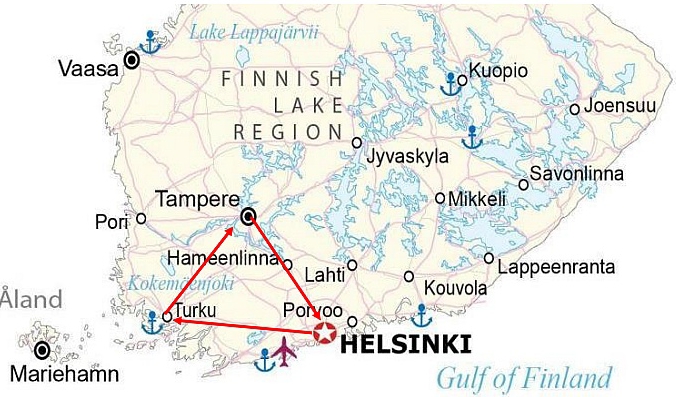
There is no doubt the Finland train network is a very effective system to get you around the country. After the long drag of our bag down to the Turku Railway Station, getting on the train to Tampere was a very simple and comfortable experience. Even when we arrived, our Hotel (Tampere Scandic) was just over the road from the station. The hotel was fully sold out due to an Italian Opera Singer holding a concert that night in the city but this didn’t interfere with our time in the hotel and the city.

Given we only had twenty-four hours to see as much of Tampere as possible, we dumped our bags and headed out into the city that is judged to be the most populous inland city in the Nordic Countries with a population of 244,029 citizens. The map to the left shows the metropolitan area of Tampere showing how it is located between two lakes. The curiosity of this geographical feature is made more complex by the fact that the two lakes differ in levels by 18 metres. There are the Tammerkoski Rapids linking the two lakes and this waterway flows so fast that it has been an important power source for city manufacturers since the start of the Industrial Revolution.
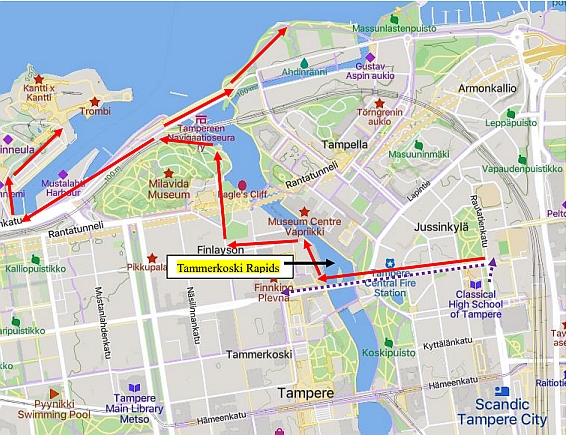
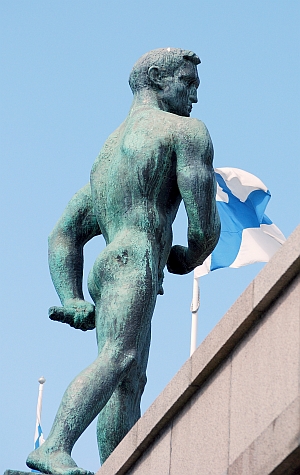
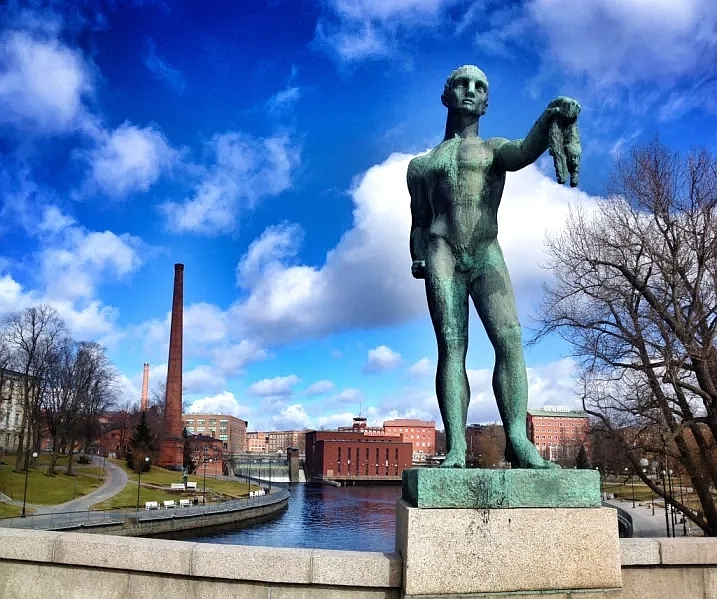
The map to the right illustrates our two journeys around Tampere. The dotted purple line shows our stroll in the late cold afternoon air in Tampere where we turned left from the hotel and then left again at Hameenkatu; luckily for us, this is the main street of Tampere. It was a busy shopping street for its first half but then it met the Hameensilta (Hame Bridge) that took us across the Tammerkoski Rapids. This bridge is a city landmark particularly famous for the four statues that stand on its railings. It was originally a wooden bridge built in the 16th century and the current bridge replaced the original in 1884. In the image on the right below, behind one of the bridge statues can be seen the Tammerkoski Rapids and the factories that depended on this waterway for power.
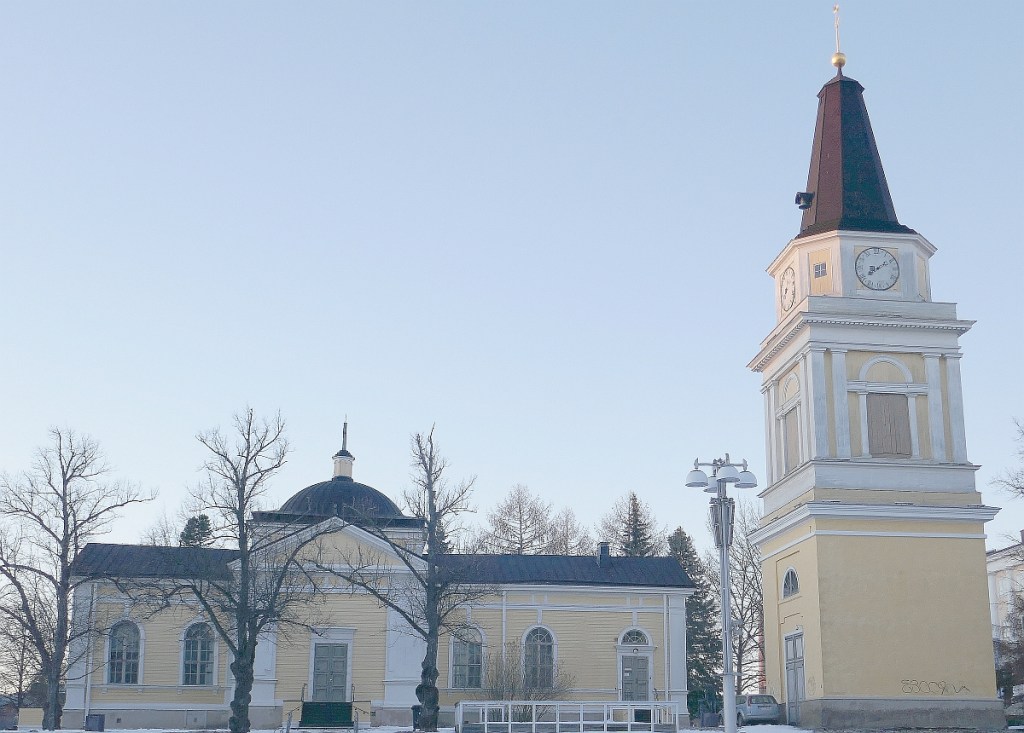
Just across the Hame Bridge on the right was the Tampere ‘Old Church’, which opened in 1825. It is apparently the oldest surviving building in the city centre. It sits on the edge of the Central public square in Tampere where the City Hall is also to be found. The photo below is of the Town Hall and in front of it can be seen a fountain that was installed here in 1883 to celebrate the first water supply network in the city. By this stage of our afternoon it was starting to get cold and dark so it was time to return back to the comforts of our hotel. It looked like we had started to find a pathway to follow around Tampere so we decided to continue on from the Hame Bridge in the morning.

TUESDAY MORNING (04/04/2023)
We walked back to the bridge crossing the Tammerkoski rapids and decided to turn right off the bridge as there were stairs that took us down to the bank of the rapids as well as a pathway that looked like it would take us in an interesting direction. There were two sculptures in this little area of parkland beside the waterway; one was close to the bank and looked like some water spirit that had escaped to dry out from the rushing waters . The other sculpture was of two entwined swans set back a little from the waterway. The sculptor of this piece won the grand prize at the Paris World’s Fair in 1937. The city of Tampere acquired it for the Library
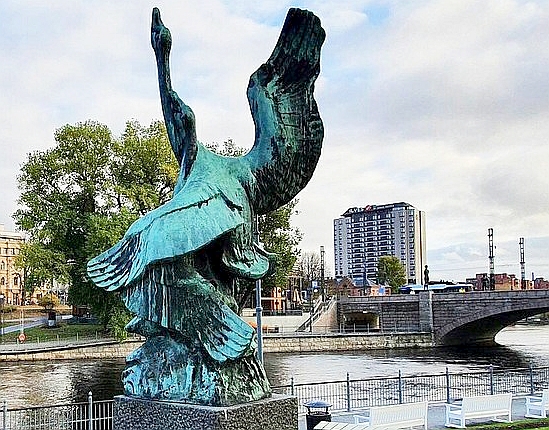

The image above shows that our walk along the Tammerkoski rapids took us towards the wall of a dam with a walk-way across the top, above the falling water. I wasn’t sure if this was the point where the height of the waters in the two lakes were equalised. We crossed the dam but found ourselves hemmed in by the old factories that surrounded the waterway so we retreated and headed in the other direction which we knew would take us down to the shores of Näsijärvi Lake.
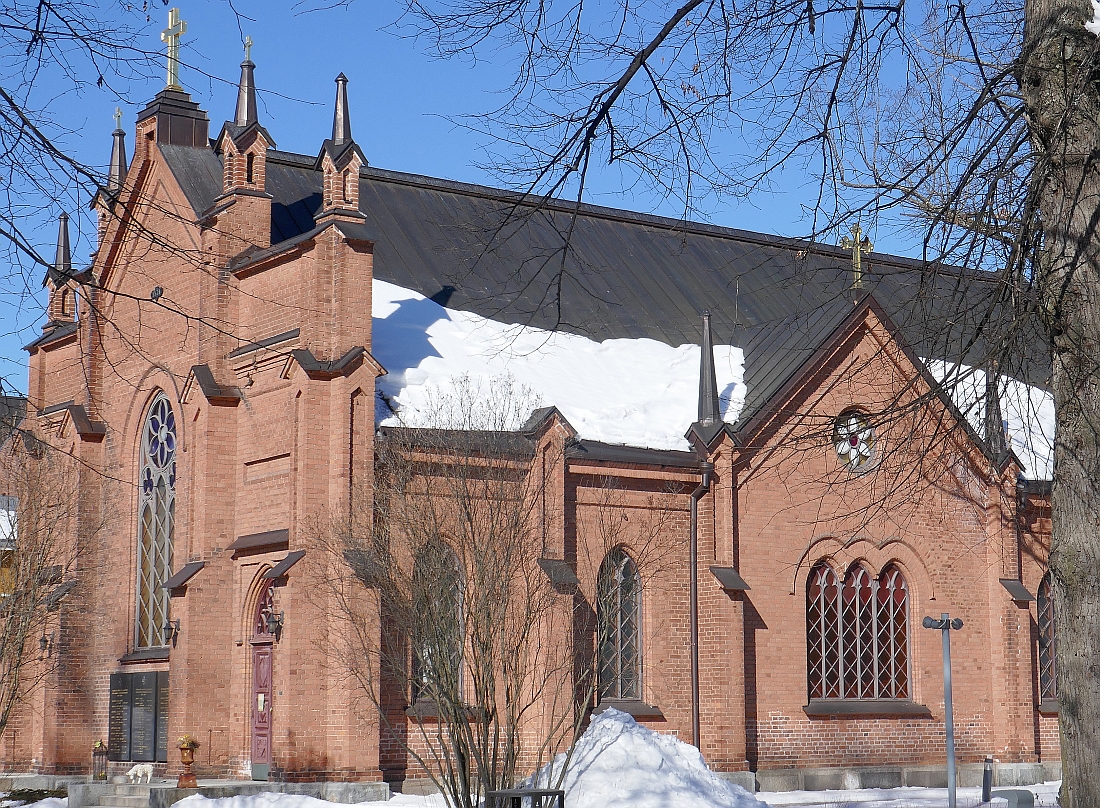
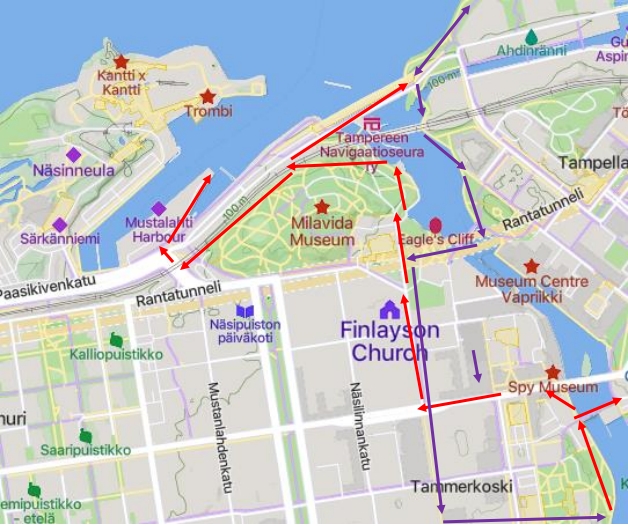
As the map to the right above illustrates, we had to walk away from the rapids to make our way to the area of the city that is built along the edge of Lake Näsijärvi. It is the biggest lake in the Tampere area at 256 square kilometres in size. This lake drains through to Lake Pyhajarvi on the other side of the city via the Tammerkoski rapids. Along this route we passed the Finlayson Church (above left). Its origin is a little unusual as rather than arising from a parish area as a church for the locals, this church was built as the church of the Finlayson cotton factory in 1879. It survived as the church for the cotton factory until 1962. By 1982 it had been transferred to the Lutheran congregation of Tampere in 1981.
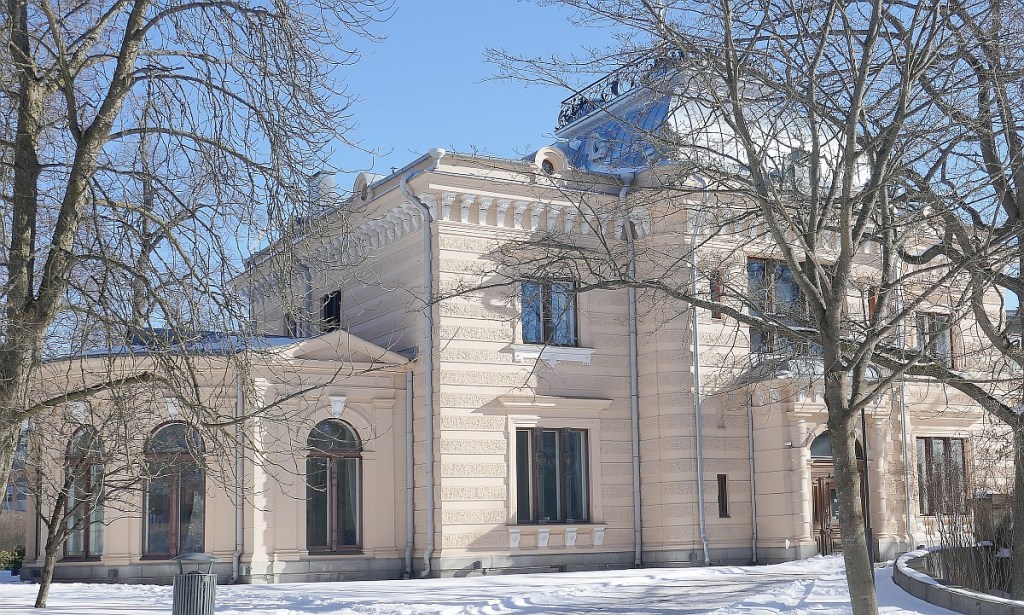
The road alongside the Finlayson church took us past a very impressive palace situated in a large area of parkland that sat on the edge of the Tammerkoski rapids. It is called the Wilhelm von Nottbeck Park which was originally built in 1848 by the Finlayson factory owner Wilhelm von Nottbeck himself. This park became city property in 1995 and Finlayson’s palace today functions as a restaurant.
After passing around Finlayson’s palace, we found ourselves back in a park that returned us to the edge of the Tammerkoski rapids. Here the path led us to a bridge that crossed the rapids and was the main road along the shoreline of Lake Näsijärvi.


The most obvious attraction in this area of the city of Tampere was a large fun park, the Sarkanniemi Theme Park. On the map to the right above, the line of our walk can be seen heading towards Sarkanniemi but even though it was a Tuesday, there didn’t appear to be too much action happening at the Fun Park. This was no doubt due to this park having a relatively short season due to Tampere’s climate…it apparently only opens between May and September.
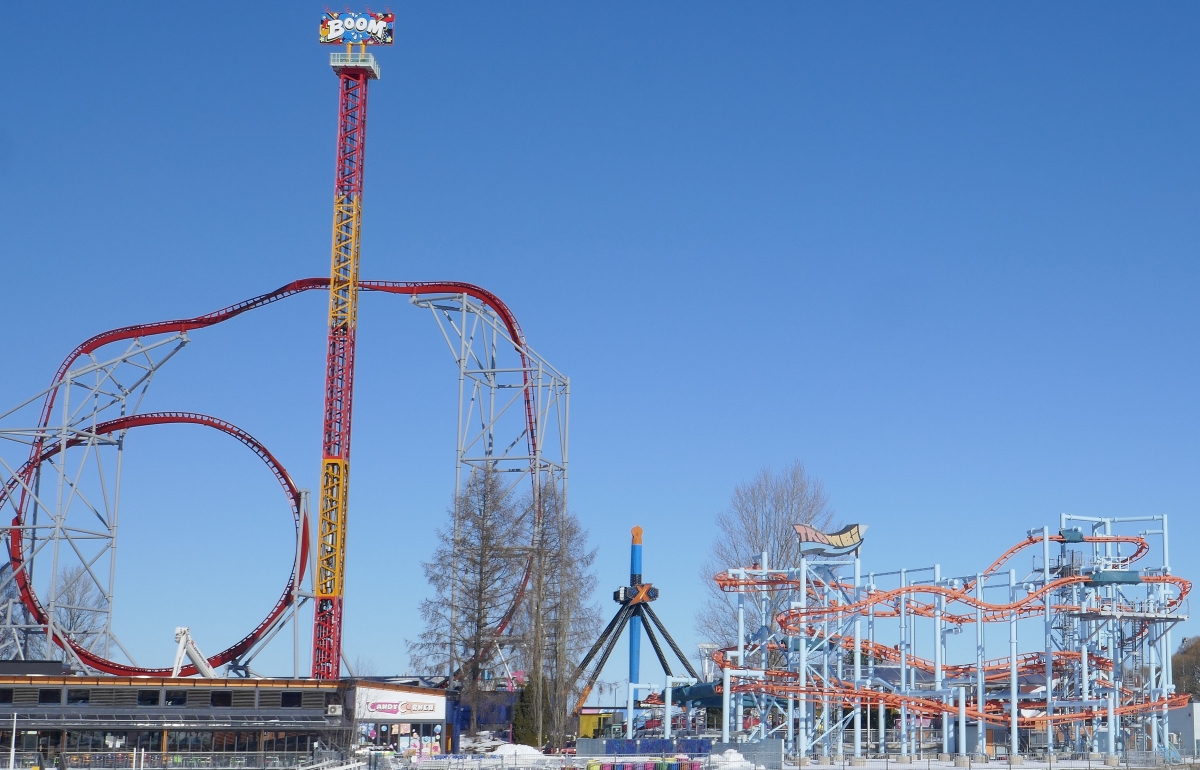
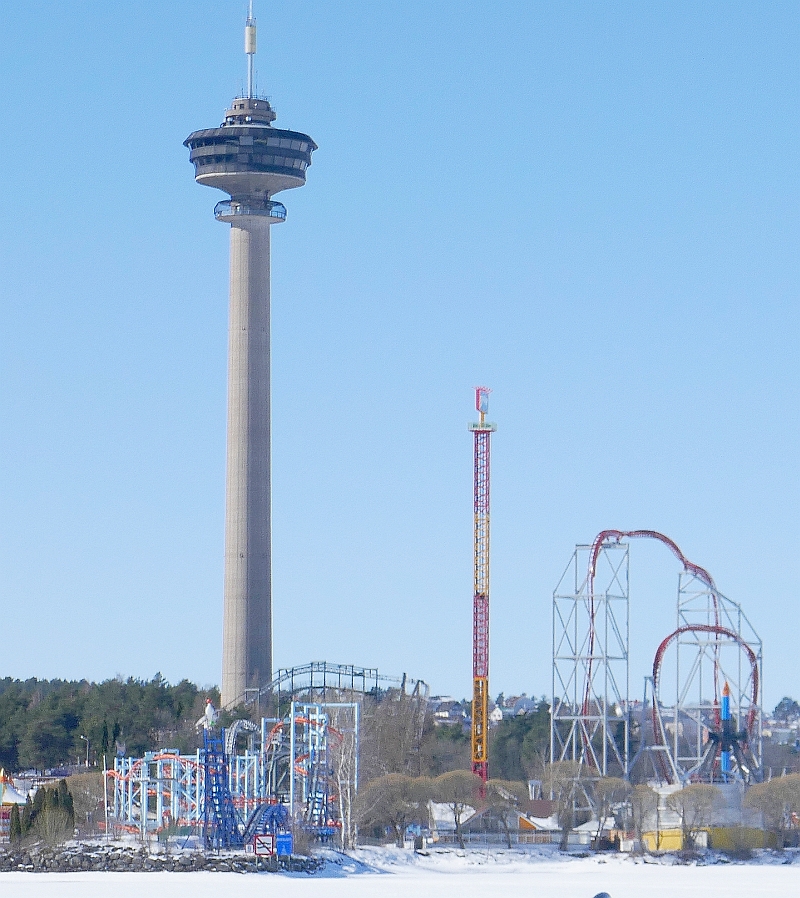
My companion in all things travel had the urge to walk on water and the harbour that sat between the edge of the lake and the Fun-Park seemed to be as good a spot as any that she would encounter on this trip. She set out to walk along the ice and snow that covered Mustalaliti Harbour and surprisingly didn’t fall through any holes in the ice. Walking over the top of a frozen lake is an alien activity for Australians but we were soon to discover further along the shores of Lake Näsijärvi that it was common practice for joggers, skaters and old age pensioners out for their morning constitutionals.
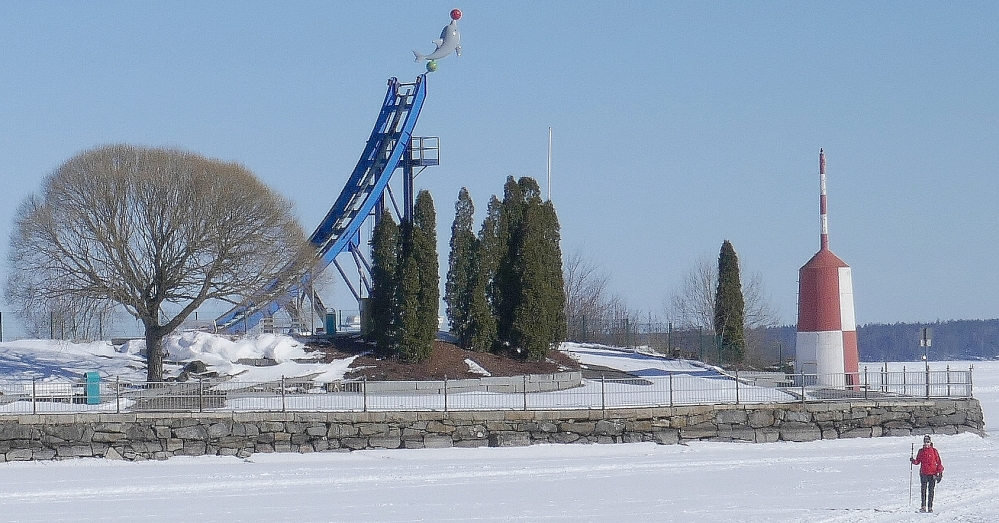
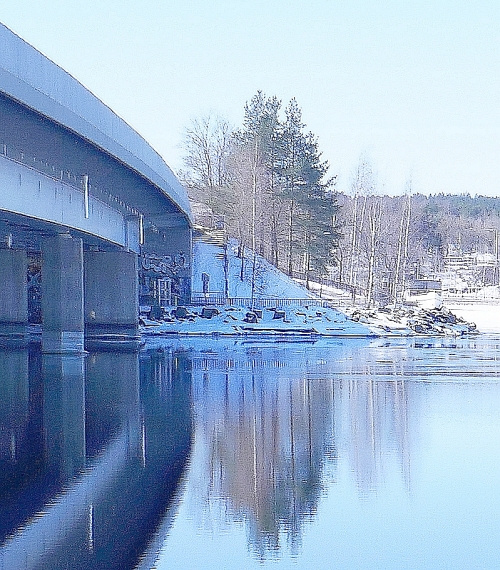
From the edge of the Fun-Park we walked back up beside the roadway and headed across the bridge that would take us to the Ranta-Tampella area of Tampere. It has clearly been taken over by developers who have built lots of canal side apartments not far from the edge of lake Nasijarvi and only a kilometre from the city’s Central Square. It was here we discovered that in April, the active locals have no fear of going running, skating or skiing on top of the frozen surface of Lake Nasijarvi.
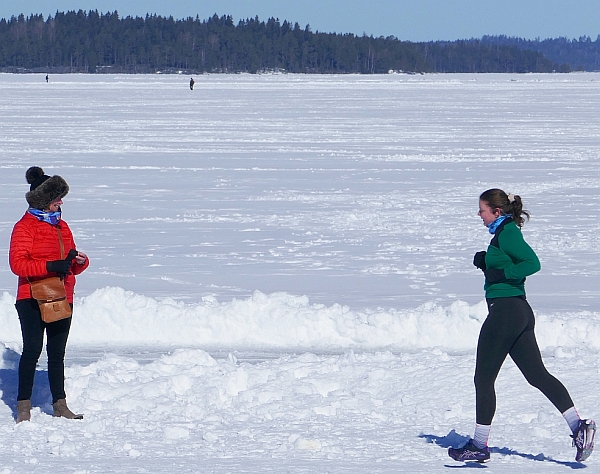

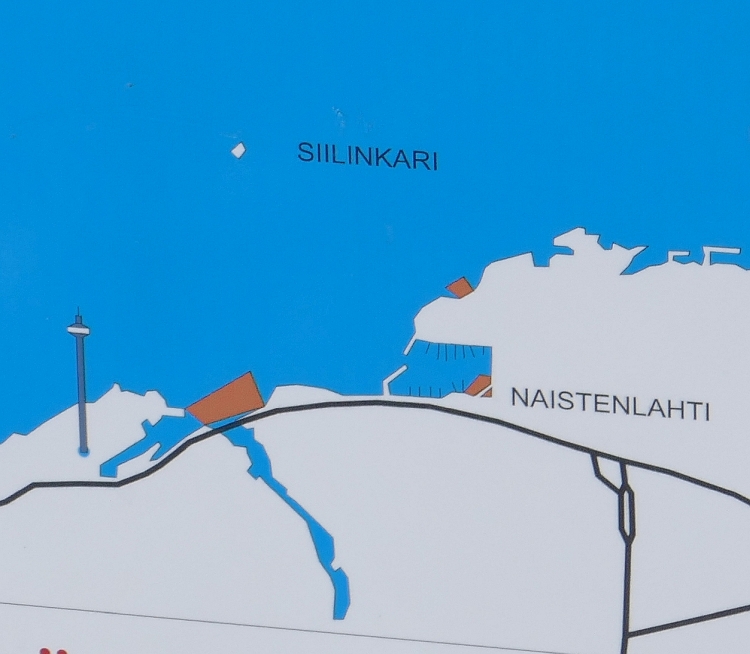
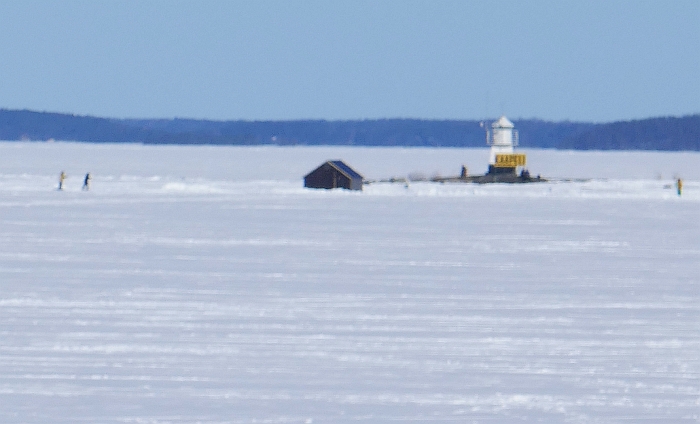
Those locals that just wanted to go for a walk could hike out to an island in the middle of the lake with little concern that they might end up at the bottom of the lake. The map of the lake to the left below gives an indication that it is a fair walk out to Siilinkari Island but probably worth the effort if you wanted to examine the small lighthouse there.
From this impressive lake-side area of Ranta-Tampella, we headed back to the bridge over the Tammerkoski rapids. This time we decided to walk up the other side of the rapids as we could see a bridge further along that would take us back to the area around the Finlayson Church. We found ourselves getting a grand view of the other side of the Wilhelm von Nottbeck Park and there appeared to be a jetty and boathouse for those lucky enough to have access to this facility.
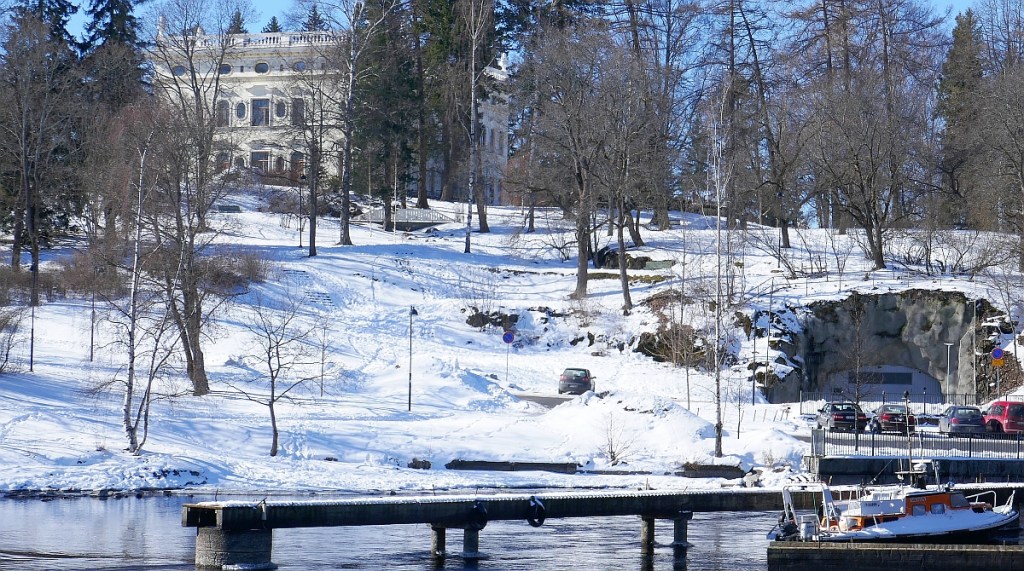
It was while looking across the rapids that we noticed that there was a group of older ladies that were engaged in the curious practice of walking into the freezing waters of the Tammerkoski rapids next to the jetty. They appeared to stroll along in the shallow waters and then turn around and walk back out again into the wooden shed next to the jetty. No doubt there was some ancient theory that they believed in that suggested that lowering the body temperature to just above freezing point was in fact good for the system. I suspected that the practice might promote a heart attack!
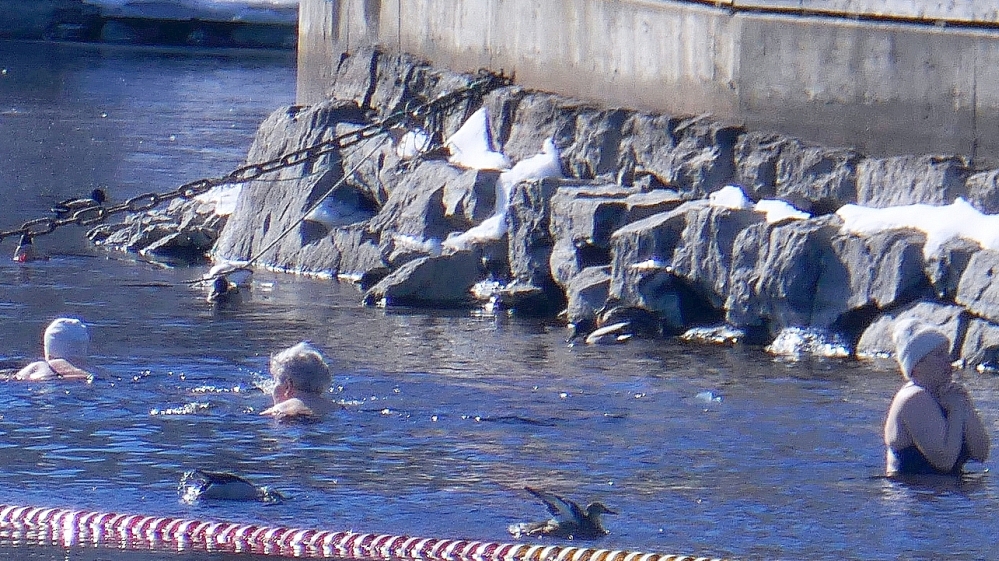
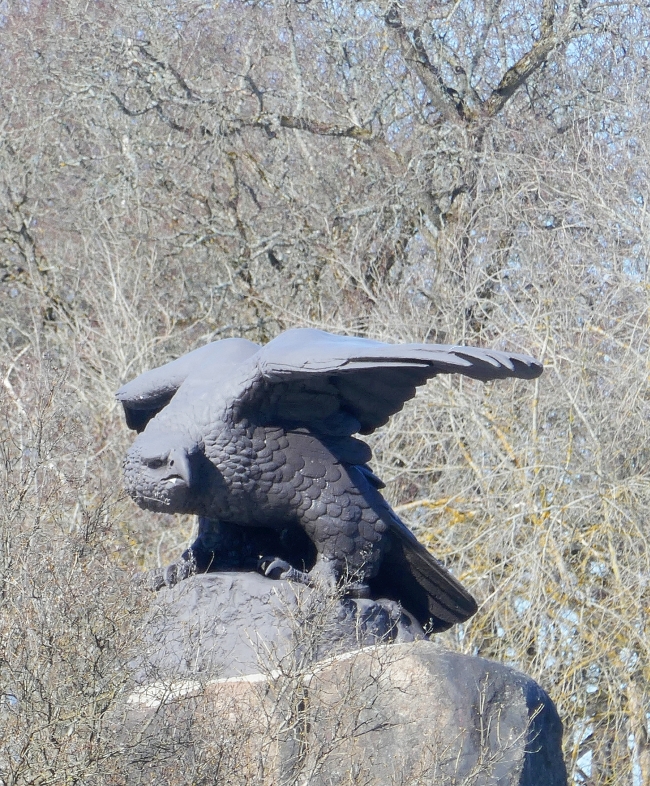
Watching over the ladies in the freezing waters of the rapids was a huge brass eagle that gazed in surprise at the behaviour of the senior ladies going for a quick walk in the freezing waters that rushed downhill from one large lake to another…what a curious place Tampere is!
 FOGTRAVEL