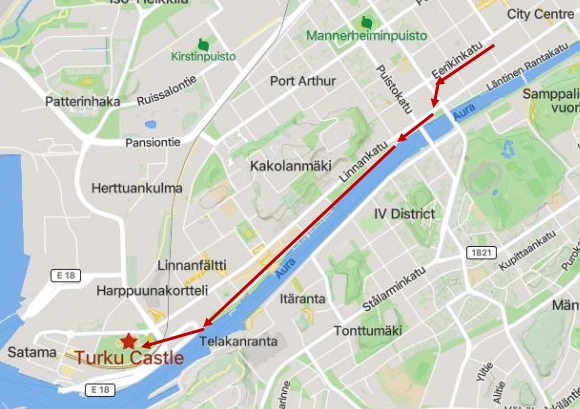
The next morning in Turku was to be fairly busy. I particularly wanted to check out Turku’s medieval castle but we only had a couple of hours available as it was well down the River Aura from where we were staying. We also had to get back in time to collect our bags and head back down to the Railway Station for our train journey to our next Finnish City, Tampere. This train trip would take us about an hour and three quarters by high-speed train.

Our walk the previous day had prepared us for the river-bank walk and we headed down to the river path near Turku’s City Hall that we had checked out the previous afternoon. The Council of Turku liked impressive buildings to conduct their administration of the city in and the ‘Art-Nouveaux’ building pictured on the left was constructed next door to the City Hall. It is probably still called the Turku City Office but the council must have decided they needed the money so they sold it and it has been converted into an apartment building.

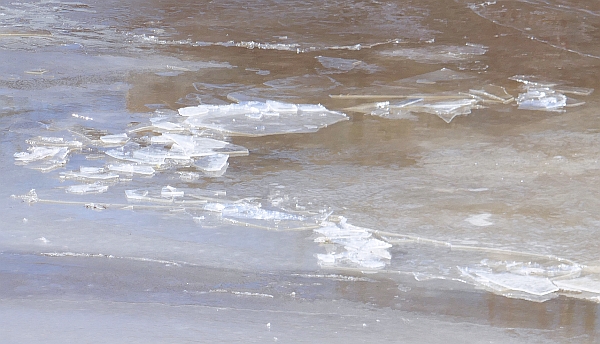
While the photo above of the Aura looks like a sunny pleasant day in Turku (which it was!), one look at the surface of the river revealed how cold it was down at water level. There were many spots where the sea gulls walked on the river surface rather than floated on it.
Turku is meant to have been built on seven hills and we had climbed one the previous afternoon to check out the old observatory. On our morning walk we spotted another hill on the other side of the river (Samppalinnanmaki Hill) where the major ‘hill-attraction’ was the red wooden windmill that dominated the outlook that we could see from our side of the river. It was another one of the city’s green spaces but that morning it was definitely a white snow space.
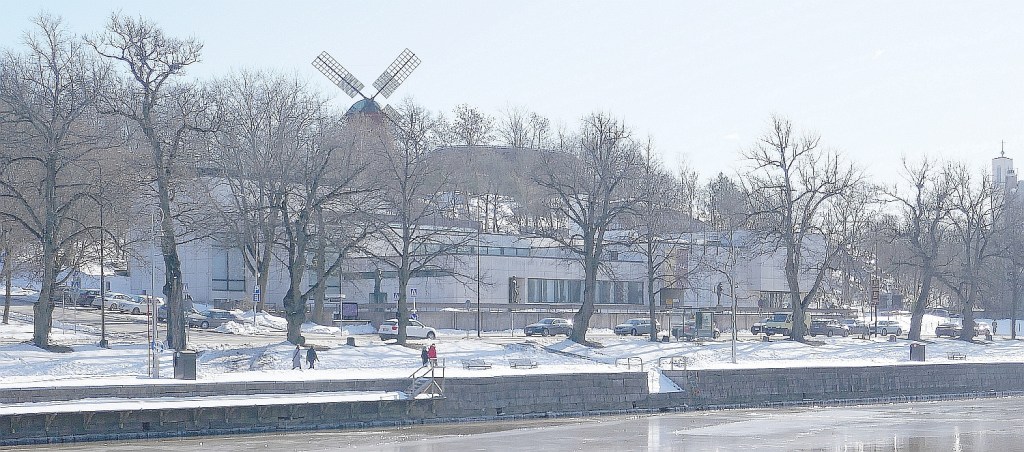
There was a convenient archway on our side of the river that we could get a great shot of both a tourist and a windmill in background. The sculpture on the right below is apparently one of a series of monuments that are described by the city-fathers as ‘Sit-by-me’ statues. Its official title is “Star-Gazer”.

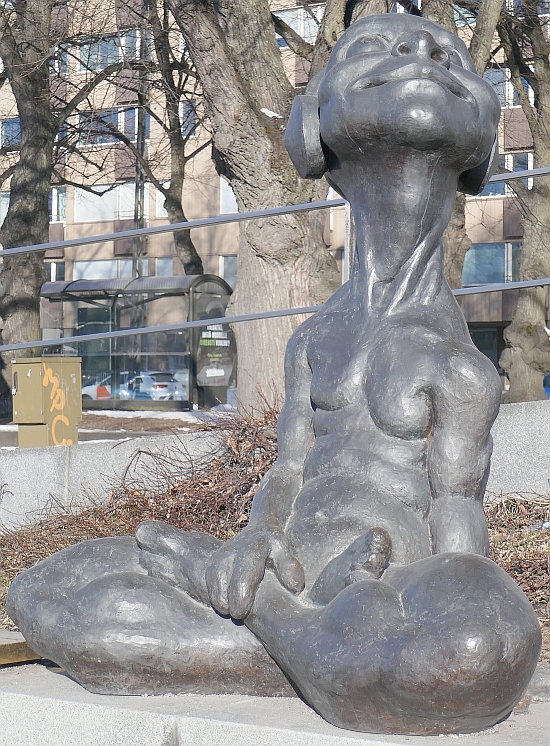
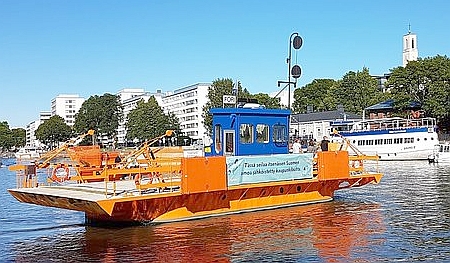
Up until we arrived beside the ‘Stargazer’, the river seemed to be a reasonably quiet place, given over to pursuits such as strolling, jogging and for some folk, driving their car onto a river ferry on a trip that took only a minute and a half to get across the river. However from here on, the action on the river became more given over to sailing and cargo boats, the important commercial side of this river for Turku.
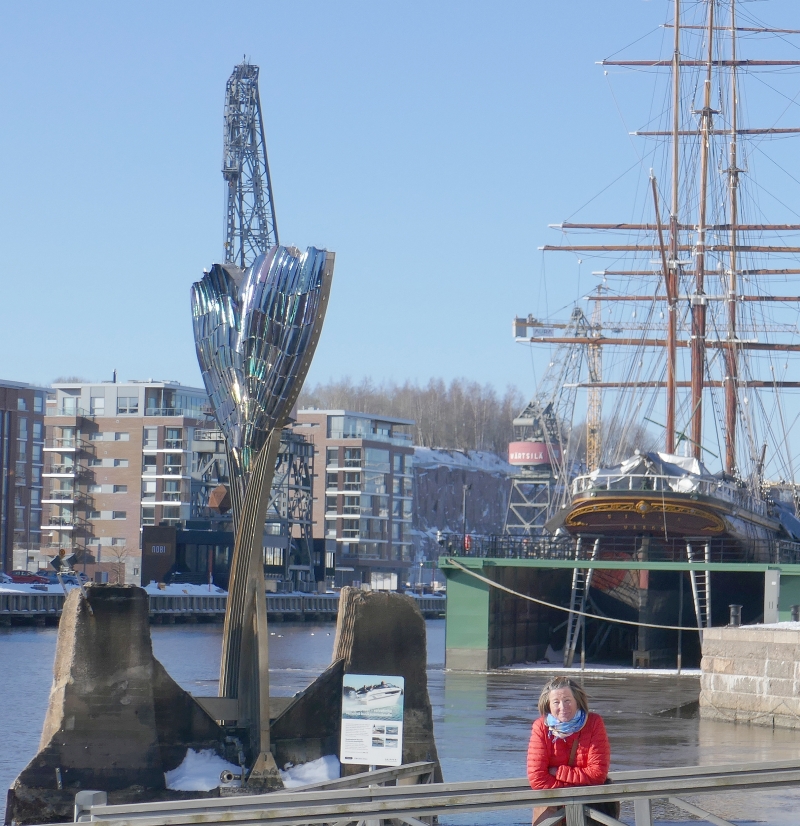
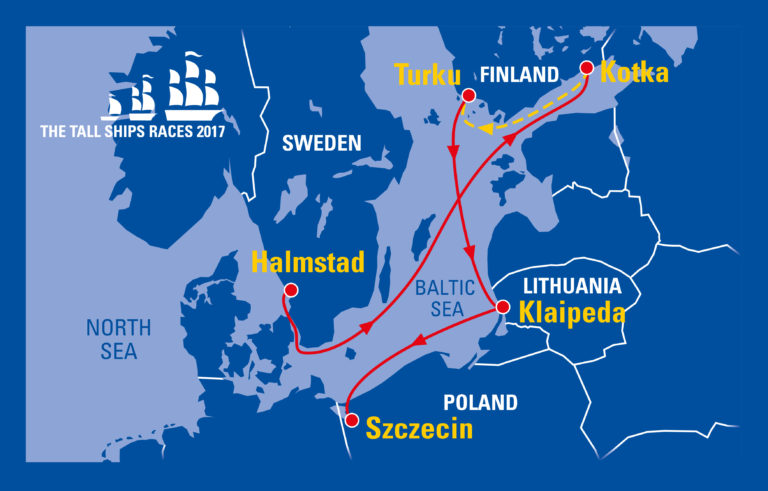
On the left above is a sculpture of what looks like a whale tail that has breached and is heading back below the water. It has been built on a cement pylon that was an old crane base that unloaded ships in this section of the river, the ‘Guest Harbour’. Its official title is ‘Harmonia’ by Achim Kuhn and was constructed here in 1996; in Summer it is a fountain and in winter a light art installation. There were a reasonable number of ‘guest’ sailing ships docked in this section of the river as we strolled past but presumably not as many that anchored here on the occasion of the Tall Ships Race in 2017. The map above shows the route around the Baltic Sea that the Tall Ships took in that year after starting from Halmstead in Sweden.
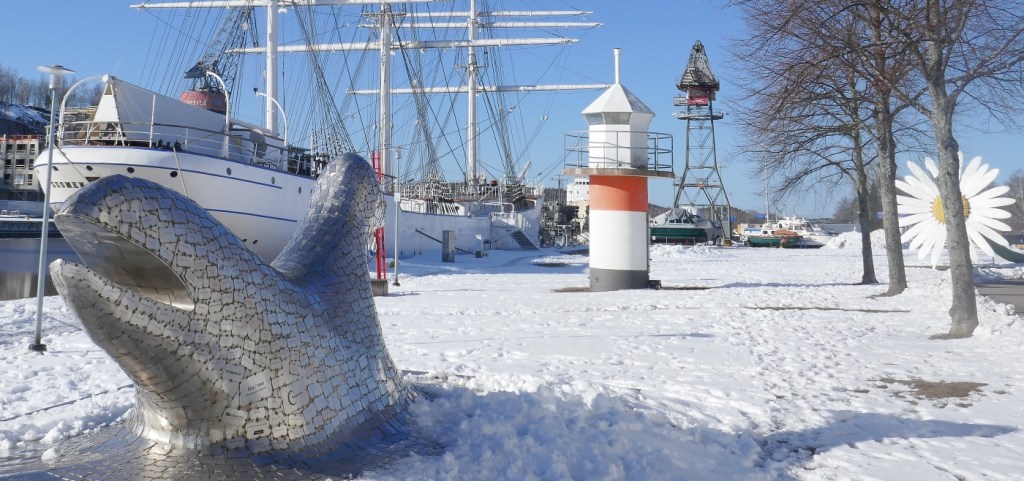
The guest harbour section of the river of the river was quite beautiful to walk beside and not just for the tall ships. In the image above. The sculpture on the left appears to be a breaching whale. The white daisy further along was installed in 2011, the year Turku was crowned as the annual European Capital of Culture. It has a stem that stretches 25 metres.
We finally arrived at the park on a curve in the river where the Turku Castle was built in the 13th century. This was at a time when the area was known as ‘Eastland’, and was a province of Sweden. This medieval castle was only once called to be a defensive bulwark against foreign invaders which was in 1318 when Russians invaded and destroyed Turku. This castle is the largest surviving medieval building in Finland.
The photo below is of the front section of the castle as we approached from the river side.
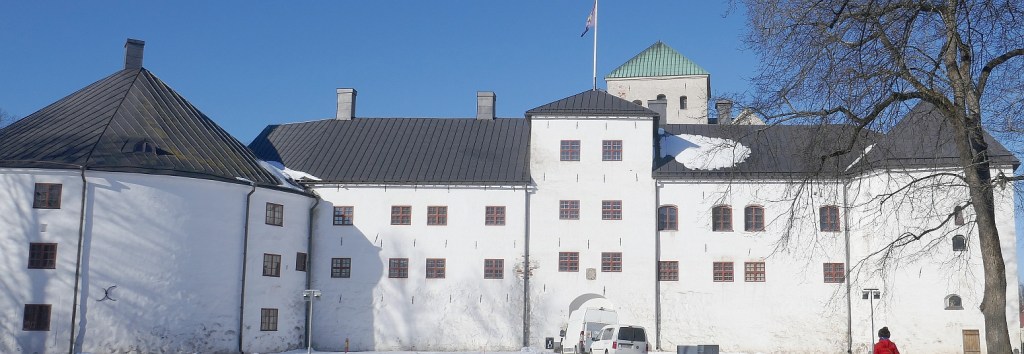
We were able to enter the courtyard of the castle through the entrance that can be seen in front of the parked cars in the above image. The photos below were taken in the courtyard of the castle that can be seen in the plan to the right (courtesy Wikipedia). Significant work on the castle and its defences were carried out in the 15/16th centuries.


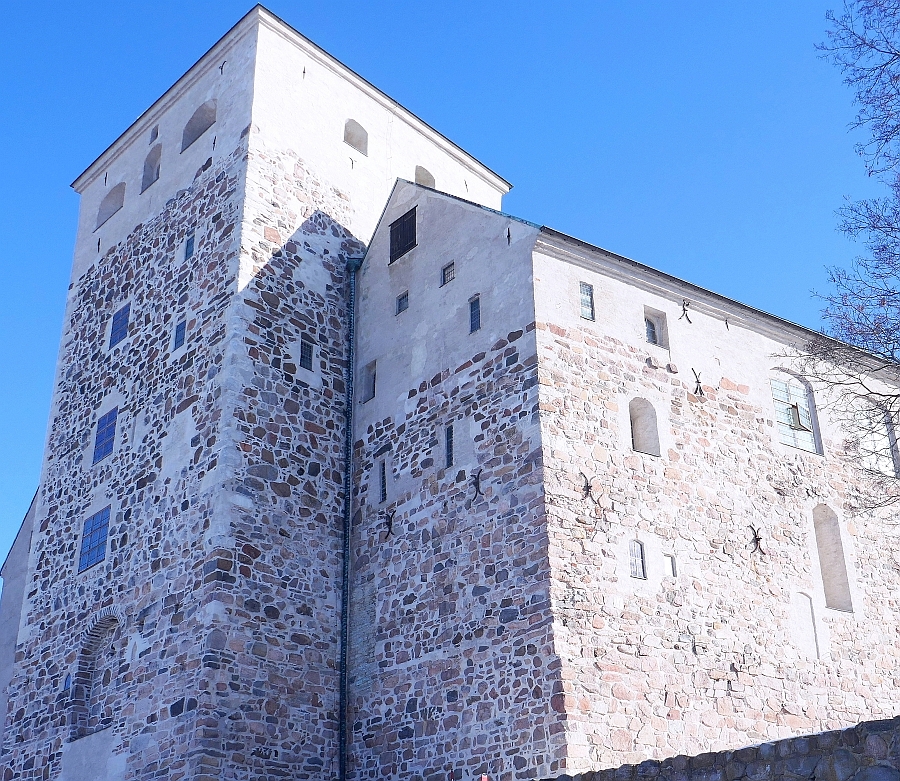
In the Middle Ages, the castle was surrounded by a moat that was linked to the Aura River. This feature ensured that the castle was on its own island. Over the centuries since its completion in the 16th century, there have been numerous sieges and battles that have been fought outside its walls.

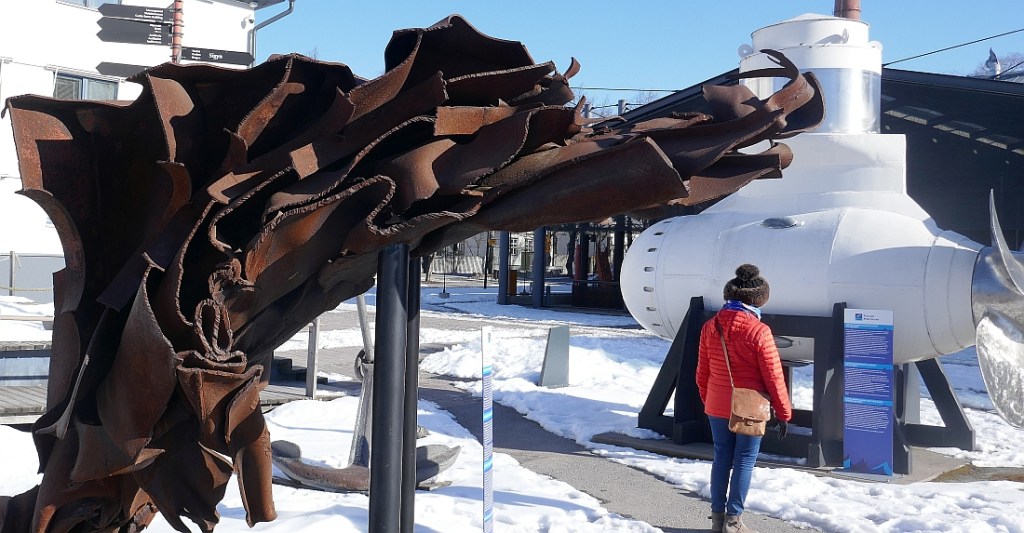
Once we had finished inspecting the Turku Castle, we headed back towards the river path and made a short detour to visit the area in front of the Forum Marinum, Turku’s Maritime Museum. It had a large number of vessels out the front of the museum building as well as two tall ships, four naval vessels, a harbour tugboat and a police boat housed elsewhere in the facility.
We couldn’t stay long in this area as we needed to head back to our hotel and gather our travel luggage for the walk back down to the train station. We had one more Finnish City to visit before our last train ride to Helsinki Airport. On the way it was good to see the other side of the whale tail as it continued to try and inspect the bottom of the Aura River!

 FOGTRAVEL