We were dropped off at the San Sebastian bus station around 8.30 on Saturday morning to catch our transport to Bilbao. The large circular, underground bus station was just the other side of the Maria Theresa Bridge and was a large and complex establishment. Our ride along the northern coast of Spain was very pleasant and we were collected from another equally impressive and modern bus station in Bilbao. Our van driver would not only drive us everywhere for the rest of the day, he also ran the hotel where we would be staying the night in the Picos de Europa National Park. Our first destination for the morning was the hillside above Bilbao where we got spectacular views of the city and the river valley that was the source of its wealthy economy for many centuries. The panorama below captures the excellent view and our next destination (after morning coffee!) was to be the dock area just the other side of the large sports arena that can be seen on the left in the image below.
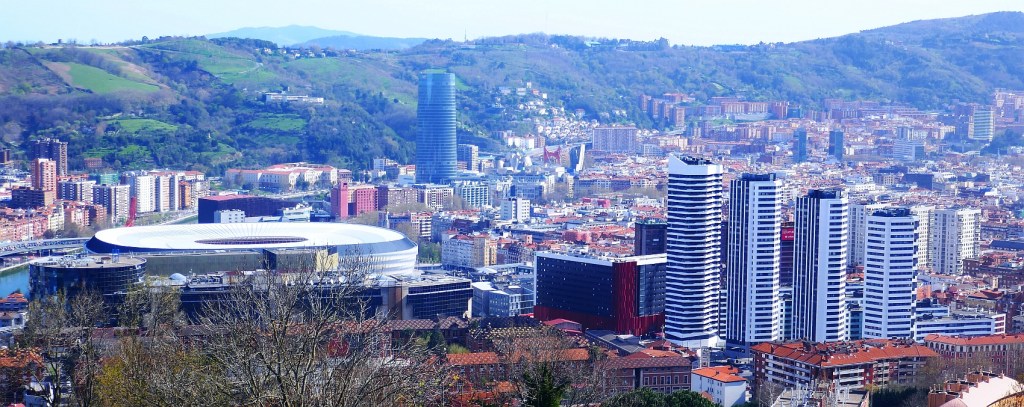
Bilbao is the largest city both in the Biscay province and the Basque Country in general; it has around 347,000 citizens in 2023. The city was founded in the 13th century and its economy has always flourished based on its trading port and its export of wool and Iron. With the industrial revolution from the start of the 18th century, it became the second most industrialised region in Spain.

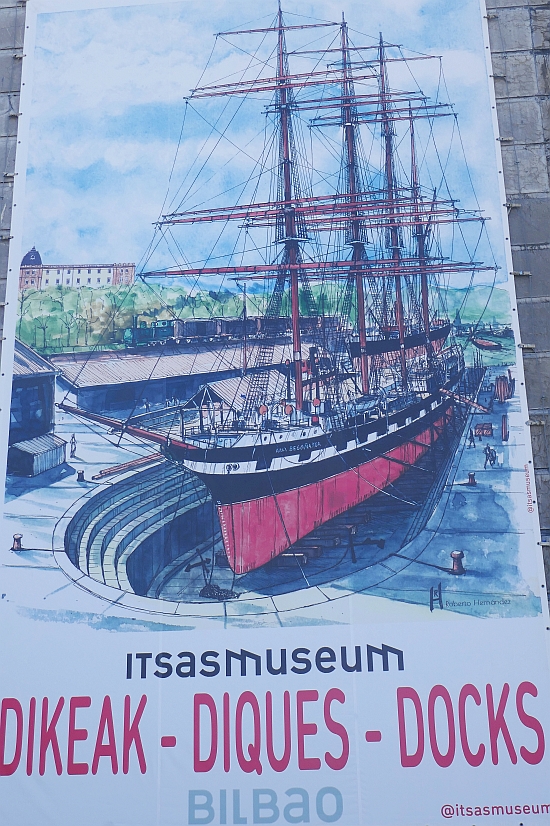
The centre of the city was very busy on Saturday morning so our van driver couldn’t find a park so we were dropped off in the Dock area and he went off looking for a parking spot to sit while he waited for our guide’s call to take us to our next destination in the city. We strolled along the Dock area admiring the boats under repair and heading directly to the door of the Itsasmuseum, Its main goal apparently was to inform visitors “about the heritage created by Maritime activities in the Bilbao estuary.”

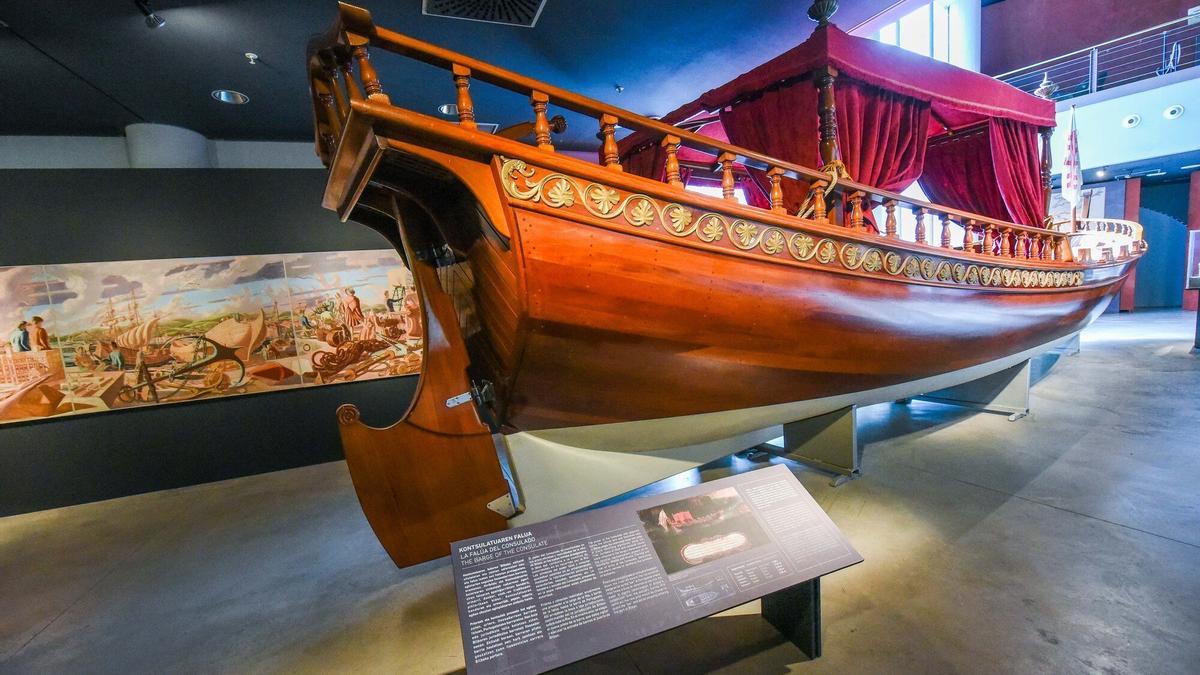
There was a lot to see in this museum, mainly the shipping background of Bilbao; some of the ships we could even board such as the Felucca on the left below. It is suggested it was a significant feature in many ceremonies on the estuary since 1670.

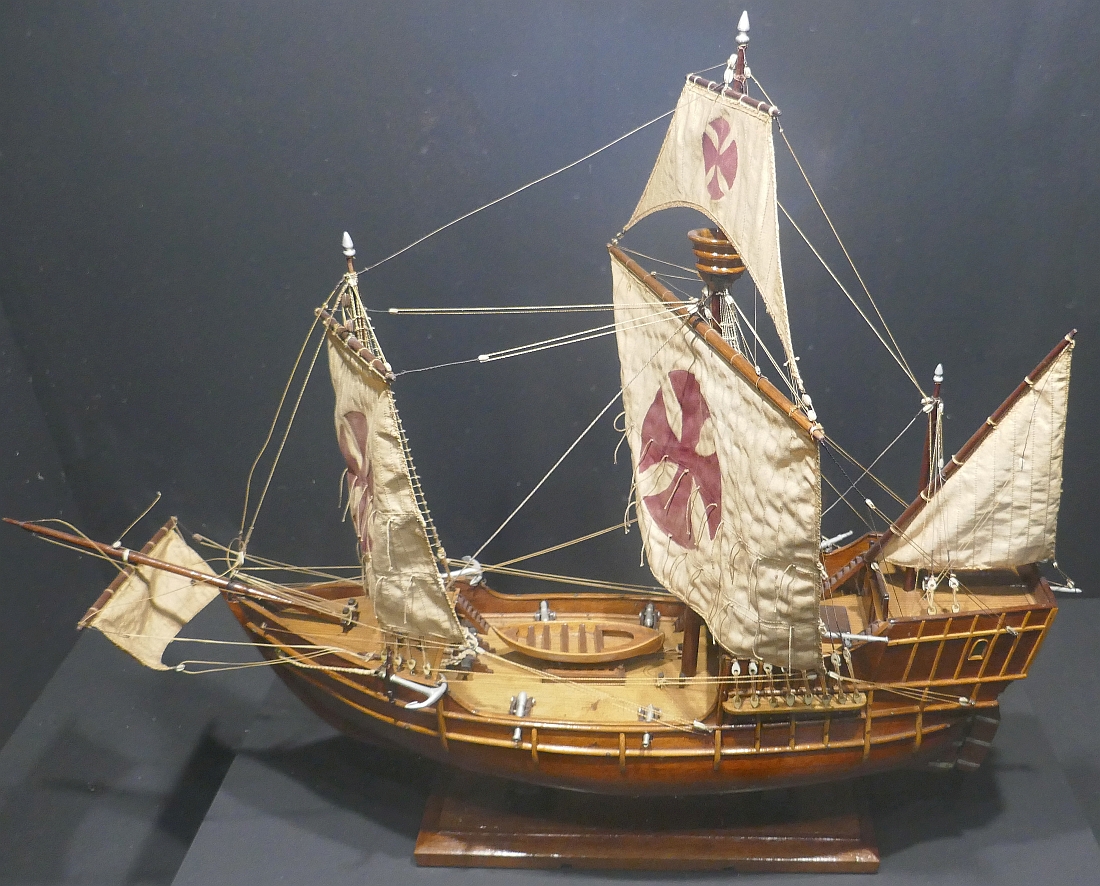
There were also recreations of other famous Spanish ships on display such such as the Santa Maria, which in 1492 carried Christopher Columbus to the new world. The model on the right below was of the Galleon that was the means of plundering South America of it gold and bringing most of it (of course except for the gold that wasn’t pirated by the Francis Drake) back to the court of Spain.


We had a very enjoyable stroll around Itsasmuseum and then it was time to move on to our next major destination, the Gugenheim Museum. The map of the first part of our morning walk shows that the Gugenheim was a reasonable walk along the Nervion river. This Museum is defined as a modern and contemporary art gallery and was inaugurated in 1997 by King Juan Carlos I of Spain. It is held in high esteem by critics, academics and the general public as well. The image to the left is the side of the Gugenheim that backs onto the river; it stands next to the Le Salve Bridge that can be seen in the background of the photo.
We didn’t have time on our morning tour of Bilbao to go inside the Museum but there was plenty to see on both sides of the building. I am not sure how the many children present dealt with the huge spider that sat beside the river at the back of the Gugenheim but it seemed to me that the one of the Spiders from Mars had landed in Bilbao after being encouraged to visit by David Bowie (Ziggie Stardust), referencing these spiders in his music!

We decided to head around to the front of the Gugenheim as this was where we were due to catch up with our driver and van. As the photo below illustrates, the front is even more spectacular than the riverside view of the museum.
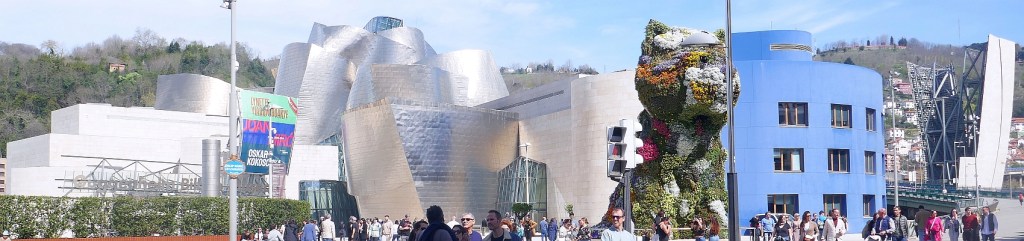
The most famous feature of the front of the Gugenheim is a 12.4metre tall Scottish Terrier hiding inside a covering of tens of thousands of flowers. I have to admit I thought it was a cat which meant that I didn’t get involved with all the other tourists keen to get a photo taken with the flowery dog/cat of Bilbao. I was also taken aback by the claim that this huge cat/dog was created by the sculptor, Jeff Koons, who presented it to the world back home at the Sydney Museum of Contemporary Art.

We had to move down the street away from the Gugenheim to find a spot where our driver could collect us. We were being driven to the other side of the river in the old part of town called Casco Viejo. This is the medieval neighbourhood of Bilbao and was a walled section of the city until the end of the 19th century. The map below gives an outline of our walk around what is considered the most colourful part of the city.

Our driver dropped us off just over the Puente del Arenal bridge just near the plaza where the Church of Saint Nicolas stood. This St Nicolas was the patron Saint of sailors and so an appropriate saint for Bilbao. Construction of this church began in 1743 in the Baroque style. It sits just over the road from a large park that runs along the river…much of this park can be seen in the panorama below.

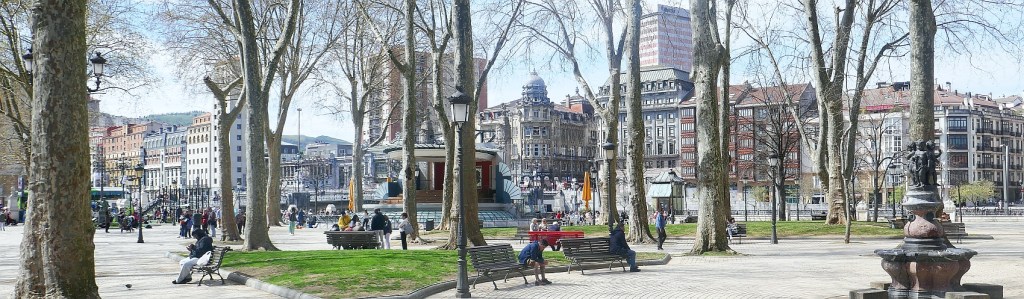
The image on the right below is of the Plaza Nueva and is a ‘monumental’ plaza given that is enclosed by arcaded buildings. This is a very significant spot in Bilbao history as it was once where the original market of the city was held. It was also where the Biscay Government was located before it was moved to a new palace built in 1890. We liked the look of the place so we decided we would have lunch here as there appeared to be plenty of restaurants and taverns in the plaza. The only problem was that lots of the local population decided this was the place to have Saturday lunch and we were lucky to find an empty table in one of the taverns.

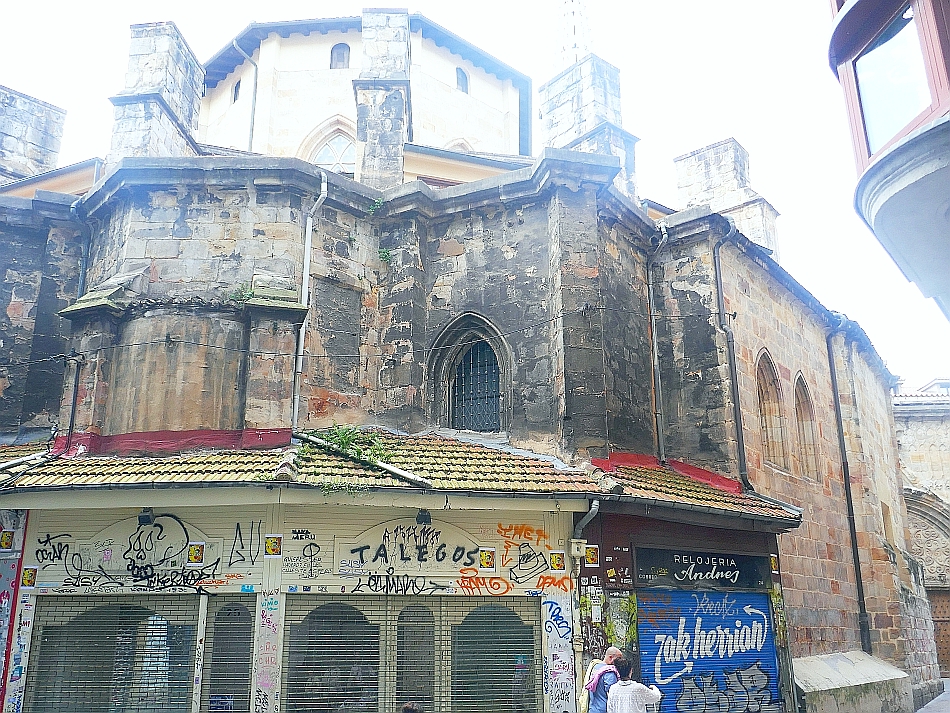
We headed out after our lunch for a walk through the old town area of Bilbao. There were two churches in this area that we passed, one was called the Church of St John the Baptist and St John the Evangelist. It is tightly squeezed into three streets and does not come across as well maintained. The image on the right below is one view of this church with some empty shops attached to the church building and the graffiti certainly makes it look unattractive.

The other church that we encountered was the Santiago Cathedral. It was originally built during the 14th-15th centuries but was only declared a Cathedral in 1950. It was consecrated in honour of Saint James the great (Santiago) as it was a stopping off point for pilgrims following the northern Way of St James.


What looks like a crest was attached to a wall of the church just down the street a little from the Cathedral entrance. I was hoping that I would find out what the carving was referencing but alas I still remain unenlightened.
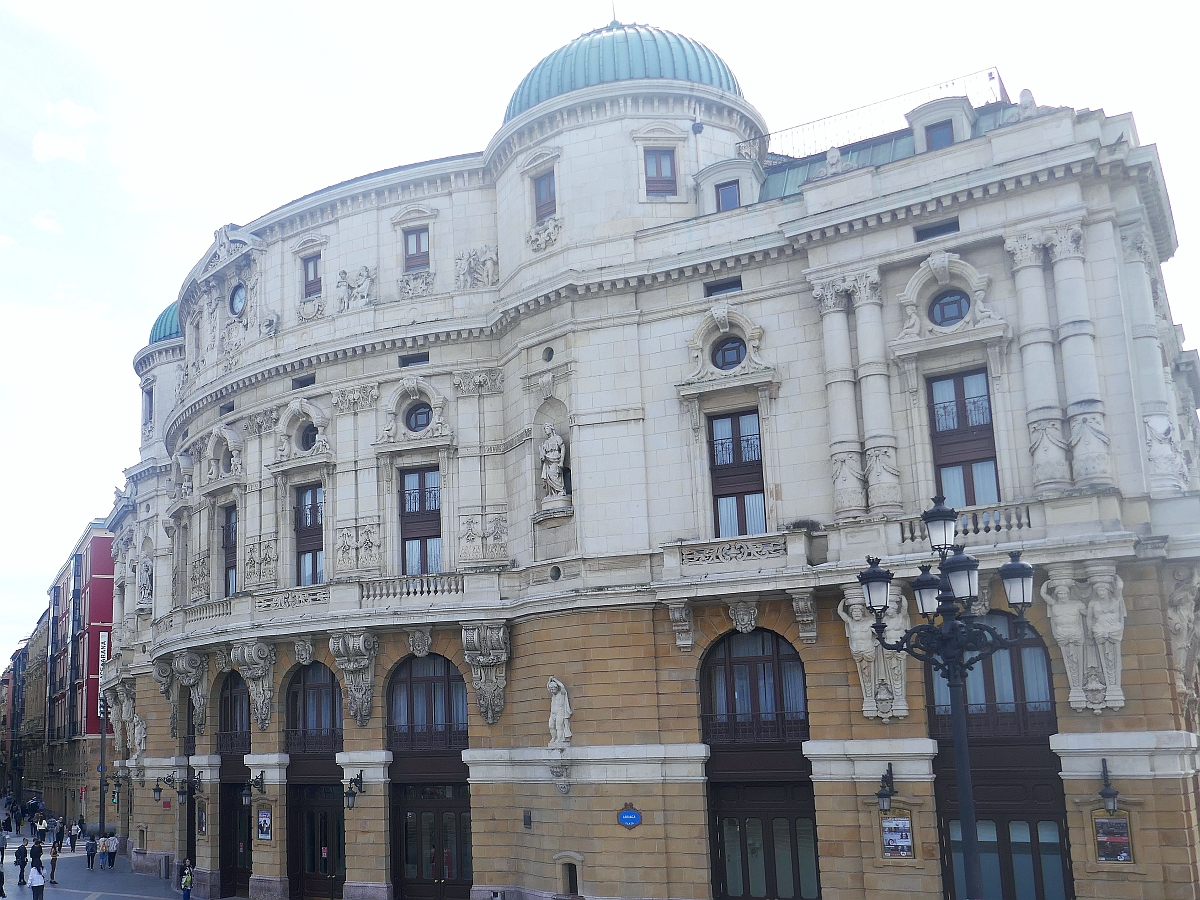
From the Cathedral we walked directly back to our meeting point with our van driver in the plaza outside St Nicholas’s church. This gave me an opportunity to have a quick explore of the area along the river before our ride turned up. Over the road was the Teatro Arriaga which is an Opera House originally built for Bilbao in 1890. Having pride of place next to the City’s river isn’t always the best location for a building’s survival as was proven in 1983 when it was destroyed by severe flooding of the Nervion river. It was rebuilt in 1985.


I had a little more time as the van hadn’t arrived yet so I was able to walk along the river and get a photo of Bilbao’s 19th century Town Hall that stood on the right bank of the estuary in front of the “Puente del Ayuntamiento bascule” bridge. When I looked for a translation into English of this lengthy title, I was informed it meant “the Town Hall Bridge tilts!” Before I could check the angle of this bridge, I realised my colleagues were yelling at me to get back to the van as we ready to head west along the coastline for our next adventure, the Caves of Altimira!
APPENDIX 1…One last Bilbao Photo

The most attractive building in the park beside Saint Nicolas Church was called the ‘Allegorias a la Musica II (Allegory of Music). I presume it would be called a band-stand in most other countries but in Bilbao it appears to be considered more significant as an art sculpture, particularly with the stained glass windows at the back and the cherubim decorating the roof.
 FOGTRAVEL