We travelled by bus across the hilly country north of Logrono on our way to Laguardia. It took less than half an hour before we reached this walled town on top of a ridge where a walk around the town walls gives continuous long distance views over the countryside below. This is Basque country, in fact the town sits inside the Basque Autonomous Community which was declared in the Spanish Constitution in 1978. The original walls were built in the 12th century with five gateways.
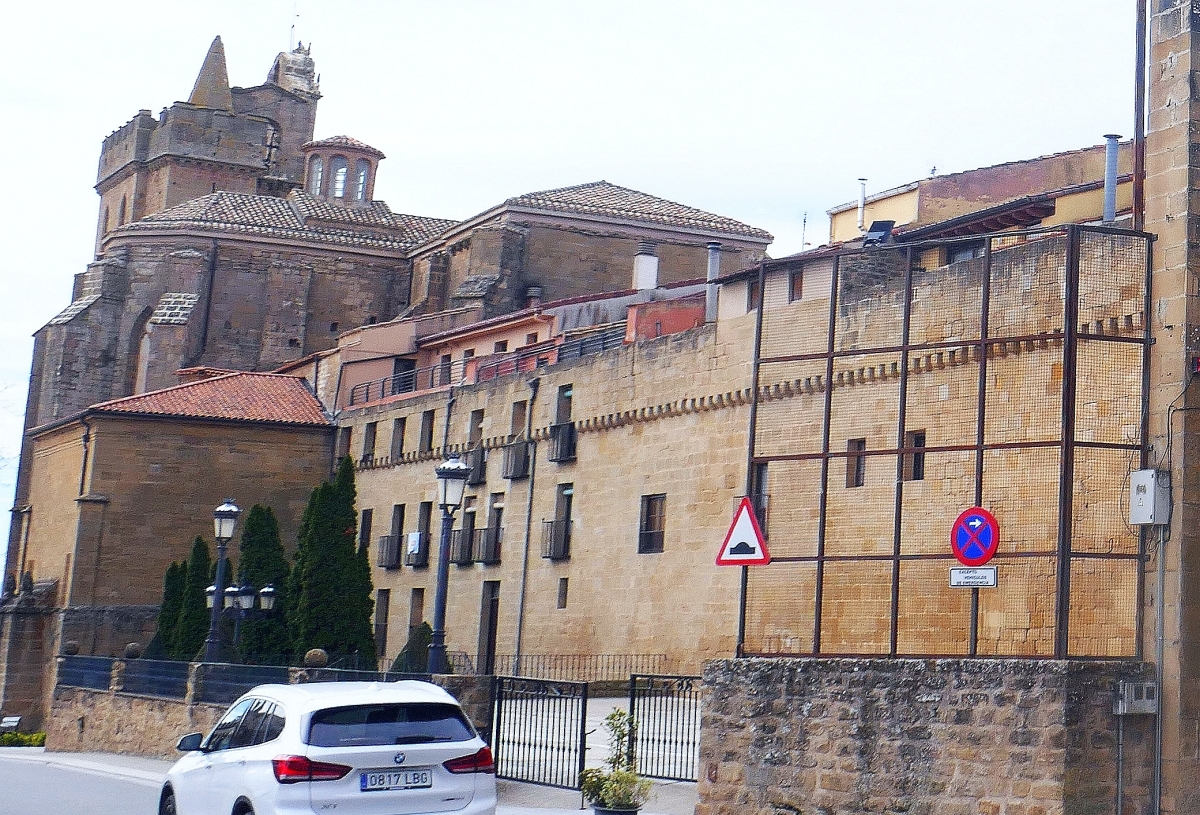
In the image above left can be seen one section of the town wall with the Church of St Juan standing tall above the walls. Its height owes itself to it being originally built as a temple-fortress at the beginning of the 13th century. Three centuries later it lost its fortified character. For example, the tower of the fortress was converted to a bell-tower. To the right of the above wall photo can be seen a netted area which encloses a court for a Basque Country ball game called Jai Alai. Our guide explained the principles and it sounded like a very vigorous game with the Xistera (photo, right) slinging the ball at all angles against the walls. It seemed to have some similarity to the game of ‘squash’.

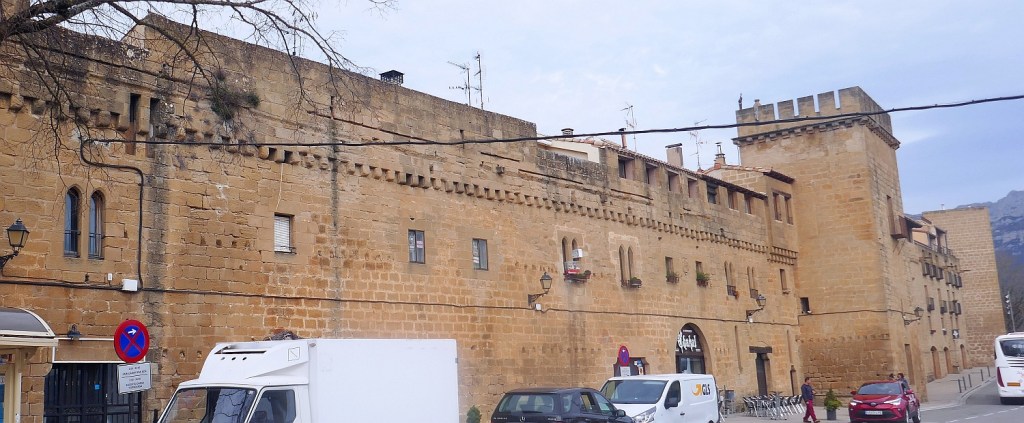
The image above was taken from the bus stop and shows the rest of the wall continuing on around the town.
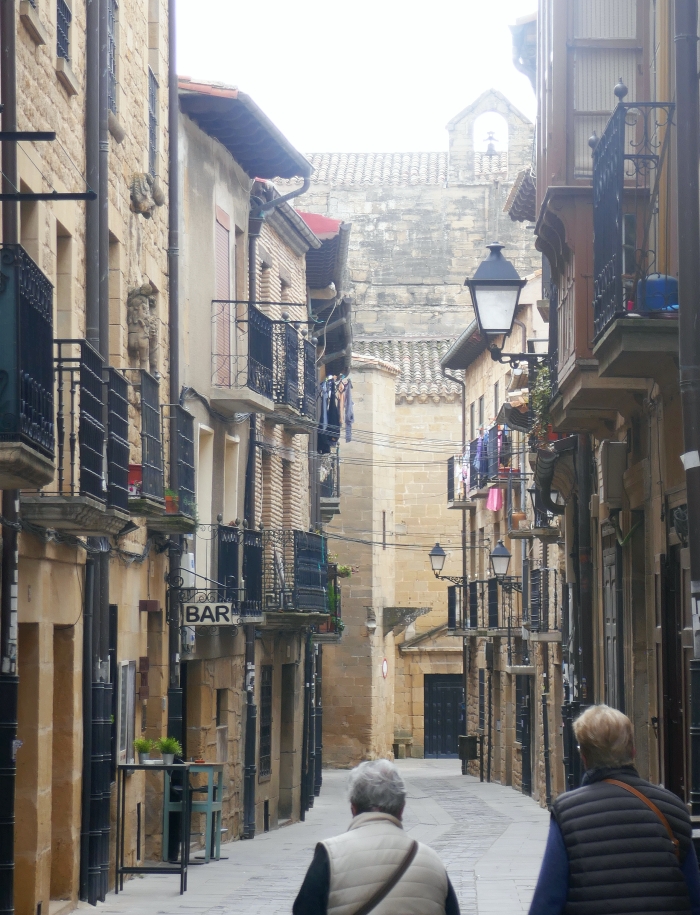

Our first destination in Laguardia was to find the tourist bureau as this was where we would be led on a wine tasting trek; not through the town’s streets or local vineyards but through tunnels dug under Laguardia itself. The winery we were visiting is called Eguren Ugarte (founded in 1870) and is built mostly underground. It apparently has around 2000 metres of wine cellar caves. I was grateful that I didn’t have to walk anywhere near 2 kilometres underground to get to the wine tasting.

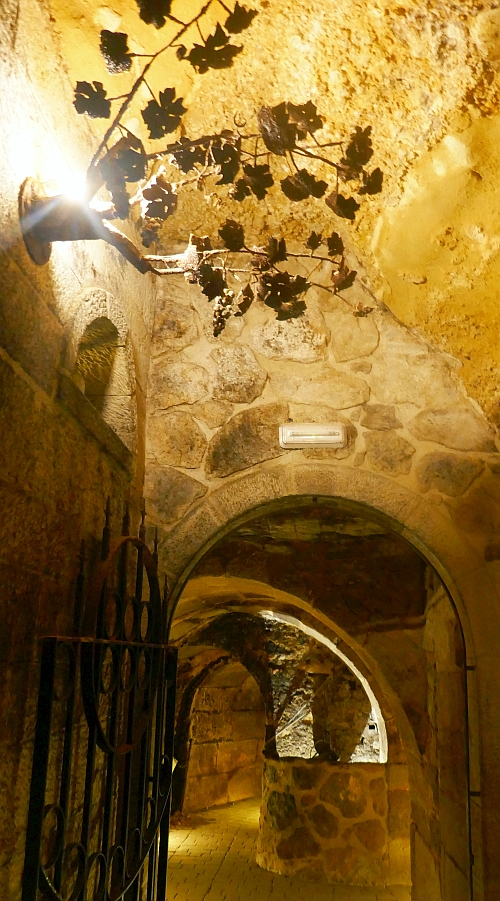
We weren’t given immense detail by our hosts on the origin of the tunnels but it was briefly explained that originally many of the tunnels and caves under Laguardia were built by townsfolk who would store provisions and arms when the town was under siege during many of the wars in the town’s long history. It seems that wine storage and tasting are a much better use for the ancient tunnels than for citizens sheltering from passing marauders.

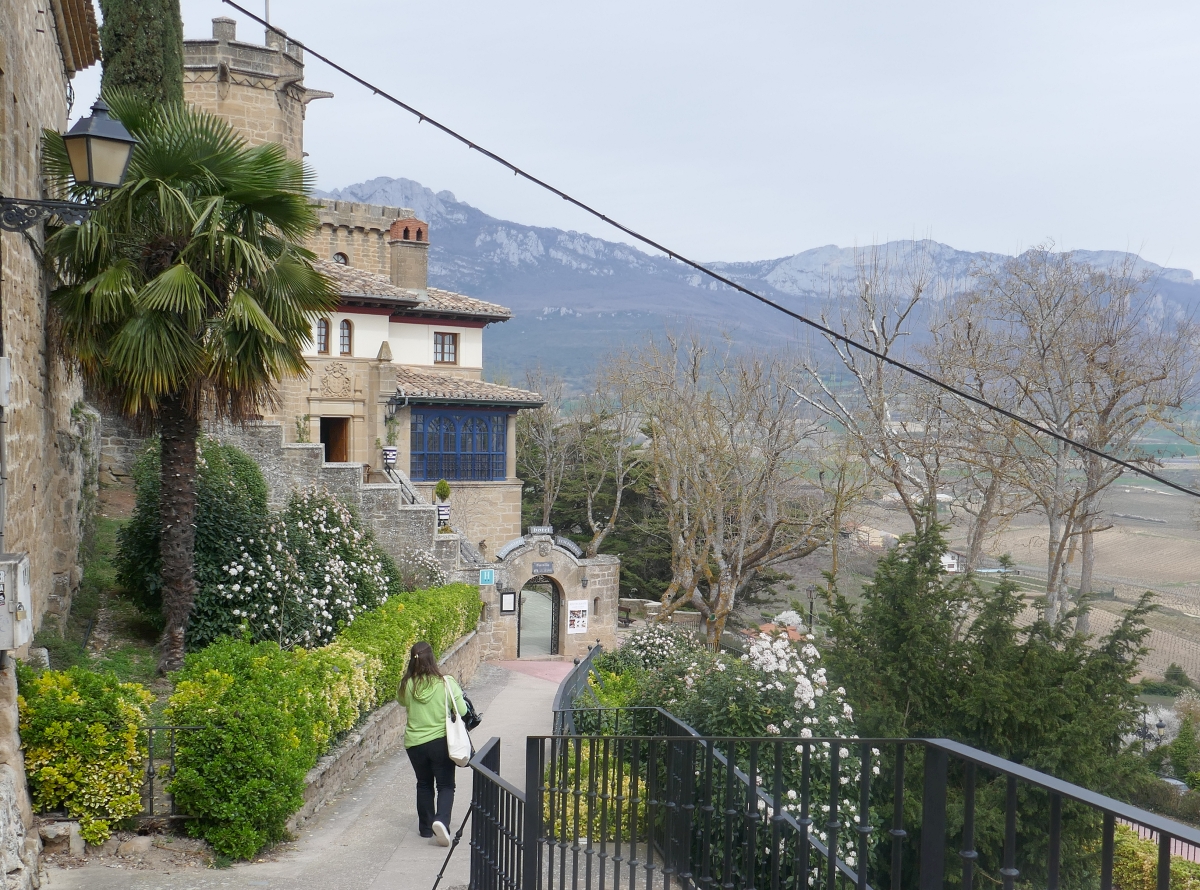
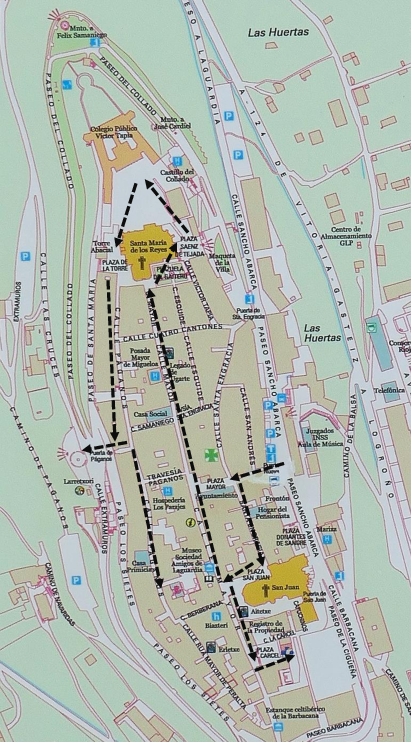
After the most unusual wine-tasting of our lives in the tunnels under Laguardia, we headed back to the open-air for an extended walk around the town. There appeared to be two local churches in this hill-top town and our walk took us in the direction of the second church on our itinerary, the Church of Santa Maria de los Reyes (‘Reyes’ translates as ‘Kings’.) We hadn’t heard much of the Knights Templar on our journey around Spain so far. They were a 12th century organisation of Knights who were a military order who fought in the crusades for the recapturing of Jerusalem from the Muslims. Apparently Santa Maria was once a monastery of this order of knights. Like the Church of St Juan at the other end of town, it had originally been built as a Temple-fortress. A referral to the map at the start of this blog shows that this church is almost at the other end of this walled town.
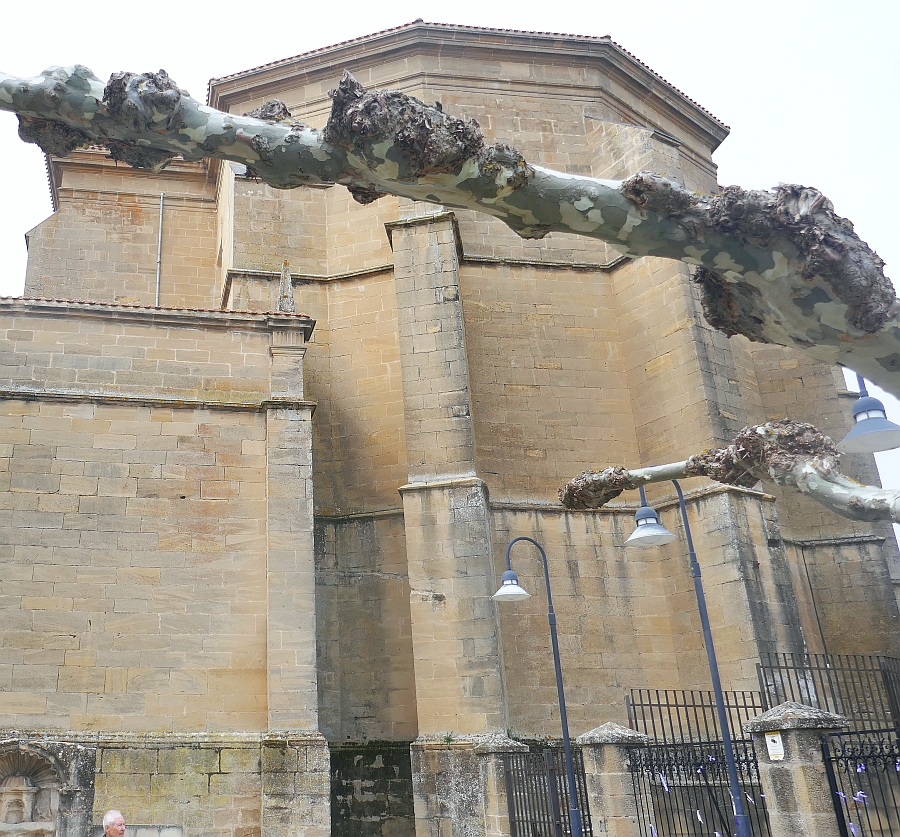
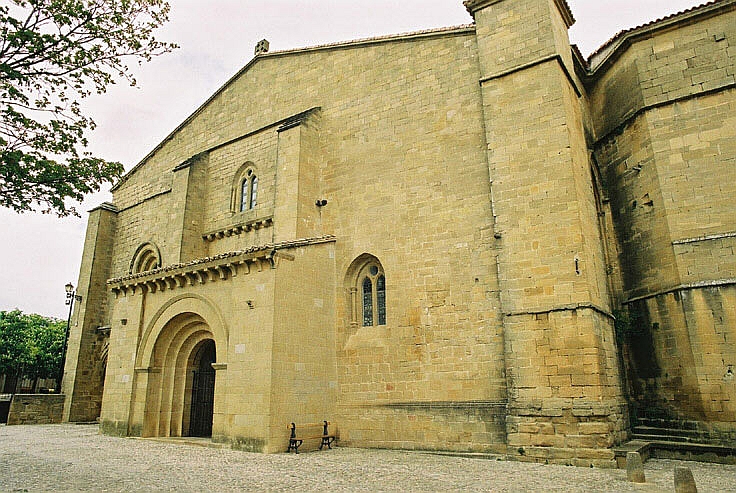

There are plazas on either side of the Church of Santa Maria. We walked first to the Plaza Saenz Detejada at the back of the church and here we found a curious pair of sculptures. They consisted of two bronze sculptured tables, one with bronze shoes and boots on them and the other handbags. I thought it might be some memorial to past tragedies like the bronze shoes along the Rhine in Budapest (a memorial to Jews executed during WW2 beside the river who were told to take their shoes off before they were shot!) However the only story attached to these sculpted tables that I could locate was that they were a tribute to those who travel a lot!?
On the other side of the church of Santa Maria there was another plaza called Plaza de la Torre. The name refers to the Abacial Tower seen below on the left, opposite the Church that was once used by the monks attached to the original abbey here.
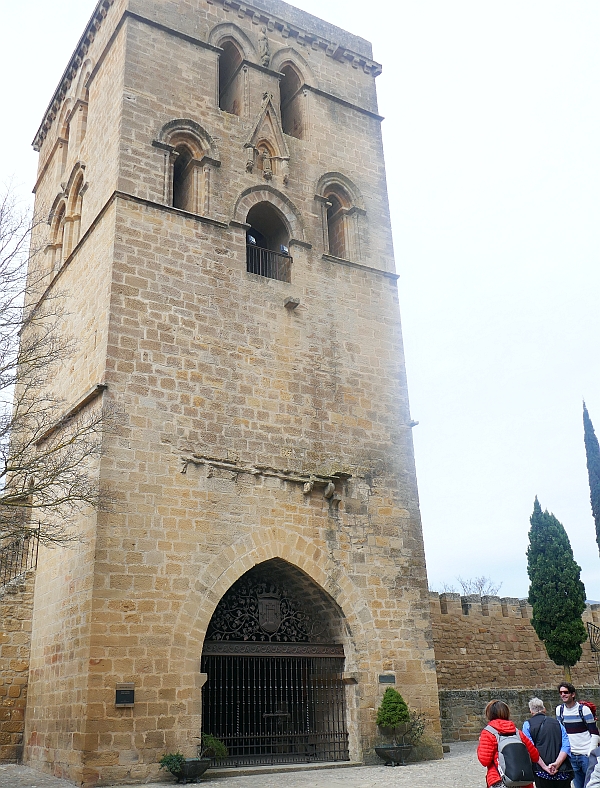
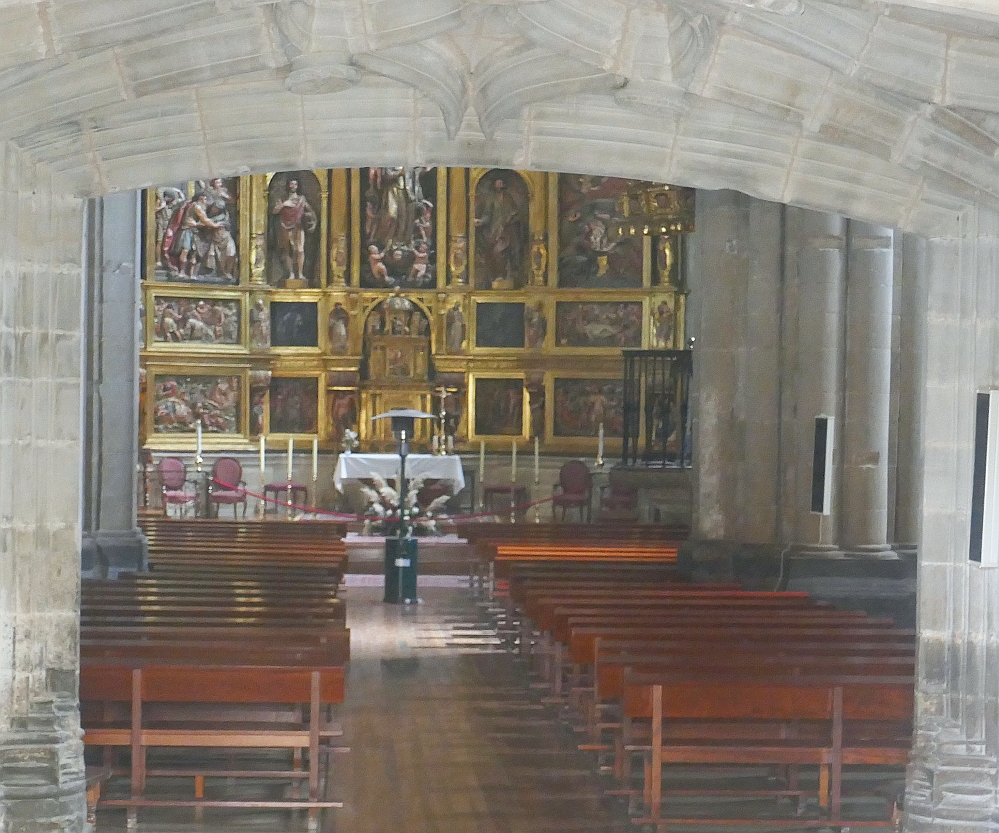
From the Church of Santa Maria, we headed down the alleyway beside the western wall of the town, heading for the southern end of town where a hotel lunch was waiting for us. Along the way we exited through the western gate (The Gate of Paganos) to a lookout area that was sited just outside this gate. The views over the farmlands outside the town were very impressive. The photo below is of the western wall of Laguardia taken from the lookout.


We left the lookout and returned to the alley that took us south to our lunch. The food was excellent and we were ready to return to where we were dropped outside the town walls for the next stage of our journey. We were heading north in a hired van towards San Sebastian for our next two days in Spain.
 FOGTRAVEL