
San Giorgio Maggiore is an island almost directly opposite St Mark’s Square in Venice and belongs to the administration area of the San Marco Sestiere. It lies east of the Giudecca and is on the Ferry route that takes travellers from San Zaccaria (just down from St Mark’s) down the Giudecca Canal all the way round to the start of the Grand Canal at Piazzale Roma. It is believed that the island was occupied at the end of the Roman period when the lagoon islands were starting to be occupied and Venice was founded. By 829 CE there was a church dedicated to St George on the island. A monastery was established in 982 CE when the island’s marshes were drained and the island’s lands stabilized. Today the island is famous for its church, San Giorgio Maggiore that was built in the 16th century.
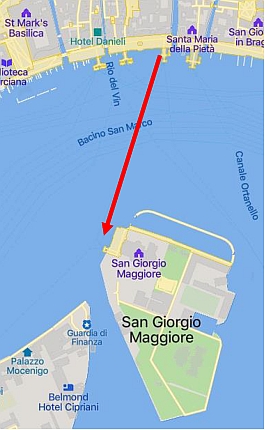
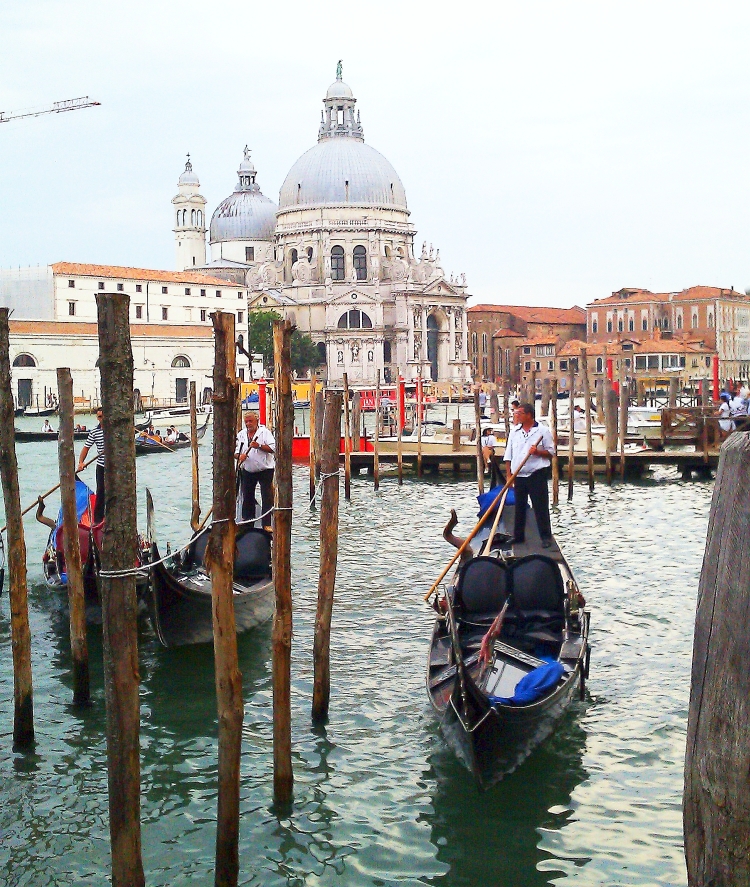
My favourite view of San Giogio is the photo on the left below taken from the edge of St Mark’s Square through the gondolas and their docking posts
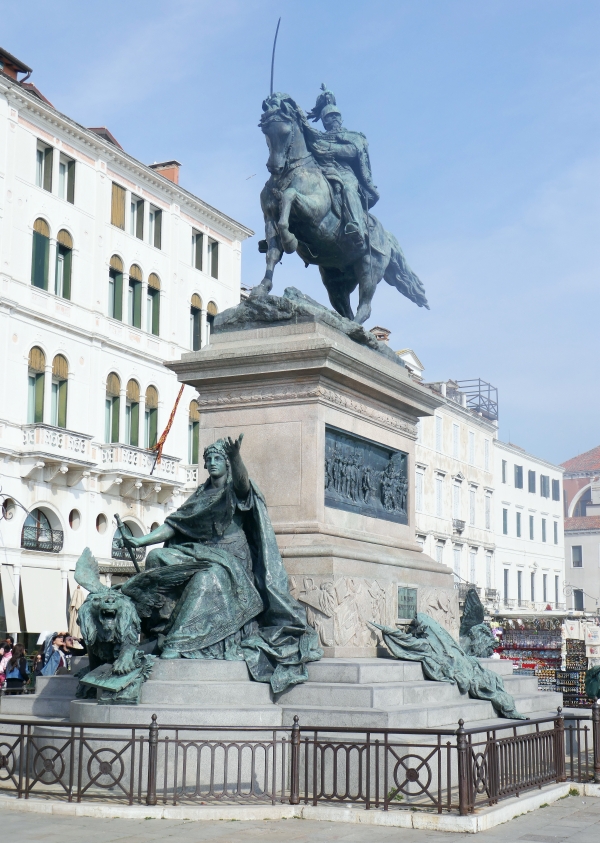
On the day I visited San Giorgio, I bought a return ferry ticket from Ferrovia to San Zaccaria, 9.50 Euro for each leg. After arriving at the San Zaccaria ferry stop in the Castello Sestiere, I decided to go and have a close look at the monument to Victor Emmanuel II (1820-1878), an equestrian statue completed in1887 by the sculptor, Eltore Ferrari.
Victor Emmanuel had been King of Sardinia-Piedmont from 1849 to 1861 when he became the King of united Italy until his death in 1878. He had significant involvement in the wars of the first half of the 19th century and was heavily involved in the events that led to the unification of Italy. The female statue at the front of the monument to the left is described as ‘Venice Trumphant’. By the time I finished my inspection of the grand monument, my ferry to San Giorgio had arrived and I could set sail across the canal to my destination.

The aerial photo above of San Giorgio shows the huge campo in front of the white marble façade of the church where my ferry deposited me. The presence of two beautiful churches across the canal from Saint Mark’s Square adds just another amazing feature to a trip to this centre of Venice. Perhaps Edward Foster in his famous novel, ‘A Passage to India’, is a little over the top when he writes, “…but oh those Italian Churches! San Giorgio standing on the island which could scarcely have risen from the waves without it, the Salute holding the entrance of a canal which, but for it, would not be the Grand Canal!”
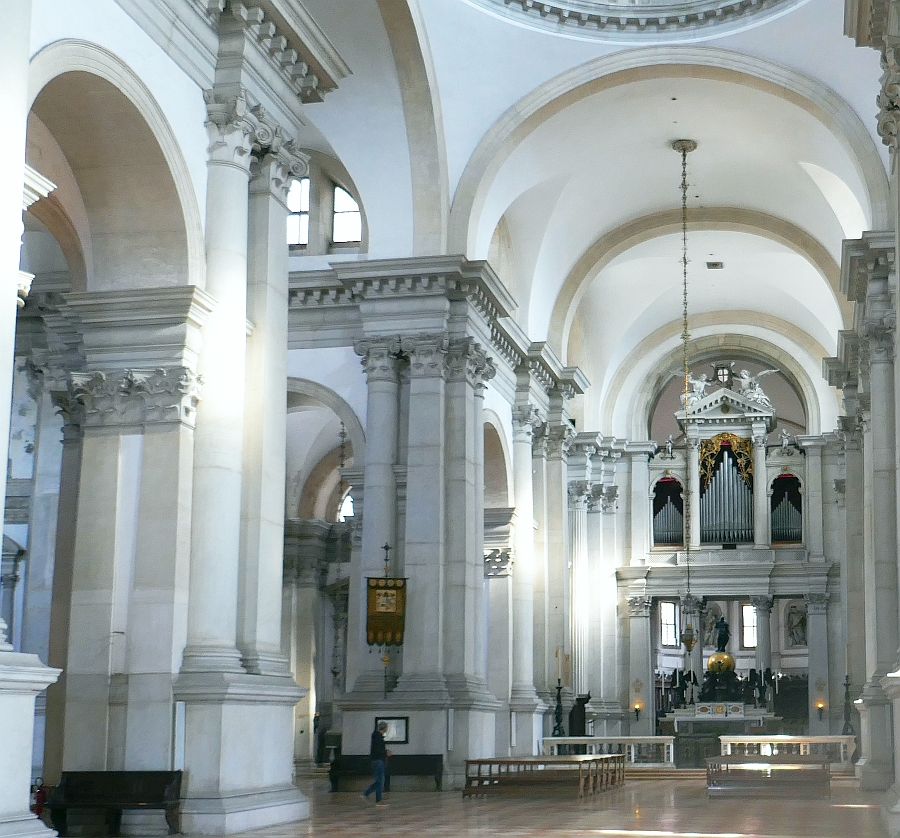

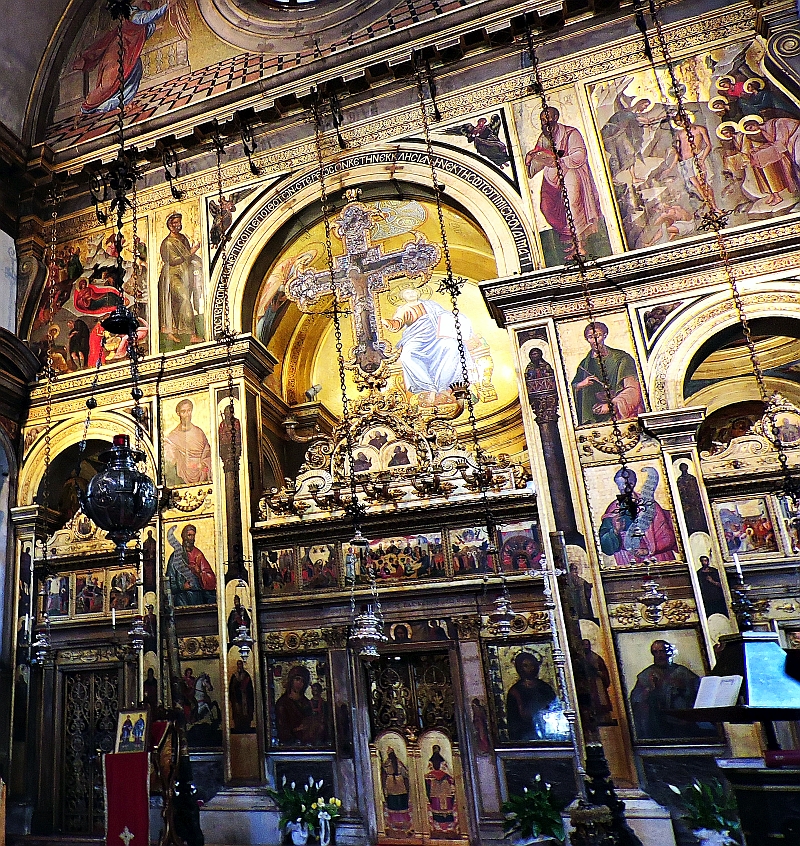
The interior of the church of San Giorgio Maggiore was a pleasure to visit. If you are a fan of Tintoretto, the great 16th century artist, there are a number of paintings of his to inspect inside this church. I was particularly intrigued by the unusual bronze statue group that stood above the high altar of the church (above right). The subject of the piece is the Trinity and the four gospel writers supporting a large copper globe upon which stood the sculptor’s (Girolamo Campagna) version of God the father.
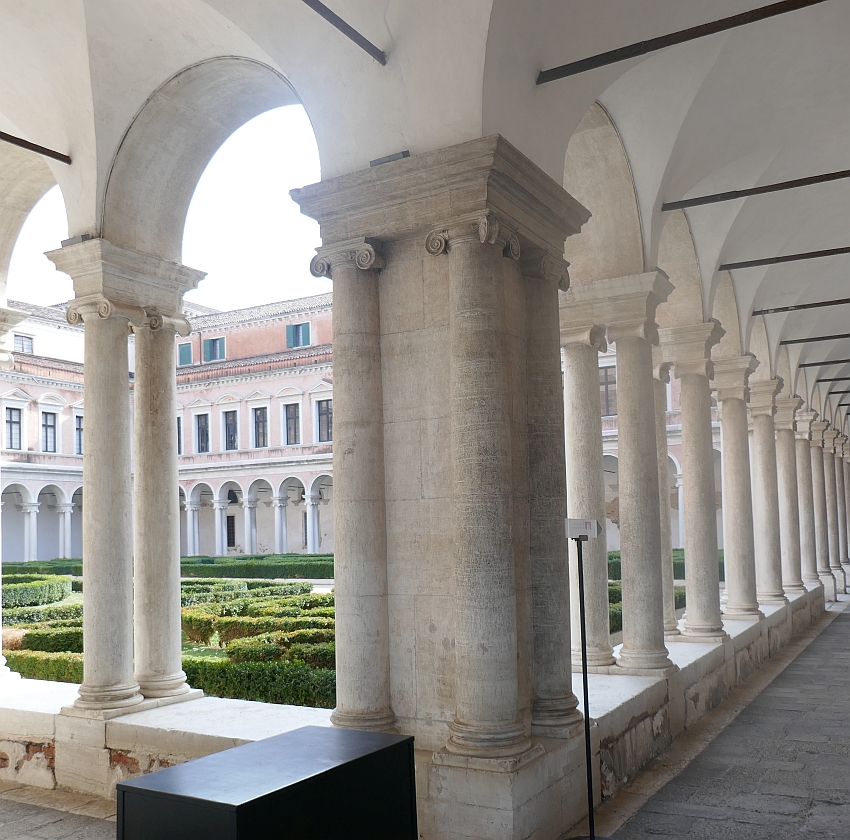
One of the reasons I had decided to visit San Giorgio, even before I had arrived in Venice was that I had watched the English Gardener, Monty Don’s TV programme called ‘Adriatic Gardens’. In this show he had visited the island of San Giogio and spent some time inspecting the Labirinto e Sala Borges built as part of the original monastery. Unfortunately, the closest I got to the labyrinth was when I took the photo to the left through the glass panel in the entry door…I was quite disappointed I couldn’t inspect it.
The small island of San Girgio is not just the site of the church of San Giorgio Maggiore. It also houses the George Cini Foundation which is a research centre for humanities studies and developing cultural heritage. A poster nearby to the doorway to the labyrinth explained that apart from the above activities it cared “ for an inestimable heritage of artistic, literary, musical and archival treasures” in its library.
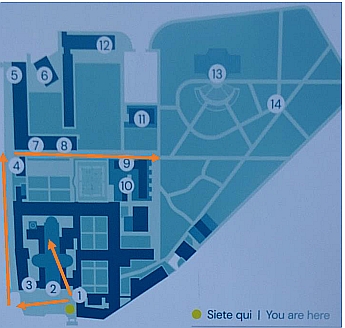
The island is also home to the Teatro Verde theatre (#13 on the map above right)
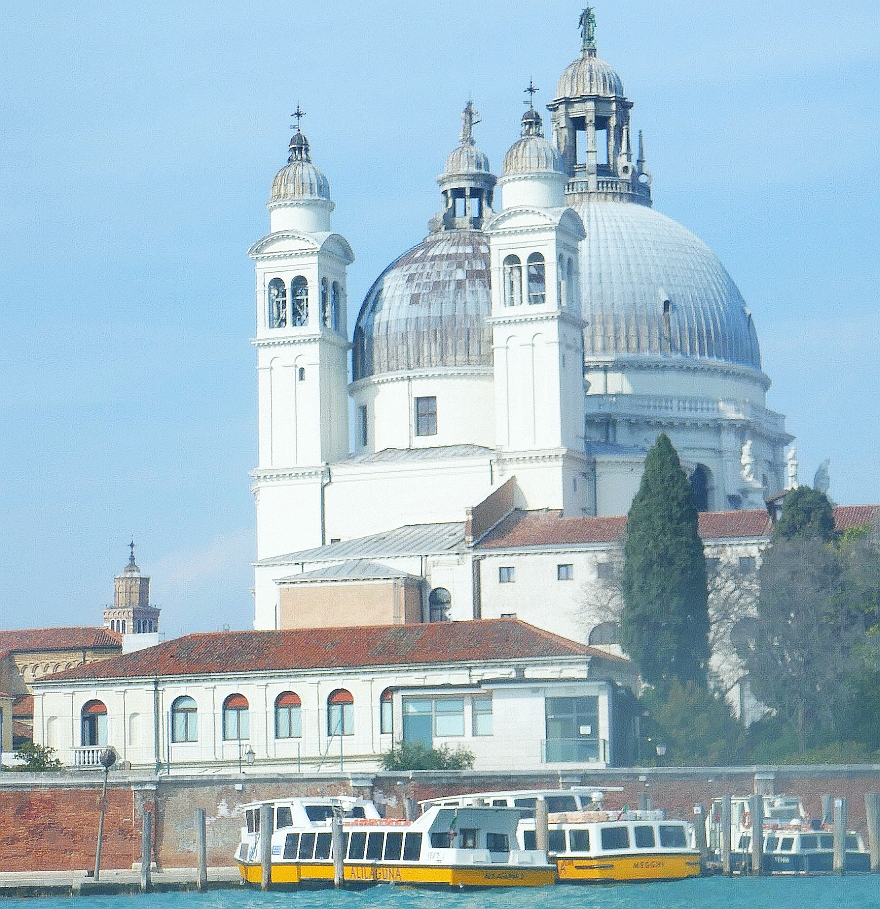
From the front of the church, I decided to see what I could find by going for a walk along the eastern edge of the island. This took me alongside a harbour where presumably wealthy locals were able to park their boats and at the same time sponsor some of the upkeep of the island. Down this side at #4 spot on the map above right is a very pleasant café with a great outlook across the Venetian lagoon. I continued on past the café and turned right at what looked like a country lane, presuming that I might be able to see more gardens or gain access to have a look at the theatre that was down this way. On my way back to the front of the island, I was very impressed by the photos I could get of the towers of Santa Maria Maggiore.
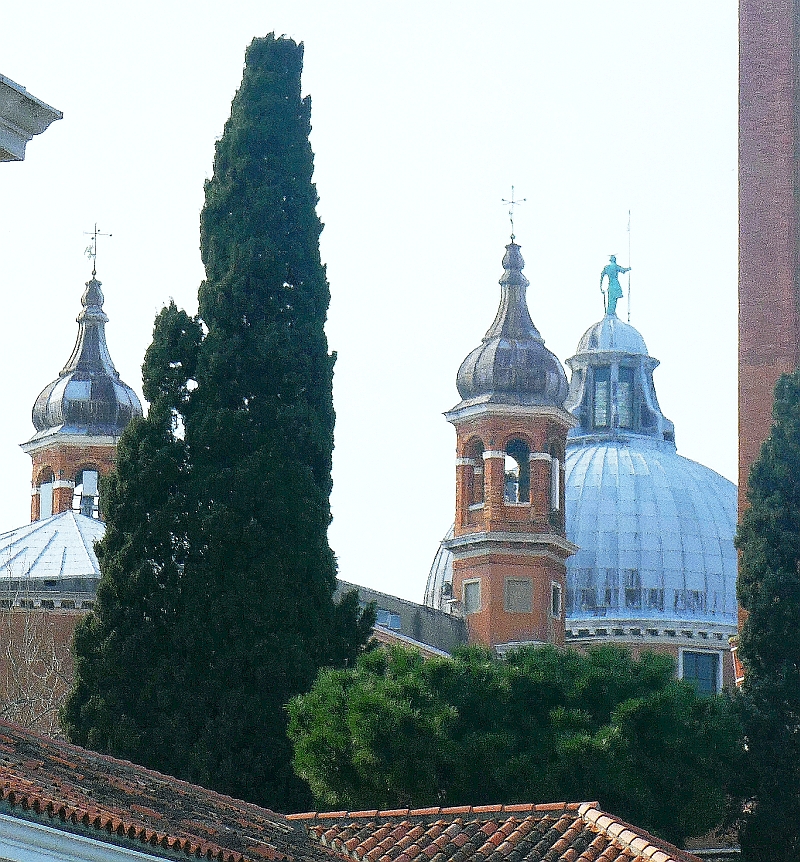
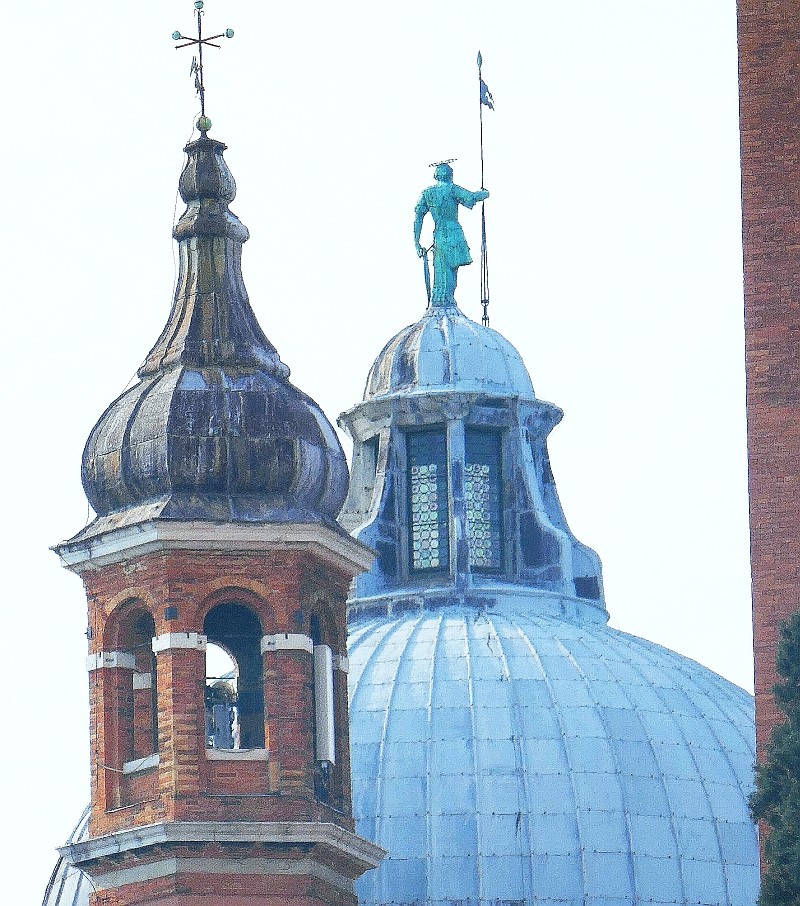
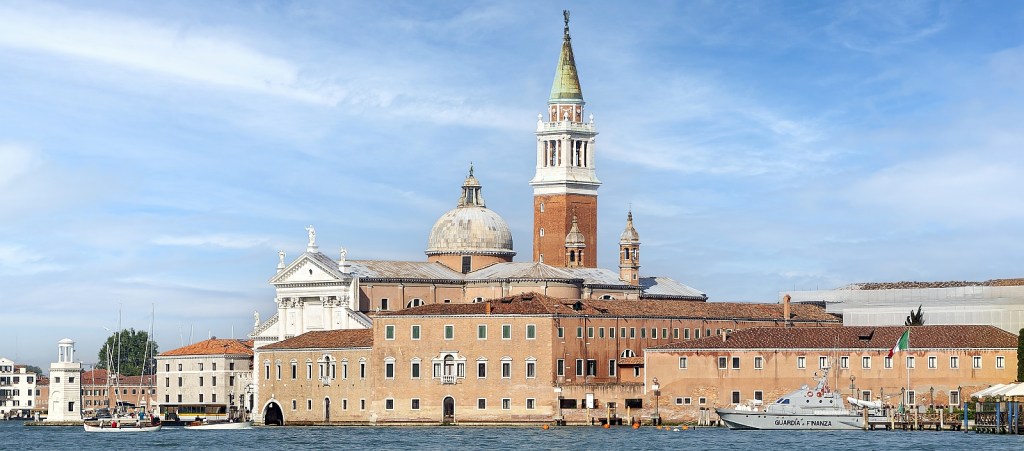
I was quite pleased that the ferry that stopped at San Giorgio was the ferry that would take me home to Ferrovia. The photo below of San Giorgio shows the ferry terminal at the left end of the photo but at the right hand end can be seen one of the boats of the Guardia di Finanza. This police agency has their own small port on the island next to San Giorgio. This section of the Italian police force deals with financial crime, smuggling and the illegal drug trade
APPENDIX 1: Some views from San Giorgio
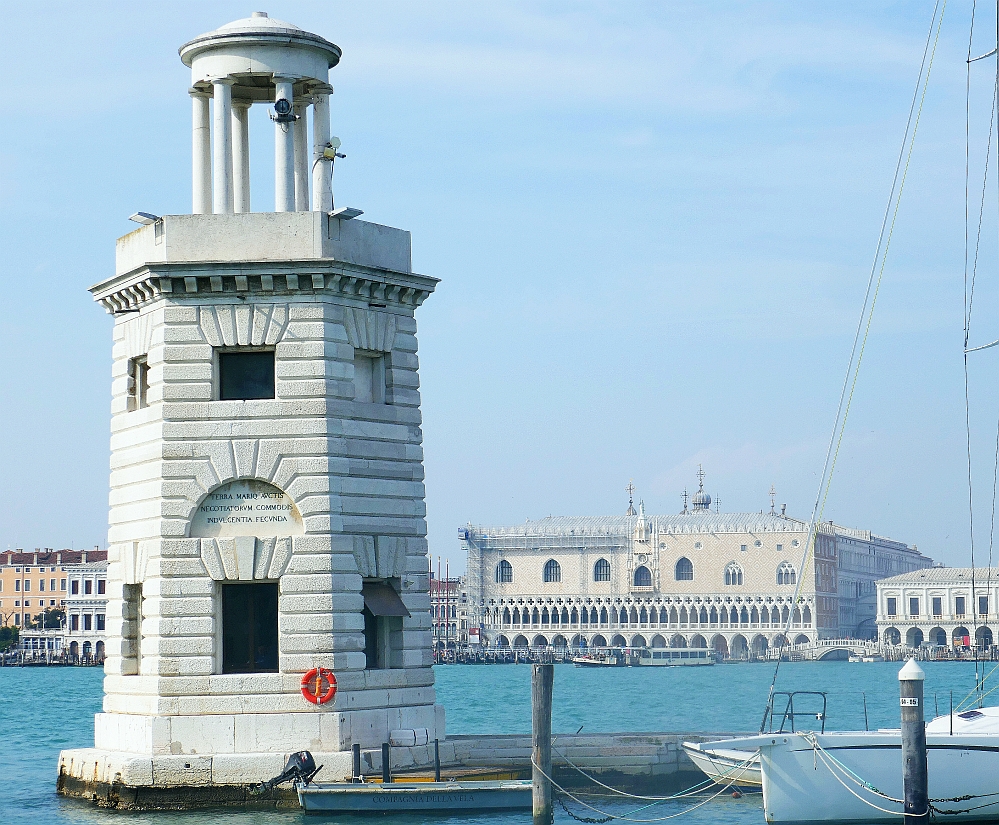
- A view of the lighthouse on San Giorgio, looking across to the Doge’s Palace in the background.
2. The View from San Giorgio over to St mark’s Square showing in particular the two granite pillars that hold the two patron Saints of Venice, St Mark and St Todaro.

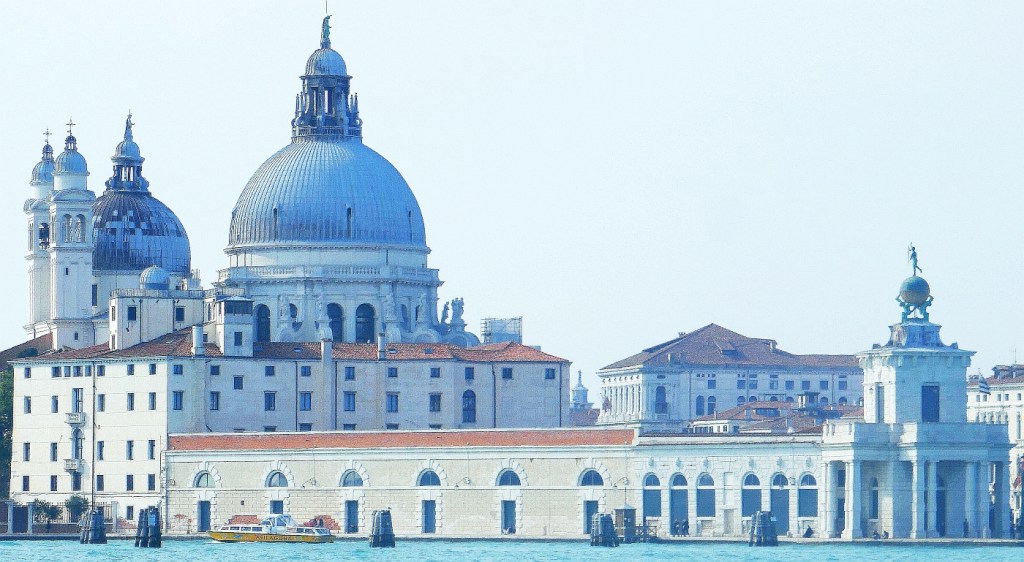
3. The view from San Giorgio over to the magnificent Santa Maria della Salute, which is just down the canal a little from St Mark’s Square.
 FOGTRAVEL