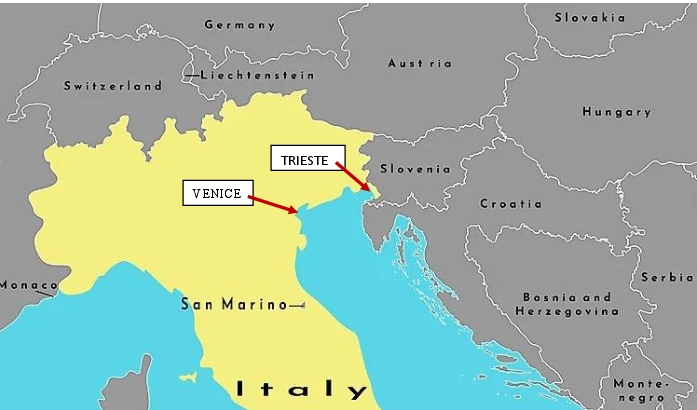
I was staying in Venice for a week in March 2023 and with time to spare, I decided I would visit some of the towns/cities within easy reach of Venice by the train network. My wife’s uncle was born in Trieste and he had told me many stories of his childhood in this northern Italian city. In particular, given that he was born just after World War 2, this was a particularly difficult time in this area and the United Nations was struggling to resolve the border issues between Italy, Yugoslavia and Slovenia. His family found themselves in territory allocated to Yugoslavia and decided they needed to escape back across the border into Italy and Trieste. I decided I needed to visit this city whose history of being dragged between the Austria-Hungarian Empire and Venice had been going on since 1382.
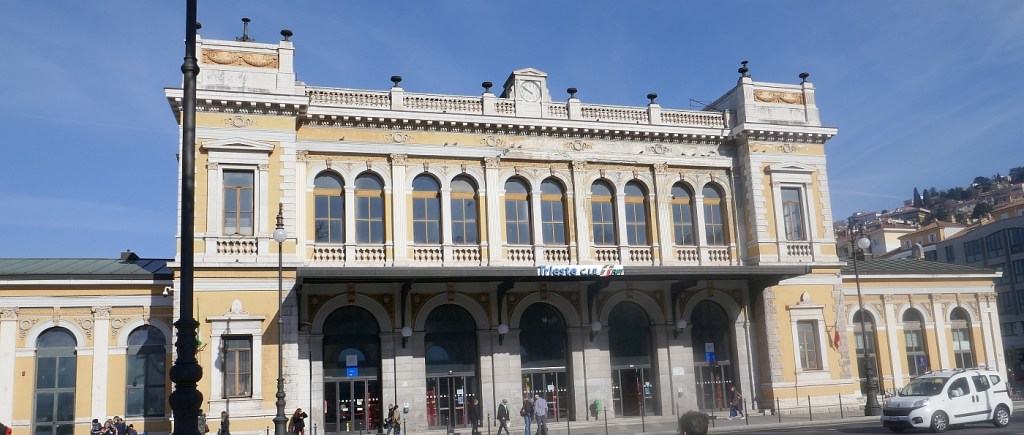

Having been to Vienna for a short visit a few years before, I remembered the story of Sissi, the very interesting and much-loved wife of the Emperor of Austria Hungary (Franz Joseph) from 1854 to 1898. She was assassinated in Geneva in 1898 by an Italian anarchist. As I was looking for the route to the centre of town at the time, I didn’t spend a lot of time checking out this memorial in the piazza opposite the railway station. However I did note that the monument was inaugurated in 1912 but it was taken apart after the war and stored before being finally relocated to this spot in 1997. I am not sure that Elizabetta would have appreciated the local rough sleepers using her monument as their bed at night
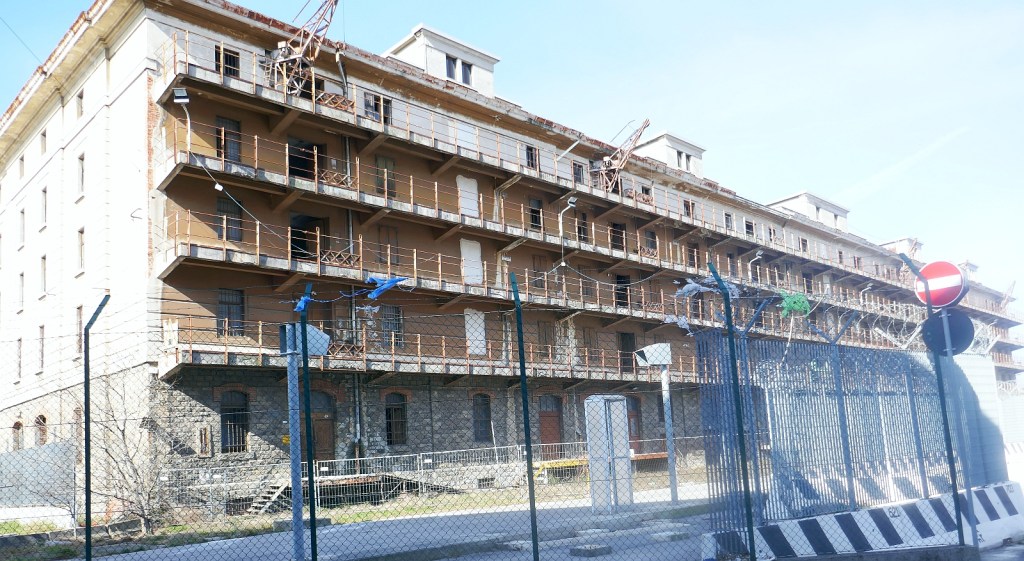
I had examined a digital map of Trieste before my journey there and it looked like the centre of the city had Adriatic sea-views not far from the train station. I assumed that there would be city-centre direction signs or even a map available in the train station to get me started. I ended up doing a circumnavigation of the streets around the station with still no inkling of the direction of the city centre. I decided I could smell the sea-air so I began to walk towards what looked like port buildings and followed a street that had decaying warehouses on either side. To my delight as I walked out of this street, I could see the Adriatic shoreline ahead and I knew that the Trieste city centre couldn’t be too far way.

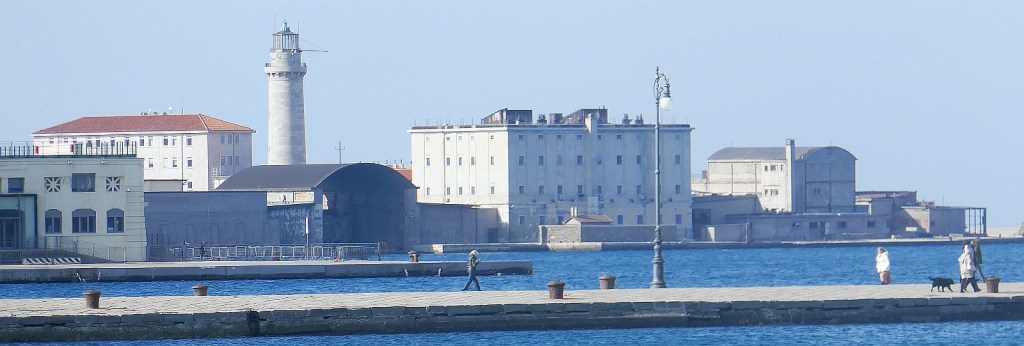
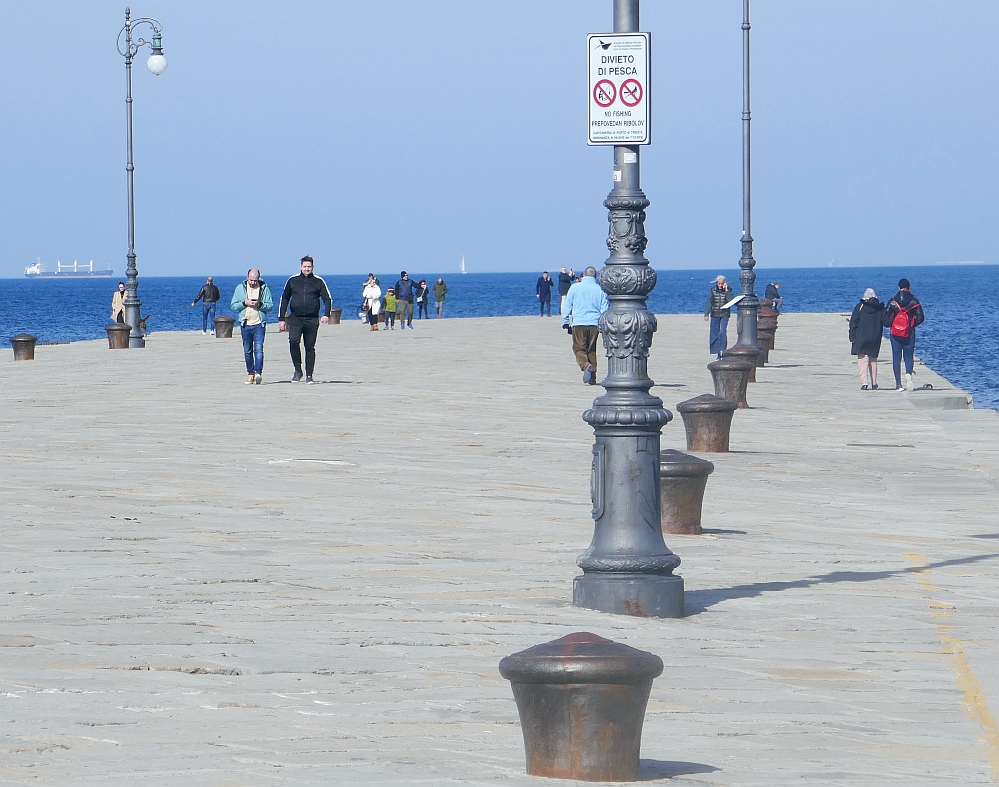
Rather than being distracted by the impressive buildings that lined the seafront of Trieste, I continued along the pathway that led along the foreshore of the city. The first site of local importance that I came upon was the Molo Audace which was a long pier that stretched out into the Adriatic, just over the road from the central piazza of the city, the Piazza Unita d’Italia. The pier was built over a shipwreck back in the 1740s and for two centuries, passenger and merchant ships docked here. The first ship to enter the port at the end of WW 1 was an Italian Navy ship Audace and so the pier received its current name, Molo Audace. It is a popular place for promenading by the locals and there were a lot of people out for a morning walk when I strolled out to investigate the Molo.

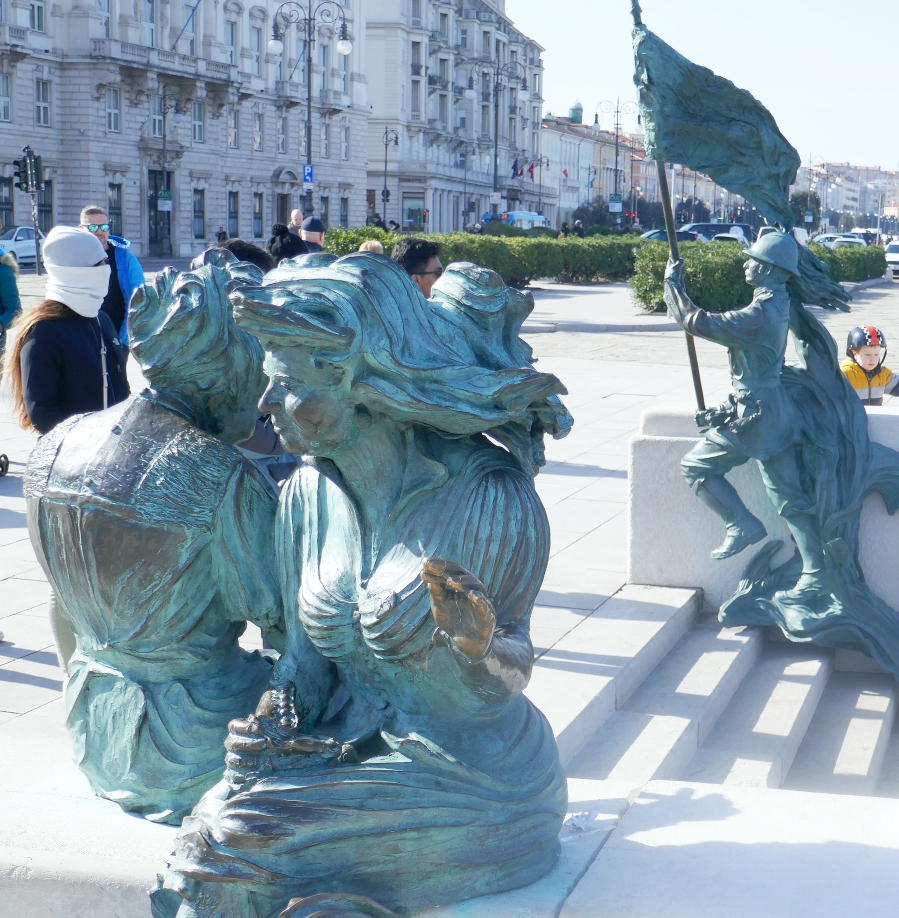
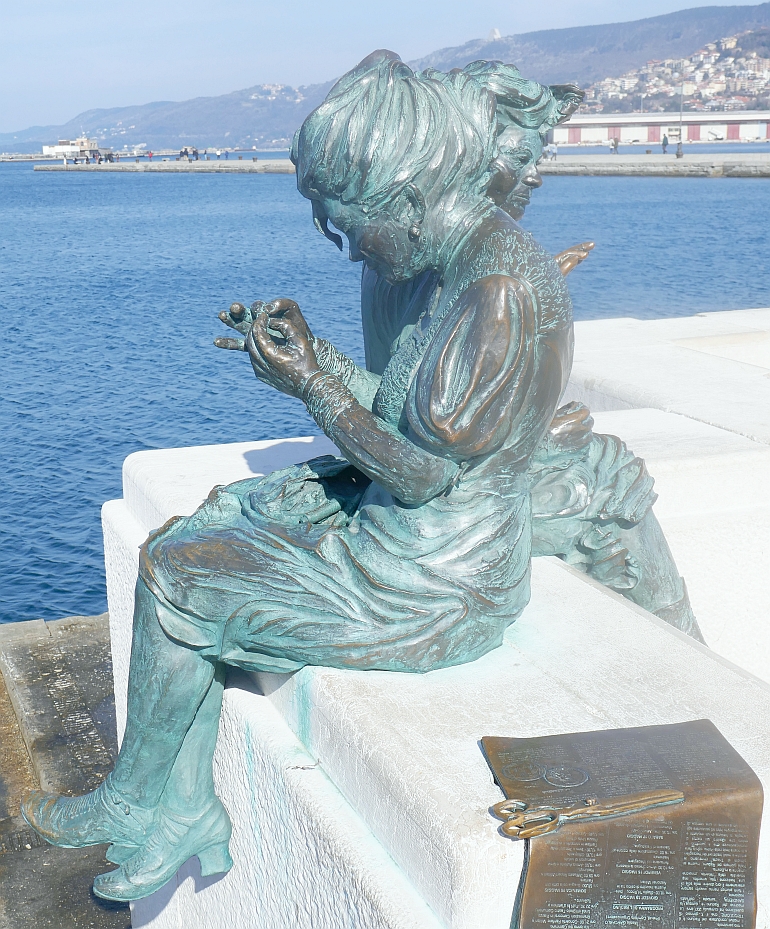
A little further along the shorefront is the ‘Royal Stairway’ (Scala Royale) that is a set of steps coming up out of the water and at the top of them are a series of gorgeous bronze statues. One of the statues represents a Bersaglieri, an Italian Soldier with a flag to remember the landing of the Italian Army in November 1918. The other statues are of Trieste girls who at the end of WW1 had been sewing tricolour flags for the celebrations.
The target for my walk along the seafront of Trieste was a building in the distance that looked like a church with a steeple. On arrival I discovered that it was in fact the Civic Marine Aquarium of Trieste. It had been established in 1933 and is described as an ‘open cycle aquarium’; the water circulation system for the tanks is pumped from the sea and after use, is recycled back into the Adriatic.

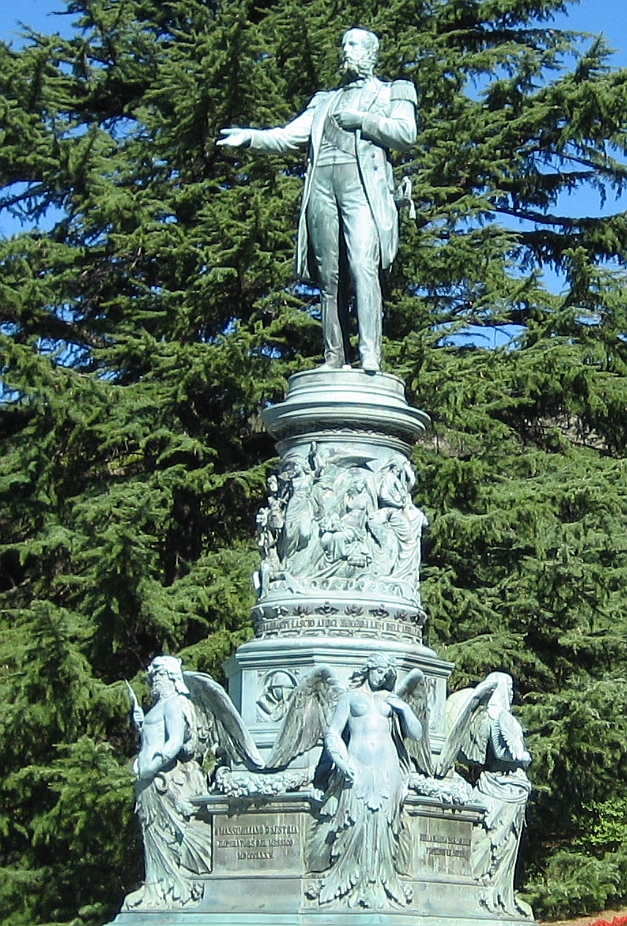
Across the road from the Aquarium is the Piazza Venezia. It is a large square and its most prominent feature is a statue of the brother of the Emperor of Austria at the time, Franz Joseph I. The monument holds a statue of his younger brother, Maximilian I of Mexico. The 19th century was a time when new nations were being born and ‘needed’ hereditary royalty to lead them. Europe had a series of these new monarchs from neighbouring royal families (eg. nearby Greece) but luck wasn’t with Maximilian when he accepted the job of becoming the first Emperor of Mexico. He lasted three years in the job before he was executed by a firing squad. Franz Joseph the Austro-Hungarian Emperor came to Trieste for the inauguration of this statue in 1875, 5 years after the death of his younger brother.
From Piazza Venezia I walked back down Riva Nazario Savro to visit the Piazza Unita d’Italia, perhaps the most important Square in Trieste. The first building I noted on arrival was originally called The Palace of the Austrian Lieutenancy but is today the Prefecture of Trieste. The original building on the site was built in 1764 by order of Empress maria Theresa of Austria. This building was demolished in 1899 and replaced by the current building.

I wandered down the right-hand side of the Piazza past another impressive palace, the Palazzo del Lloyd Triestino. It caused me great excitement when I arrived outside the Trieste Infopoint (Tourist Bureau). I was able to enter, obtain a couple of maps and various other info docs and I left a confident tourist, knowing that I would now be able to find my way around Trieste without getting too lost!
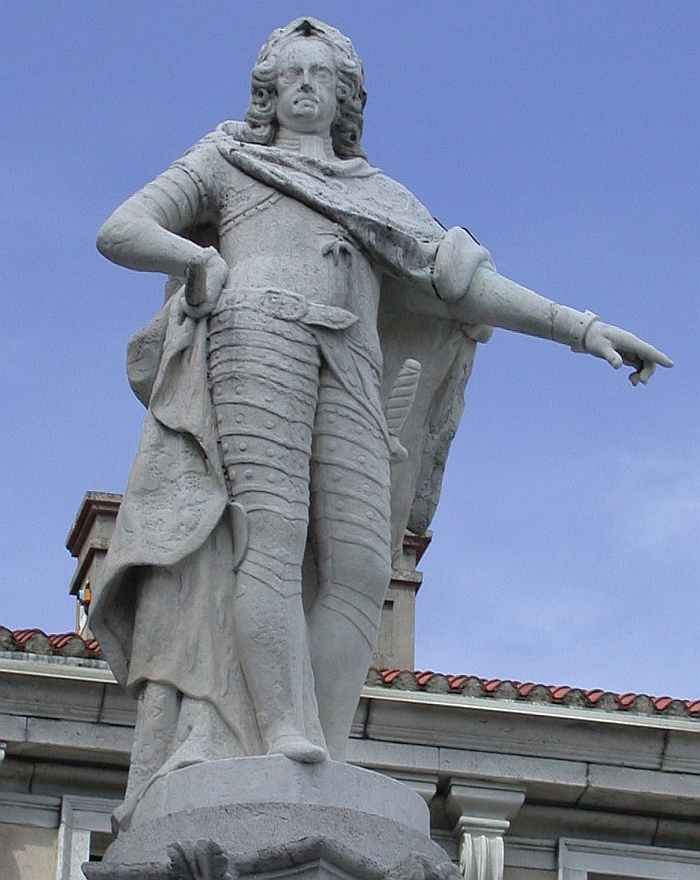
As you would expect of a piazza titled Unita d’Italia, there were a few prominent sculptures of prominent leaders from the past. The first one I inspected was the tall pylon down in the corner of the square that held a statue of the Hapsburg Emperor Charles VI (1711-1740). In the image on the left below, he is pointing to the sea where he established a free port. The statue was erected in 1719 when he visited Trieste.
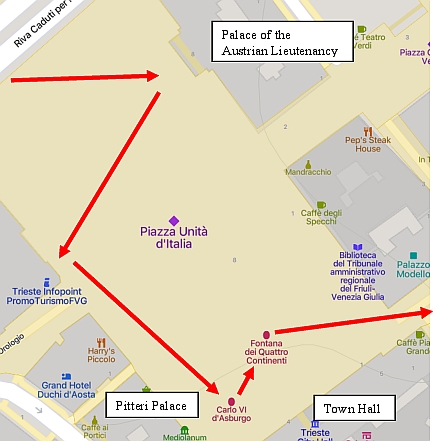
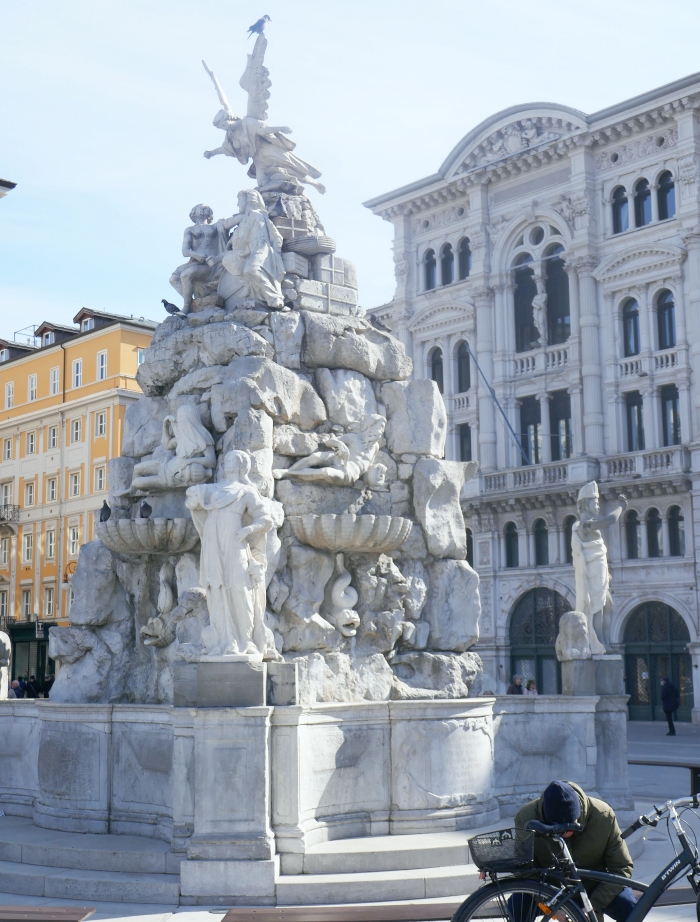
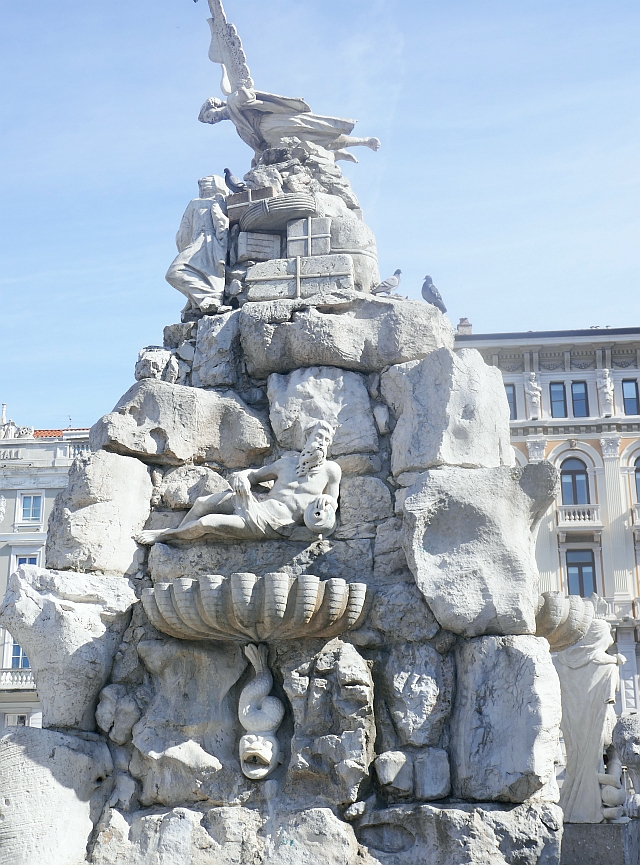
The other significant sculpture in this square is called the Fountain of the Four Continents. A winged figure stands on top and the large pedestal is a conglomeration of bales, barrels and boxes! On the four corners of the statue there are animals and people representing Europe, Asia, Africa and America. The structure was created in the 1750s and 20 years later the English navigator, James Cook, was the first European to discover the coastline of Australia, the fifth continent. Of course this European discovery pales into insignificance when it is considered that the ancestors of the indigenous people of this continent may have arrived there more than 65 thousand years before Cook’s arrival. I must admit I found the monument fairly ‘overblown’, perhaps because I was annoyed by the absence of my birth continent! Even the locals decided back in 1925 that it had to go but it was saved by the protests of ‘local cultural figures’. However when Mussolini came to town to speak in this piazza in 1938, it was dismantled and didn’t return to the square until 1970.
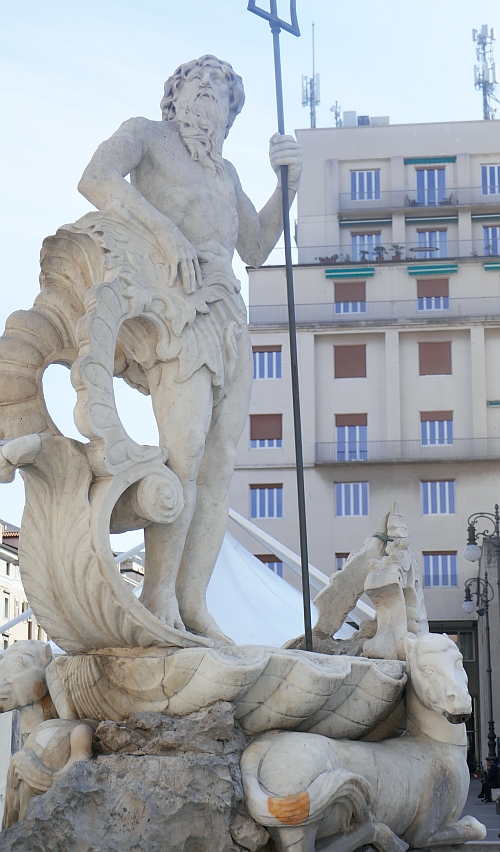
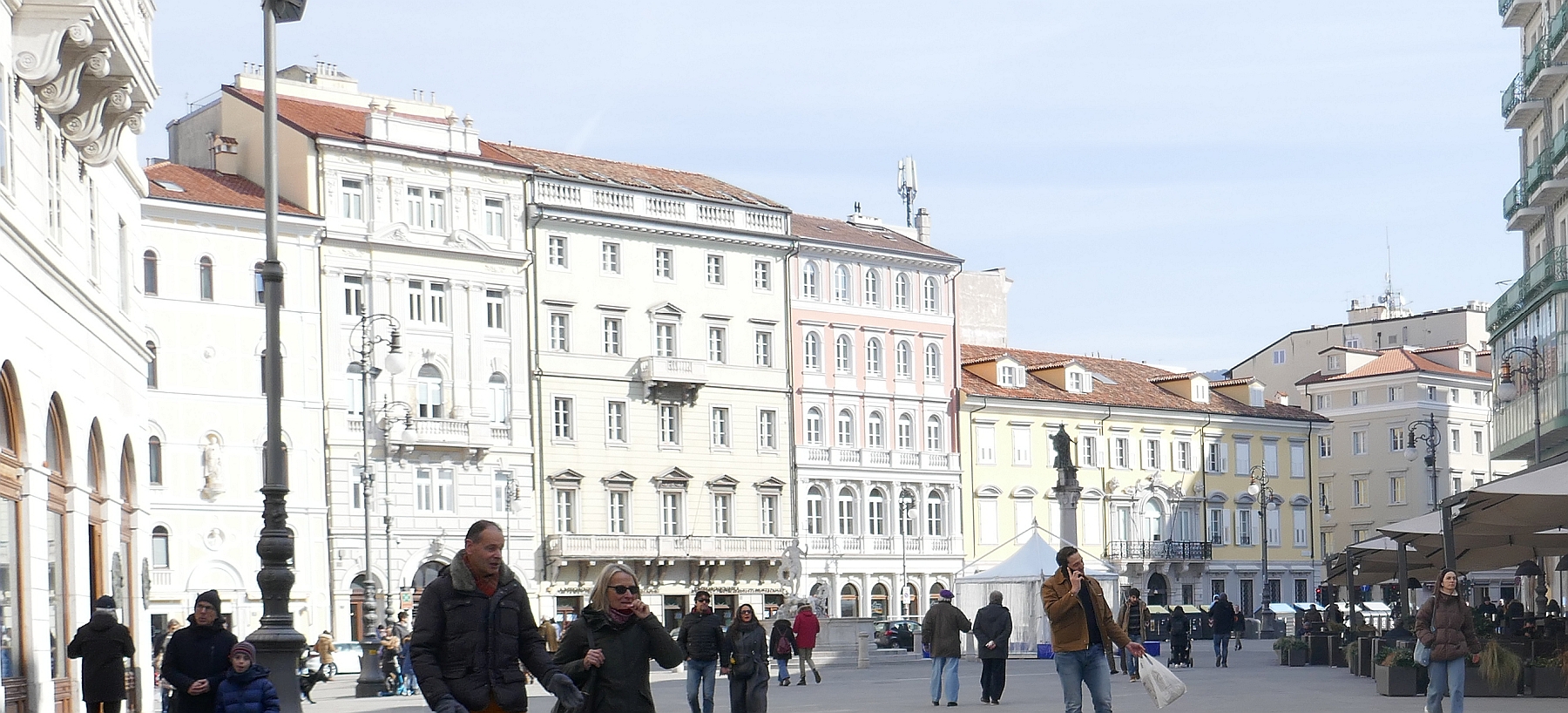
From the back of the Piazza Unita d’Italia, I was able to walk between the ‘Model Palace’ and the Town Hall into a different piazza, Piazza della Borsa (Stock Exchange Square). The photo above right shows this wide piazza with business establishments and cafes on both sides of the area. This commercial centre of Trieste developed in the 18th century; the Trieste Commodity Exchange was founded in 1755. The building that houses the exchange looks like a miniature Roman Temple with a four-column portico out the front and a fountain featuring Neptune nearby (Image to left above).

The long association between the Austro-Hungarian Empire and Trieste keeps being emphasised by the number of statues of Emperors that have been erected in this city over the centuries. The next one we encounter is Emperor Leopold I (1658-1705), the second longest ruling Hapsburg Emperor. He is installed on a pylon further along in Piazza della Borsa as it curves round to merge with Corso Italia.
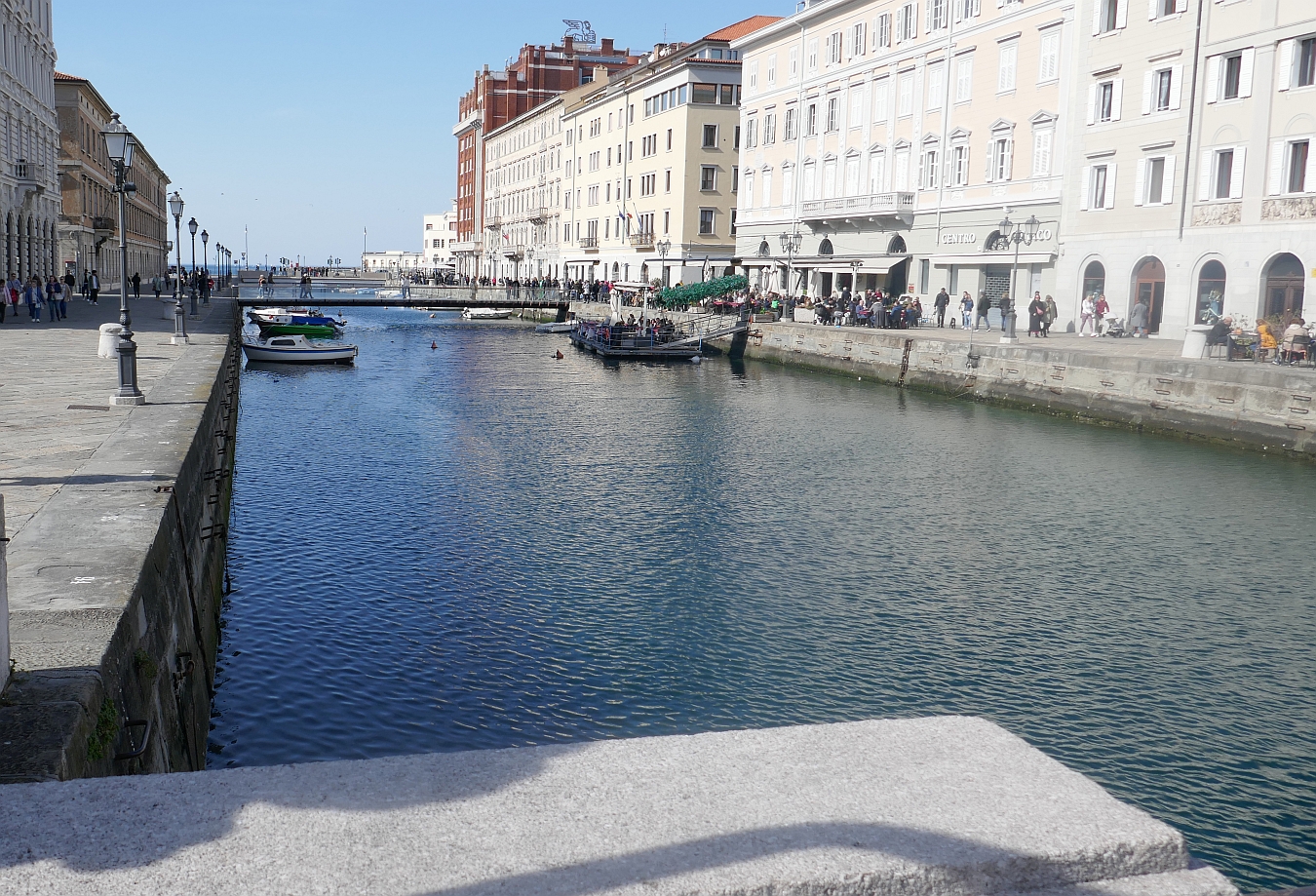
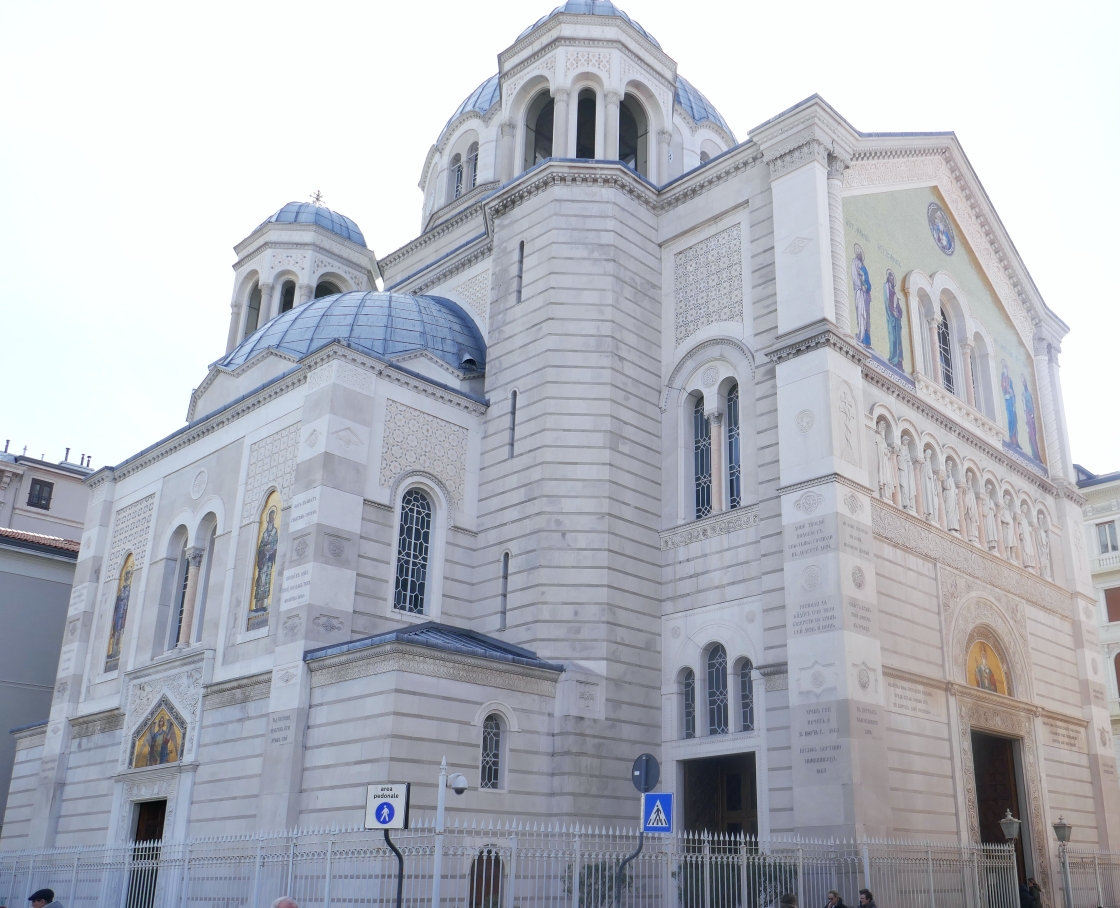
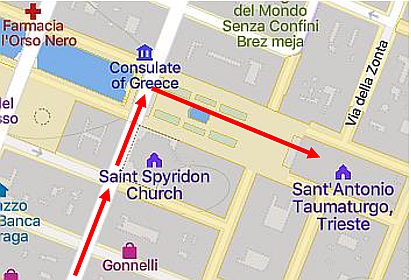
I walked up two blocks on Corso Italia and then turned left onto Via S.Spiridione, which led me up to the end of the Canal Grande di Trieste (Image below left). On the corner of Via S.Spiridione stands a simply beautiful Orthodox church with large areas of ornate mosaics on the walls. It is apparently the first Orthodox Church built in Trieste. It was originally shared between Greek and Serbian Communities but the two groups built their separate churches in the 19th century. Translated, this church’s official name is the Serbian Orthodox Church of San Spiridione.
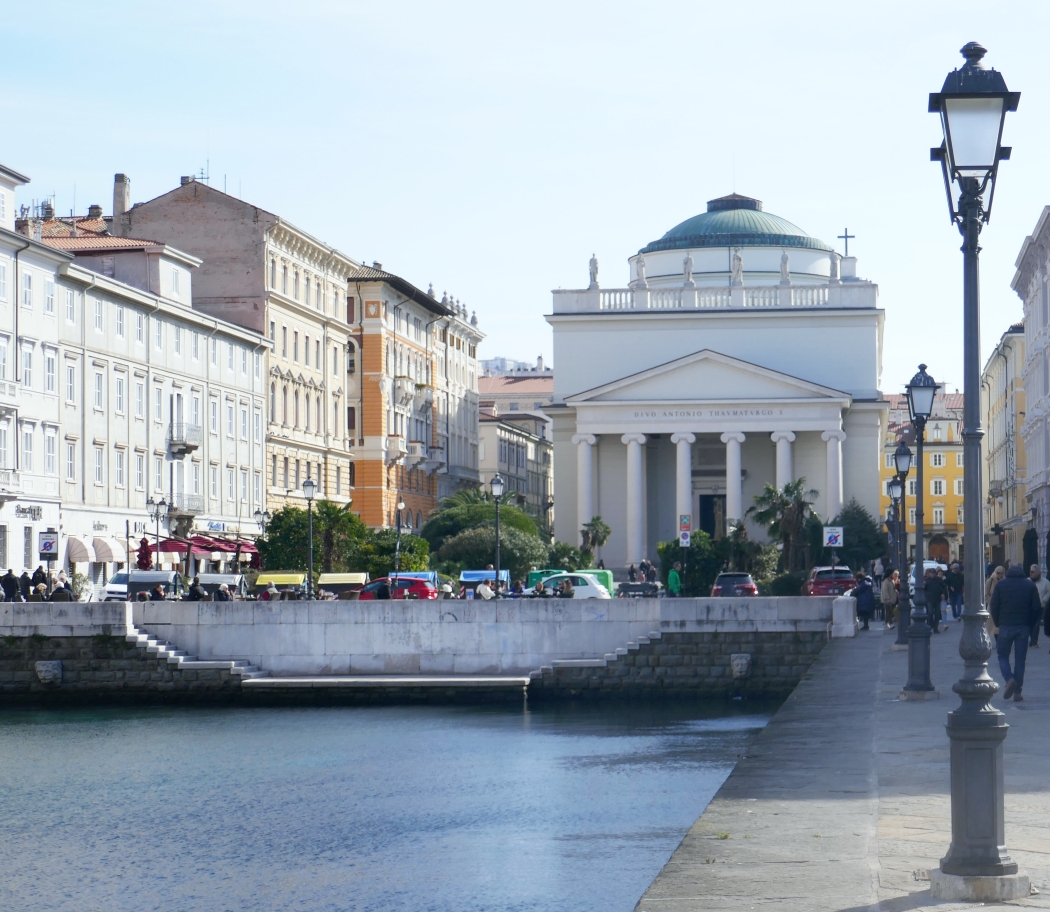
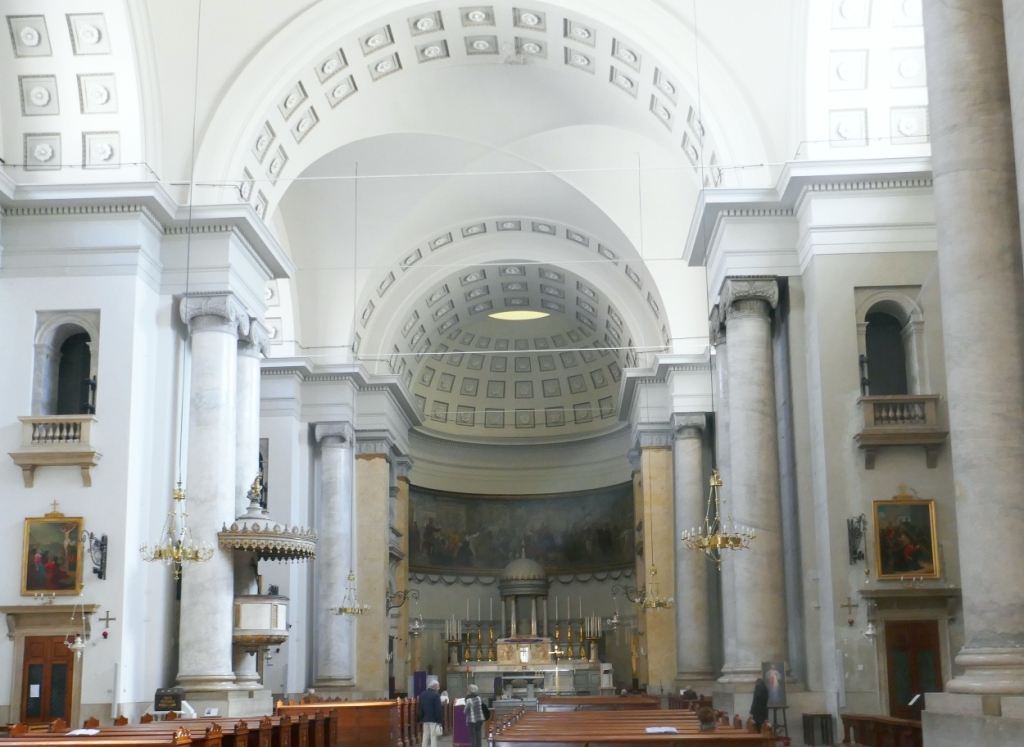
From the end of the Grande Canal, I walked up towards another large church further up the street in a section of Trieste called Borgo Teresiano. This structure was the City’s largest Catholic Church and is called the ‘Church of Saint Antonio Taumaturgo’, built in the first quarter of the 19th century. The design of the front of this church reminded me of the stock exchange building seen earlier. Rather than having a four column portico, this one had a six column frontage that made it look more like a Roman Temple than a Catholic church. However once I entered and had a look around, the inside of the church looked like a traditional Roman Catholic church.
 FOGTRAVEL