An Unplanned Stop at the Altamira National Museum and Research Centre.
As mentioned in the previous blog about our stop in Bilbao, our van driver was also mein host at the hotel where we were staying in Cosgaya, a small hamlet in the Picos de Europa National Park which was our original destination after leaving Bilbao. As we were chatting while driving along the northern coastline of Spain, our guide mentioned that we would be driving fairly close to the site of the Altimira Cave, a very famous site where early humanity had left traces of their hunting artistry on the walls of a cave. We had spent some time in the Dordogne area of France visiting the Lascaux caves in 2011 and I had always hoped to visit the other famous cave site in Europe where the evidence for early humanity’s high intelligence was illustrated on cave walls. After hearing of our interest, our guide immediately agreed to take us there.

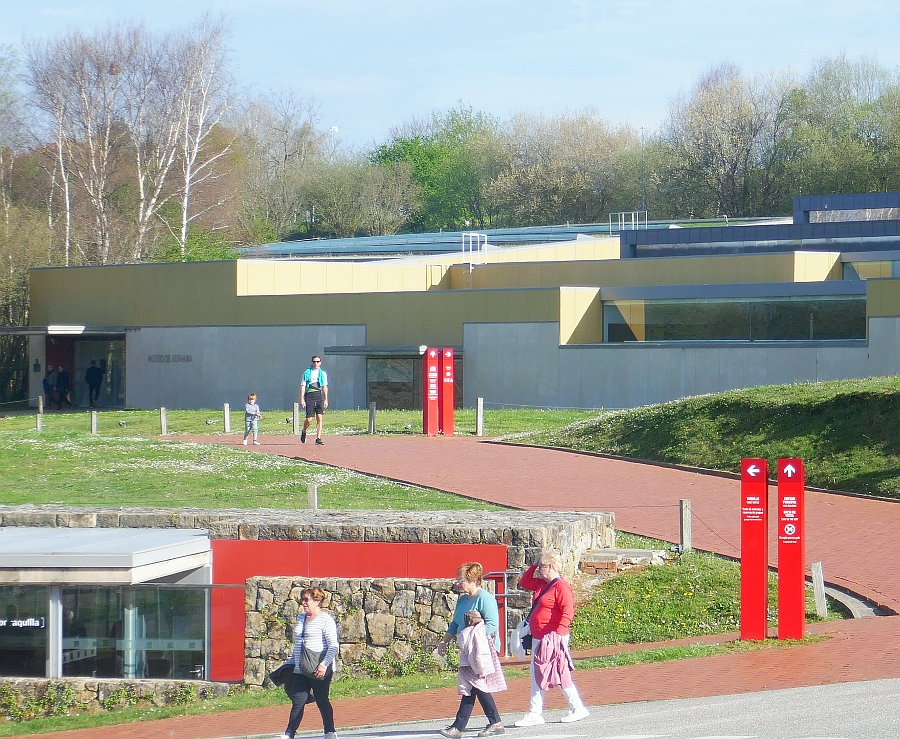
In 1879, an amateur archaeologist discovered the Altimira Cave featuring charcoal drawings and polychrome paintings of ancient local animals. The earliest paintings were an astonishing 36,000 years old! There was controversy for the next 20 years of the 19th century after experts had decided they were forgeries as “prehistoric humanity lacked sufficient ability for abstract thought!” This pointless controversy continued until the start of the 20th century, when due to tlocating large numbers of other caves in Northern Spain where pre-historic paintings were found, leading anthropologists accepted the authenticity of the Altimira cave paintings.. The story of the effects of human visitors on pre-historic cave paintings was the same in the Lascaux Caves as it was in Altimira. The paintings were damaged by carbon dioxide exposure and water vapour so both Altimira and Lascaux caves were closed and duplicate caves were constructed for the enjoyment of passing tourists such as ourselves. At Altimira, there is now a museum that can be visited and a recreation of the cave itself for visitors to both see and learn about these fascinating reminders of the long existence of humanity in Northern Spain. (Below left).

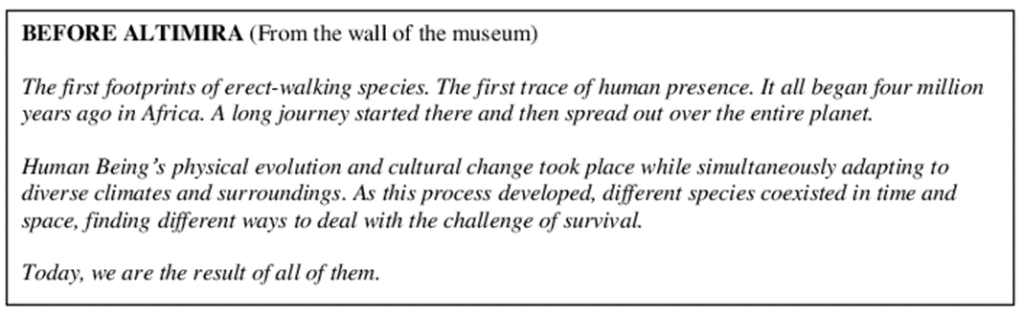
The structure of the museum at Altimira had been thought through carefully. On entering the museum the visitors are given a crash course in Anthropology, particularly key information about the different species of humanity that wandered out of Africa millions of years ago. The main four species were well illustrated. In the images below, the oldest species of ‘Homo’ on the left (Homo Habilis) emerged from southern and eastern Africa in the period spanning 2.1 to 1.44 million years ago. The second image is of Homo Heidelbergensis which was the species that populated Europe between 600,000-200,000 years ago. Then came the third species, Homo Neanderthalensis who emerged in Europe and the Near East between 250,000 and 28,000 years ago. The fourth species were the anatomically modern humans who appeared in Africa 300,000 years ago and reached Europe 40,000 years ago. The arrival of Homo Sapiens is thought to have decimated the Neanderthals who disappeared around 12,000 years ago.


The above images courtesy of Altimra Museum.
The Cave of Altamira and the other Paleolithic caves of Northern Spain were included by Unesco on its World Heritage List because they represent “the apogee of Paleolithic cave art that developed across Europe, from the Urals to the Iberian Peninusula, from 35,000 to 11,000 BC… The caves are inscribed as masterpieces of creative genius and as the humanity’s earliest accomplished art. They are also inscribed as exceptional testimonies to a cultural tradition and as outstanding illustrations of a significant stage in human history.” (UNESCO Website)
The replica of the Altimira Cave is reached from an internal hallway from the Museum. After browsing the information in the museum, we were then escorted into the cave and around the walls as our guide illustrated the paintings of the local paleolithic animals that once roamed Northern Spain.
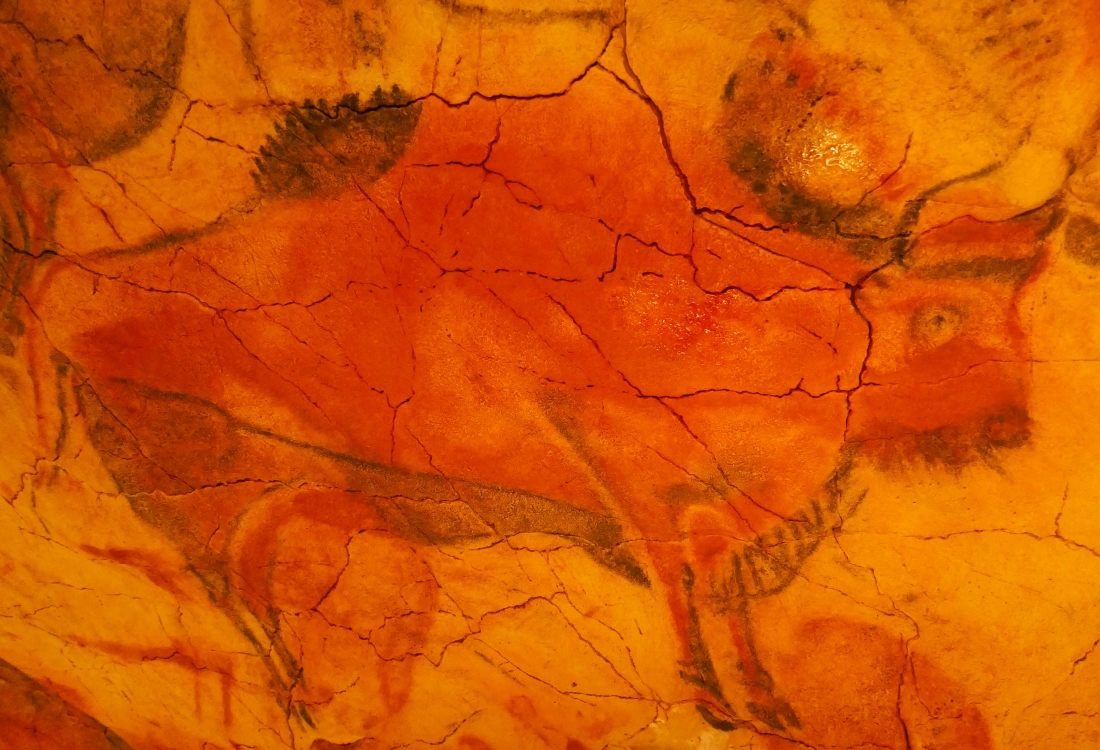

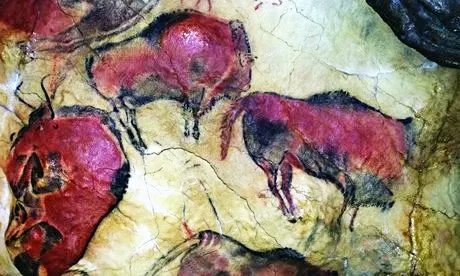

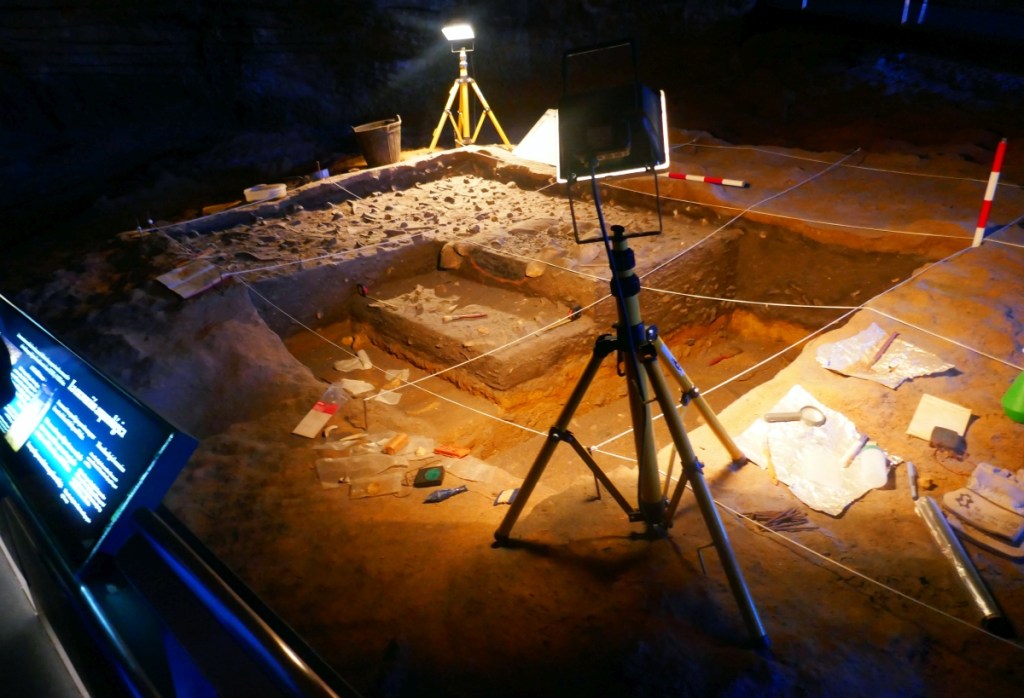
The original Altimira Cave is around 1000m long and is made up of a series of twisting passages and chambers. The replica cave is by necessity a small version of the original. As well as replicating some of the famous animal images, they have also illustrated the archaeological work that was done at the cave mouth where the stone age folk obviously camped. Lots of stone artifacts were uncovered by this work and were displayed in the museum.
 FOGTRAVEL