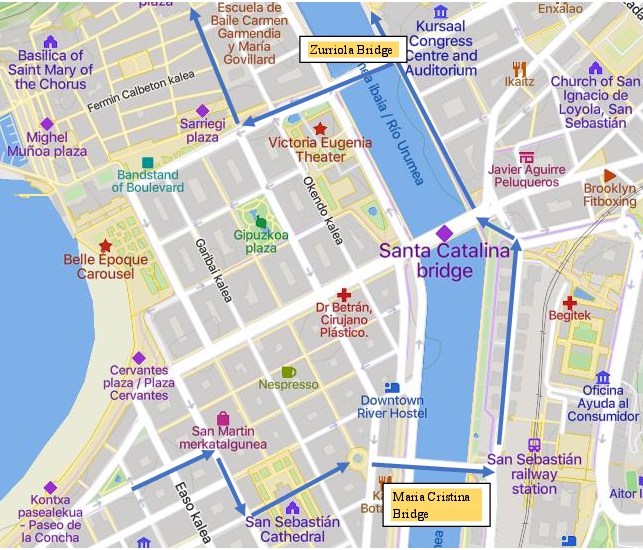
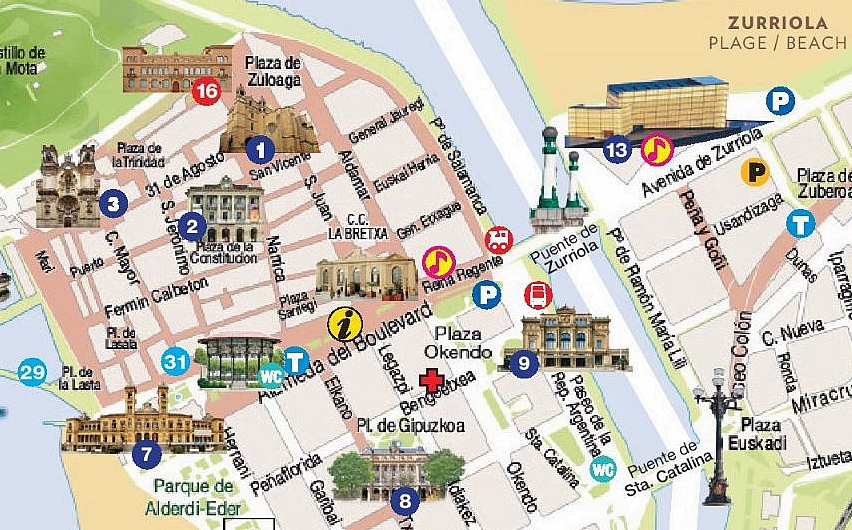
It was a big day of exploration of San Sebastian for us on Friday 23rd March 2023. We had a specialist San Sebastian guide for the morning and she would lead us via the Cathedral of the Good Shepherd and then along the river to the surf beach. We would then cross the Zurriola Bridge to explore the Parte Vieja (Old Town) of the city. It would then be time for lunch and then meet our own Intrepid guide for the afternoon. Our afternoon was to involve a long walk down the beach of San Sebastian, taking in the Peigne de Vent (The Wind Comb) sculpture on the headland and then catching the Funicular up Mount Igeldo to the theme park at the top of the headland. It would be a very interesting day of sightseeing!
It was a short walk from our hotel to the San Sebastian Cathedral. I was slightly surprised by one commentator’s opinion of the Cathedral who claimed that it “was the most remarkable religious building of San Sebastian, it is endowed with a strong verticality (!)…” Our guide was a great fan of the architect Manuel de Echava who oversaw the construction of this cathedral from 1888. It was completed in 9 years and was consecrated from worship from 1897.
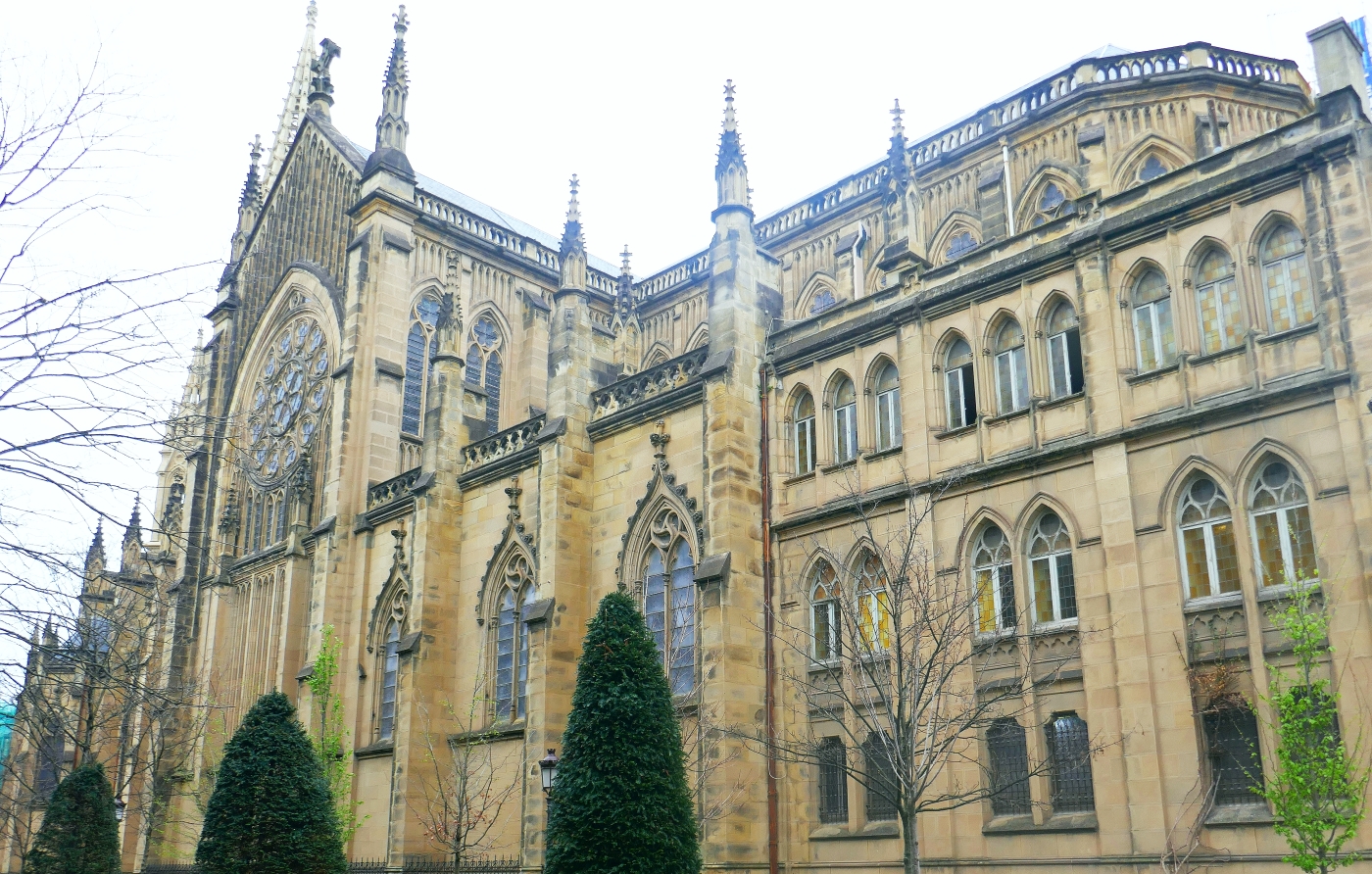
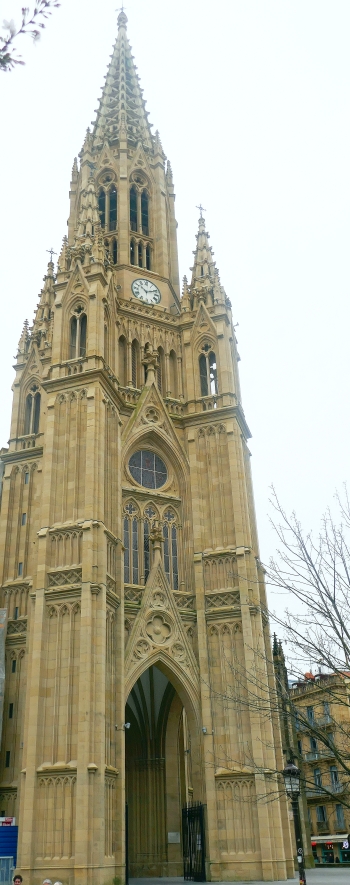
I am not sure if it was a coincidence that the second wife of the King of Spain in the late 1800’s was an Austrian noblewoman, Maria Christiana and the bridge over the Urumea river just down the road from the Cathedral was named after her. She laid the foundation stone of the Cathedral and was present in 1897 when her son King Alfonso XIII officially opened the Cathedral.
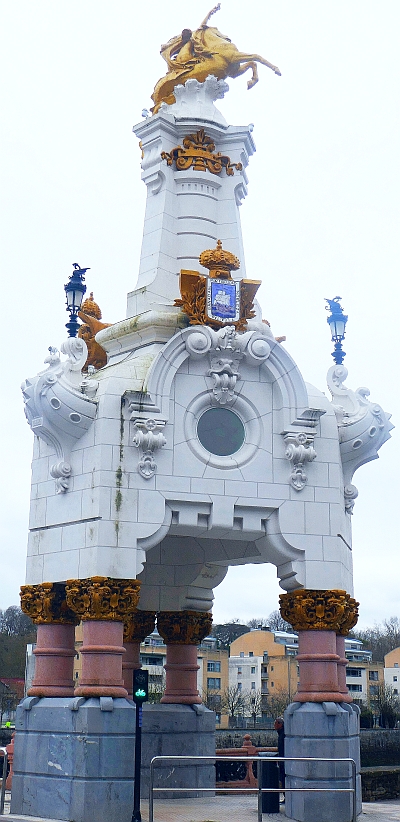
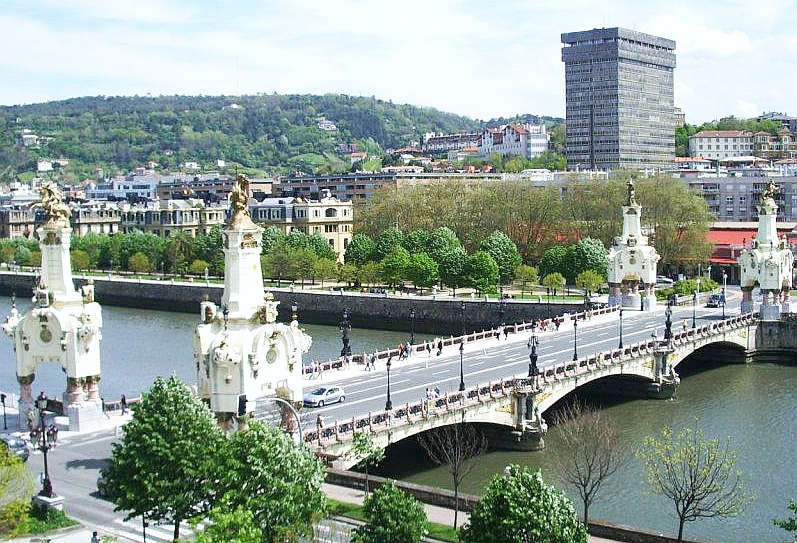
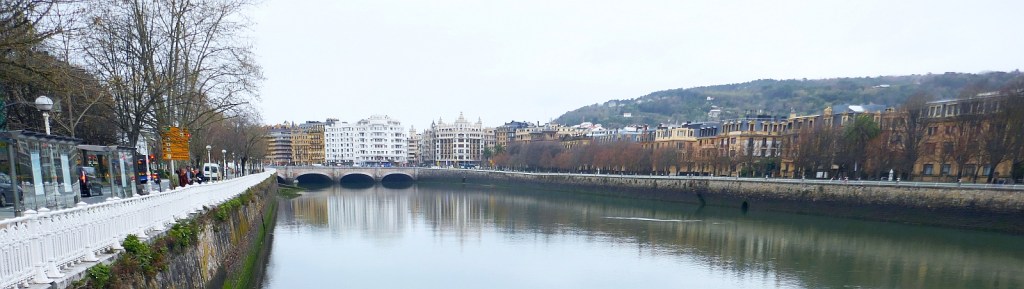
Below is a photo of the Maria Cristina Bridge with its wonderfully ornate four obelisks which for some reason were copies of those on the Alexander III bridge in Paris. The next photo below is of the view down river at the start of the bridge.
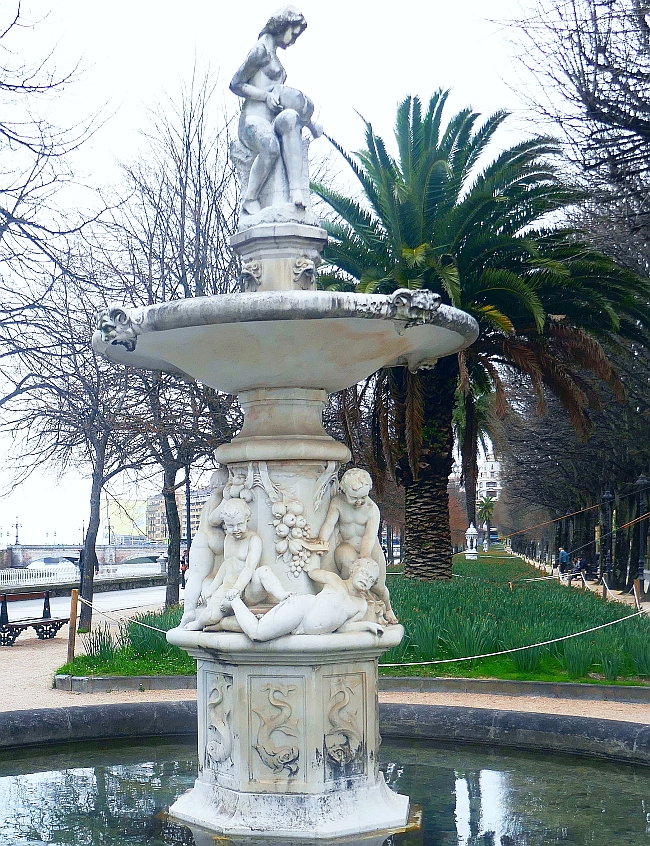
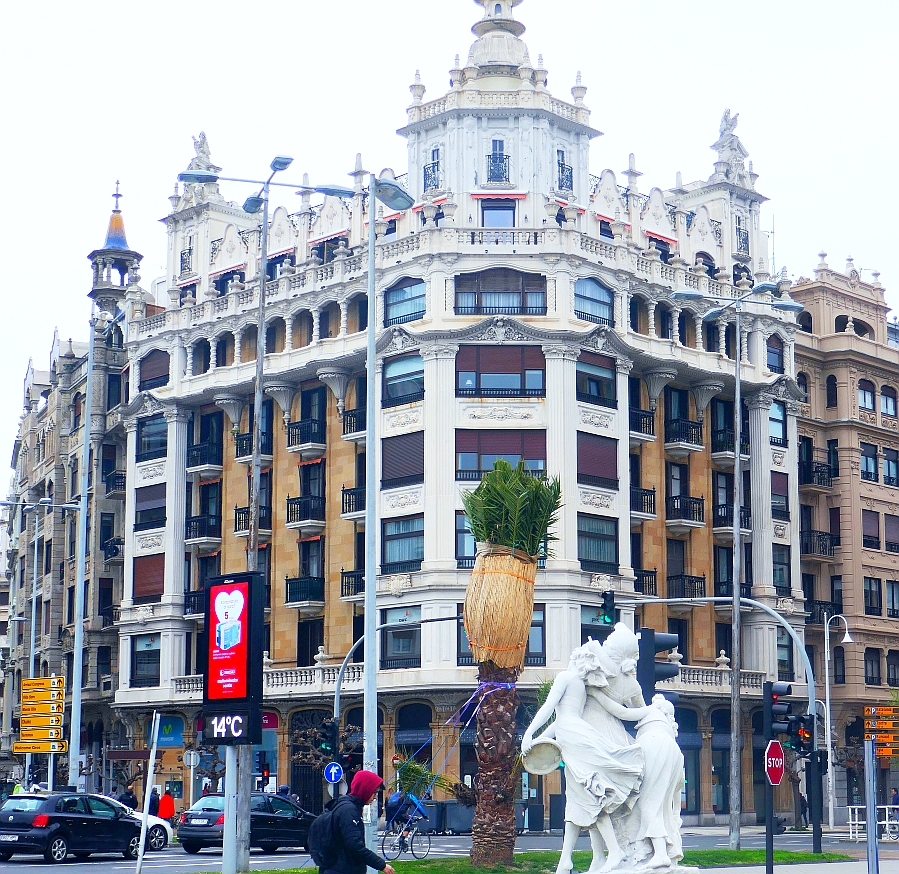
We crossed over the Maria Cristina bridge and turned left in the direction of the sea. It was a gorgeous morning walk as we strolled past the gardens that lined the river walk. The next bridge down was the Santa Catalina Bridge and we passed through the Euskadi Plaza that covered both sides of the road that approached from this bridge. Note the Dancing Ladies (esculturas danzarinas) next to the palm tree below right in this plaza.
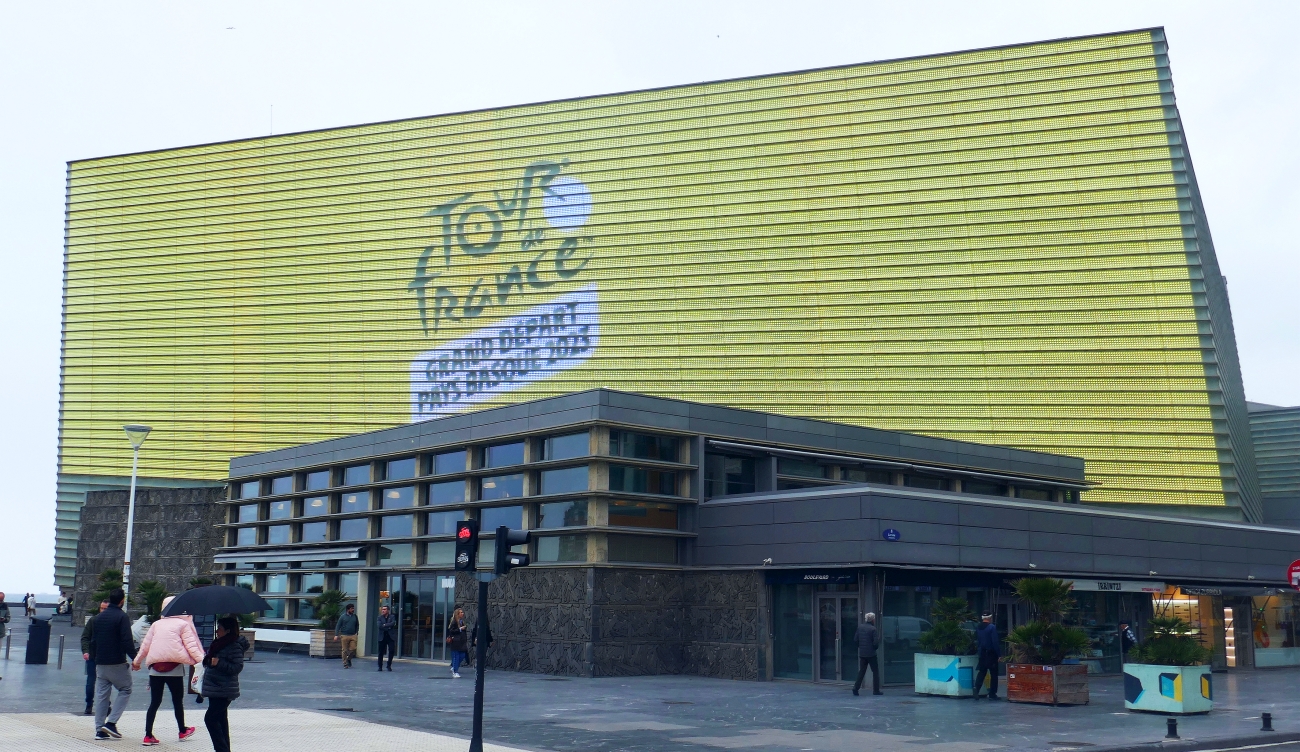
By this stage of our walk we were becoming aware of the large numbers of school students that seemed to be having the day off, particularly after we reached Paseo de Jesus Maria de Laezada across from the impressive Kursaal Conference Centre (See left below). Eventually we decided to ask one of the students sitting near us as to why such a crowd of students had the day off school. Their English wasn’t fantastic but we gathered they had been called to protest against some governmental change to the process of teaching the Basque Language. Their catch cry appeared to be something like, “Keep your hands off our Basque Language!” The image on the right below was taken when the students were gathered to march over the Zurriola Bridge.
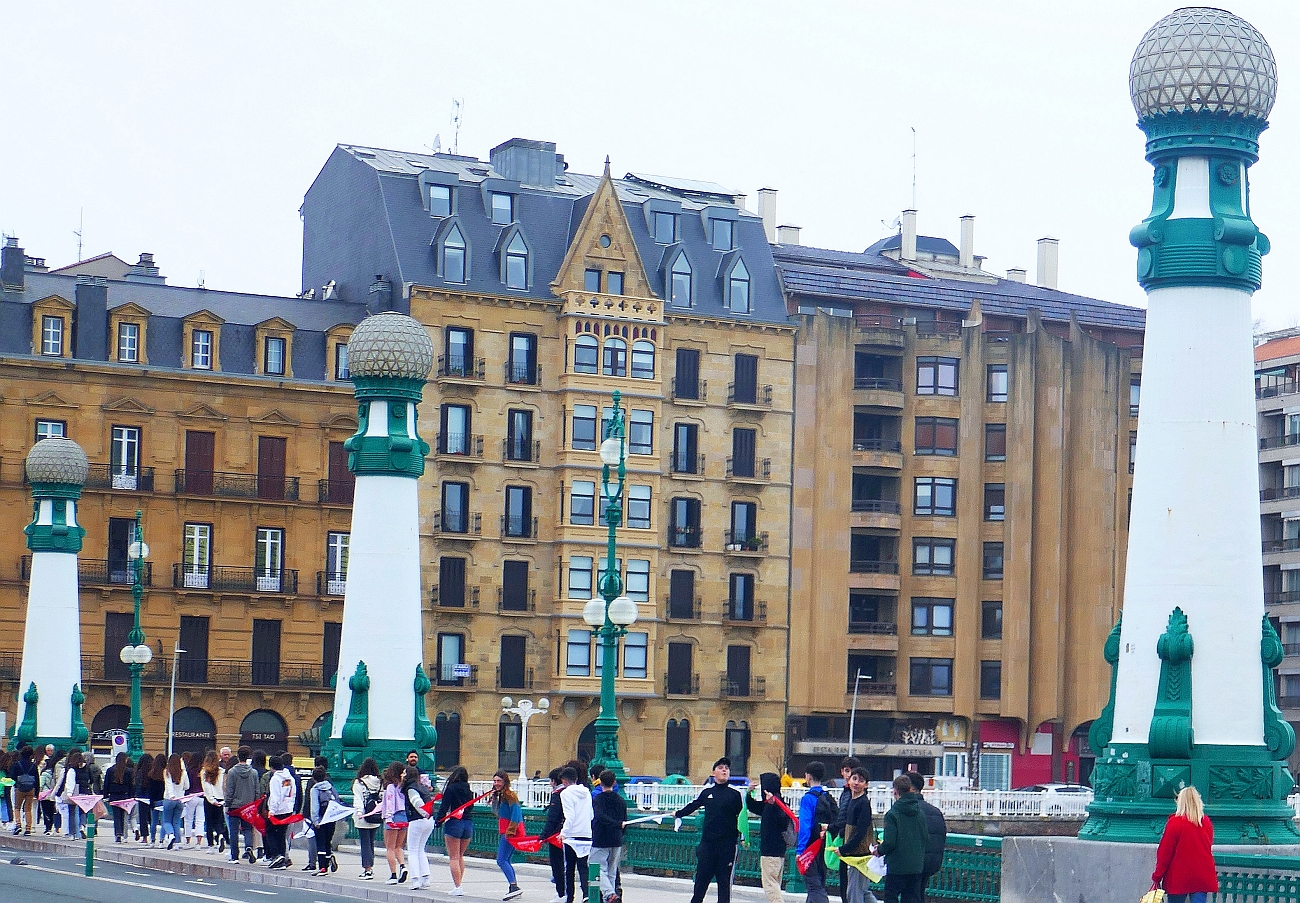
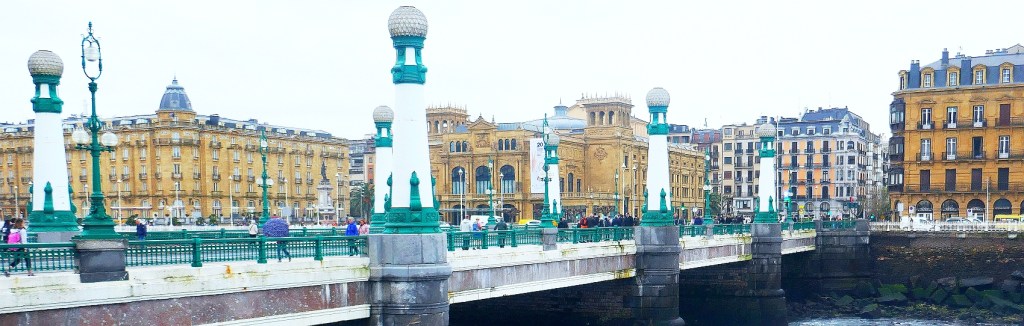
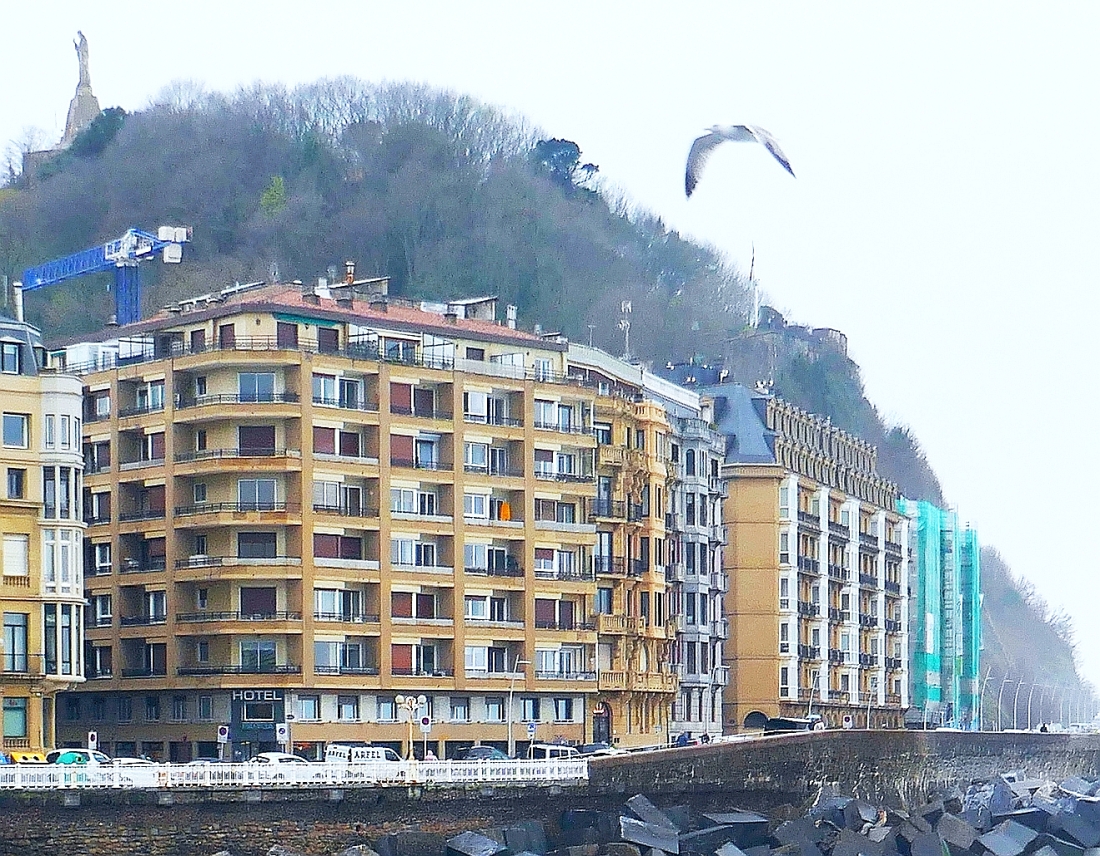
We let the student protesters get ahead of us as they crossed the bridge and headed into the old part of San Sebastian. We loitered on the Puente de Zurriola bridge and admired the architecture of the buildings that lined the street that followed the river down to the ocean.
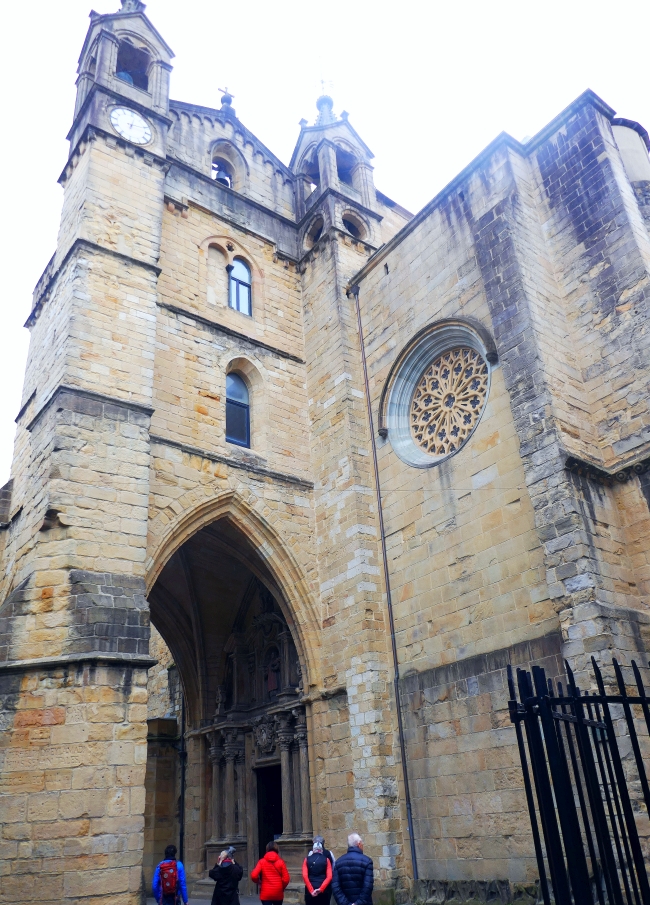
In the image to left below, part of Monte Urgull looms above the apartment blocks beside the river but its most important monument, El Sagrado Corazon (Sacred Heart), can be clearly seen. It has been referred to as the custodian of the city since 1950. With another day on our hands to see more of San Sebastian, I would have loved to have explored this mountain. The other flying object to the right in this photo is not a kite but a large seagull “blowin in the wind”. The image on the right is the doorway of the church of St Vincent the Martyr and is the oldest building in San Sebastian. It was our target after we had had inspected Plaza de la Constitution.
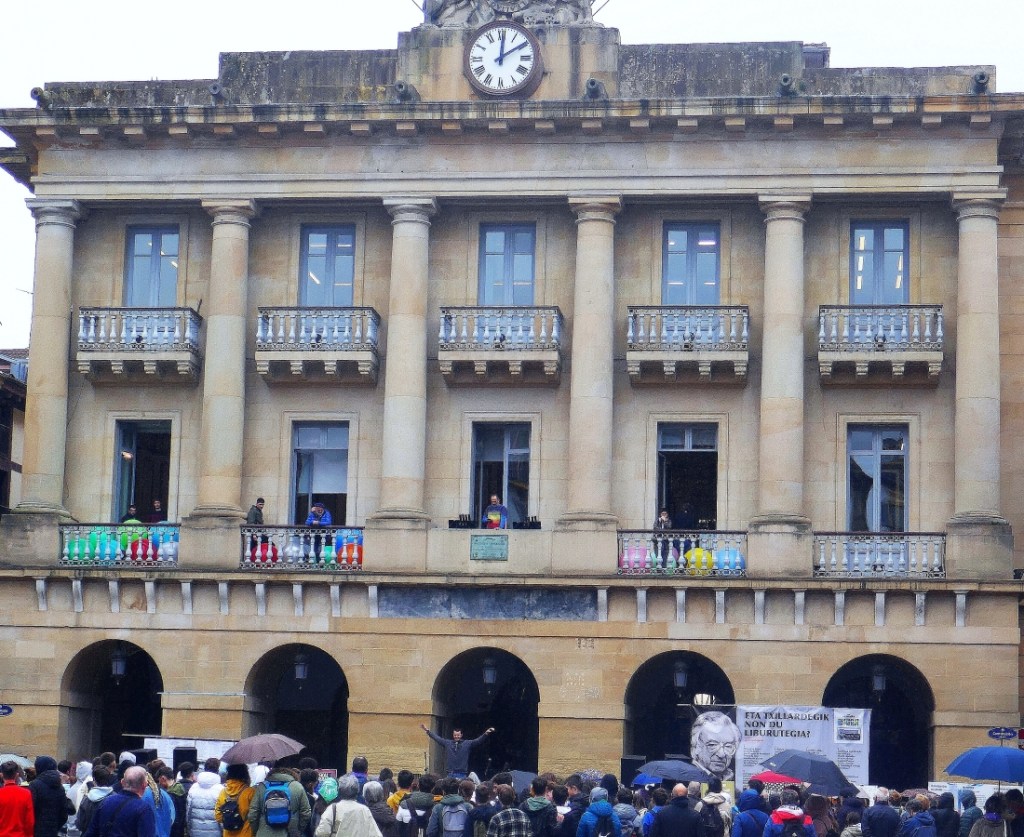
The main building in Constitution Plaza is the one in the photo on the left; it used to be the Old Town Hall building until the council moved their offices in 1947. This is a very picturesque square with the Old Town Hall (now a public library) being flanked by buildings that have arcades built over their ground floor pavements and each balcony above is numbered. The square was built after the destruction of the city in 1813 after the conflict between Napoleonic troops and the English and Portuguese armies.
The photo on the right I took while walking along an arcade around the Plaza de Constitution. It is an image painted on glass of a bullfight in the plaza where the pavers have been covered by dirt for the event. You can see the crowd gathered on the numbered balconies and along the arcades on the ground floor of the buildings flanking the old City Hall. Bull-fighting ceased here when another larger bull fighting arena was built elsewhere in the city.

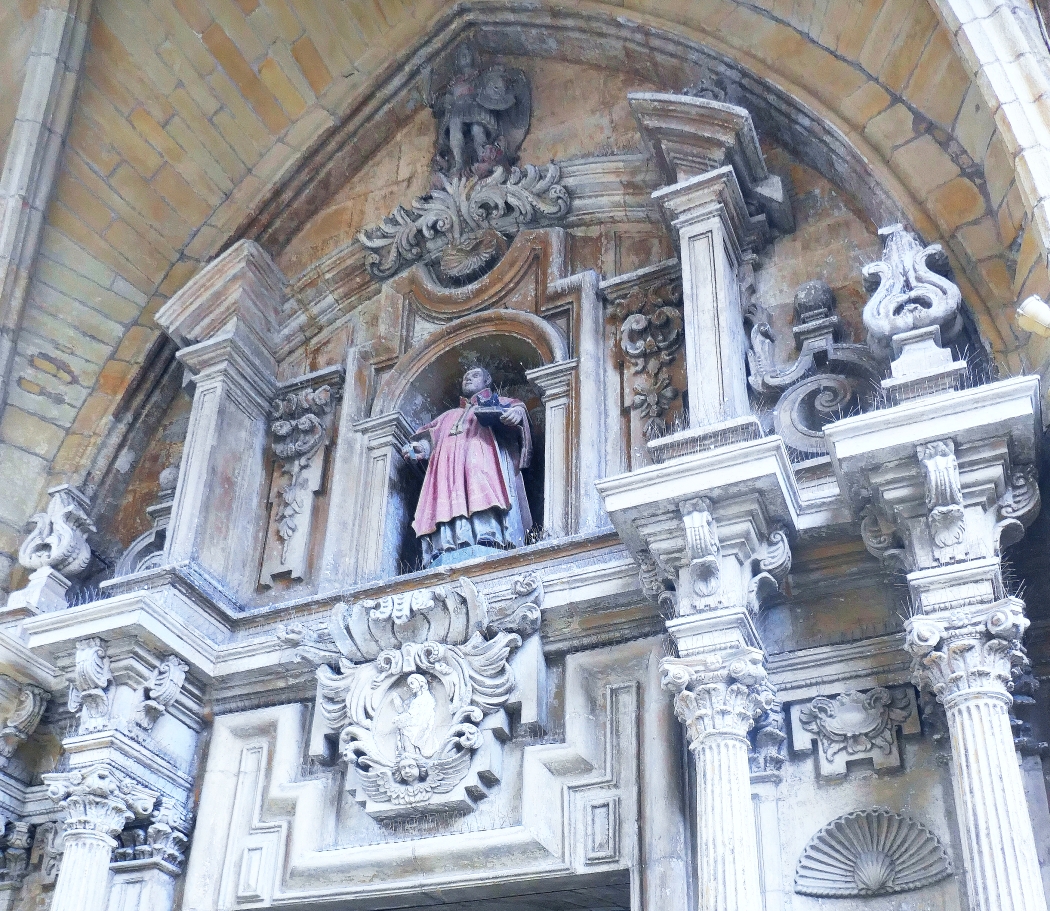
From Constitution Square we walked up to the Church of St Vincent Martyr whose constrution began in 1507 over the remains of a church that had begun life in 12th century. This original church appears to have been destroyed by fire in the 1400’s. We gathered in the porch of the front door of this church while our guide for the morning gave us the details of this church building’s long history. The photo below left shows details of the carvings and sculptures above the front door.
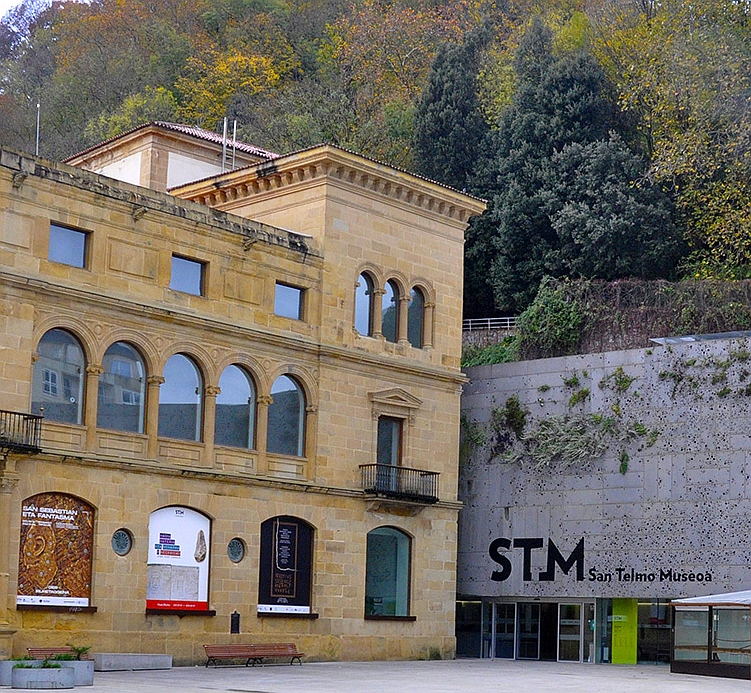
There is some similarity between the building that houses the San Telmo Museoa in Zuloaga Plaza and the Church of St Vincent Martyr just back down a neighbouring street. Both were built over the remains of previous ancient buildings. In the case of the Telmo museum, the building was originally erected as a Dominican Convent between 1544 and 1562. Like so much of San Sebastian in 1813, the convent suffered extensive damage when English and Portuguese troops assaulted the city held by Napoleonic troops. In 1932 the old monastery was purchased by the City and opened as a Museum of Basque Society in 1932.
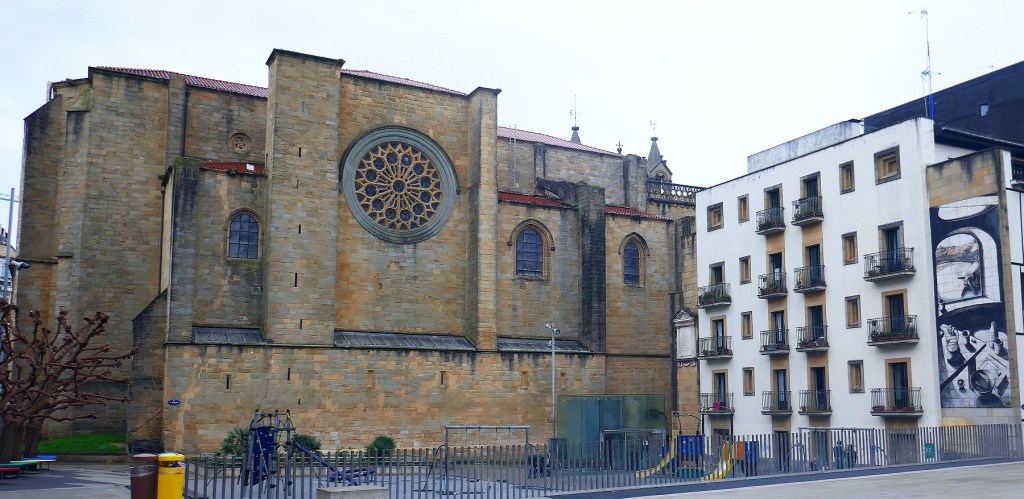
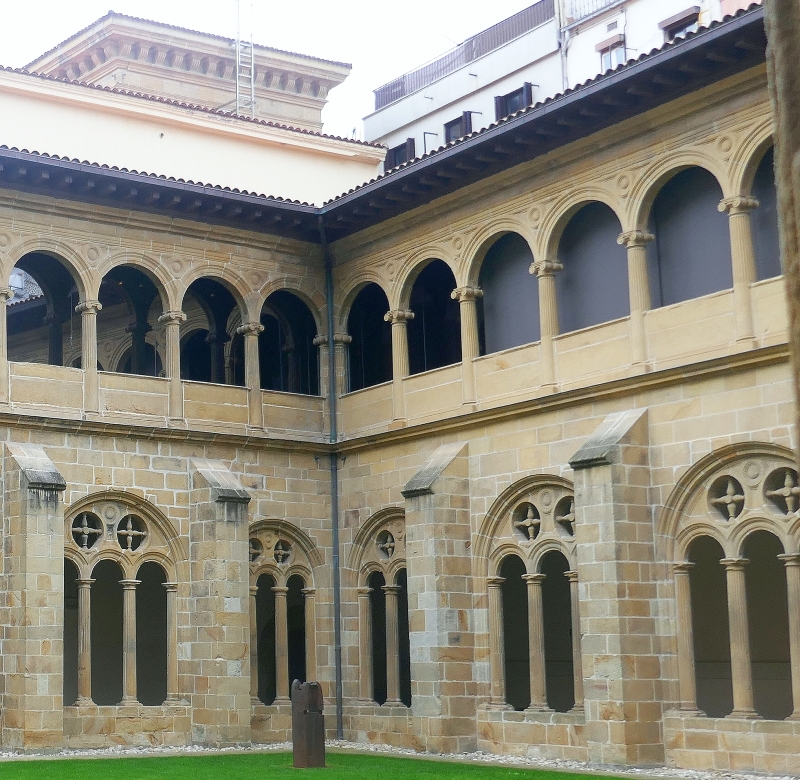
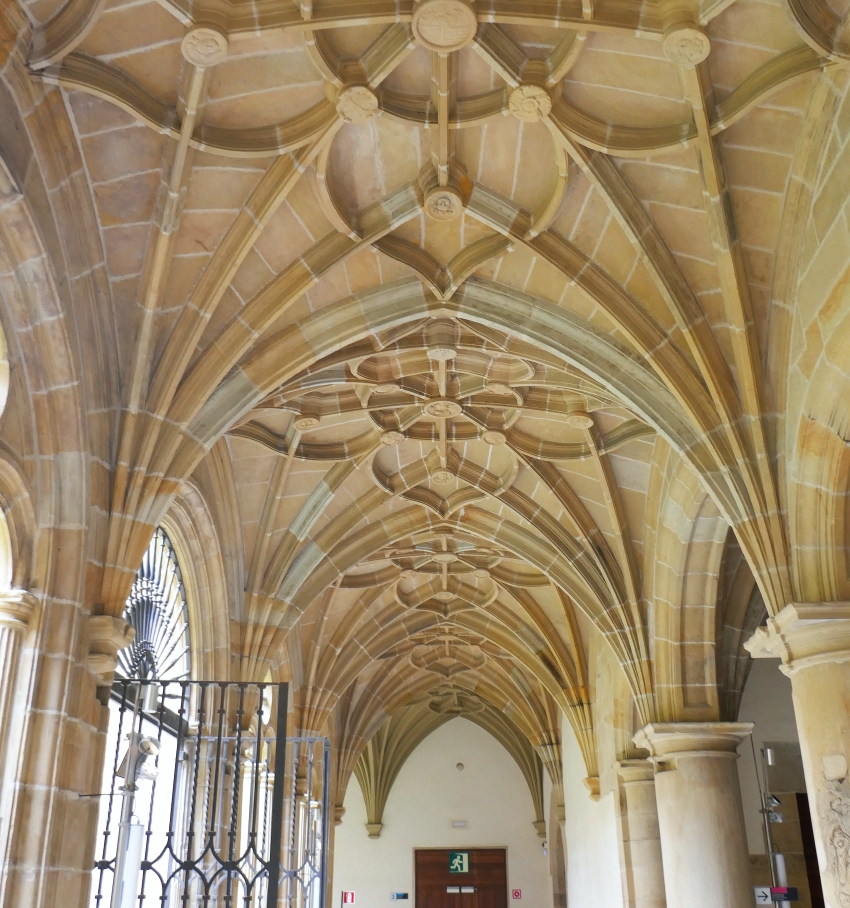
The conversion of an old monastery into a modern ethnographic museum appeared to be a startling success as we wandered the displays in this wonderful old building. Both the building and its displays were both beautiful and interesting and we spent a very enjoyable hour exploring here.
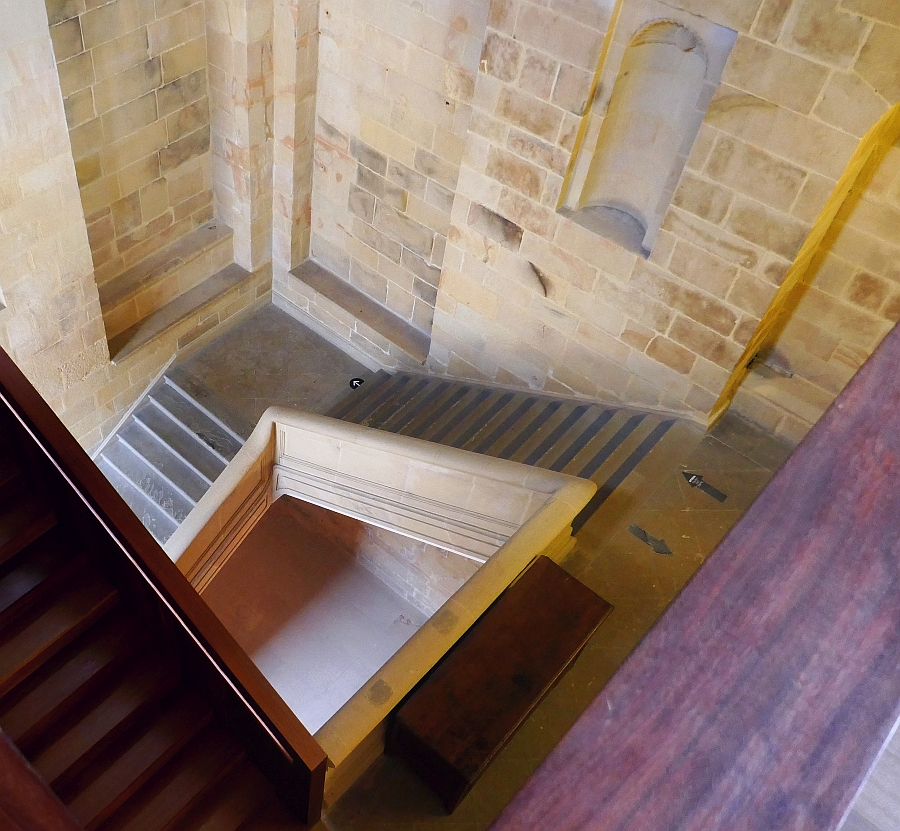


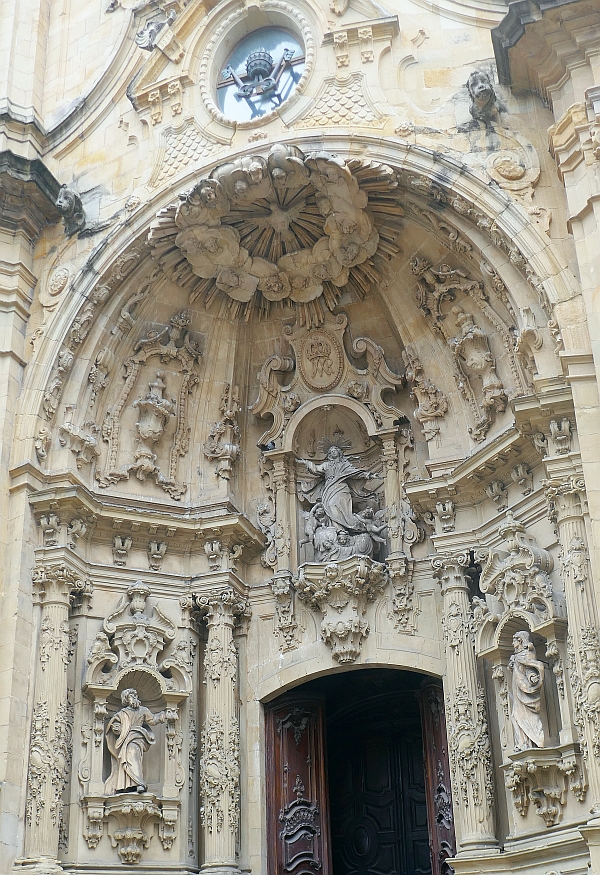
Our last major site to visit for the morning was the Basilica of Saint Mary of the Chorus which was to be found at the edge of the old city before the land gave way to Mount Urgull in the background. This parish church was completed in 1774. Its main entrance was another masterpiece of sculptures as can be seen in the photo to the right below.
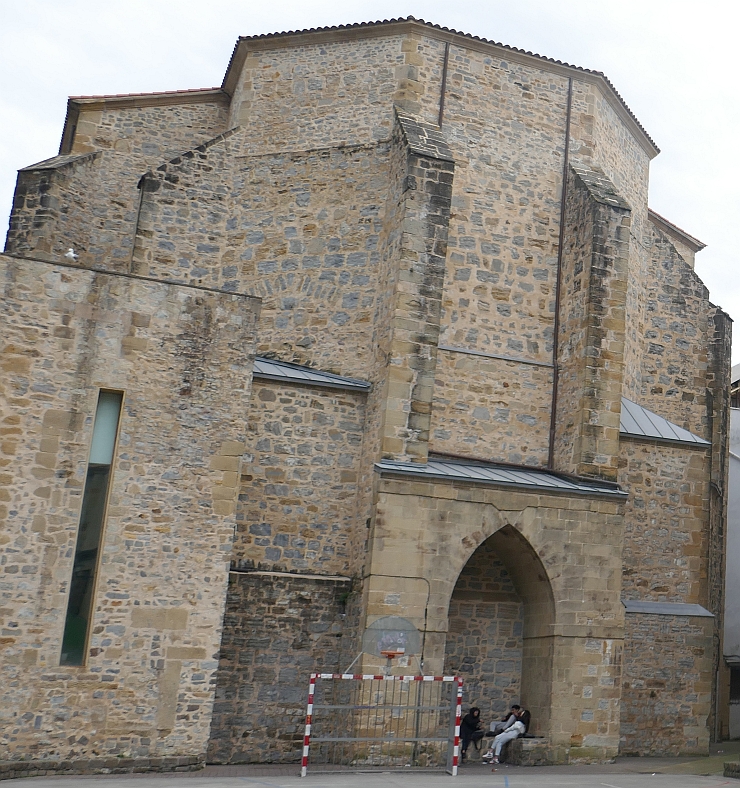
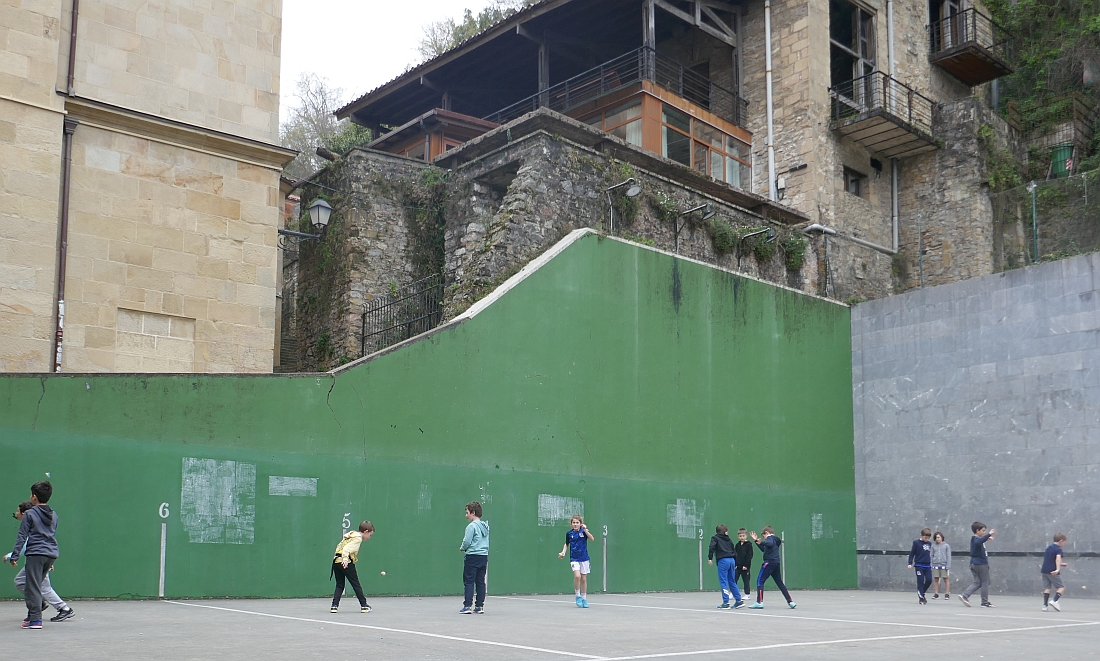
There was a small school next door to the Church of Saint Mary and the children were out playing handball in the large concrete playground attached to the school.
We said goodbye to our morning guide and headed back towards our hotel to find a restaurant for lunch before we began out afternoon trek towards the opposite end of La Concha Plage!
 FOGTRAVEL