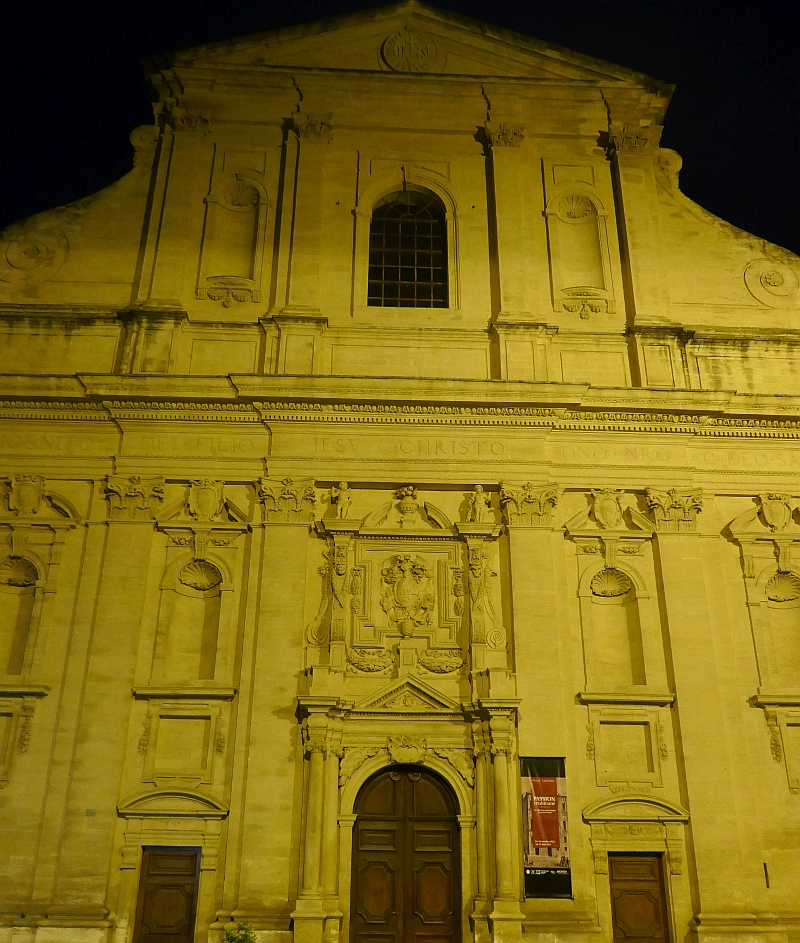
On the third day of our stay in Avignon, I again woke early and set out on another walk around early morning Avignon. On this day I chose to start by strolling down Rue de Republique which I realised would take me down to the train station, built outside the medieval walls of the city. My first stop was to check out the complex façade of the Lapidiary Museum which is a few blocks down Rue de la Republique on the left hand side. It is of course an old building that has been repurposed by Foundation Calvert who took over this ornate 17th century building that was once the city’s Jesuit College and created a museum to display Greek, Etruscan and Gallo-Roman sculptures. The image on the right below is one sculpture from this museum, a statue of Athena wearing a plumed Corinthian helmet.

I continued down Rue de la Republique and came to a curious park on the corner of Rue H.Fabre. The park was fenced off from the street by a large iron fence, the gate of which which wasn’t open at this early hour of the day. This area initially appeared to enclose a series of ancient ruins. I discovered later that they were the ruins of a 14th century monastery belonging to the Benedictine Order which was completed in 1388. These buildings had a long history having been enlarged in the 17th century, only to be abandoned during the Revolution and had been taken over by the Calvert Foundation for a museum.


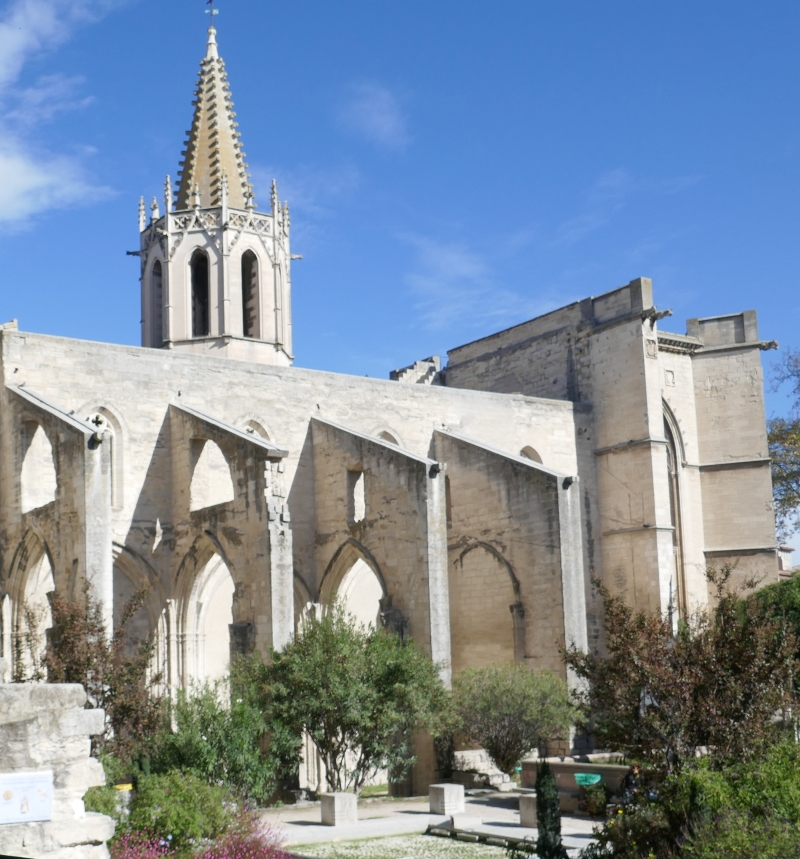
I returned to this park later in the day. It was now a park full of greenery where office workers spent their lunch hour and the ruins took on a more benign appearance. What I hadn’t been able to see in the early morning hours of Avignon that there was a church at the back of this parkland which could be accessed from Rue H. Fabre. I could also make more sense of the ruins of the monastery in the daylight hours.
The Church was called the Temple of St Martial and it too had been built in the 14th century as part of the Benedictine Monastery. The Church today belongs to the protestant Church of France and holds liturgical services every Sunday at 10am.
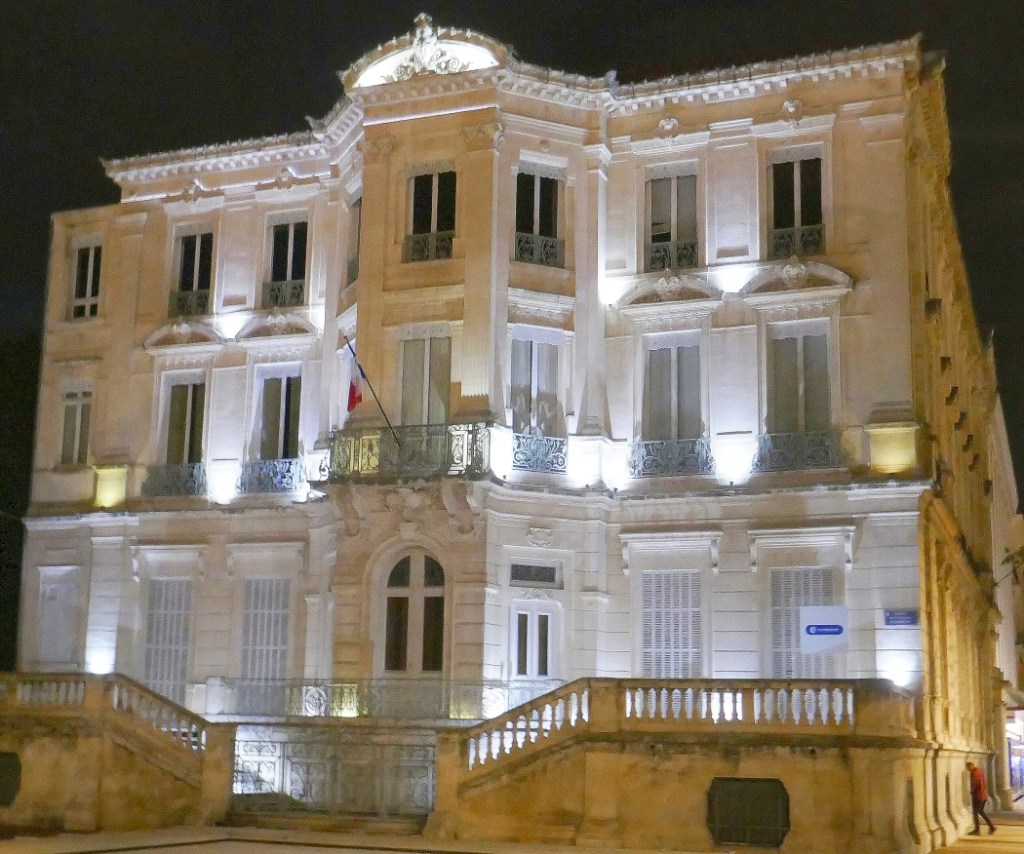
I only needed to walk another block down from the Park that surrounded the Temple of St Martial before I arrived at Cours du President Kennedy. This was the road that ran inside the walls of the city, over the road from the Avignon train station. Across from the train station was the lovely threestorey house to the left that looked particularly attractive at this early-hours of the morning.
One of my goals for this visit to Avignon was to have a close look at the medieval walls of the city, something I hadn’t done when I visited Avignon 10 years before.

The first defensive walls were built around Avignon in the first two decades of the 13th century. This was a period of almost continuous warfare, prompted by a call for a Crusade by the Pope against the Cathar heretics of southern France. This led to the Albigensian Crusade between 1209-1229. The most famous incident of this crusade was the massacre of the citizens of Beziers, both Catholic and Cathar. Apparently one of the soldiers asked Commander Amalric how to distinguish between Cathars and Catholics in Beziers; his sage advice was to “Kill them all! God will know his own!”
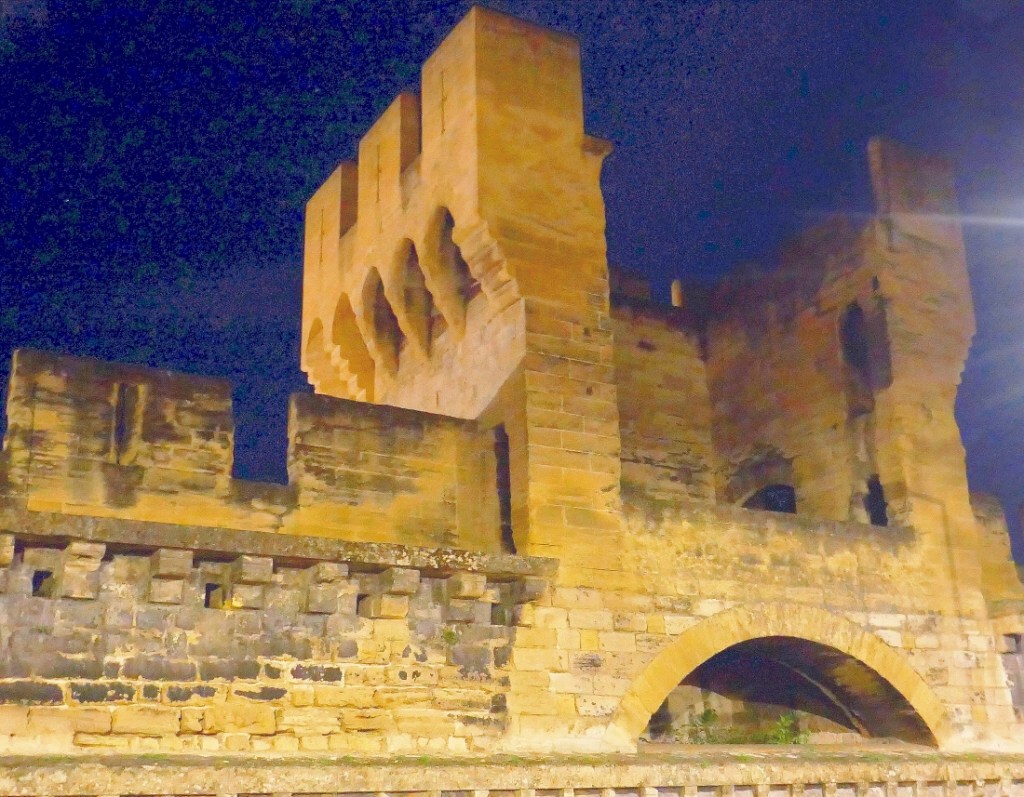
Avignon was on the wrong side in this war and its walls were pulled down and its moat filled by order of the French King Louis VIII. New walls were built under orders
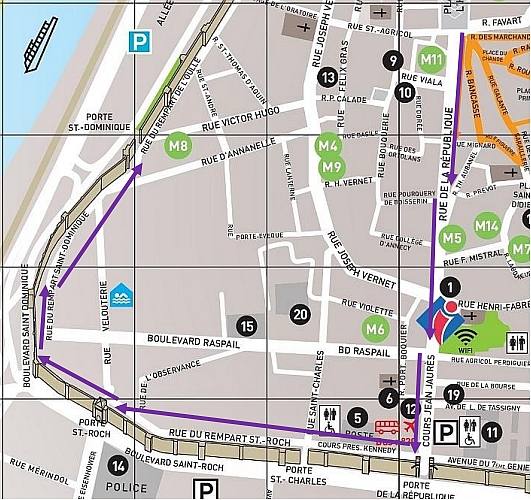
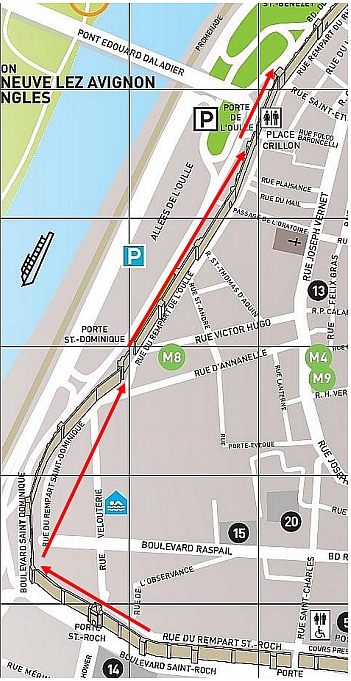
from the fifth Avignon pope during the 1350s, the period of the 100years war in France. It took 20 years to complete the walls. These walls stretch for 4.3 Km. I followed the Rue du Rempart Saint Dominique that ran inside the walls of Avignon which ran parallel to the River. I arrived at St Dominque’s Gate in the wall and passed through it to walk along the outside of the walls along Rue du Rempart de L’Ouille. (The only meaning in English for the French name “Ouille” I could find was “Ouch”!) I had noticed the previous day as we drove around outside the walls of the city that there was a large statue of ‘Marianne’ standing tall in a park next to the Boulevard de L’Ouille. As we passed by very quickly, I decided I needed to come back and check it out more closely. Statues of Marianne can be found in most French cities and represent the embodiment of the French Republic and its permanent values, “Liberty, Equality and Fraternity”.
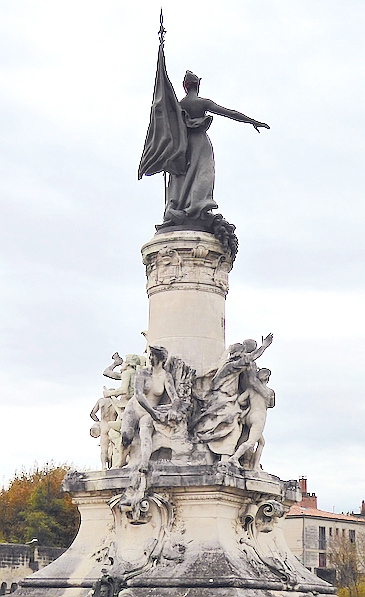
By the time I arrived at the statue of Marianne it was still before sunrise in Avignon so I decided I needed to use a daytime photo of Marianne to capture its impressive appearance. However as I walked on from this large statue, the walls of Avignon were very well lit up so the sections of the ramparts running beside Boulevard de L’Ouille were made beautiful by the rising sun.
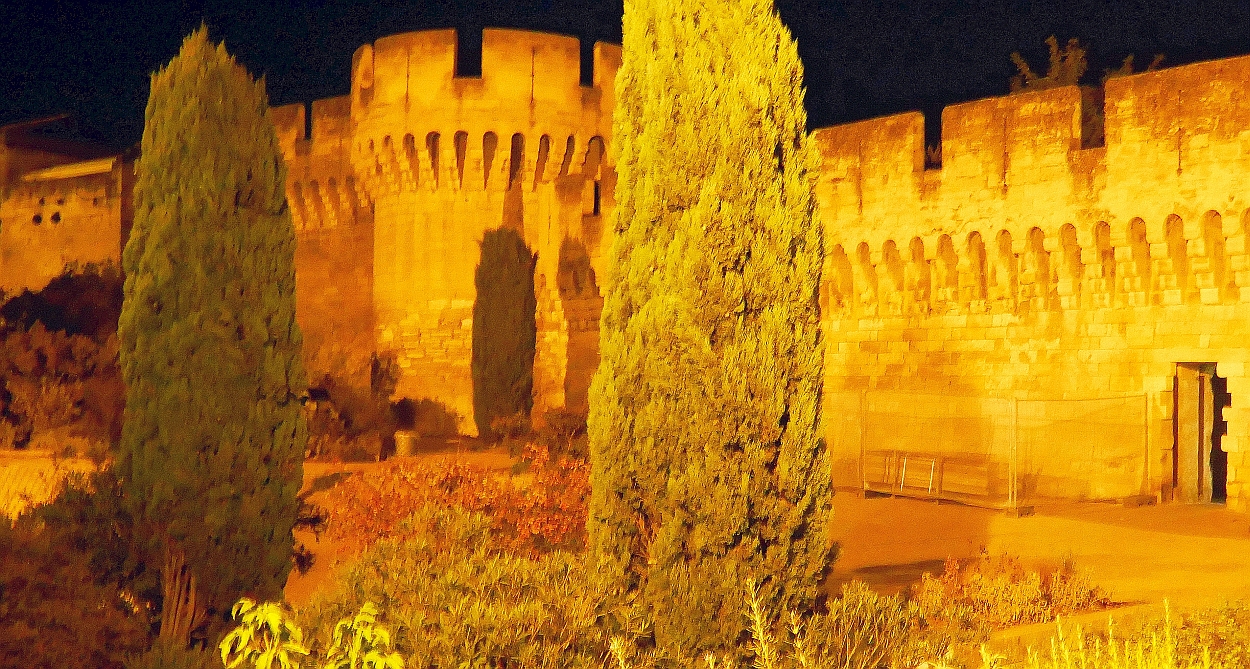
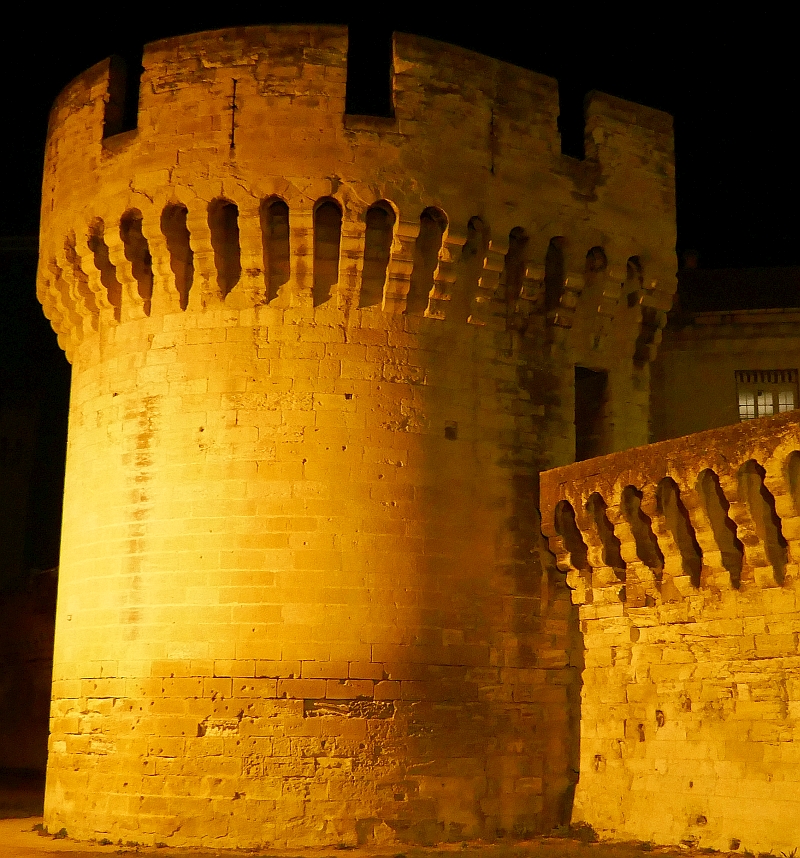
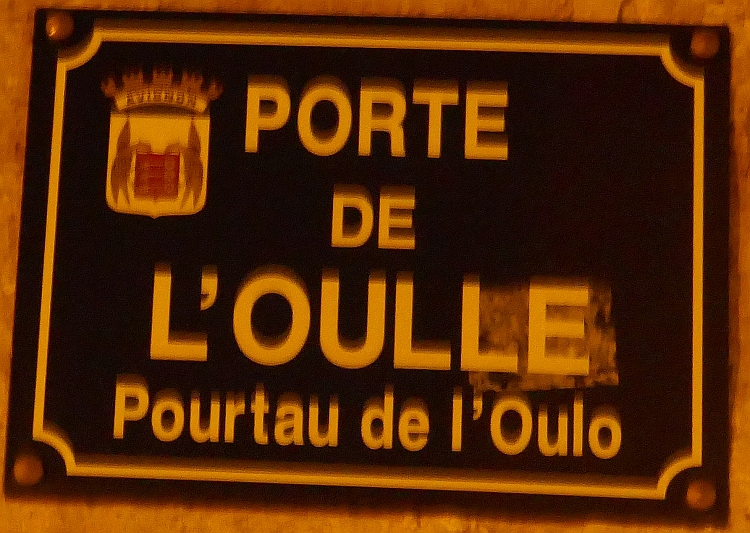
By the time I reached the next gate in the Ramparts, I decided it might be time to turn back towards our hotel and the necessary breakfast to keep me going for the day.
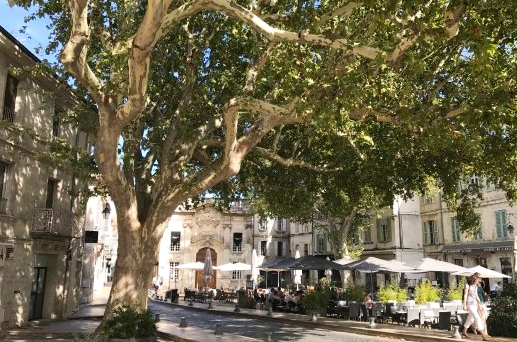
After passing through the gate in the walls, I found myself in Place Crillon which was a small square surrounded by restaurants. The photo on the left below is of Place Crillon before sunrise and the image on the right is the square at Midday.

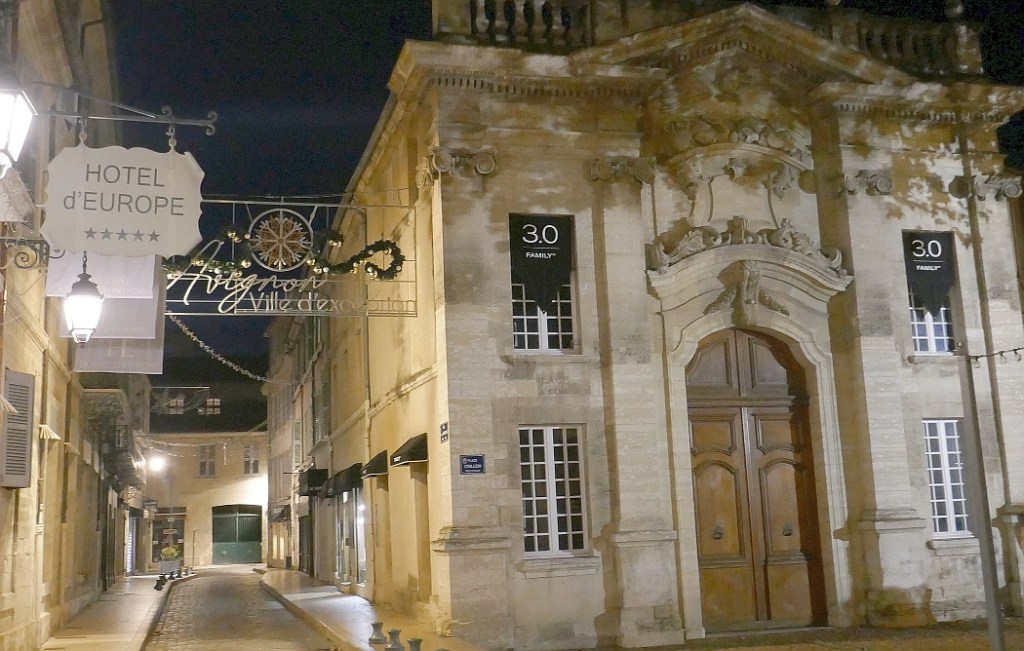
To the right is an image of Galerie Ducastel which sits at one end of Place Crillon and opened as an Art Gallery in 1962. The building itself functioned as a theatre as far back as the 17th century. It is linked across the alleyway to Hotel D’Europe. The hotel is also a building whose construction began in the 16th century. It claims that its first distinguished guest was Napoleon Bonaparte who stayed there when it reopened in 1799.
The Porte de Loulle that led through the town walls of Avignon to Place Crillon was surprisingly close to Place de Horlogue. I was able to walk swiftly up to the back of the city’s main Square, by pass the carousel and arrive at our hotel in time for breakfast!
 FOGTRAVEL