The Journey continued towards Cape of Good Hope and Cape Point.
The last section of our second day in Cape Town was spent driving through the Table Mountain National Park, the section that includes the Cape of Good Hope and the Cape Point Lighthouse. This part of our day’s tour reminded me of my younger days as a History Teacher in Australia where the story of the First Fleet coming out to Australia to establish an English penal colony in Botany Bay in 1788 was the first topic in Year 8 history. This topic also covered the history of European explorers such as Vasco de Gama and Bartolomeu Dias who led the way in discovering sea routes that would eventually lead to the encounter with the east coast of Australia by the Englishman, James Cook. The 1788 fleet of Governor Phillip arrived in Table Bay and gathered large quantities of seeds, plants and livestock for their arrival in Botany Bay, Australia. Our arrival at the Dias Cross in the Cape Point Region was like meeting up with an old friend, unseen for many years.

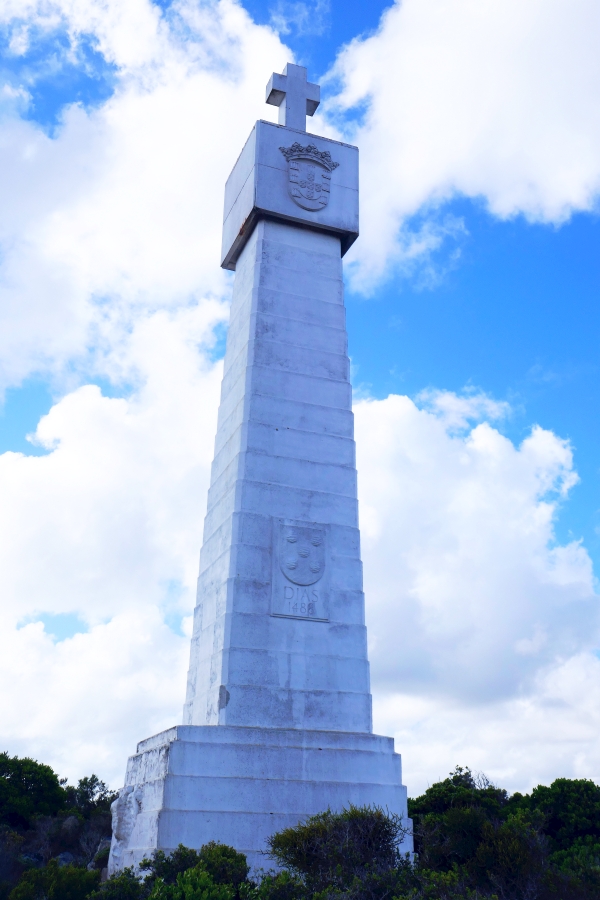
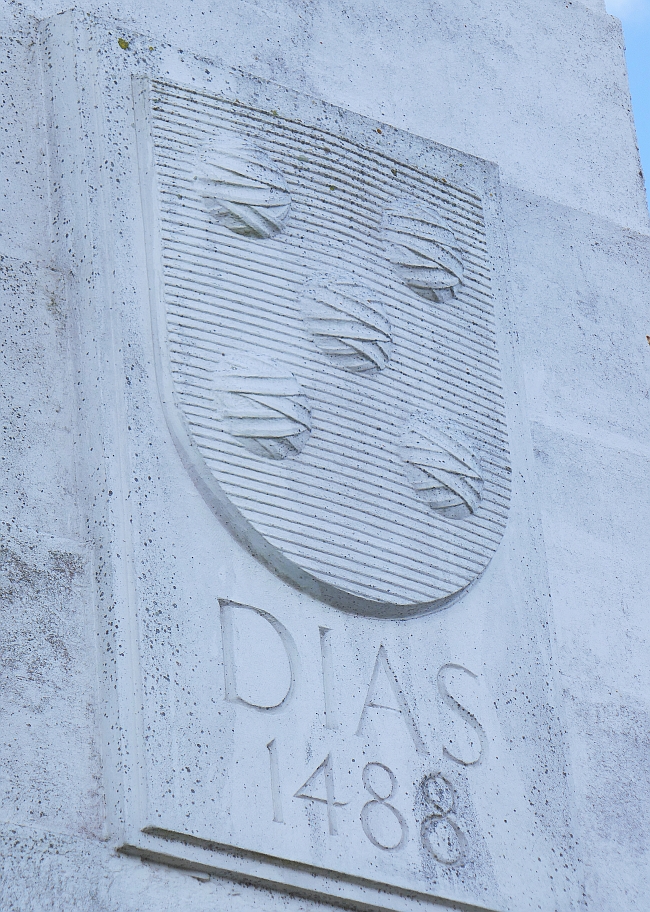
We ran into many different people on our tour of South Africa and its neighbouring countries but occasionally we would meet curious individuals that left us wondering. For example, at one point after our inspection of the Dias monument, our driver saw something ahead beside the road and decided to slow down and check out a car that had stopped in a layby we were going to pass. We discovered that a couple had stopped to take a look at a family of Ostriches, the parents and three or four chicks.

We got out of the car and immediately noticed that the couple had decided that they wanted to get up close and personal for photos with the ostriches. Our guide decided that the girl involved was putting herself in danger by getting too close to the ostrich chicks and called out to her to move away from the chicks or one of the parents would attack her; their kick is very damaging. To our surprise she laughed at our guide and said she was very safe, in fact as well as a photo, she was going to try and ride one of the ostriches! Our guide continued to urge her to step back from the ostriches but her opinion of her own infallibility could not be shaken. We decided that we should leave her to her fate given that her respect for local wisdom was completely lacking.


After our unpleasant encounter with the tourists who wanted to ride ostrichs, we finished our journey down to the Cape of Good Hope. I had always believed that the most southern point of Africa was the Cape of Good Hope, no doubt due to my misreading of the history textbook I was using 50 years before to teach Year 8 history. I wasn’t alone in this belief as many people accept that this is the point where there is an imaginary line that separates the Atlantic and the Indian Oceans. The image above (from a local noticeboard!) shows this rugged coastline with the Cape of Good Hope at one end on the left and the ‘Cape Point’ at the other end. The actual southernmost tip of Africa ia Cape Aqulhas, 150 kilometres to the east south east.

When we arrived at the Cape of Good Hope, the only sign of significance that marked the spot was surrounded by a large group of tourists all waiting for a chance to get the key photo with the local definitive sign. Our only claim to fame was that we had reached the “most south-western tip of the African Continent”!
From the Cape of Good Hope we drove along the coastline until we arrived at a much larger car-park below the ‘The Cape Lighthouse’. This site also had a tourist office and shop that was located at the bottom of the hill on which a light house stood to guide ships around this confusing and dangerous headland.
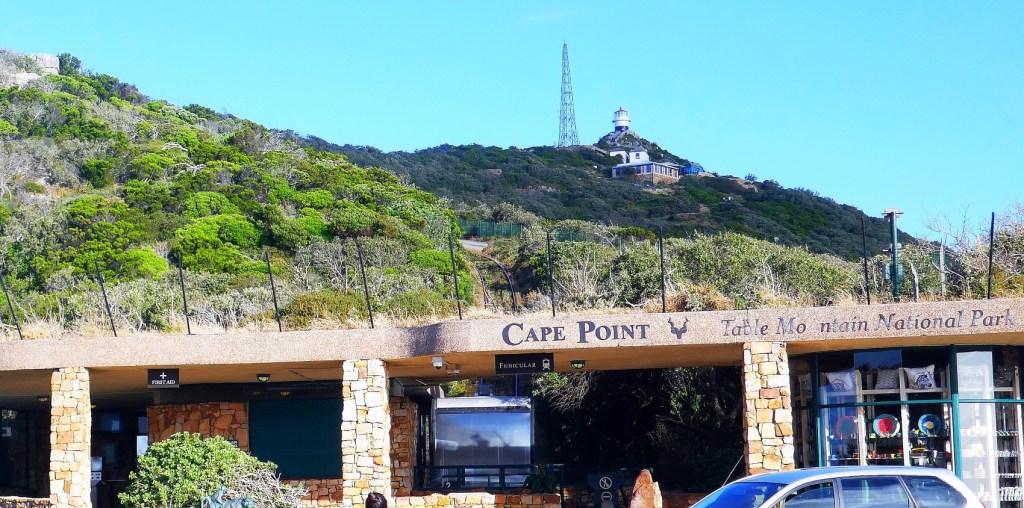
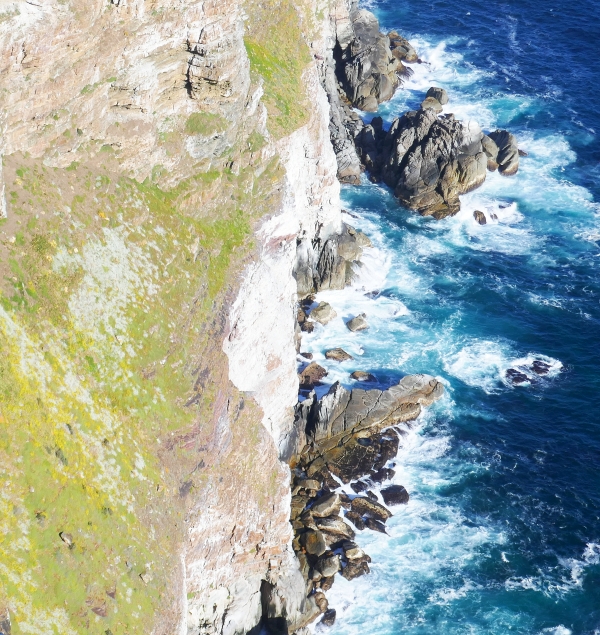
We decided we didn’t need to wait for the funicular that took tourists up to the lighthouse. This probably wasn’t the most sensible decision as there were a huge number of steps that eventually led the active tourist to the top of the hill. The image on the right below gives a good indication of the cliffs around the lighthouse and the reception area for any ship that doesn’t read the signs as it is turning around the cape.
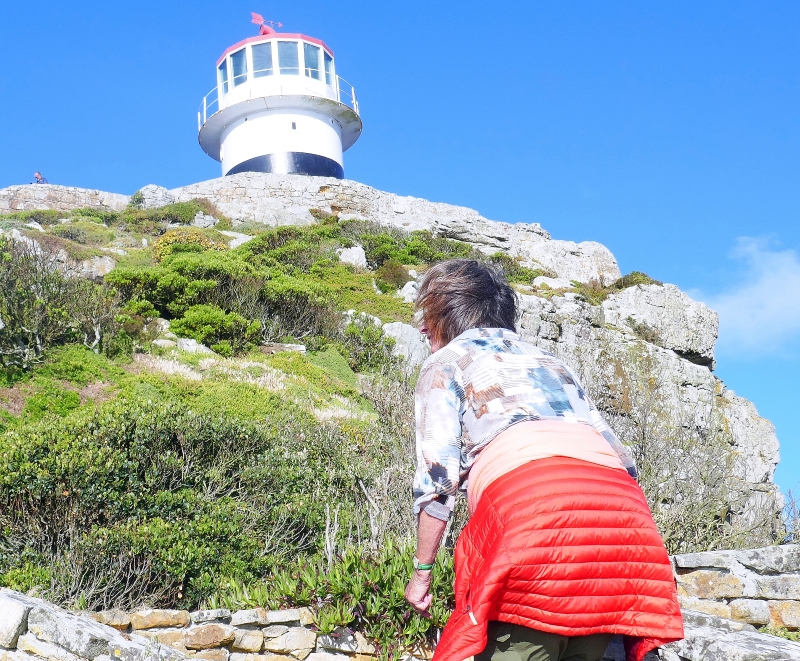
The photo below is taken from up near the lighthouse and shows the pathways leading up the hill/ or down to the beach and the car-park below.

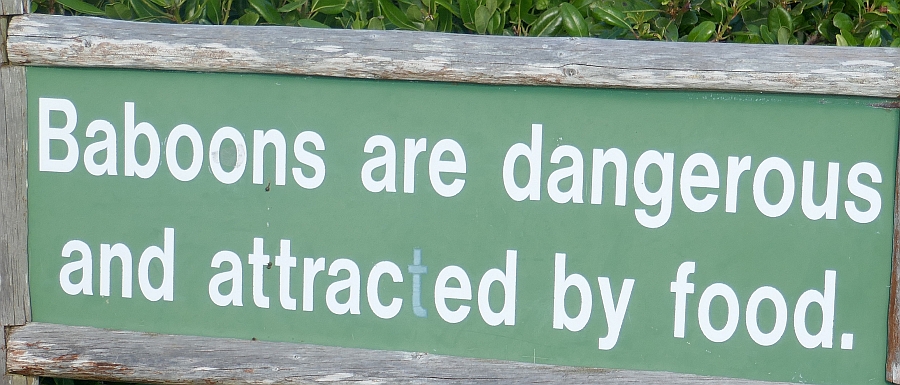
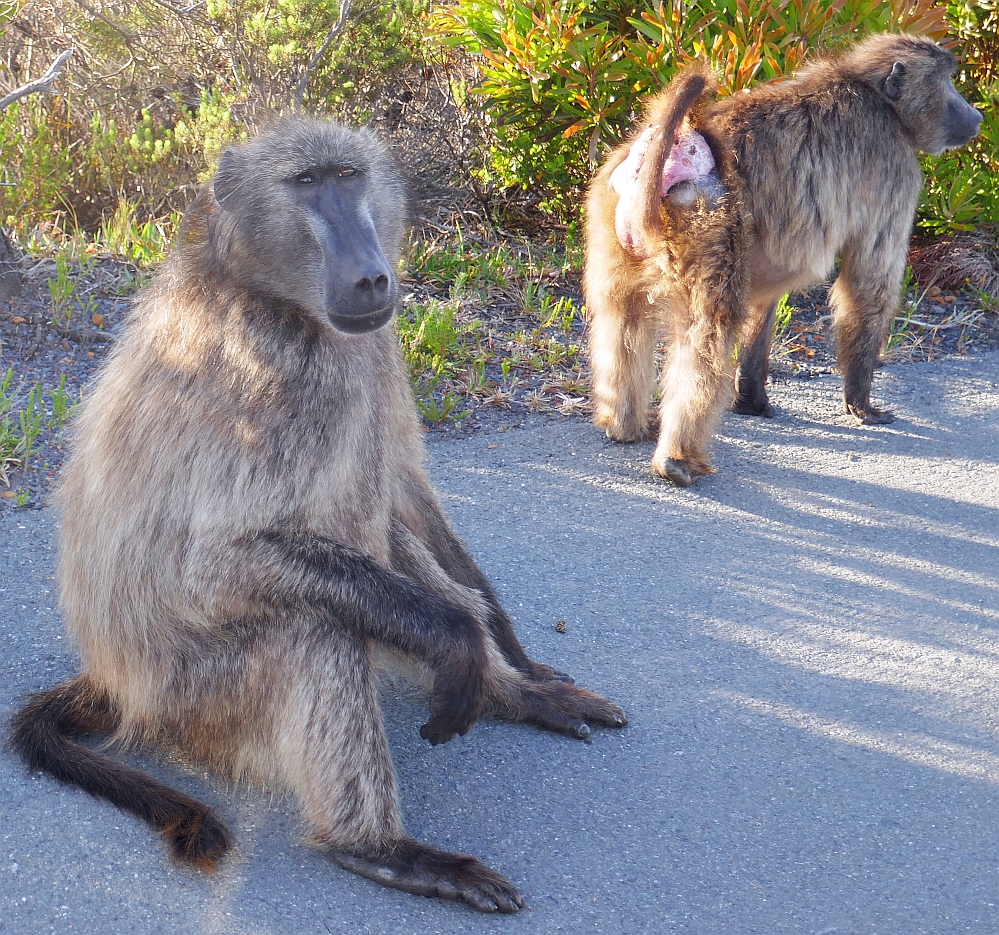
On the way down the hill from the lighthouse I noticed the sign to the left informing visitors of the dangers of baboons. We hadn’t driven far from the Cape Lighthouse car-park when we came across a large family of baboons who had decided they needn’t worry about road safety issues. These baboons neither demanded food from the passing cars or in fact took much interest in us. The main attraction was the baby baboon who seemed to be having a grand time annoying the adult baboons and rolling around the road .

 FOGTRAVEL