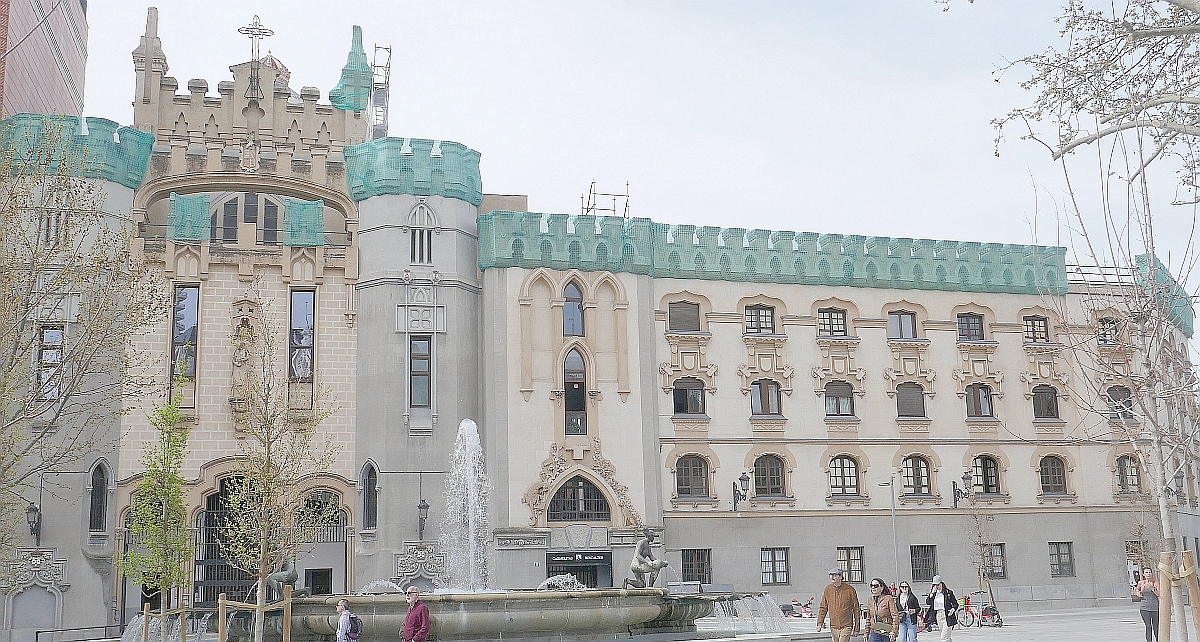
Our plan on Friday morning in Madrid was to take a bike ride around Madrid’s old ‘Centro’ which would take us about 3 hours. The first part of this expedition was by walking from our hotel near Sevilla Metro station to the bike shop that was over near the gate to Parque de El Retiro. This meant us finding away across to Carrera de San Jeronimo and making our way in the direction of the Museo del Prado down past the Fountain of Neptune. The big difference between walking down this street and the streets we casually strolled the day before was that there appeared to be a lot of guards in black uniforms casually strolling in front of the various buildings along this road. This situation may have arisen due to the location of the lower chamber of the Spanish Parliament (below left) half-way down this important street.


It may have been coincidental that the Congreso de los Deputados (sounds a bit like “desperadoes” in English) was built directly opposite the Plaza de las Cortes where a statue of Spain’s most prominent writer, Miguel de Cervantes, was erected in 1834. The Congress’s foundation stone was laid in 1843.
Further down the road, we came across one of the major fountains of the city, Fuente de Neptuno. It lies in the Plaza de Canovas del Castillo. It was completed in 1786. The fountain is formed by a python surrounding the God Neptune on his chariot in the centre. He holds a sea-serpent in one hand and his trident in the other. We came via this fountain in a taxi the previous day and our driver proudly explained that the famous football club Atletico Madrid’s fans celebrate here whenever their team wins a trophy!


Our Bike shop was just down a short street that was over the road from the large Parque de el Retiro. This was a property that originally belonged to the Spanish Royal Family and was opened up to the public at the end of the 19th century. The most prominent feature of the park is an artificial lake that sits in front of a huge monument to Alfonso XII. He became King of Spain in 1874 following a military coup against the First Spanish Republic. Alfonso is presented to the modern world via the usual equestrian statue that sits on top of a huge structure that visitors can admire from hired boats on the lake.
Below is a map of our long bike ride around Madrid that took us in a vague circle around the city. From Parque de el Retiro we made our way via the long route that eventual brought us to the the Royal Palace of Madrid. From here we circled back to our bike shop just down the road from our starting point at Parque de El Retiro.

Our first stopping point in the park wason one side of a small lake that gave us a clear view of the Glass Palace (Palacio de Crista). It is currently used for Art Exhibitions. It was used back in 1887 as the main venue for the Philippines Exposition which during colonial times was used to boost commercial and economic relations between the Asian archipelago of Islands and the Capital of Spain


From the Palacio de Crista we rode up hill through the park and came to a large roundabout in the road that would lead us out of Park de el Retiro. In the centre of the roundabout there was a fountain with a large sculpture called the Glorieta del Angel Caldo. The sculptor, Ricardo Belliver created this amazing image of the Fallen Angel, inspired by the verses of John Milton’s Paradise Lost. The work was displayed in the Exposition Universelle in Madrid 1878. It has the dubious reputation of being the only prominent sculpture dedicated to the Devil. It is probably a coincidence that it stands 666 metres (the ‘number of the beast’ from the Book of Revelation) above sea level!
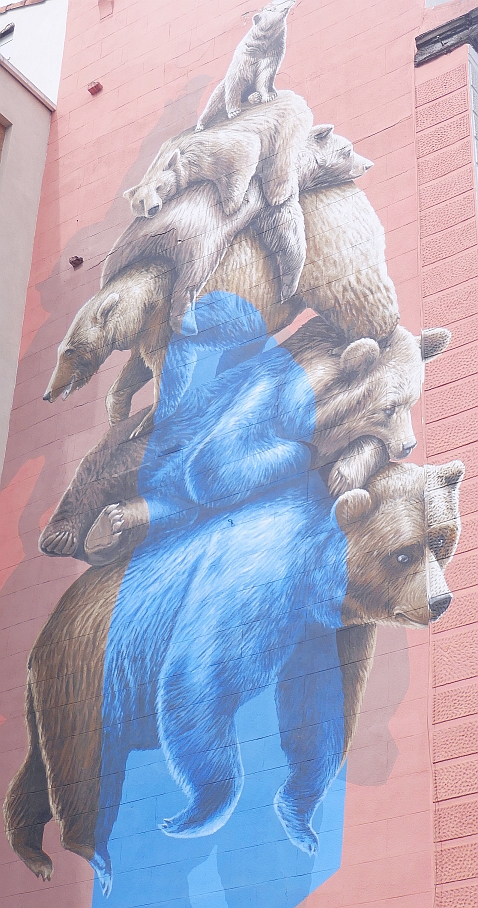
By checking out the map above, readers can see that we rode quite a distance after our relaxed inspections in Park de el Retiro. Once you get off the bike paths and into the main city areas, you need to be quite confident to compete with the cars in the narrow streets of old Madrid. Luckily our dozen or so bike tourists survived the competition with other vehicles as well as getting to see some great street art such as the stack of bears to the left that can be found in Calle de Augustus Figueroa in the Chueca neighbourhood.
Our first significant stop was at Plaza del Dos de Mayo. In our visits to Barcelona and San Sebastian we visited sites that held long memories of the 1808 invasion of Spain by Napoleonic troops. Spain was joined by Portugal and Great Britain in their attempts to defend their territories and resist Napoleonic control from 1807-14. The name of this square is named after an uprising in Madrid in May 2 1808 against the French occupation. Two soldiers, Luis Daoiz and Pedro Velarde, were killed in the uprising and they became martyr figures in the War of Independence that followed this uprising against the French Empire. There is a memorial to Daoiz and Velarde in this plaza (below right). The Plaza sits next to an Early Childcare Centre and sitting on a bench against the fence of this place was a modern sculpture of a parent reading a book; perhaps she is waiting to pick up his/her infant children (Left below).


From Plaza del Dos de Mayo we made our way rapidly down a sloping street bypassing a couple of Metro stations (Noviciado and Santo Domingo) until we arrived at our next significant stopping point, Monasterio Descalzas Reales at Plaza San Martin. This monastery was founded by Juana of Austria (1535-1573) when she decided to convert the Palace on this site in which she was born into a monastery. Her grave is in the chapel of this building

Monasterio Descalzas Reales sits on the Gran Via and we rode down this prominent road to the Plaza de Espana. The square is bordered by two prominent skyscrapers, the Torre de Madrid and the Edificio Espana. The most prominent feature of this Plaza is the huge monument to Miguel de Cervantes that was built at the same time as the Plaza. In the image to the right can be seen the traditional image of Cervantes and his noble companion on their donkeys exploring Spain.
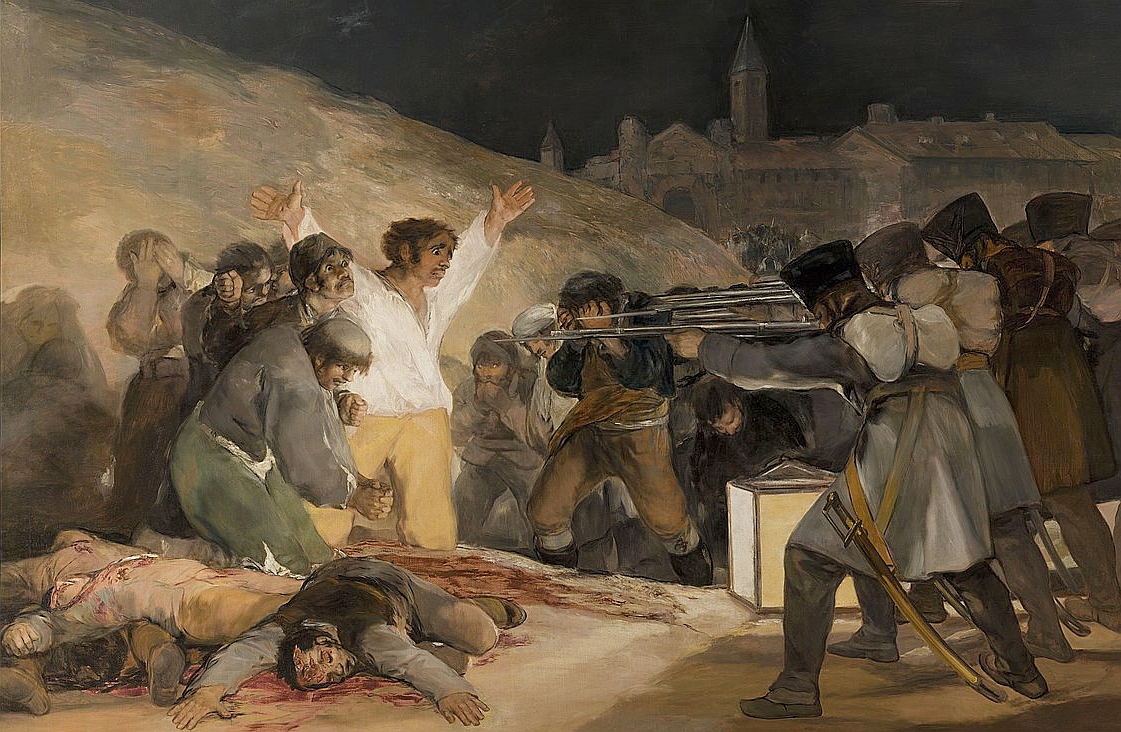
Just as the heroes of 3rd of May 1808 were celebrated in the Plaza del Dos de Mayo that we visited earlier on our bike-tour, this famous day was also commemorated in a dramatic sculpture in Plaza de Espana (Below left). We didn’t have time to visit the Prado Art Museum but if we had, we would have been able to examine Goya’s famous painting, ‘The Third May 1808’ (below right). A hill in the original area of this park was used by French Firing Squads to execute prisoners.


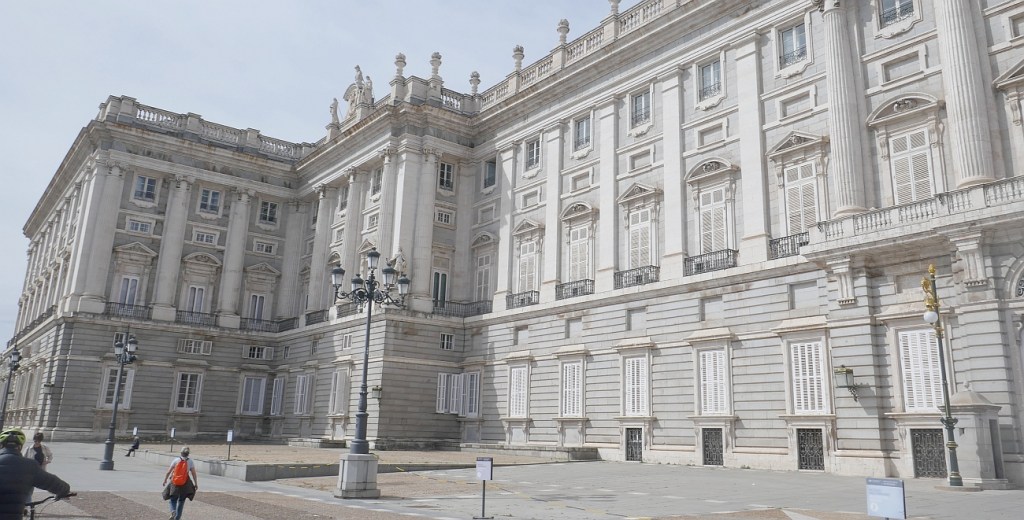
We were very pleased to encounter a long stretch of Bike Path after we left Plaza de Espana and it took us most of the way to the Royal Palace area. Our guide for the bike ride took us past the palace and this time offered to take us into the crypt of the Almudena Cathedral just past the Palace.


It was apparently time for a late morning tea and our bike tour guide took us to a café on the outside of Plaza Mayor where we had spent some time on the previous day. To my disappointment, the morning tea that we were expected to delight in was the dreaded Churizos and a cup of thick hot chocolate that we had already experienced in Santago de Compestella and found to be a little overpowering for our sensitive Australian taste-buds.
After our Chorizo morning tea, we took to our bikes for the ride back to the bike shop. Our guide told us that the area we were riding through was very popular with locals on a night out; the area hosted a large number of restaurants. We turned left at Ronda de Atooha which took us down past the Reina Sofia Art Museum. This is one of the most popular museums in Spain holding in its permanent collection works by Pablo Picasso, Salvador Dali and Joan Miro. It is here you can see Picasso’s famous Guernica painting. Along with the Prado and the Thyssen-Bornemisza, it is part of Madrid’s Art Triangle.
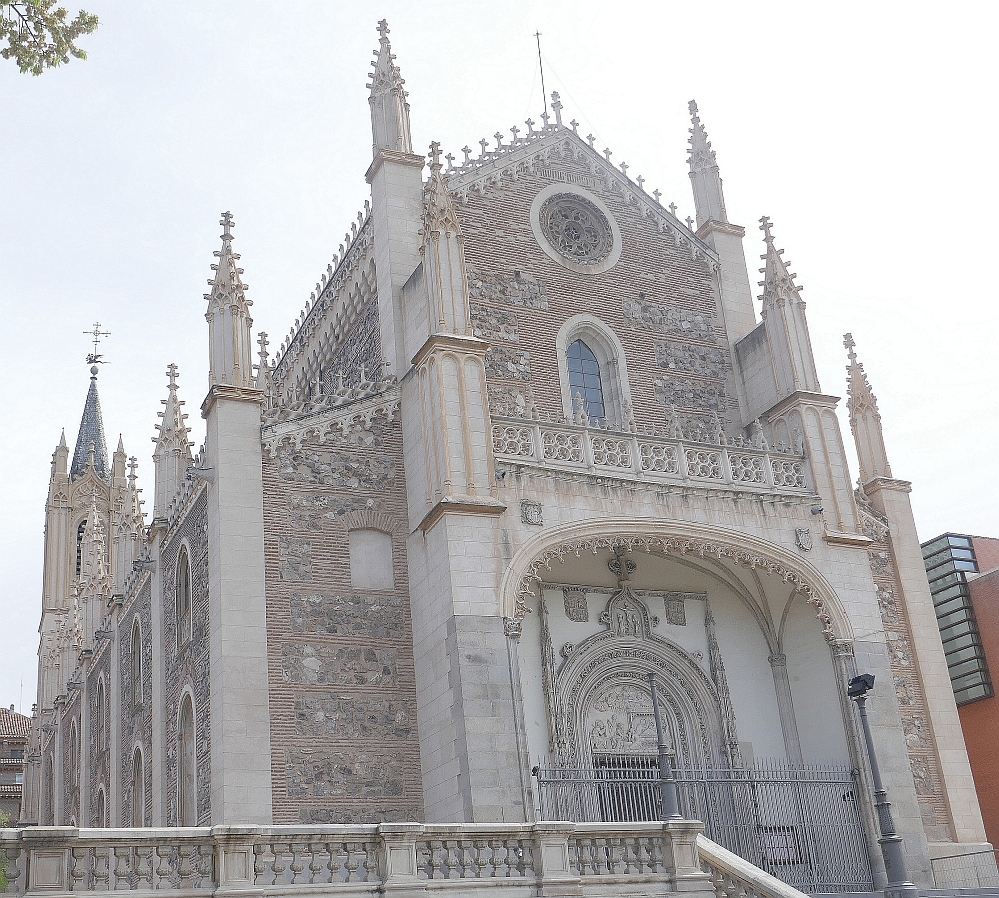
After dropping our bikes off up the hill from the Prado Museum, we began to retrace our steps back to our hotel past the huge Church of San Jeronimo el Real. This was a church built as part of a monastery back in the 15th century, developed on the orders of Enrique IV of Castille. It was also where the royal family stayed when they visited Madrid. Apparently this church belongs to the Prado Museum today and at the start of this century it was completely restored both inside and out. We continued our walk down hill and slowly strolled past the Prado, making a promise to ourselves that if we ever returned to Madrid, it would be the first place we visited.


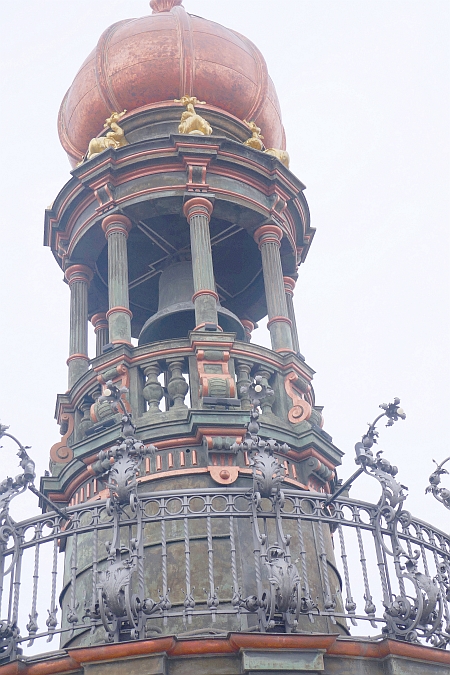
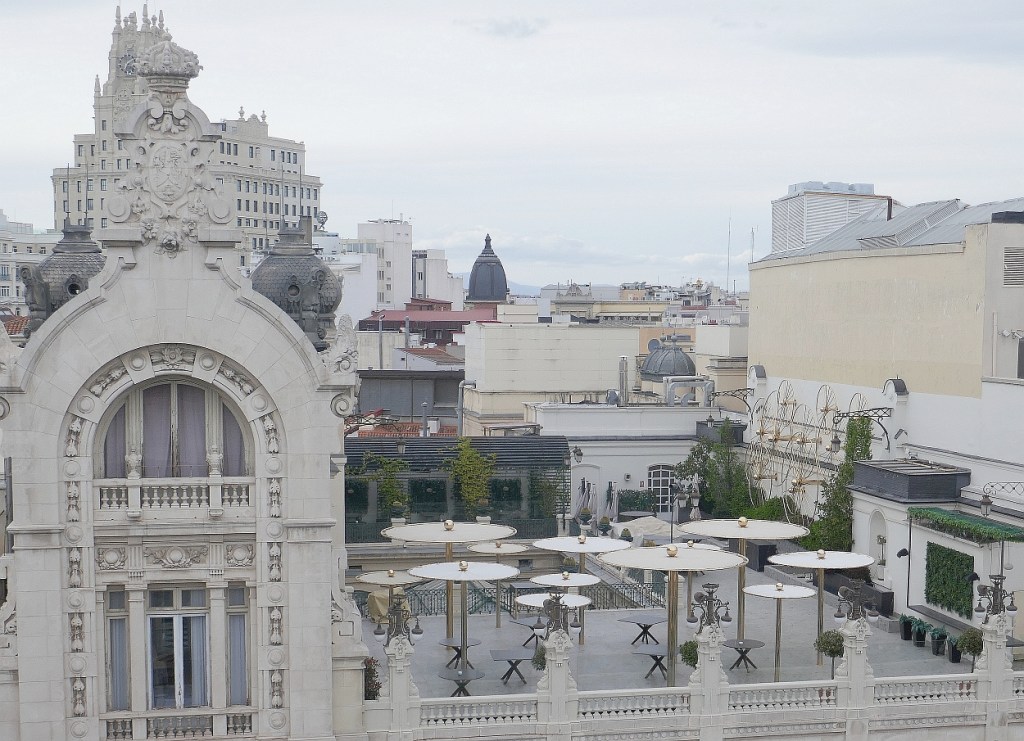
It was our last night in Madrid so we decided to go out and wine and dine at a hotel just over the road from where we were staying which had a very impressive roof-top restaurant. It wasn’t so much the food we enjoyed here but the amazing views over Madrid.

 FOGTRAVEL