The hotel we were staying at in Madrid was called Regina Hotel. It was a three-star hotel but we found it to be very well located and a lovely hotel to stay in. It was over the road from the Banco de Bilbao building with two ‘quadrigas’ on the roof; that is, statues of four horses drawing two-wheeled chariots. It was also very close to the Sevilla metro Station.
As usual after we settled in, we met in the foyer and planned our walk down Calle Alcala to our first destination which was Puerta del Sol.


We hadn’t gone far down the street when we encountered a feature of our neighbourhood that became part of our Madrid Days. It was a collection of classical musicians who appeared to be on the older side of the age range and clearly enjoyed playing wonderful music for the pedestrians as well as earning some pocket money. The quality of their music was exceptional, no matter the time of day or night that we encountered them.
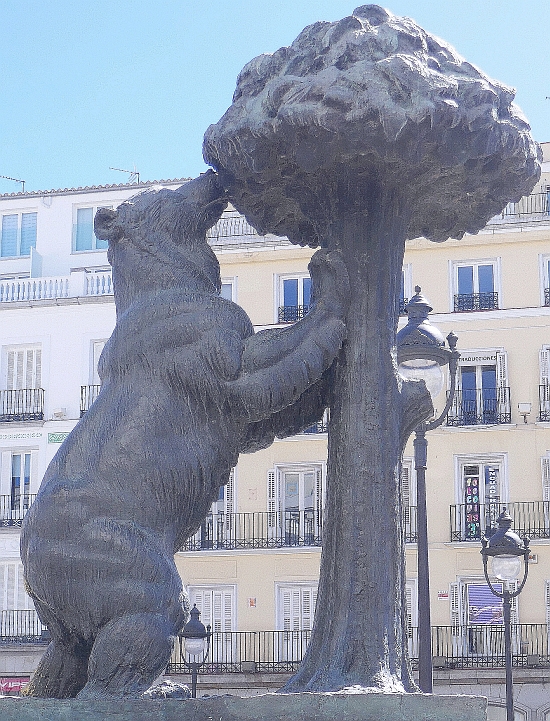
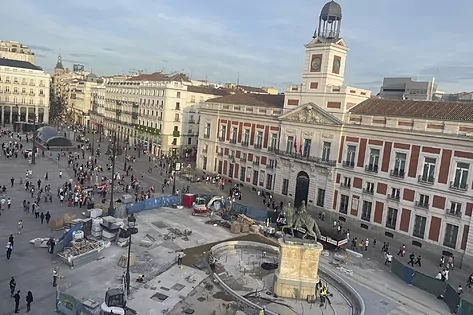
Puerta del Sol is a very large public Square and is considered to be one of the best known and busiest squares in the city. It began life in the 15th century where one of the gates of the city wall was located, a key part of the defences that surrounded Madrid at the time. It was this square that couriers coming from all over Spain gathered as they came to the city’s post office for the latest news. In the new Milenium it is where protesters gather to demonstrate against events like the 2004 attacks against commuter trains and the Iraq war in 2011. In 2020, the square was pedestrianized after being the meeting point of 6 major radial roads over its long history. The old Post Office in the square has become the office of the president of Madrid. In the image below in front of the old Post Office can be seen the mounted statue of Charles III of Spain who ensured that large public works occurred in Madrid. On the left below is the statue of the Bear and the Cherry Tree, the heraldic symbol of the city.
One of the lovely features of Madrid we first met in Puerta del Sol were the large coloured tiles that announced the name of the square. Curiously the fountain that is at the centre of this plaque was demolished in 1838; only the statue from the top has been preserved elsewhere in Madrid.
Unfortunately on the afternoon of our arrival in this square it was very hot and the much of the plaza seemed to be undergoing renovation and the dust and noise guaranteed that we didn’t stay long here. The map of our afternoon walk below shows that we walked into Calle de Arenal, the choice being easy as this street was lined with flowering trees so it was not only shady but very picturesque


Calle de Arenal quickly brought us into Plaza de Isabel II which is also referred to as the Plaza de Opera. Isabel II was not the famous Queen of Columbus’s day but reigned in Spain between 1833-1868 when the Spanish Royal Family was deposed after 35 years in the job. She would be one of the few Queens amongst the royal families of Europe who survived an attempted assassination by knife due to the significant embroidery on her dress. Her connection with this square is that she ordered the construction of the Teatro Royal Opera House that sits on the western edge of the Plaza. (See right below.)


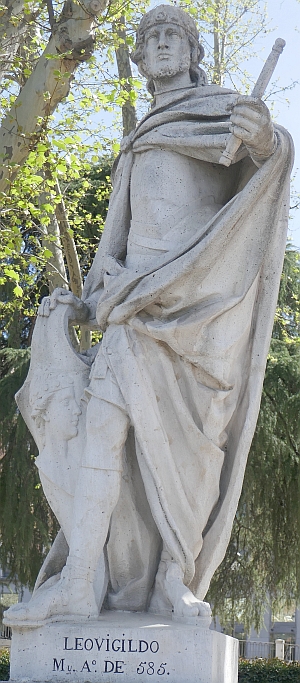
From the Plaza de Isabel II we walked down past the Royal Opera House and found ourselves in Plaza de Oriente which sits directly in front of the Royal Palace (Palacio Real). The regulation equestrian statue was of Philip IV, King of Spain in the heyday of the Spanish Empire, from 1621-1665. He had many statue companions in this plaza with 44 other statues of Kings starting back in the 5th Century.


The Palacio Real is the official residence of the Spanish Royal Family in the city of Madrid but is only used for state ceremonies. It is the largest royal palace in Europe. After having noted earlier in this blog that the Spanish Royal Family were deposed in 1865, it is pertinent to note that a constitutional monarchy was reinstated in Spain after the end of the Francoist regime and the restoration of democracy in 1977. The Palacio Real is owned by the Spanish State and is open to the public for visiting.
The site of the palace was an important historical site in Madrid before the 18th century as it was where a Muslim era fortress had existed in the 9th century between 860-880. The palace that stood here during the period of the Habsburg family reign was called the Alcazar and was destroyed by fire in 1734, a fire which burned for four days. The current palace was built between 1738 and 1755.

By returning to the map placed earlier in this blog, it shows a reasonable outline of the extent of the palace and the large square (Plaza de la Armeria) that separates the palace from the Almudena Cathedral. When we were in Plaza de la America (below right), the tourist line to enter the Palace was exceedingly long so we decided that we should see more of Madrid rather than the rooms of the royal palace. On our next day in Madrid, we had decided we would do an organised bike tour of the city so we expected to see more of the palace tomorrow.


We didn’t enter the Almudena Cathedral (above left) but examined its ornate façade that faced the palace. It is suggested that this church was built over the remains of a medieval mosque that was destroyed when Madrid was reconquered by Christian forces. The foundation stone was laid in 1883, interrupted by the Spanish Civil War and wasn’t completed until 1993. We walked to the far side of the Plaza Armeria and checked out the views of the suburbs of Madrid that stretched into the distance.

From the area of the Royal Palace, our walk took us back in the direction of our hotel via another of Madrid’s famous plazas, Plaza Mayor. Not far from the Cathedral, we passed the attractive Church of the Sacrament (Iglesia del Sacramento), a 17th century Baroque-style church. Since 1980 it has been nominated as the Military Cathedral of Spain. (Note left below).


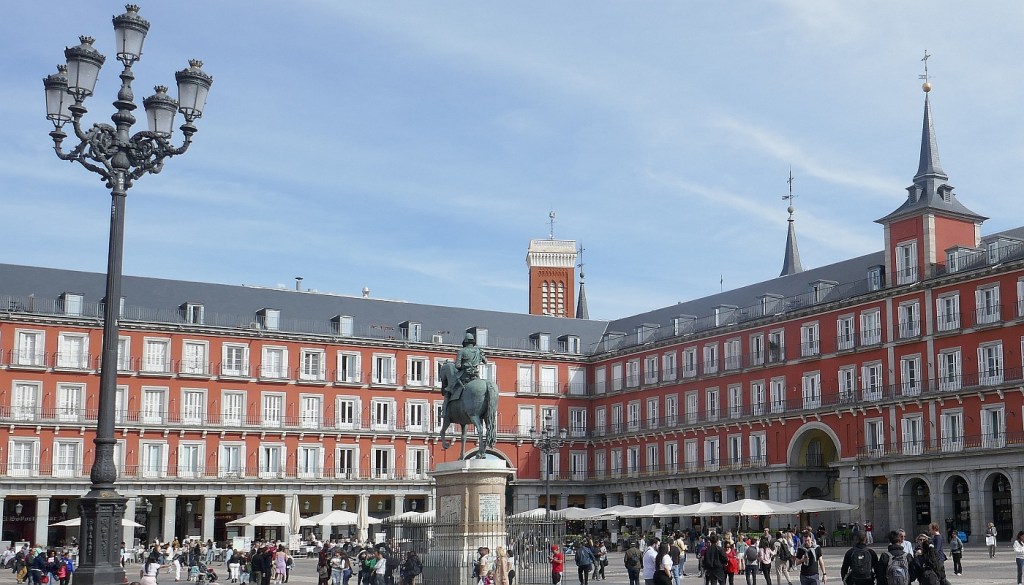
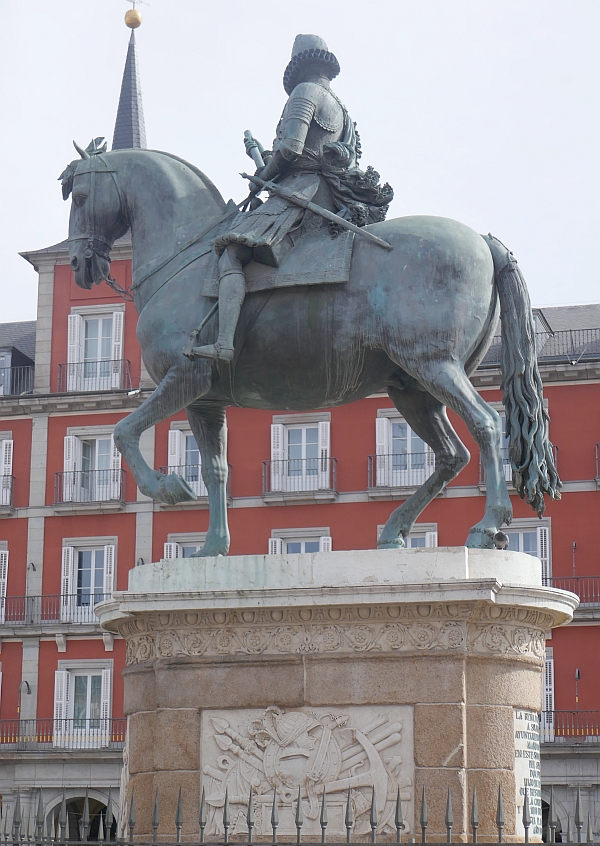
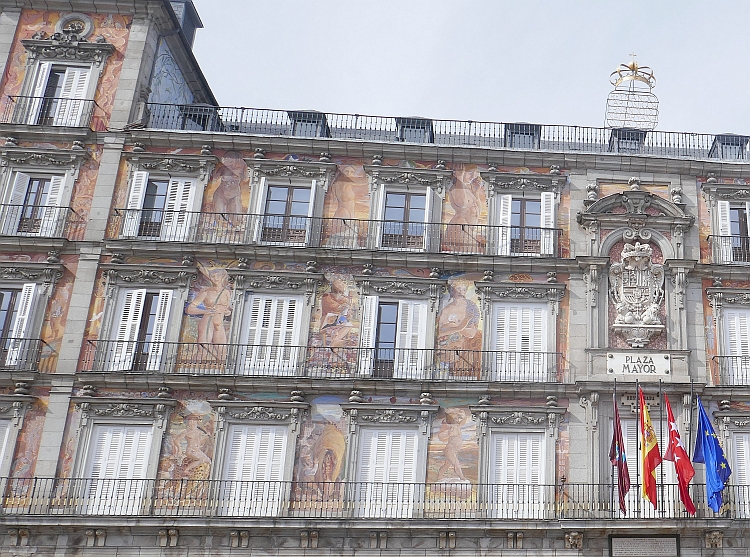
The Plaza Mayor is a huge an extravagant square in what was once the old centre of Madrid in the 16th and 17 the centuries. This was during the reign of Philip III (1578-1621) whose long reign coincided with Spain’s development of huge wealth and empire . In the image below can be seen the equestrian statue of Philip III towards the centre of the square.
Like so many other major buildings in Spanish cities, fire was always a huge problem here. Plaza mayor suffered at least three major fires over the centuries (1631, 1670, and 1790). Originally the square’s surrounding buildings were five stories but the last major fire forced the architect to reduce the size of the Plaza’ building to three stories. There are 237 balconies facing into the square.
Below is a copy of an oil painting depicting the arrival of Charles III in Plaza Mayor, the King of Spain between 1759 and 1788 (Courtesy Wikipedia).

From the Plaza Mayor we made our way back to Calle Mayor and walked up this street to Plaza del Sol. The heat had gone out of the day so our passage through this plaza was a lot more comfortable than our earlier visit to this square. Our group of classical music buskers were still entertaining the passer-byes as we approached our hotel. That night we had decided to buy tickets to a Flamenco Dancing show not far from where we staying. It was a very enjoyable night with lots of guitar playing and amazing dancing

 FOGTRAVEL