I was surprised to read that Roman Forts, that were one of the keys to the Roman army’s success in expanding the territory of their empire, have never been found in Italy until recent years. However, in 2015, a group of archaeologists found an early Roman fortification system not far from Trieste by using advances in ground penetrating radar. The fort had been built as early as the third century BCE . They propose that this fort may have been the beginning of the development of the Roman City of Tergeste, the ancestor of the modern city of Trieste. I shouldn’t have been surprised then to discover the rich Roman history of this northern Italian town.
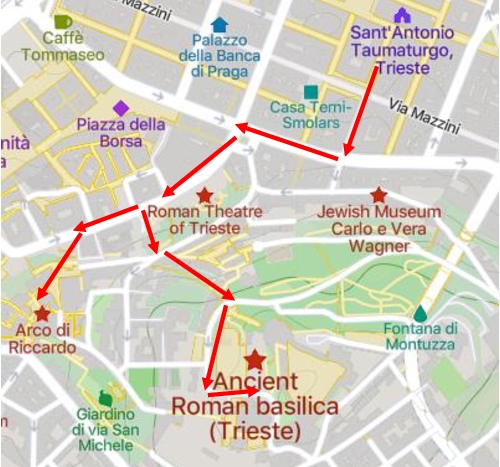
My personal investigation of Trieste’s Roman history began just after I had inspected the church of Saint Anthony of Taumaturgo. I knew there was a Roman theatre not far from where I had strolled to the top of Trieste’s Grande Canal’ and without a close inspection of my newly acquired map, I turned right and began to walk in the vague direction of the prominent St Giusto Hill where I thought the remains of the theatre were situated. I arrived back at Corso Italia and noticed down the road from me, there was a large group of tourists who appeared to be determinedly heading in a particular direction. I decided they might be going to the theatre so I tagged along and with little effort on my part, found the Roman Theatre.
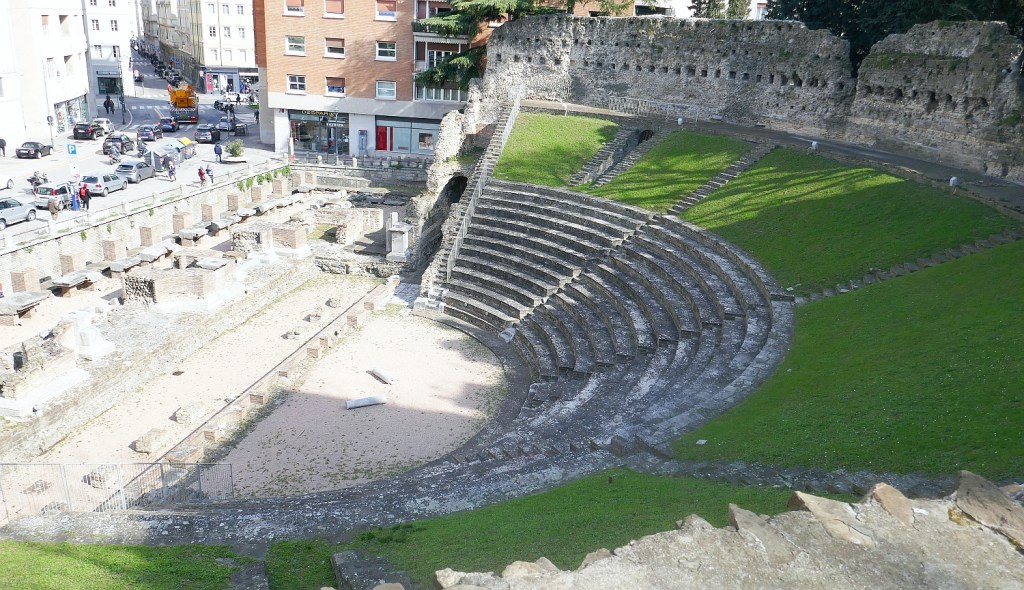
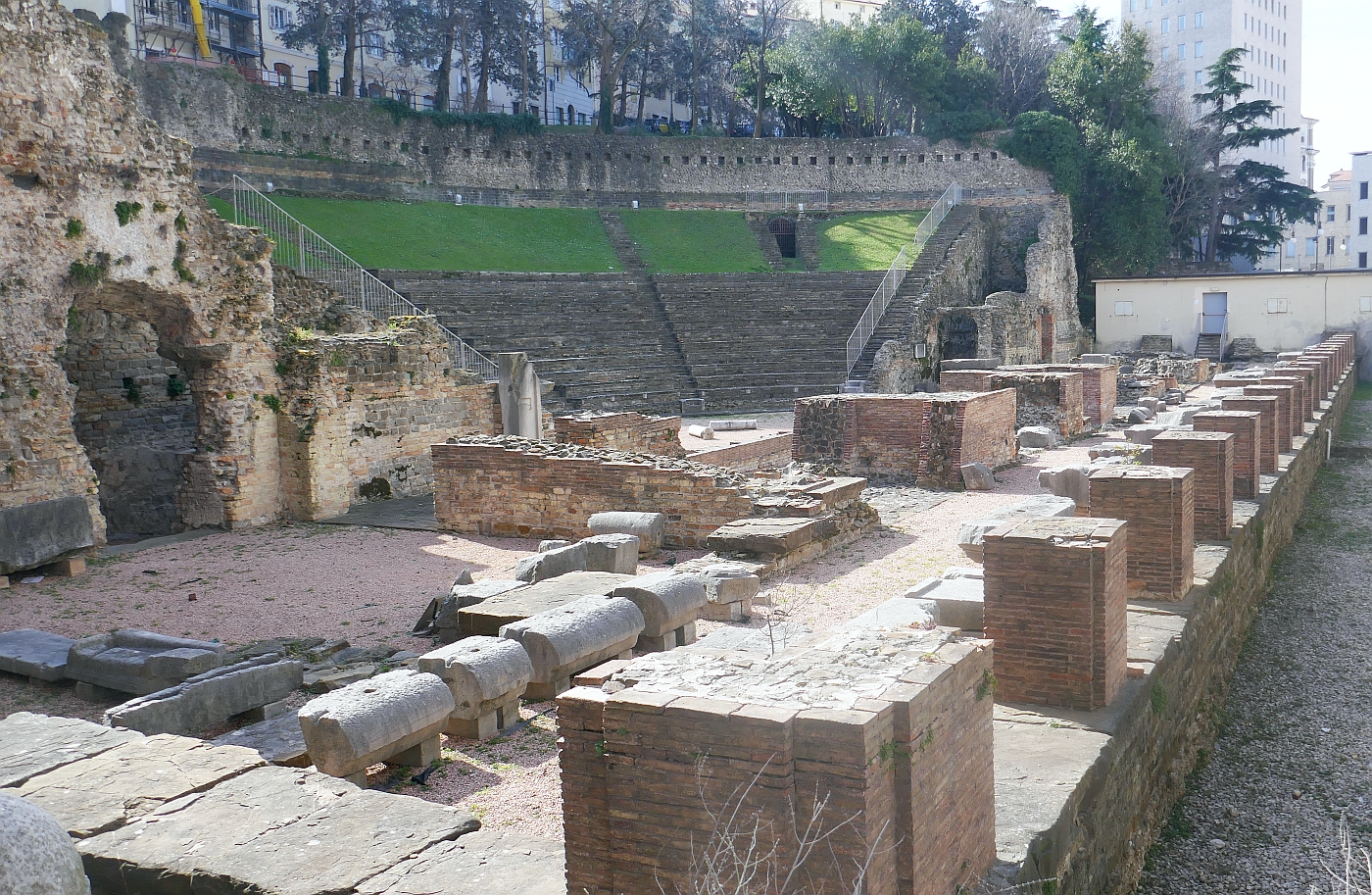
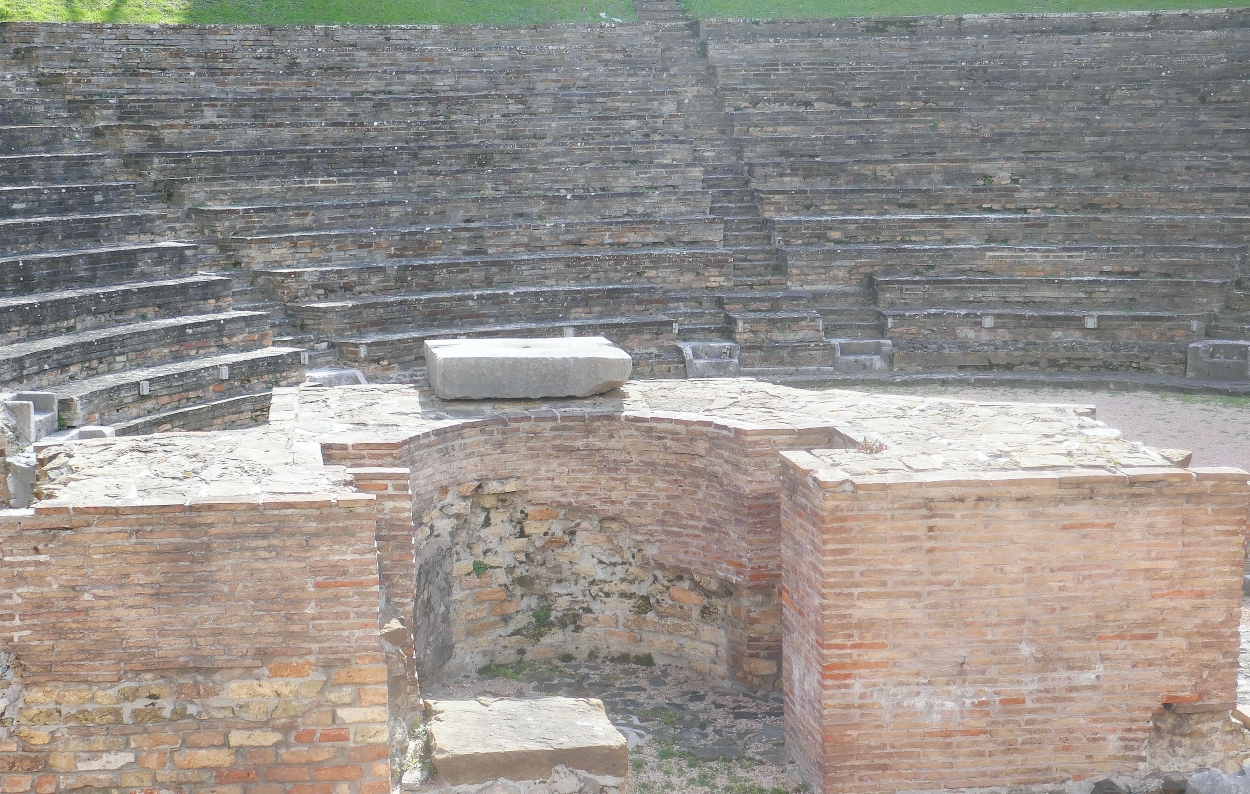
To get a good photo of the extent of the Roman Theatre, I had to wait until I was able to walk above the structure. The theatre was built in the first century CE outside the walls built by the Romans to protect their city. Like so many ancient theatres, it didn’t survive the rise of Christianity and was eventually covered over by houses in the Middle Ages and forgotten. In 1814 one Pietro Nobile decided to find where the original theatre was and given that a local suburb was called Rena Vecia (Old Arena), he determined that it still existed under the houses of the area. However, the old theatre still did not re-emerge until the 1930s when council works began removing houses as part of their urban regeneration plans. As the photo above shows, there were significant amounts of the Roman Theatre left to be brought to light nearly 1800 years after its construction.
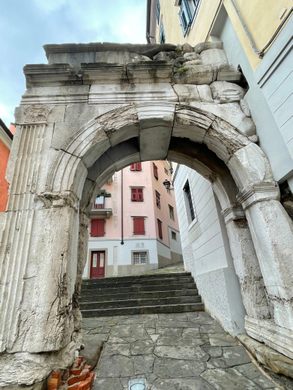
Before continuing up St Giusto Hill, I decided I was nearby another Roman survivor in the form of an old gate from the old Roman Wall that surrounded Roman Trieste called ‘Richard’s Arch’. These walls were built by Augustus in 33-32 BCE to protect the citizens of his town of Tergeste as the Roman Army had plenty to do in the area resisting the inroads of pirates and local populations who resented the presence of a Roman city here. The area around this gate was densely populated in the early 20th century and is associated with the literary crowd living in Trieste associated with James Joyce. The gate was partly uncovered in 1913 when again council work was renovating the area.
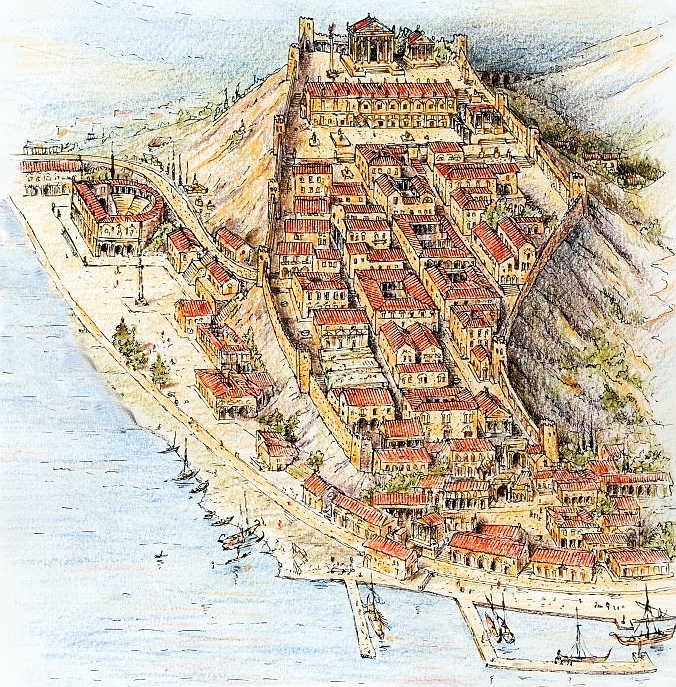
There is an excellent website (https://yestour.it/) dealing with the Paleochristian remains of a church in the cemetery area of Trieste. The map to the right comes from this site and illustrates what the early Trieste looked like. It shows that the Adriatic Sea came quite close to the Roman amphitheatre and St Giusto Hill. Old wharves of sandstone slabs were found near the theatre and reveal how the sea has retreated over 250 metres since Roman times. From Richard’s Arch I walked back to the Roman Theatre and used the pathway in the park next to the theatre to begin my walk up the hill towards where I expected to find the Trieste Cathedral. It was a steep slow walk up the hill and I encountered a local coming down the path towards me and I asked him if this was the right direction to the Cathedral. He replied that it didn’t really matter what street I was on, I just had to keep progressing to the top of the hill!

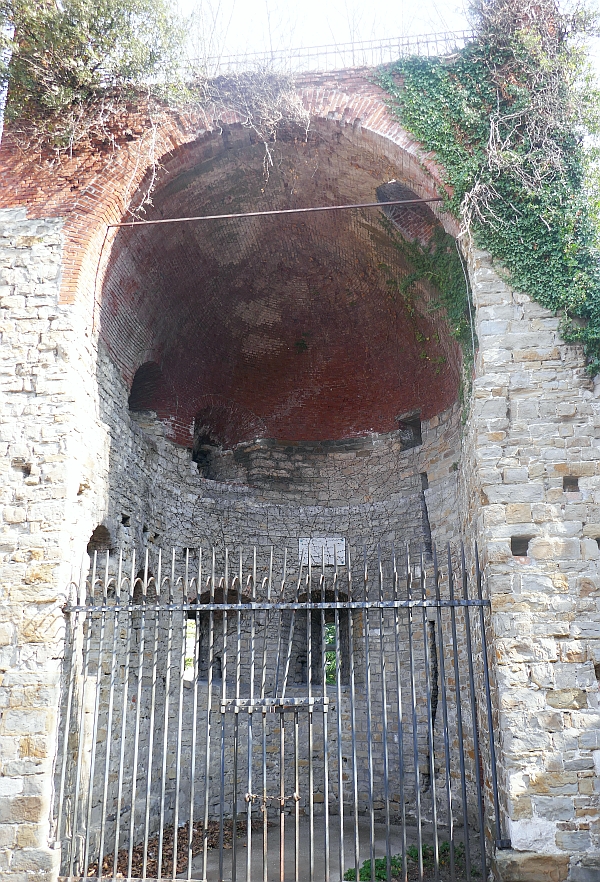
Not far from my hill-top destination, I came across a stone tower that was covered with a climbing plant that almost obscured the whole tower. It is called Tor Cucherna and was built in the 14th century. It was apparently used as a second defence of the city in that soldiers on the tower kept a close eye on the walls of Trieste. The pathway from the front of the tower was guesswork but when I got to the other side of the Tor Cucherna, I discovered it was only half a tower. The tower was apparently restored in 1910 but I did not discover what happened to the back half of the tower.
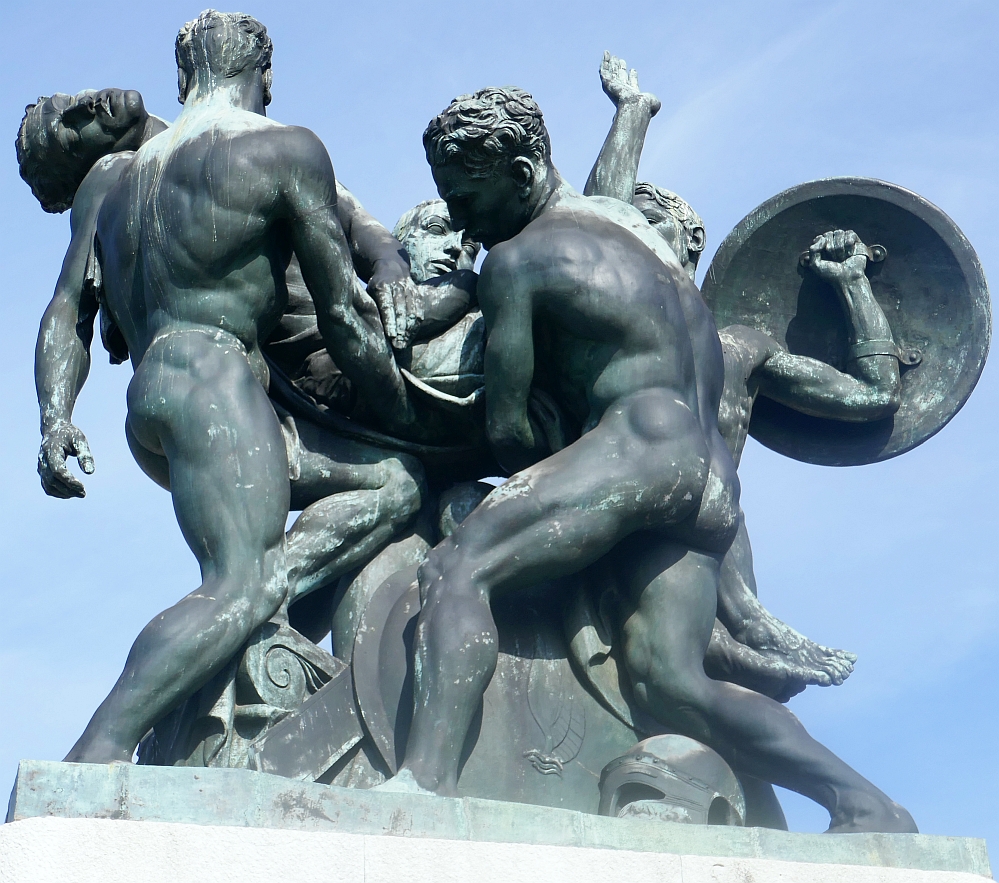
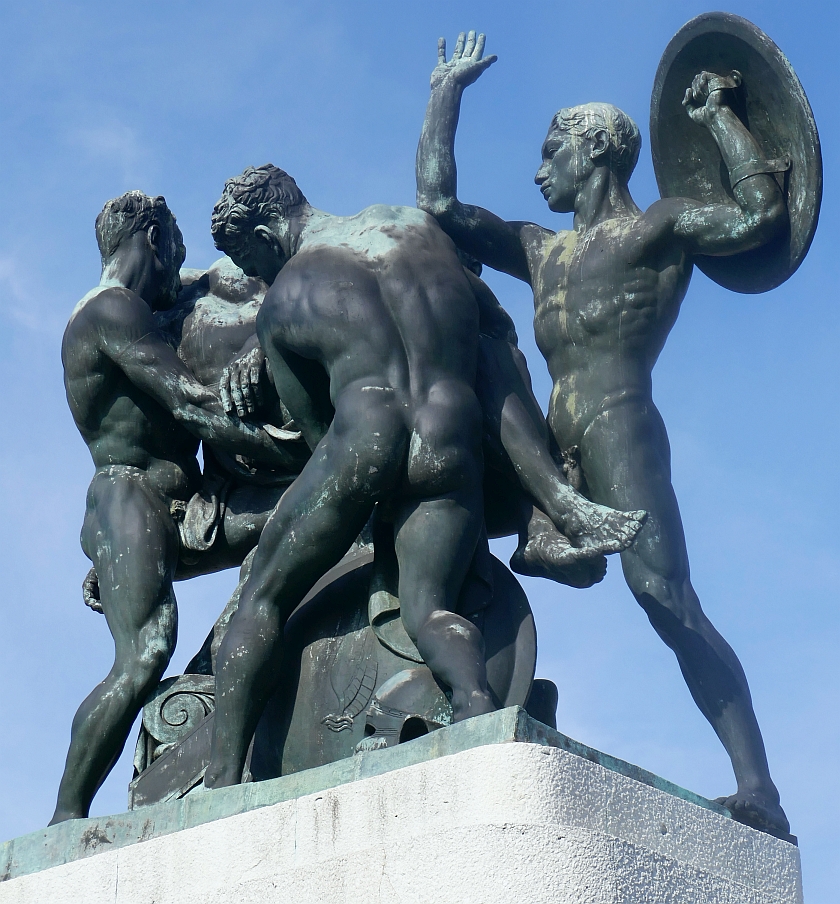
It wasn’t that far to go after I had passed the Tor Cucherna before I arrived at the edge of the Memorial Park (Parco della Rimembranza) that is close to the huge platform that covers the top of Colle Di San Giusto. There is a very impressive monument here that shows three men supporting a wounded comrade and another who protects the other soldiers with his raised shield. It was erected in 1935 to honour those soldiers who did not return after WWI. The King of Italy, Emmanuel III, with a fair number of Fascist Officials oversaw the unveiling ceremony. A curious consequence for the city was that the excavations for this monument led to the discovery of the old Roman Forum that once sat on top of this hill.

I hadn’t done much research about this hilltop before I walked up here so my attention was more drawn to the huge fortress on the site that had been built over two centuries (1468-1636) by the Austrians who had taken control of Trieste in 1382. The area between the memorial and the castle looked more like an old tennis court than anything else. However after walking along beside it, I realised that very few tennis courts hold the remains of Roman columns.
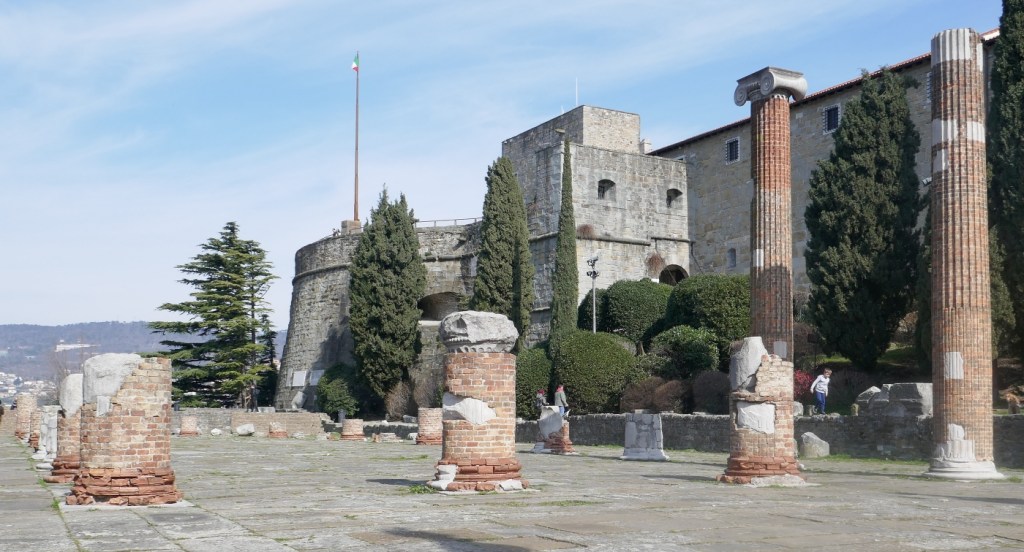
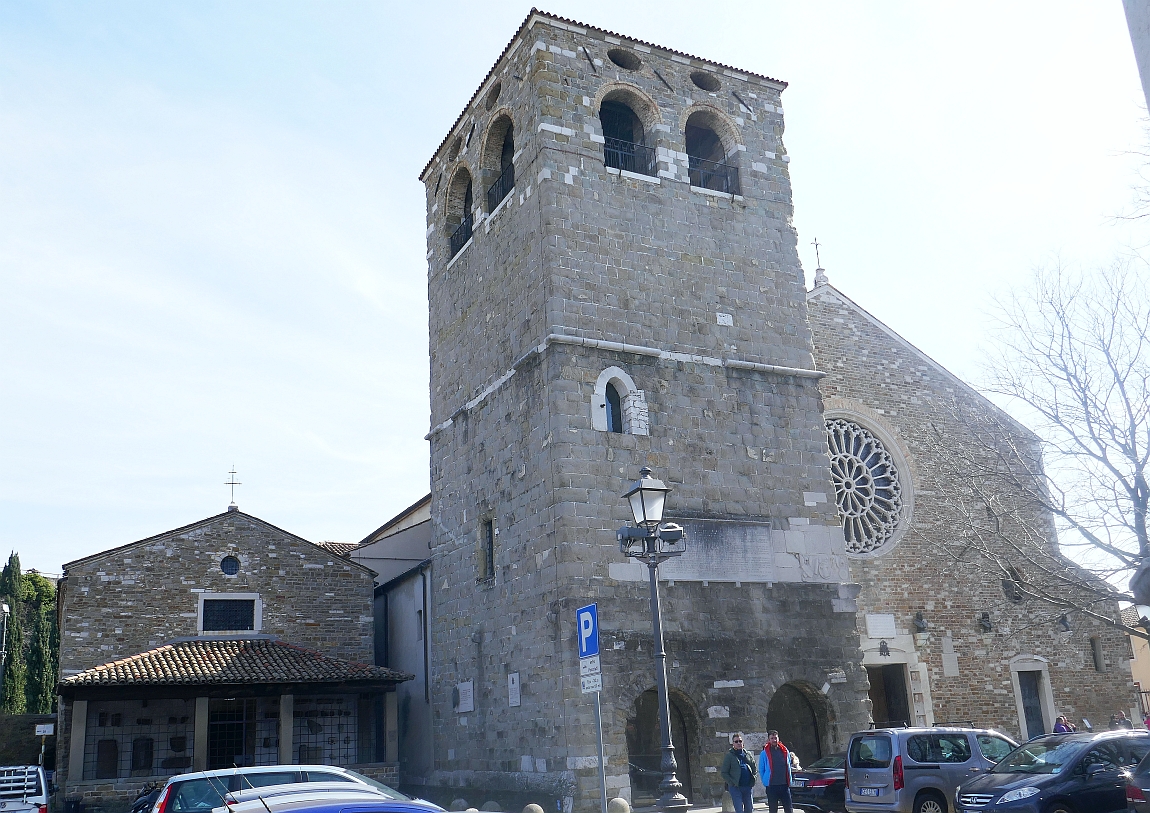
The top of the Colle Di San Giusto is a very complex place with the remains of buildings that have been built here over the last two millennia. In the image to the left below can be seen the body of Trieste Cathedral with an attached bell tower facing towards the remains of what is considered to be the original Capitoline Temple and the associated forum of the Roman town of Tergeste. When the citizens built the first church on the site here in the 6th century CE, they incorporated the Propylaea (ornamental gateway) of the original Roman temple into the walls of their bell-tower.
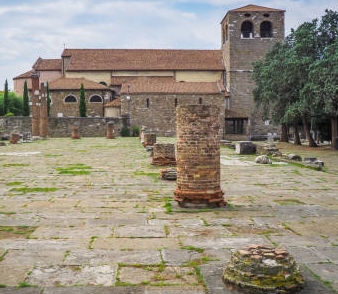

When I arrived to inspect the Trieste Cathedral, there was a mass on so I wasn’t free to do a tourist inspection of this very old church. I went to the doorway of the bell-tower and noted that it could normally be visited for the price of two euro. Again there was no entry available at the time so I took a photo of the advertising poster just inside the doorway of the Tower and didn’t give it another thought until after I had returned home and began writing this blog. In the image (above right), the original pillars of the monumental gate can be seen with the stones of the Christian church filling all the gaps in between. There is a faint diagram of a monumental gate also included on the large poster. I wonder if these Roman pillars contained within the wall of the belltower prompted curious questions from Trieste parishioners over the centuries about what happened to the original temple that once stood here. As mentioned earlier, the remains of the Roman Forum were not uncovered until 1935.
On the left below is the bell tower and on the right, the façade of the Trieste Cathedral.

By the time I turned my attention to the Castle of San Giusto, I realised I had used up most of my walking time and I needed to get back down the hill and make my couple of hours train journey back to Venice. It would take a solid morning to visit the castle, not only to examine the structures of the fortress itself but also to visit the two museums in the building. In one of the towers (the Lalio Bastion) is the Tergeste Lapdarium which has a large collection of exhibits found by the archaeologists when the old Roman forum was discovered two metres below the surface of the top of San Giusto Hill.

ABOVE IMAGE: Courtesy: https://www.travelinpink.com/

I discovered I could walk down the road that led up to the top of the hill and this revealed to me the rest of the Parco della Rimembranza. Whilst being designed as a park to walk in, it also held many memorial stones and graves of city’s war dead. This walk took me past one side of the fortress; the photo below shows one of a number of bastions that make up Castello di San Giusto.

I decided I knew the approximate way back to the train station so I decided I would head towards the Grande Canal as I knew I had missed a James Joyce statue there when I visited the churches above this central area of Trieste.
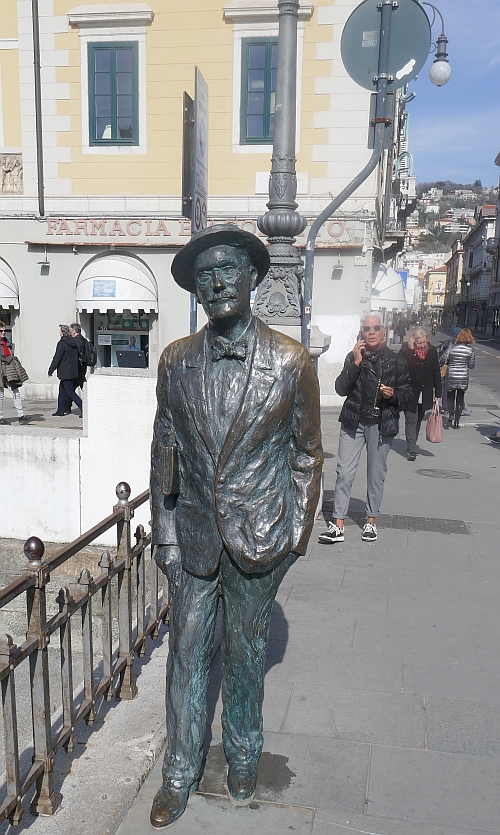
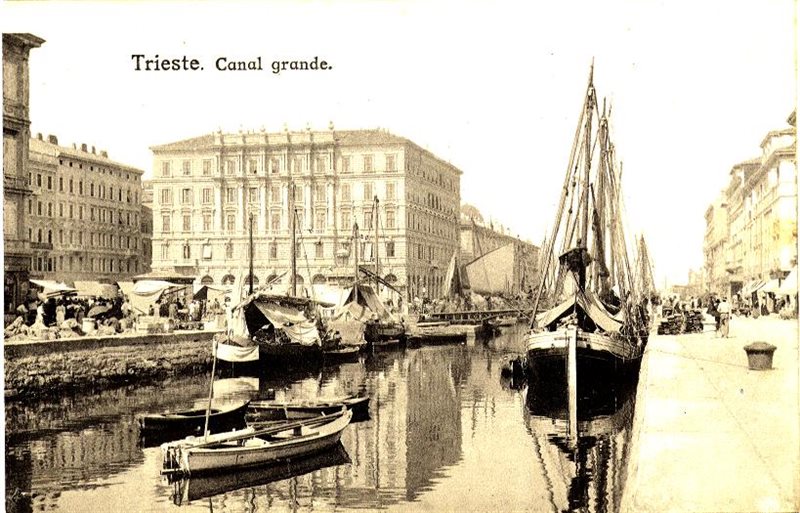
James Joyce is most famous for his giant of a novel, Ulysses…or as he described it,
“ a quintessence of consecration and desecration, at once serious and comical, hermetic and skittish, full of consequence and inconsequence, sounds and silences, lappings and anapests, horse hooves and oxen thuds, and a motley crew of Dubliners on June 16, 1904.”
He wrote the novel in three European cities, Zurich, Trieste and he finished it in Paris. He returned to Trieste after World War Two. When I arrived at his statue next to the Grande canal, I basically had to wait in line for the privilege of taking his photo. What a great day I had in Trieste!

 FOGTRAVEL