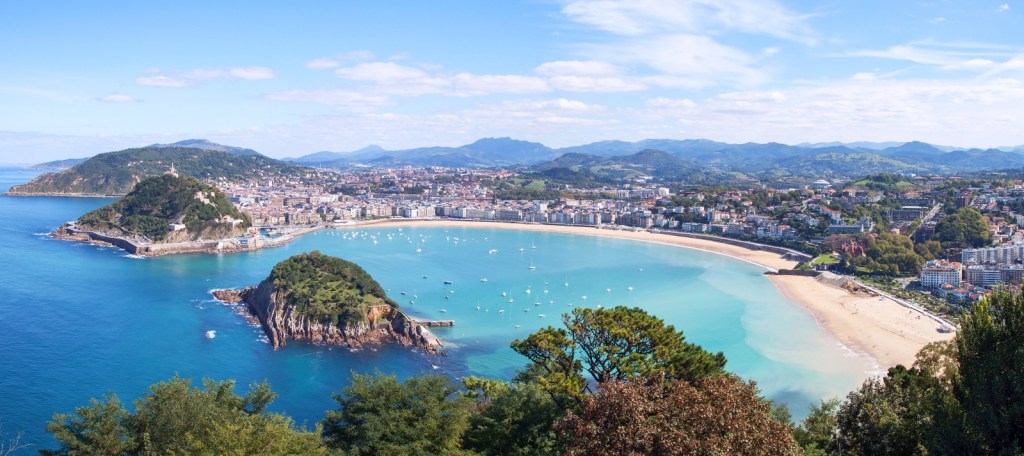
After our long drive from Laguardia, we were very happy to see the coast of the Bay of Biscay and the city of San Sebastian. It took a while for our van driver to find Hotel Catalonia as it was hidden on the top of a small mount in the centre of town, not far from San Sebastian’s beautiful, curved beach (Image below courtesy Wikipedia). We were now only 20 kilometres from the border of France, presumably a crossing point for so many pilgrims heading towards Santiago de Compestela at the other end of this coastline when it curves around to greet the Atlantic Ocean.

Unsurprisingly for a city on the coastline of the Bay of Biscay, humanity has lived here for a long time. For example there is evidence of Homo Sapiens living near the site of San Salvador in pre-history times, from about 24,000 BCE. While we were at La Guardia, we were told that there were Roman Ruins outside this hill-top town; the same for this city. There was a Roman settlement nearby between 50 and 200 CE.
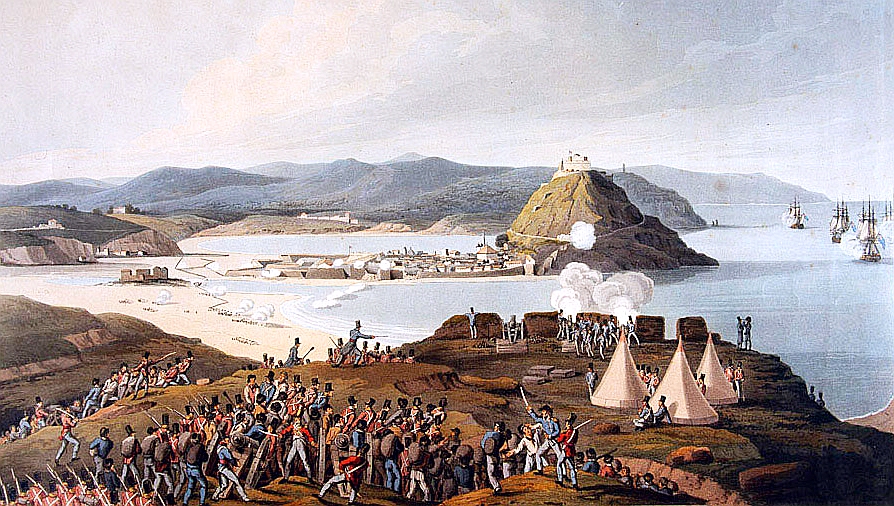
The medieval period experience of this city was of almost endless conflict between the powers of France across the border and local kings. Perhaps the most devastating event in the history of San Sebastian was the conquering of the town in 1808 by Napoleon’s troops. The city was attacked by British ships 5 years later which led to the almost complete destruction of the city. The British had taken over the island of Santa Clara as the base for the attack which can be seen in the above panorama between the two headlands of San Sebastian as well as the historical image to the right.
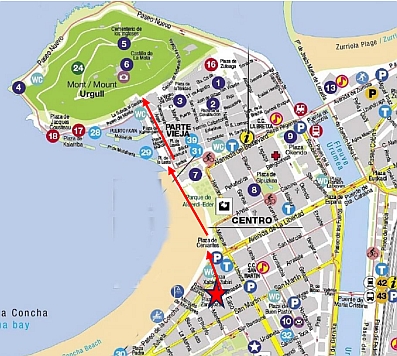
As was our usual practice, we very quickly settled into our rooms and our group of five then set out to for the city’s beachfront. The direction of our walk can be seen on the map to the right. Curiously the first thing that stood out when we arrived at the beach boardwalk was a very large black gorilla that was waving to passerbyes, urging them to get their photo taken with him. I think the tourist business-men of Spain had decided that Gorilla photos were the new thing to exttract money from the passing tourists as we met up with numbers of them as we travelled along the north of Spain and then down to Madrid. Luckily, we escaped the clutches of the unphotogenic gorilla and kept walking down to the end of the beach where there was a significant administrative centre of San Sebastian.
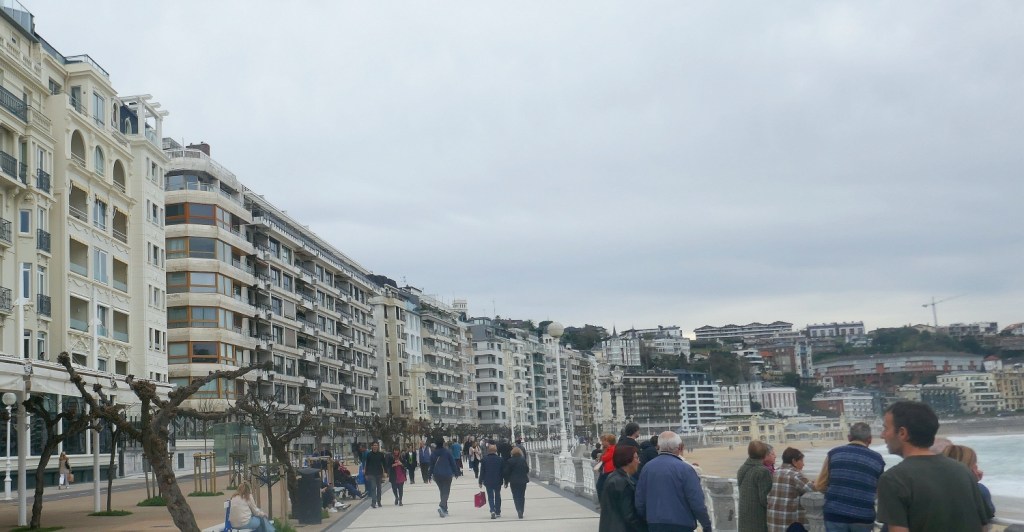
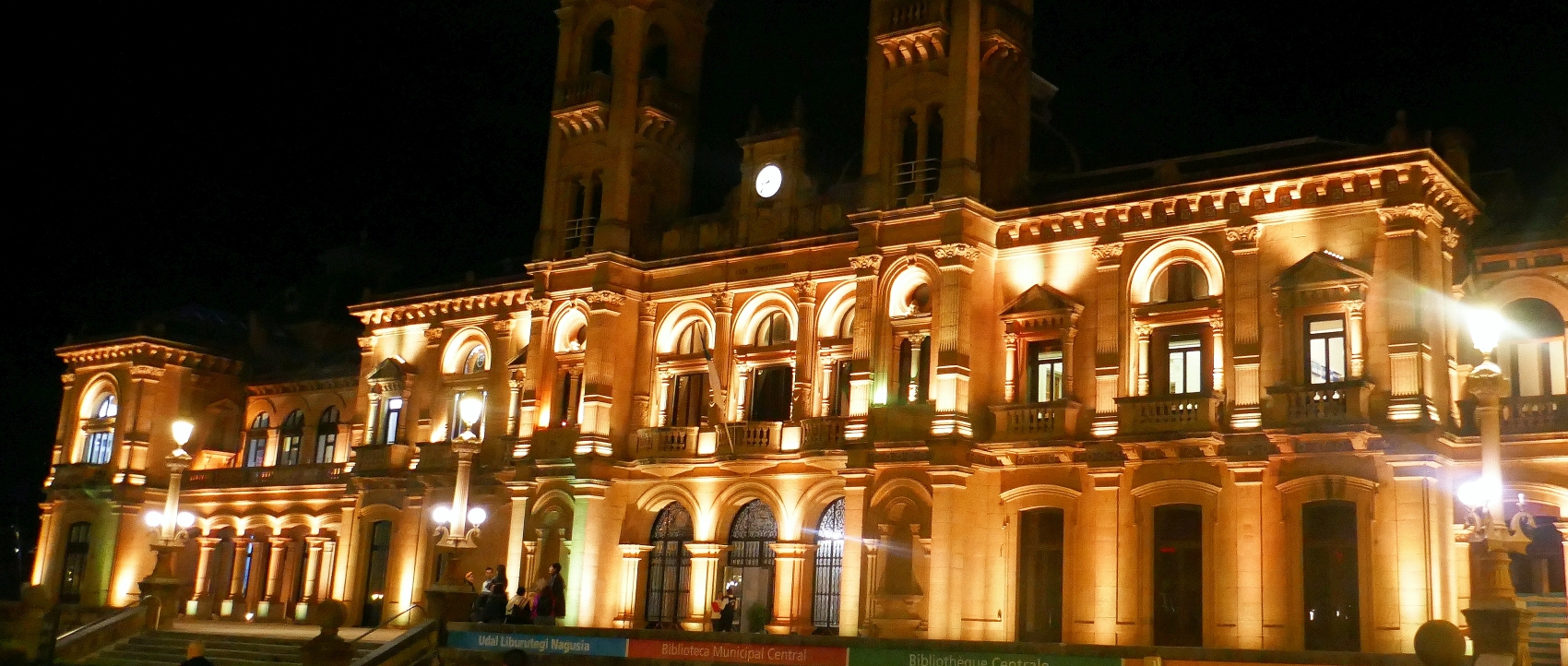
Both bridges and boardwalks in San Sebastian were beautified by the handsome street-lamp posts. Below left is one example of these significant decorations that accompanied many of the walks in this city. To the right below, the photo shows is one end of the San Sebastian city hall that sits not far from the end of the beach. It was surrounded by some very impressive parklands.
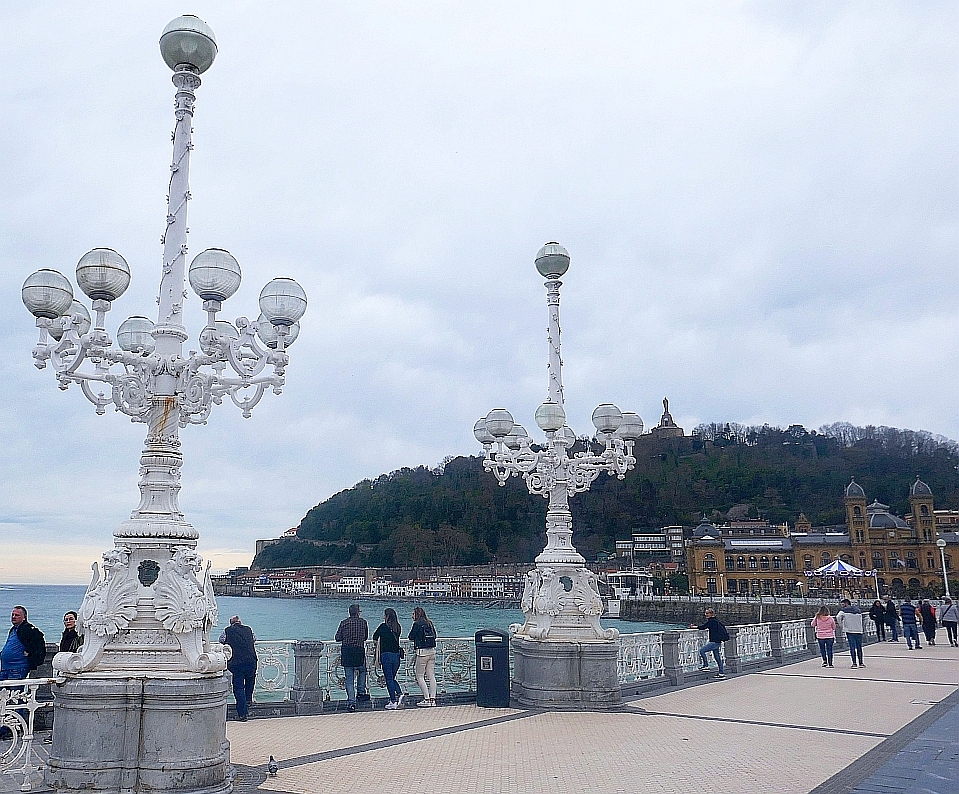
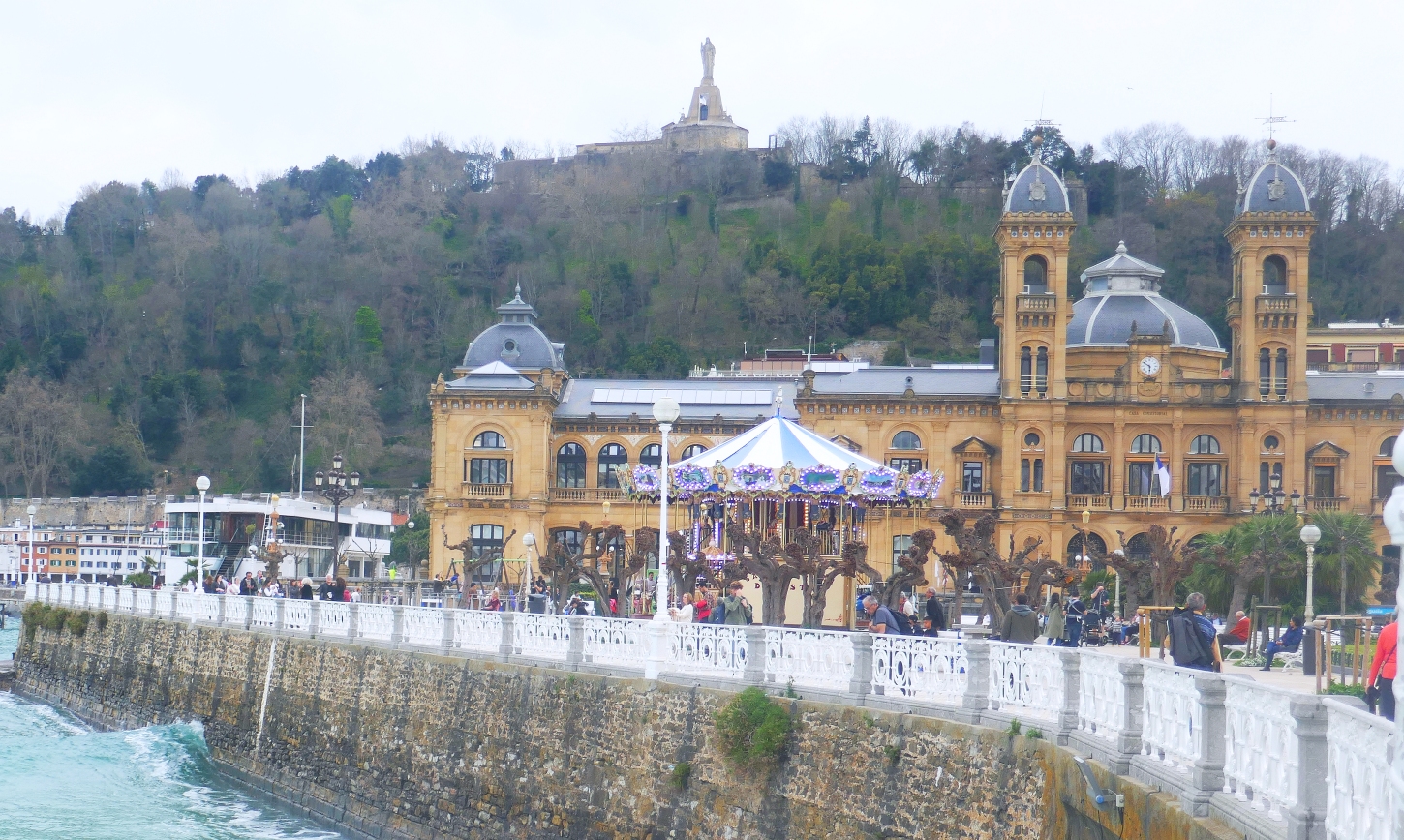
Before we got to the City-Hall we passed a significant sculptural group at the edge of a park that depicted two of the most famous characters in Spanish Literature, Don Quixote and his ‘side-kick’, Sancho Panza. The novel was written in 1615 and is considered a foundational work of Western Literature. The sculptures are a marvelous depiction of the two characters winding their way through the landscapes of Spain, intent on their adventures.
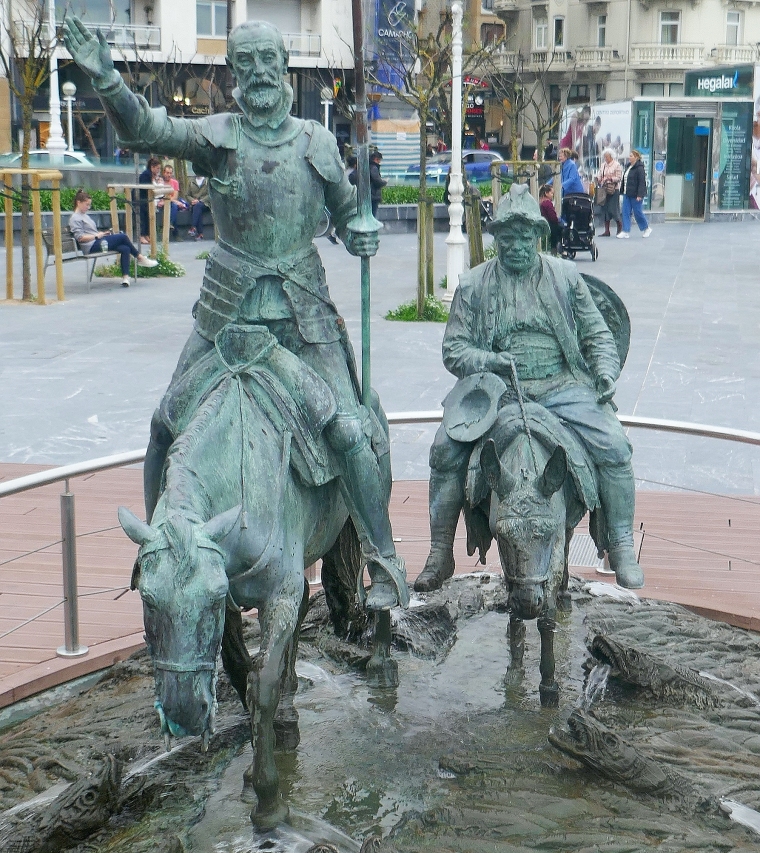
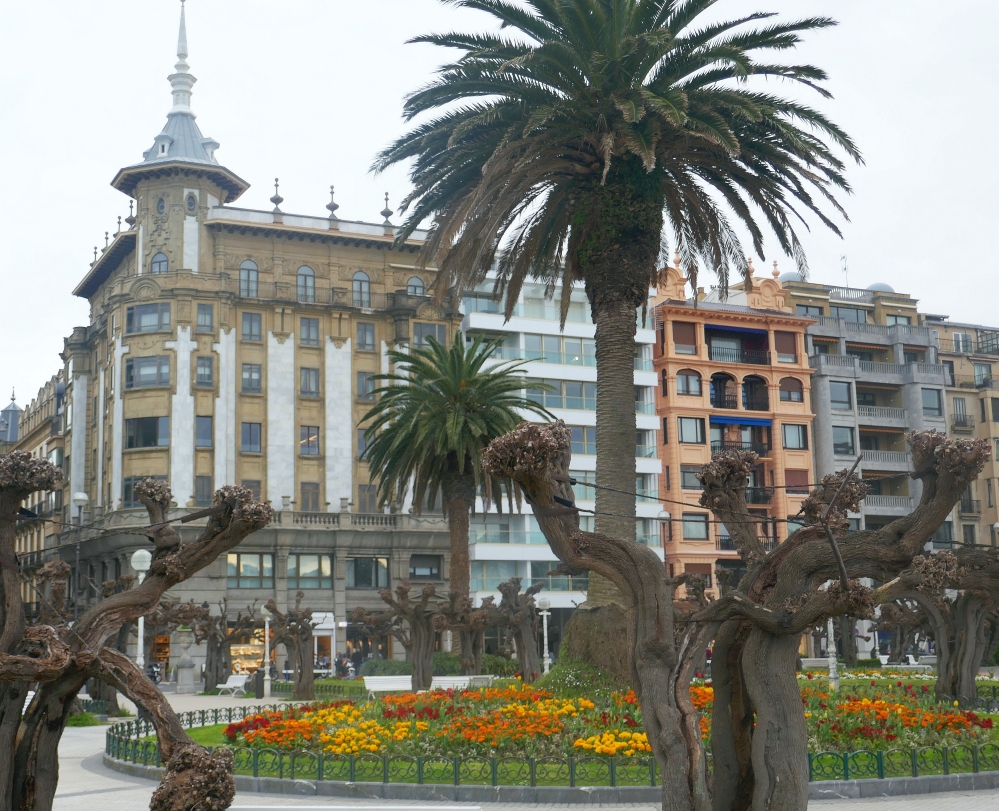
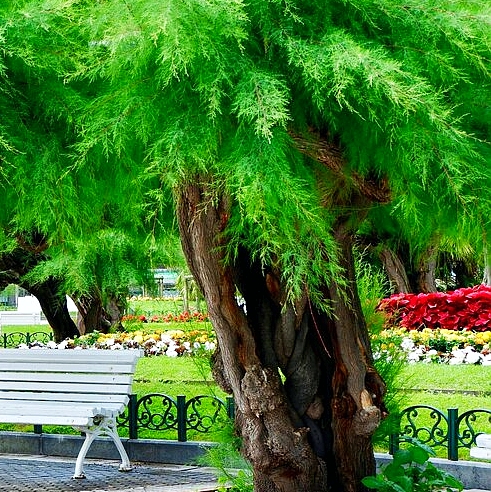
The park pictured in the image to the right above was just across from the Town Hall building with spring flowers in bloom. At the front of the photo can be seen the trunks of bushes that have been heavily pruned. The city is clearly proud of these bushes in their summer foliage, so much so that they put up an Information board to explain them…The “Tamarax Pentandra” was first introduced in San Sebastian in the year 1885 due to its suitability to “La Concha” Bay area and its resistance to sea winds. The Tamarix set forms a very singular historical garden of great beauty that has become a true icon of the city. (The image to the right is the bush in seasonal foliage.)
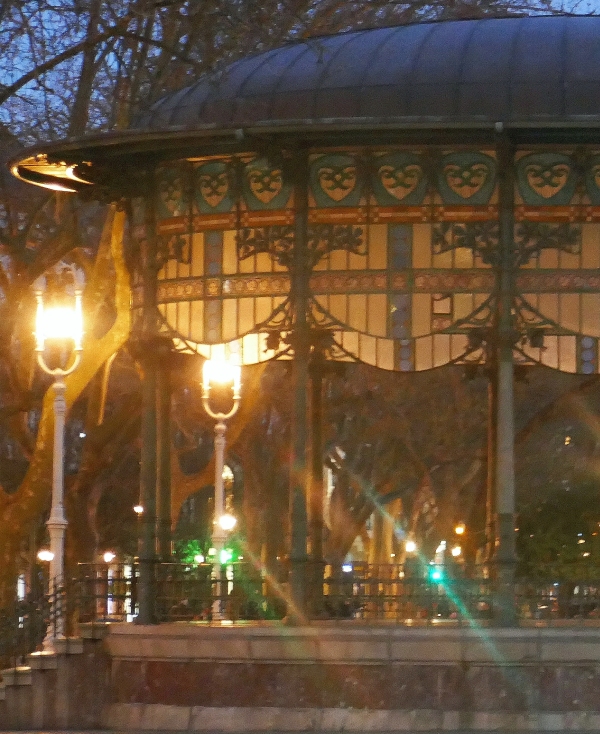
On the way home from our walk, the sun was setting over La Concha Bay and the city of San Sebastian. This meant that photos of the ‘Belle Epoque’ carousel in one of the parks as well as City Hall behind it were taking on their evening faces.
The sun setting over the horizon out beyond the Bay of Biscay created an amazing, coloured spectacle over the Bay, the colours reflecting back off the sky and the wet sand of La Concha Bay.

 FOGTRAVEL