We had a very pleasant three days in Cape Town and on our fourth day, a driver collected us from the ‘Twelve Apostles’ Hotel and drove us back to the other side of Cape Town to the airport. Our journey today was to take us to Kruger National Park where we would be staying at the Londelozi Game Reserve for the next three days. From Capetown we flew to the Kruger Mpumalanga Airport (KMI airport). We were picked up here by our next driver whose job was to drive us the nearly 3 hours to Kruger National Park; more specifically, the Sabi Sands Game Reserve (Londolozi).


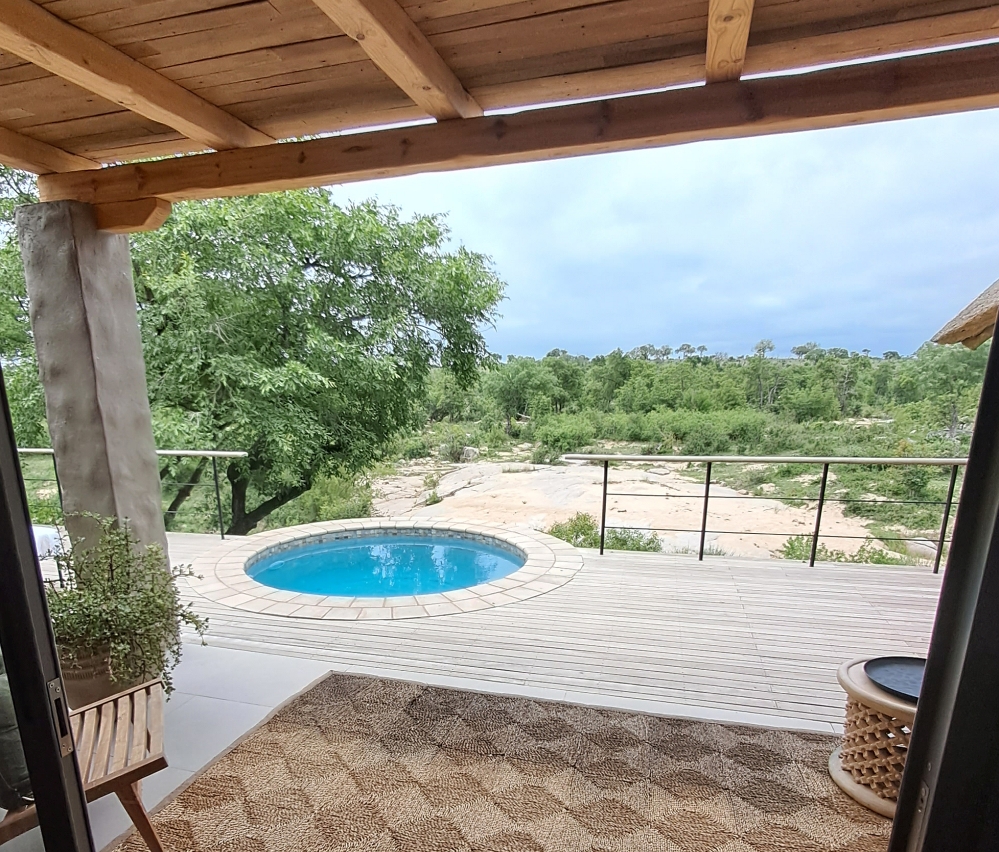
We were welcomed by our driver for the next three days as well as our hostess who kept us fed and watered over our stay. We were due to go out for our first drive after lunch so in the meantime we were led to our gorgeous accommodation (images below) to settle in. Our ‘Cabin’ sat at the edge of the Sand River and the water was quite low at the time of our stay. This meant that the banks of the river were a pathway for the roaming animals that were passing up stream.

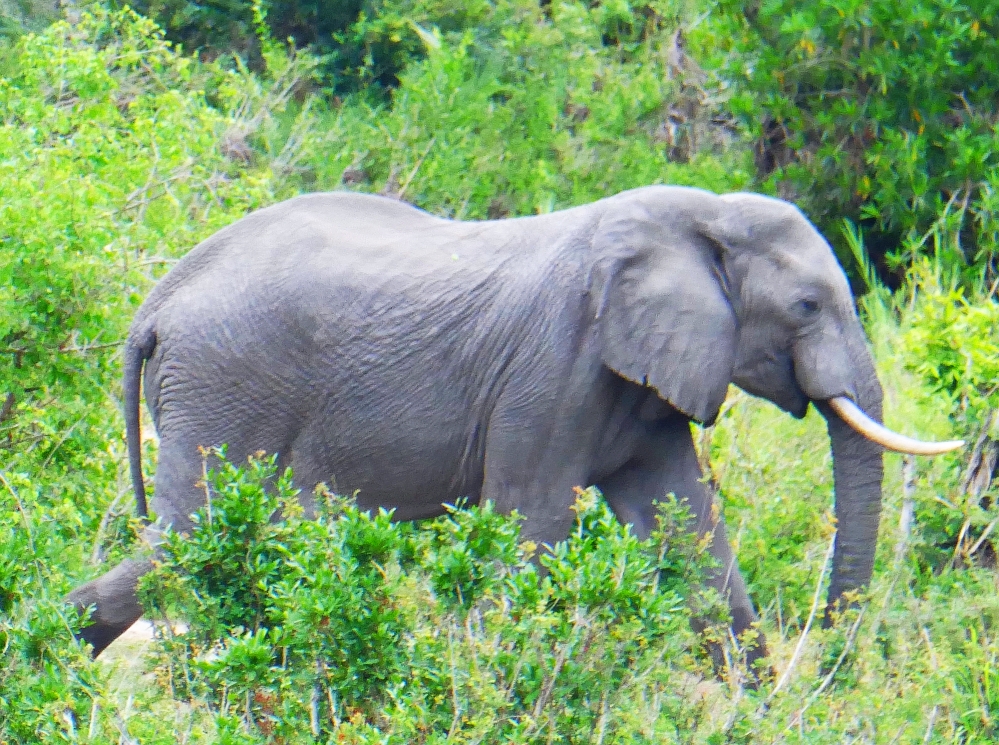
The first animal to wander past our veranda was of course the huge elephant in the photos below who was clearly in a hurry to get somewhere and ignored our presence not twenty metres away.

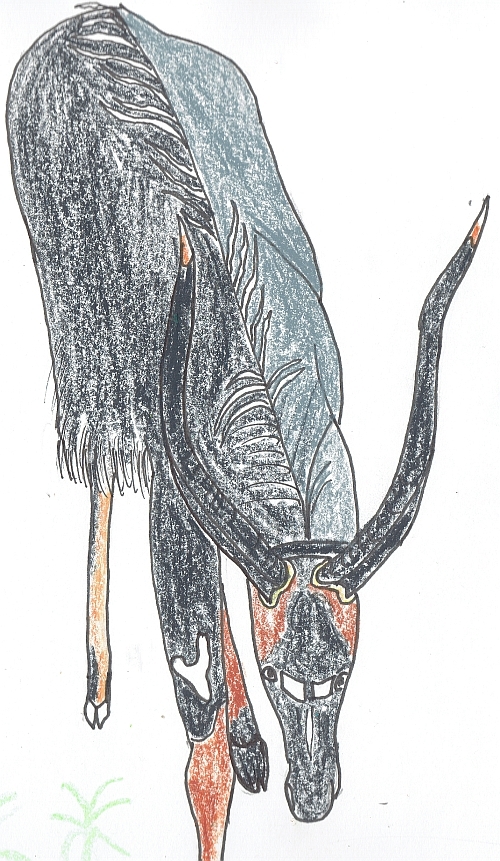
The next morning while standing on our verandah, two Nyala antelopes wandered past just below us, giving us a vantage point that revealed that the Nyalas didn’t worry too much about combing their hair before heading out looking for breakfast.
Safari Drive 1
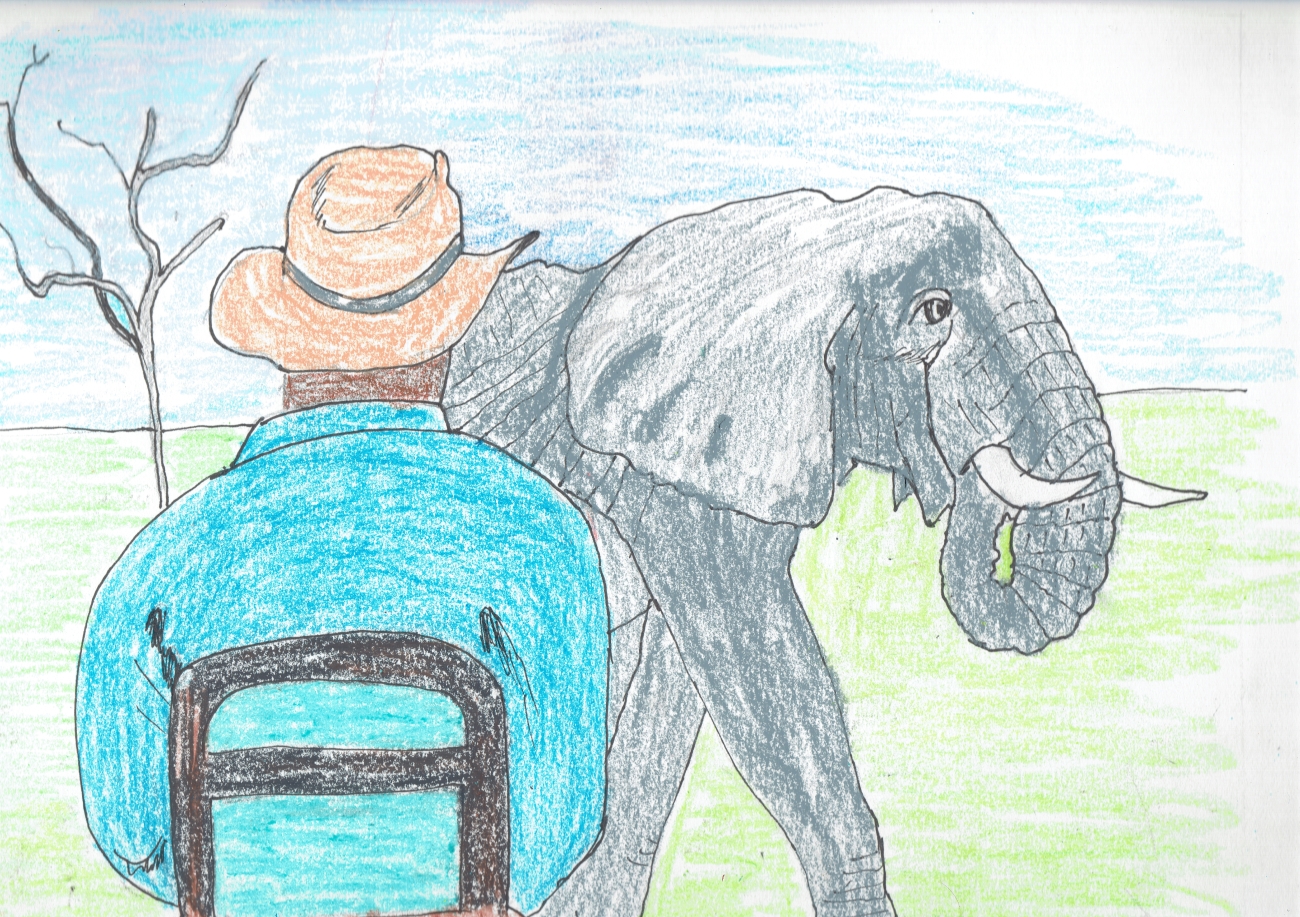
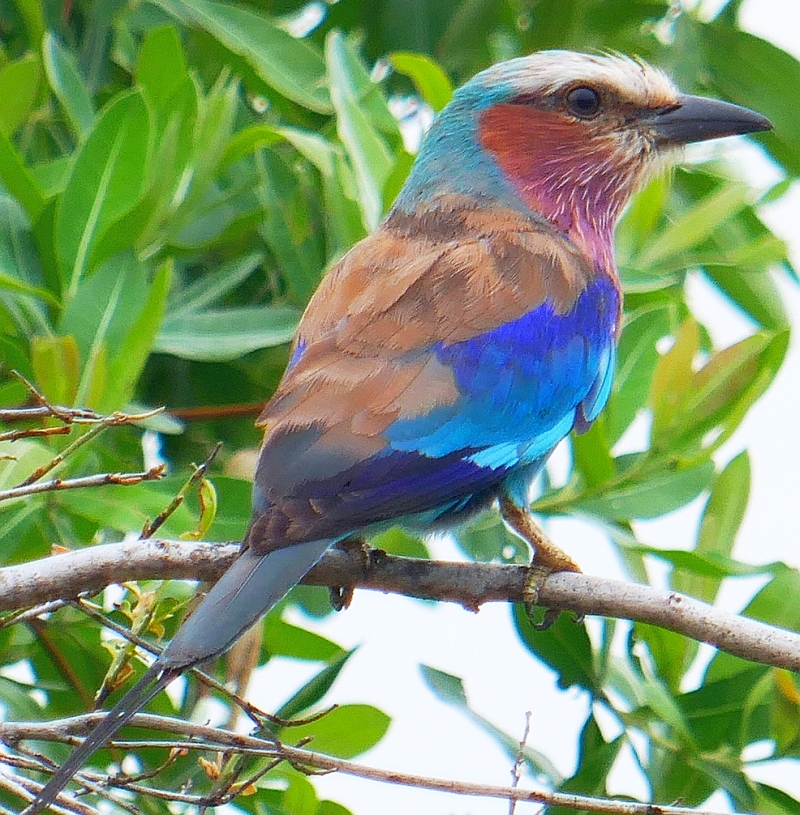
Our first Safari drive occurred after lunch on our first day. Our vehicle for this activity held three tiered rows of seats that held six visitors accompanied by our guide/driver as well as another staff member whose job was to sit on the front of the vehicle and continually check for the footprints in the surface of the road of any animals that may have recently walked along this pathway. One of the curiosities of our transport was that at no time did any of the animals we meet take much notice of the vehicle. We were clearly in a zone of our own that was of little interest to the main inhabitants of Kruger. The other thing we noticed was the abundance of bird life in the park and the very attractive Lilac Breasted Roller to the right was one of the early birds we came across.
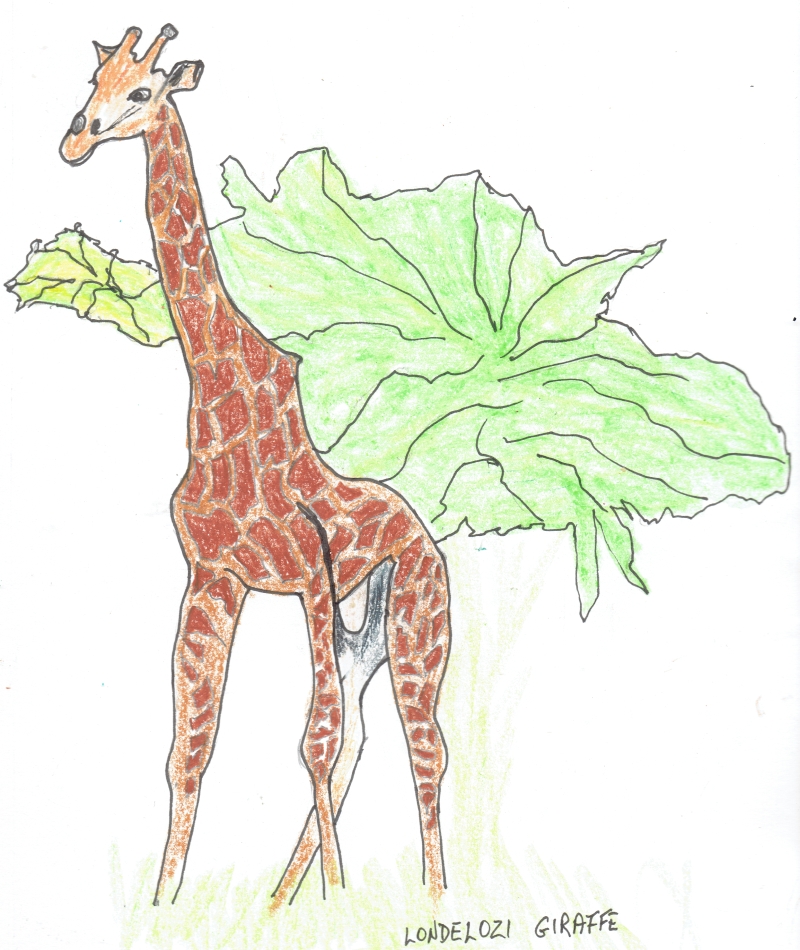
The first major group of animals that we encountered were the giraffes, the ‘top-feeders’ of the landscape as opposed to the ‘bottom feeders’, the hippopotamuses, who dominated the waterways. Unlike so many of the animals, the giraffes did take notice of the passing vehicle and clearly gathered together to have a chat about the strange intruders in their forests.

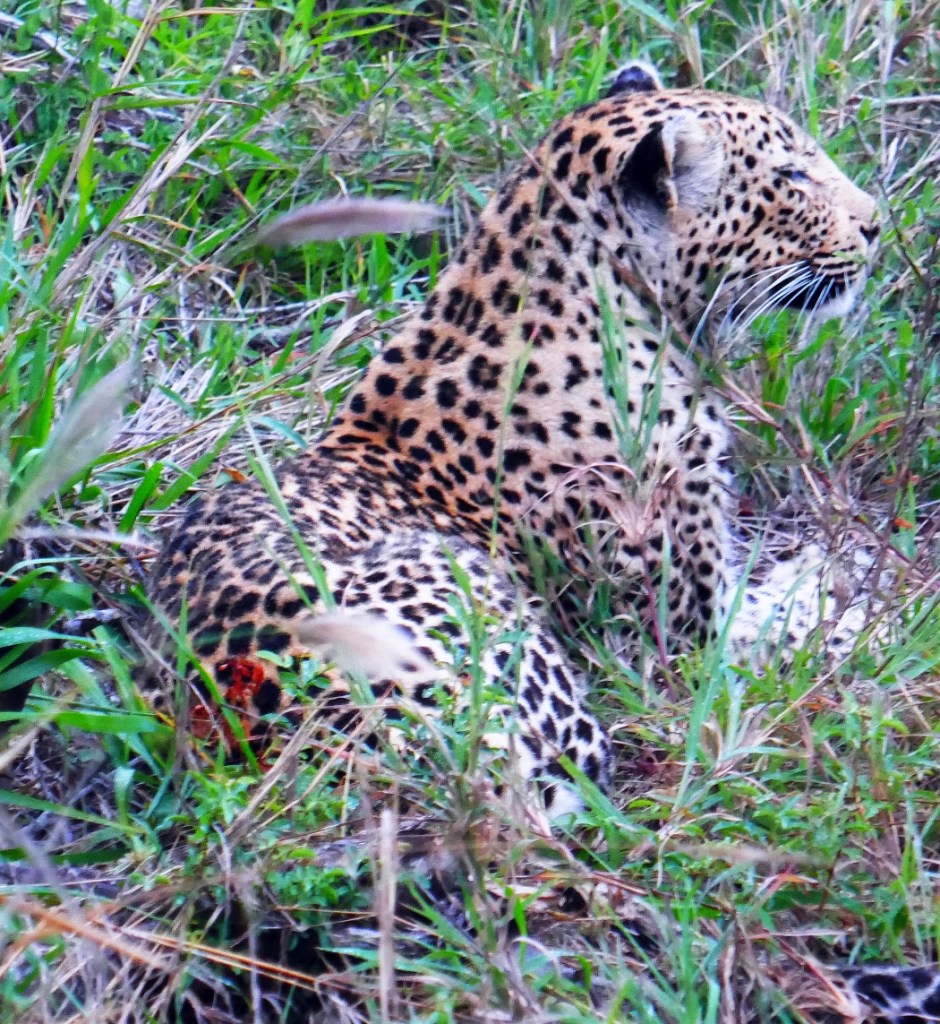
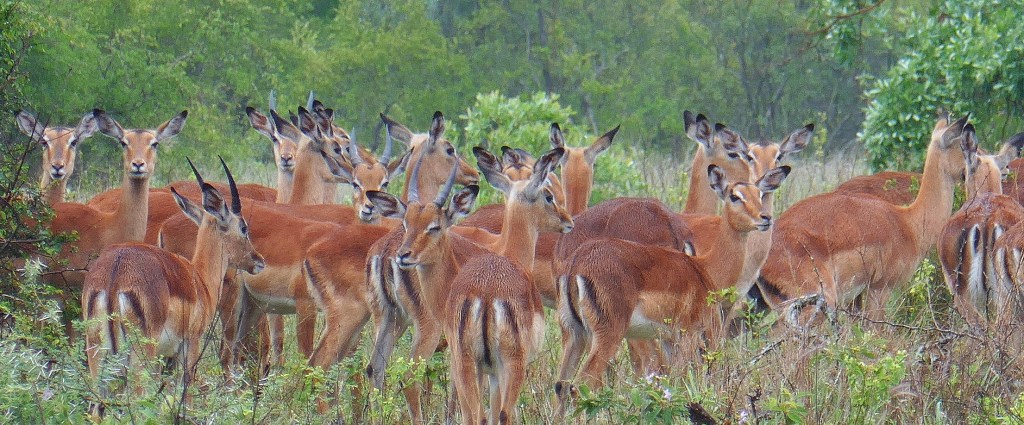
One of the most interesting animals in the park is the leopard who is one of the top predators whose lifestyle appears to be dominated by eating, sleeping and tracking his/her next meal which was generally those animals who wandered in herds and regularly mourned the loss of one of their friends and family members. This beautiful predator was always of interest to the park rangers who if they were informed that a leopard had moved into their territory, their first instinct was to track it and determine what his/her target was. There were large herds of impala in the park whose life-style seemed to be all about sniffing the wind to determine if the lions or leopards were about. The other regular targets were the buffalo and the wildebeest.
Safari Drive 2
Our second foray out into the area used by the Londelozi Camp site (the concession) began very early on our second day when we were woken by a phone call at 5am. Our job was to get ourselves up and dressed and head up to the dining hall and get a coffee and some food into our systems and be ready for the drive out into the early morning territory of the thousands of animals that called it home. Before we got out of our apartment, I noticed that like the previous day, the large hairy Nyalas were back outside on the banks of the river dining on their early grass breakfast.
On the previous afternoon we had tracked a leopard who our guides thought might be interested in a large herd of Cape Buffalos who we had spotted the previous day. Unlike the Lions and the wild dogs, the leopards don’t hunt in groups so if their prey is Buffalo, they only attack juveniles or incapacitated adults.

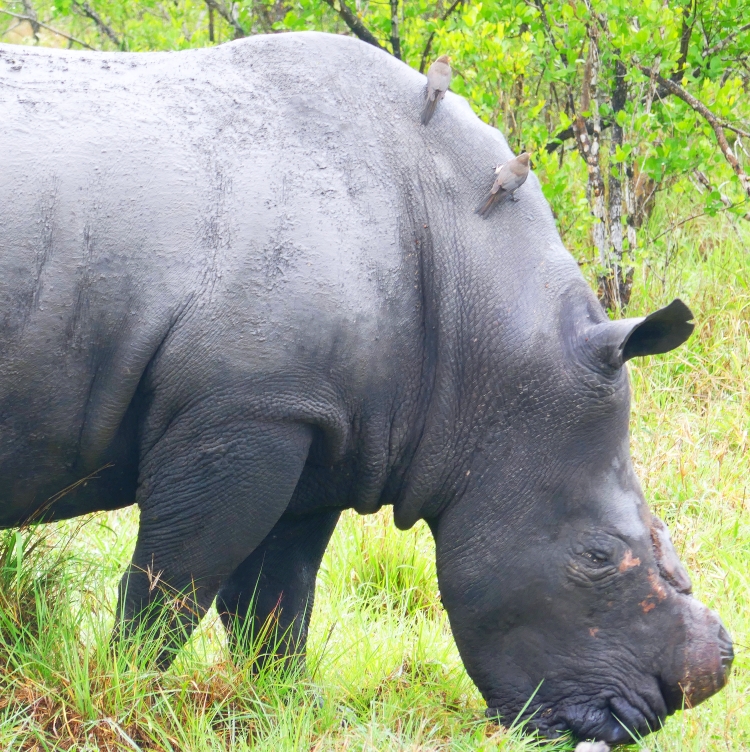
Before we found the Leopard from the previous day, we encountered a huge rhinoceros feeding on its vegetarian diet of fruits, grasses leaves, twigs etc. As we expected, our rhinoceros was not interested in us and ambled past us without acknowledgement. It had no ‘horn’ on display as one method of reducing the impact of poachers on the population of these animals is to remove the rhinoceros’s horn early in their life. This is one way of thwarting the activities of poachers from killing these huge animals. The demand for Rhino horns is a cultural practice in China and Vietnam where the horns are ground up for ‘medicinal’ purposes or used as status symbols.

Later in the afternoon we came across a large herd of African Buffalos wandering the savannah. African Buffalos have never been domesticated, apparently due to their “unpredictable temperaments. Their closest relatives are the Asian Water Buffalo.
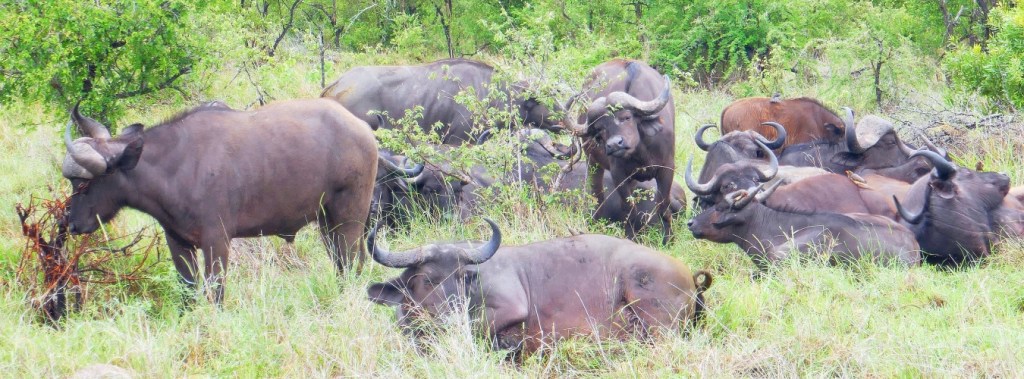
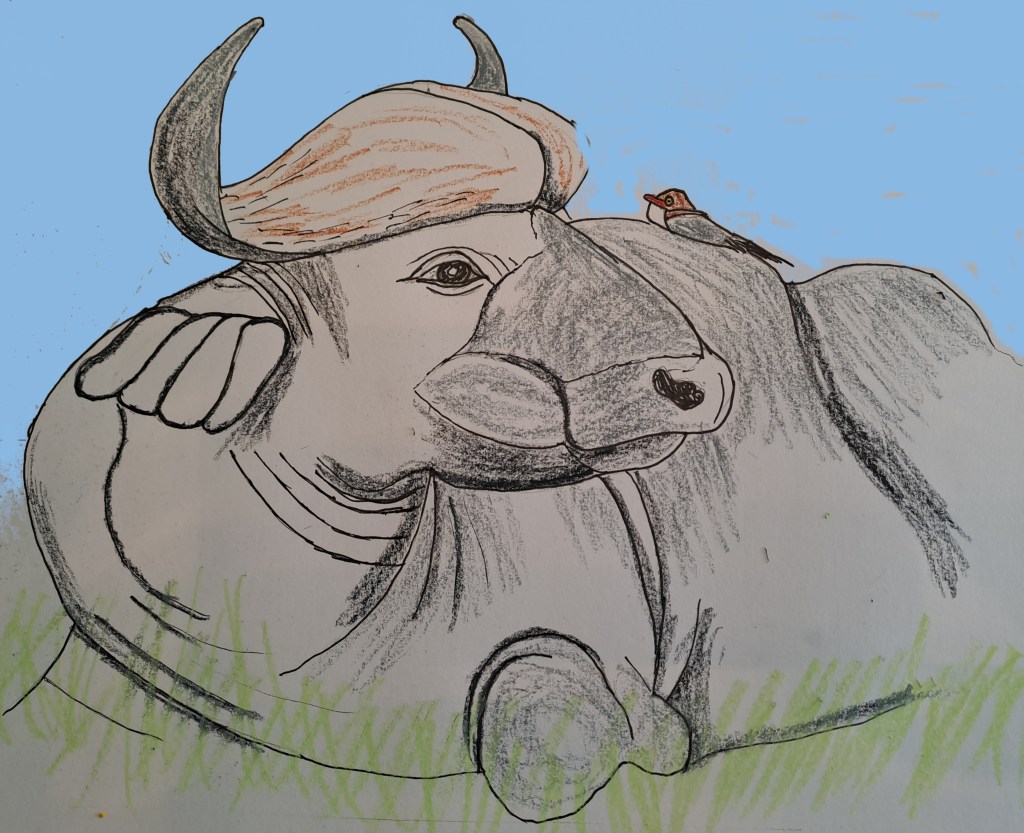
Not all the buffalo were grazing, some of the older, wiser buffalos were taking it easy in the late afternoon sun. One curious feature of Buffalo is that there is a species of bird, the Oxpeckers, who dine on the ticks that the buffalo host on and in their skin. The reclining buffalo to the right has a small oxpecker comfortably ensconced on the back of the buffalo waiting for the next tick to appear. The relationship seems a mutually supportive one. (A larger view of the Oxpecker can be seen on the left below).
One of the most common sights that we came across when driving around the Londelozi Concession were the many bird species. One of the most interesting for me were the Egyptian Geese that prowled the waterways and swamps we passed. They are South Africa’s second largest waterfowl. They are found throughout Africa except in arid areas. Another reason for my interest in these birds is that a mural was found inside the ‘Nefermaat’s Tomb in Egypt in 1871 of Egyptian Geese. The mural has been transferred to the Egyptian Museum.


 FOGTRAVEL