Safari Drive 3
Our third Safari Drive took place in the afternoon of our second day in the Londolozi Concession. The first major sighting of the afternoon was a large herd of Wildebeest (or Gnu) who are a species of antelope who inhabit the grasslands of Southern Africa. The Wildebeest in this area are the black Wildebeest, not the Blue Wildebeest who participate in the annual migration after the rainy season looking for new pastures


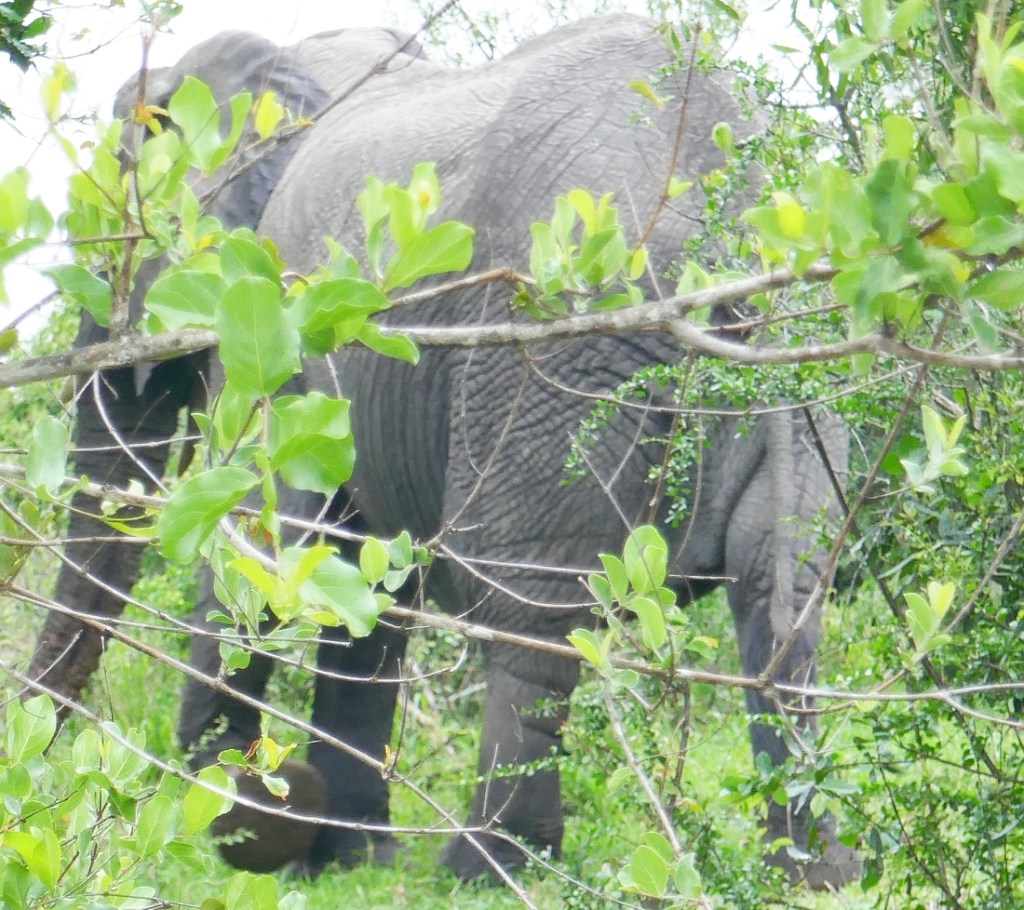
We hadn’t seen many elephants in Londelozi so far on our first two days but not long after leaving the Wildebeest behind, we came across a small group of elephants, doing their best to get a feed while shielding themselves from the intrusive tourists
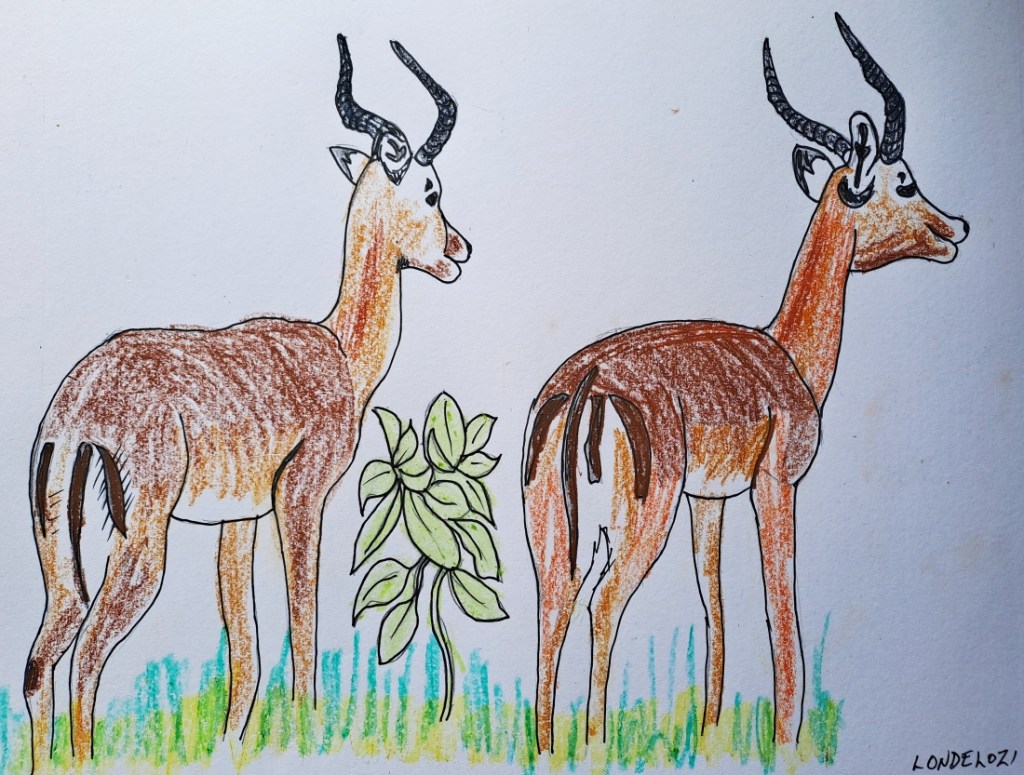
Unlike the elephants, the Impala are a local species that like wide open grasslands so they can continuously keep an eye out for predators attempting to sneak up on them. As can be seen in the image below, the Impala have a black ‘M’ marking on their posterior that some local wit decided means that they are the McDonald’s hamburger of the grasslands.

Apart from eating grass, the Impala spend a lot of time sniffing the wind and taking off in a hurry just in case there might be a leopard somewhere creeping towards them ready to pounce.
Perhaps the most impressive antelope we came across in Londelozi was the Kudu, the third largest antelope in the world. Unlike the impala, the Kudu prefer to dine amongst ‘well-bushed’ areas and if they spot a predator, can remain motionless for a long time. Perhaps the most impressive features of the Kudu are the spiral horns of the bulls. In the group of Kudus in the picture below can be seen the other curious feature of this interesting antelope, the white stripes on the back and side of the body. The local species can have between 4 and 12 of these white stripes.

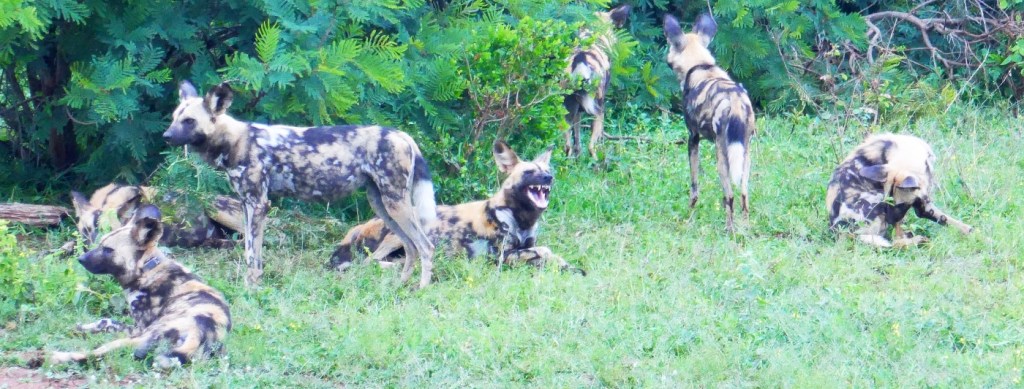
One of the aspects that became part of our Safari drives was the continuous sharing of animal information between the drivers. If lions or a leopard were spotted, the guides would share this info with the other drivers taking groups on ‘safari’. After we passed the Kudu, our driver got very excited about news of a large pack of Wild Dogs that had recently entered in the Londelozi Concession. He was told where they were headed so he took off to find them. A large group of wild dogs meant they were probably hungry and would no doubt be hunting in the late afternoon. These ‘Wild Dogs’ have many names…Cape Hunting Dogs, the Painted Dogs/Wolves and the African Hunting Dogs. When we arrived at where these dogs were relaxing after their afternoon nap, we found that there was a large group and our guide made the judgement that they were starting to get ready to go hunting.
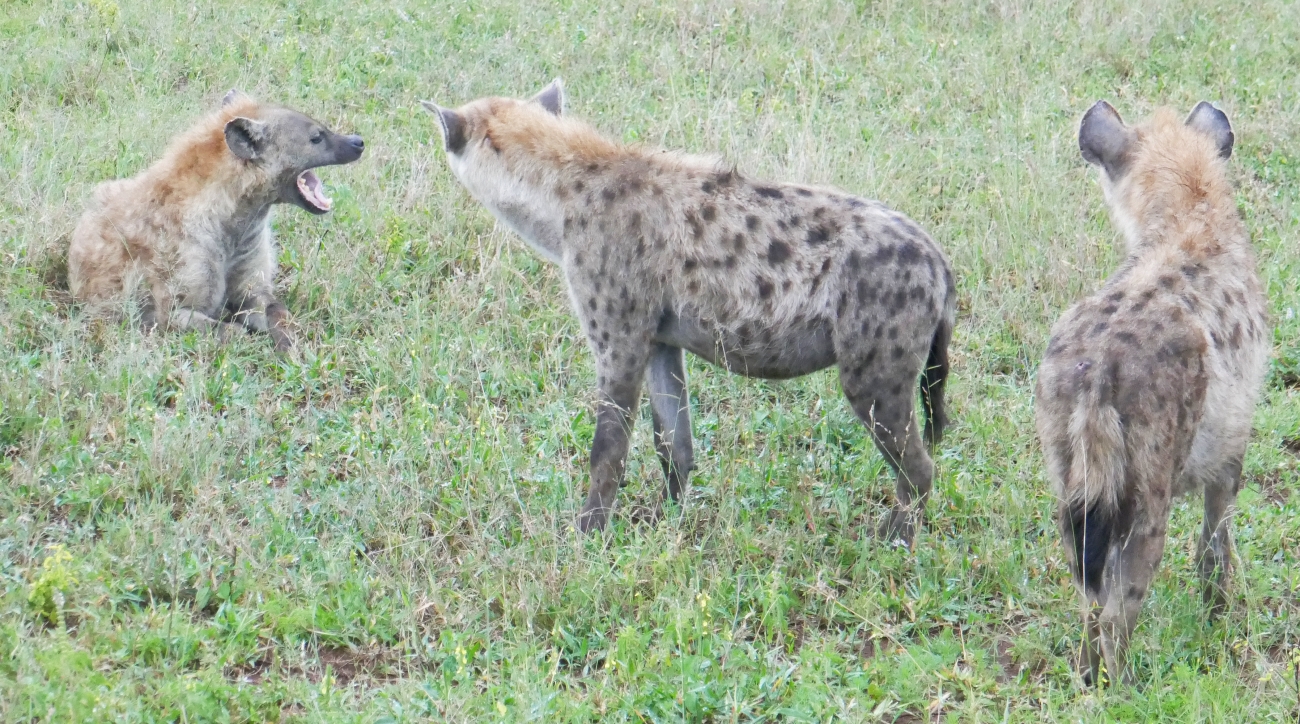
We weren’t the only characters interested in what the wild dogs were up to; the local hyenas had noted the dog gathering and had arrived to watch from a distance what these apex predators were up to. The Hyenas are scavengers and their hunting practices are similar to the wild dogs as a pack can chase down animals. In the situation we were watching develop, it looked like the Hyenas wanted to follow the dogs and hopefully share in the kill after the wild dogs had finished with their dinner.

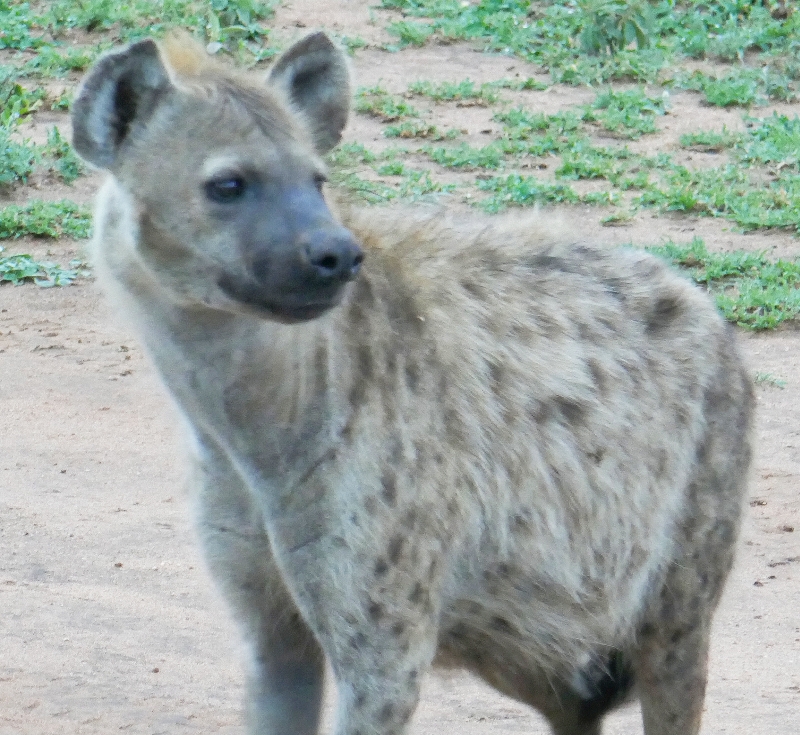
Like so many of the species we encountered on our safari, the wild dogs inhabited the savanna woodlands and the open plains. They don’t build their own dens but they tidy up abandoned Aardvark and Warthog holes. A pack of these dogs are centred around a monogamous breeding pair. They are very social animals and assist weak or sick members. When hunting, the wild dogs can reach speeds of over 60 Kms.
Along with a couple of other jeeps on safari, we had arrived around the end of the afternoon nap and the senior dogs were stirring the younger dogs up to get ready to go hunting. I am not sure who was more excited, the dogs or our guides who were just as ready for the chase.
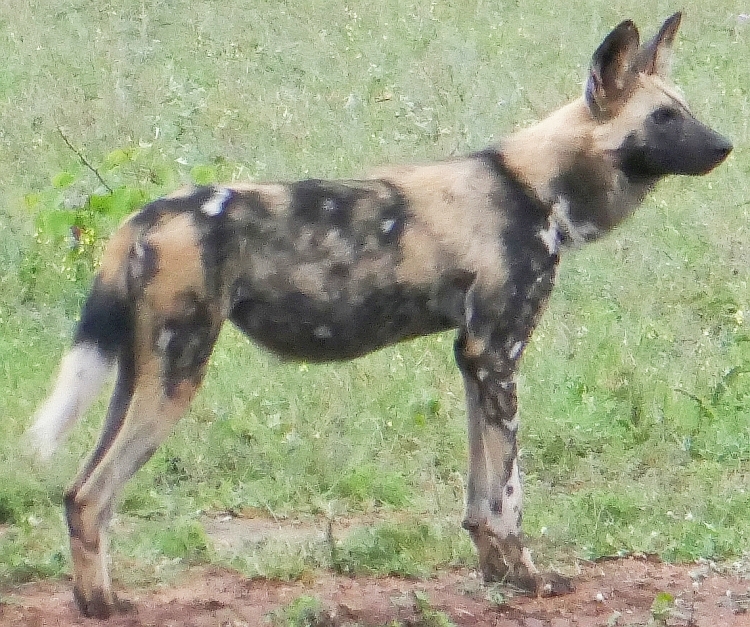

By the time the Wild Dog pack took off after their dinner, we weren’t sure whether they had caught the scent of the buffalo, the wildebeest or perhaps impala. Unfortunately after following them for some time, poor light forced us to abandon the chase.

 FOGTRAVEL