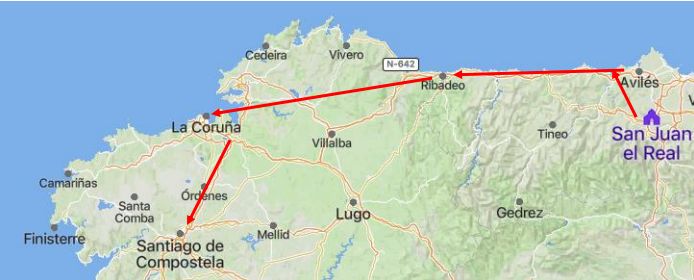
RIBADEO
It was morning-tea time when we arrived at a holiday park area on the east side of the Ribadeo Estuary. We didn’t enter the town itself but had refreshments and went for a walk on the sand between the amazing sea-stack formations that were the main attraction of this area. The landscape of the area reminded me of the ‘7 Apostles’ area along the coast west of Melbourne Australia.


A CORUNA
It was 156 kilometres further to drive before we reached our lunch-time destination of A Coruna, the second most populated city in the municipality of Galacia. It appears to be a large and complex city built around the estuaries and natural harbours of this part of Spain where the coastline turns south away from the Cantabrian Sea. Given that we were due in Santiago de Compostela by mid-afternoon, we were due for lunch in Coruna with only enough time to explore one section of the city, the parkland area along the coastline dominated by the ancient tower of Hercules that is still functioning as a lighthouse to passing ships


As the map to the left above illustrates, we had quite the walk on this headland landscape of Coruna with sea-views all around us. After parking our van, we began our trek up the Estrada da Torres de Hercules.to our first major destination.
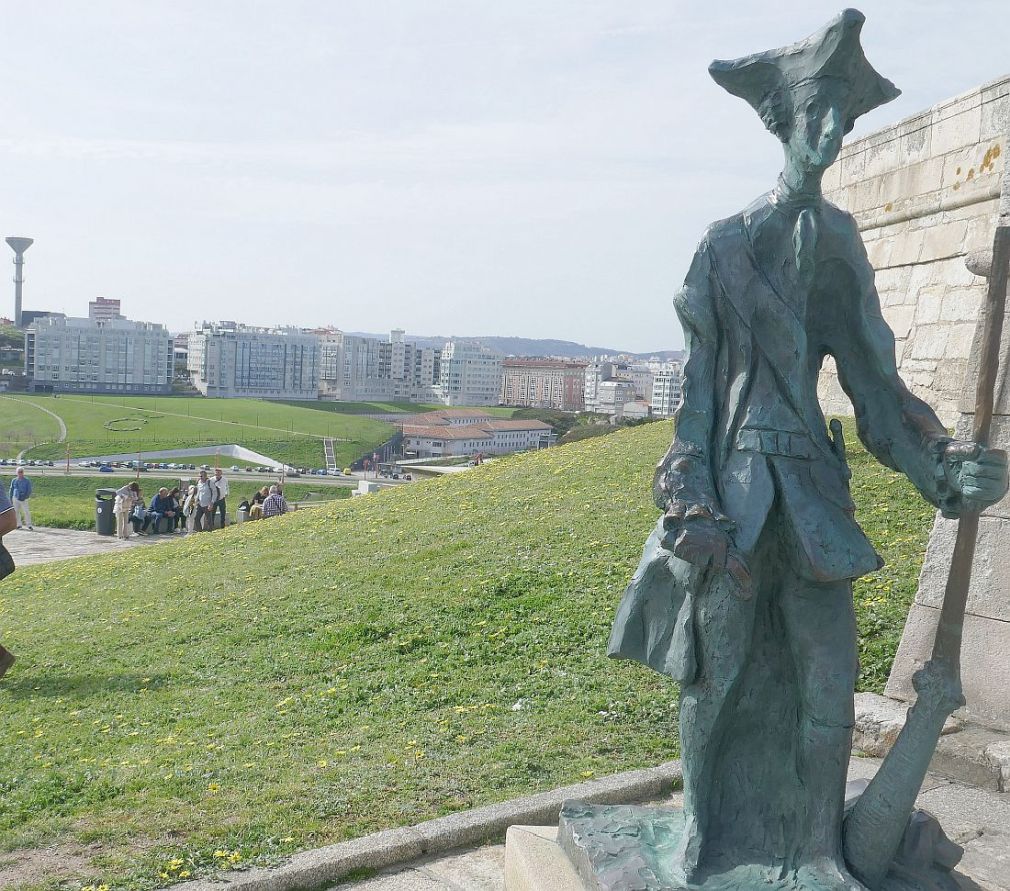
We passed the statue of Breogan (above right), who was a character from a medieval Christian History of Ireland. Breogan is described as the son of Brath, one of the ‘ancestors’ of the Gaels or Irish. The story describes how this tribe wandered the Earth for 440 years and in Iberia (Spain etc), they built a tower where they could see Ireland. They sailed to Ireland and the sons of Breogan divide it between them. I was interested in this tale given that modern DNA testing has found that many Irish in the north western area of Ireland have similar DNA backgrounds to the Basque people. Perhaps there are some seeds of truth in the Breogan story to explain humanity’s arrival in Ireland about 4,000 years ago, a very late stage in European terms.
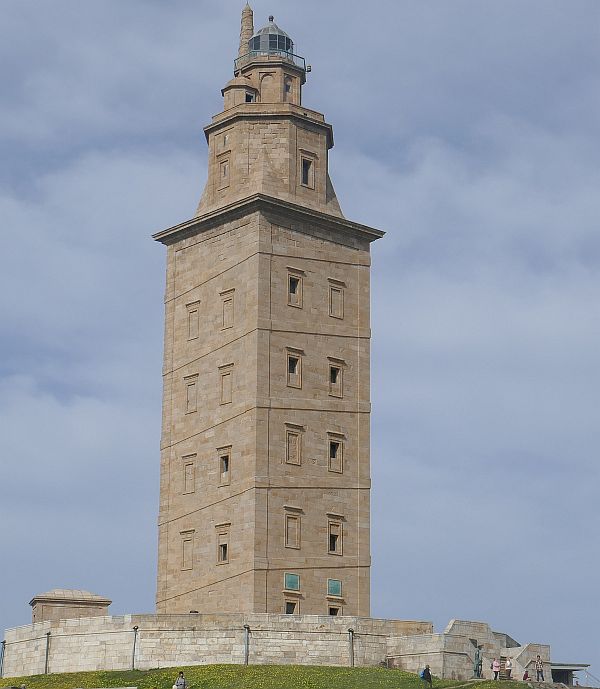
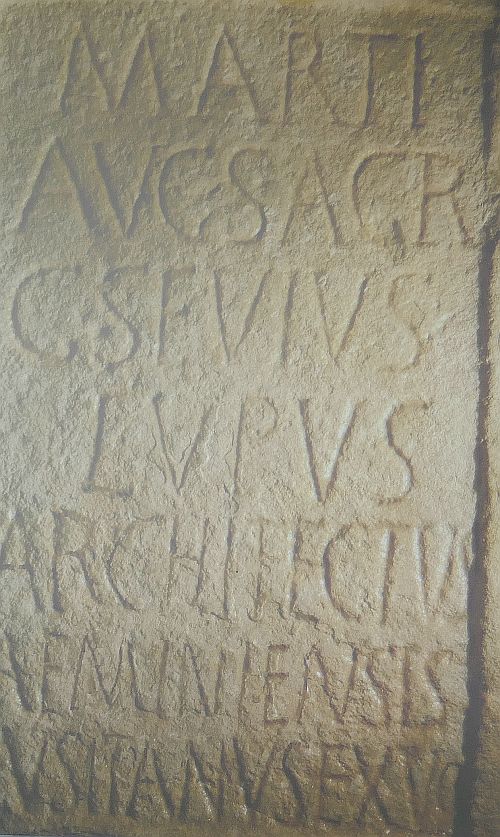
The Tower of Hercules is the oldest known extant lighthouse in the world and has been a World Heritage Site since 2009. There are records of the lighthouse since the 1st century CE and archaeologists have suggested that it is built on foundations that were Phoenician, great sailors of the period between 1500-300 BCE. The design of this lighthouse was based on the original plans of the lighthouse of Alexandria. There is a structure on one side of the lighthouse that enables visitors to see one of the cornerstones of this building which has an inscription on it that reads… “Consecrated to Mars Augustus. Gaius Sevius Lupus, architect of Aeminium Lusitano having made this vow.”
The Romans who conquered this area of Spain called it Finisterra, “the end of the earth” because it was a region notorious for shipwrecks. Its name became Costa da Morte, “Coast of Death”.
By the late 18th century there was only a 34 metre core left of this tower and it was restored by a naval engineer by 1791.
The photo on the left below shows a site that is further down the headland from the Hercules Tower. It is called the Rose of the Winds. It is a work by Xabier Corredoira constructed in 1994. It is a continuation of the story of Breogan and the story of the conquest of Ireland by his children. In many ways it attempts to capture the mythology of the North Atlantic. In between the needles that mark the cardinal points of the compass are symbols that identify the Celtic nations. The symbol on the right is the shape of the ‘Trisquel’


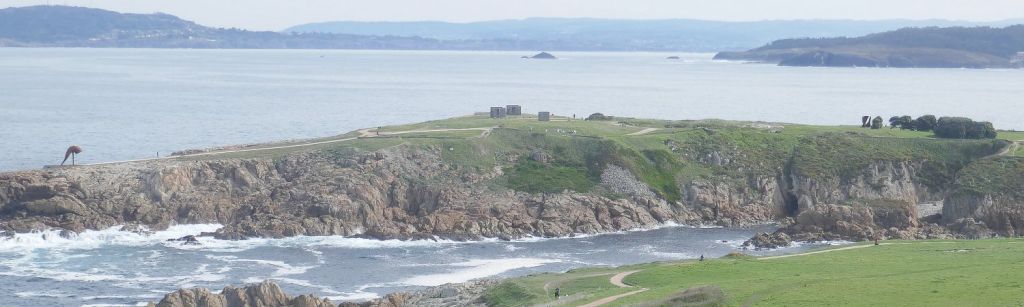
There was a paved path on the other headland that took us on the long walk down to what appeared to be a large horn that may or may not have captured the wind on days when they breeze blew from the right direction. It appeared to be shaped like an elephant’s head and its silhouette, when looking at it from the front, certainly looked like that of an elephant.


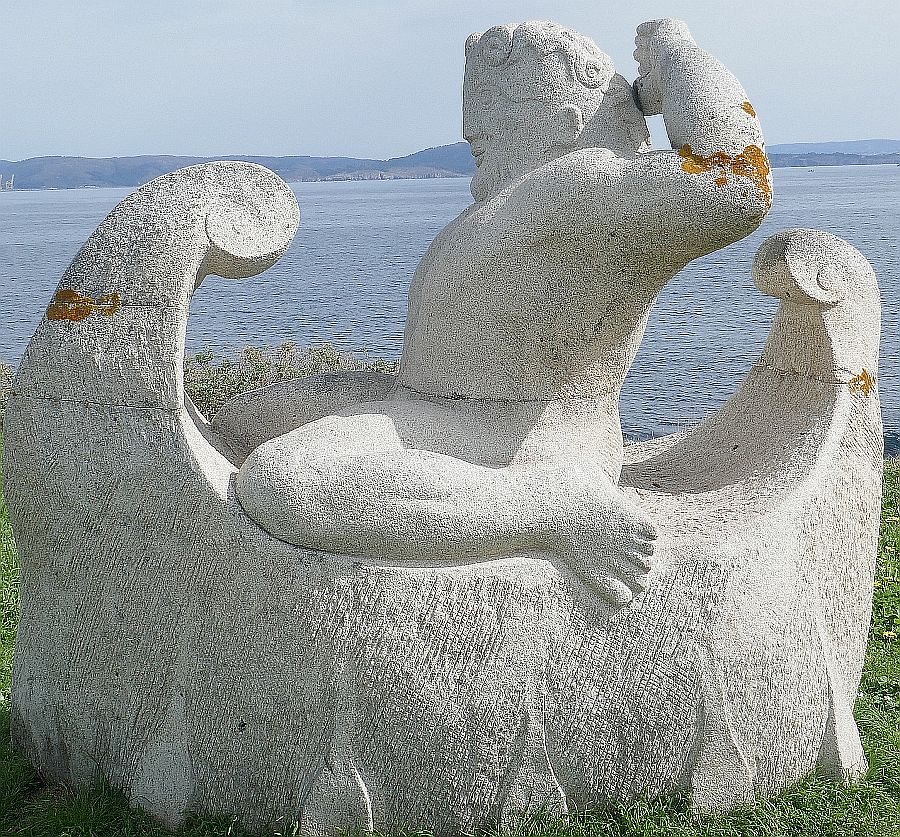
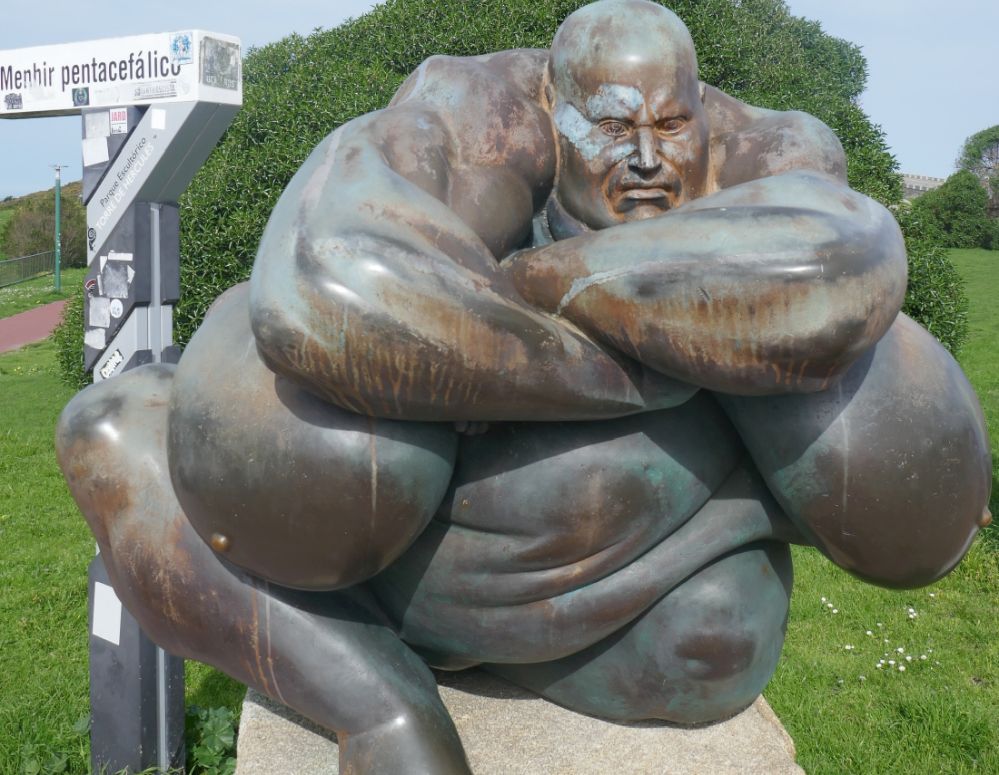
The large individual in the granite canoe was beside the path as we walked to inspect the group of menhires that graced the skyline further along this isthmus. It was called, “Hercules en la Nave de los Argonauts” or Hercules and the ship of the Argonauts and was by the sculptor Gonzalo Viana. The argonauts were Greek heroes who travelled to Colchis in the Black Sea seeking the Golden Fleece. Hercules was surprisingly part of the crew but he left the sheep earlier I search of a lost comrade.
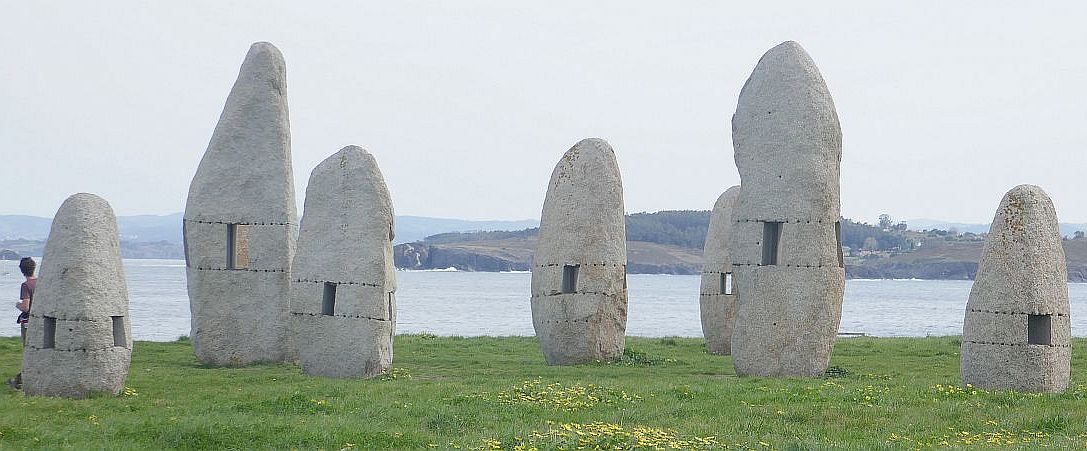
The largest work in what appears to be a very large sculpture Park in Coruna is called the ‘Family of Menhires’ or ‘Menhires for Peace’. These are 10 upright stones that appear to be looking forlornly out over the Atlantic Ocean. I had originally thought they must have been standing stones of ancient origin such as ones in the British Isles and France but the sculptor, Manolo Paz, was merely using the ancient stone shapes for his own contemporary purpose.

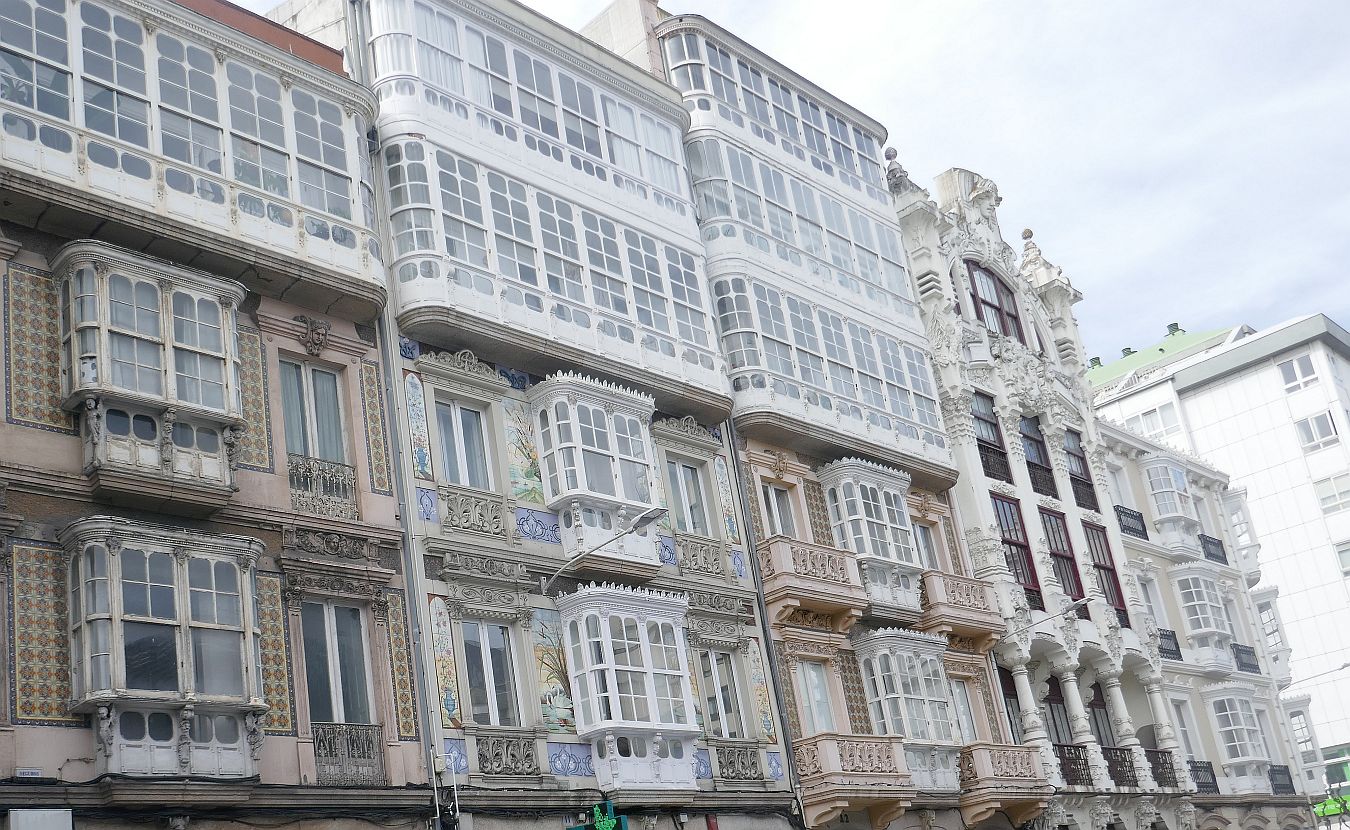
From the Atlantic sea-front, we walked back to our van and drove into the centre of modern Coruna to find a restaurant for lunch. Just as I was impressed by the Hercules Tower sculpture park, I was also very impressed by the architecture of the centre of Coruna, particularly the city’s characteristic glazed window balconies as in the building on the left below…this style was developed for the challenging weather that blows in off the Atlantic.
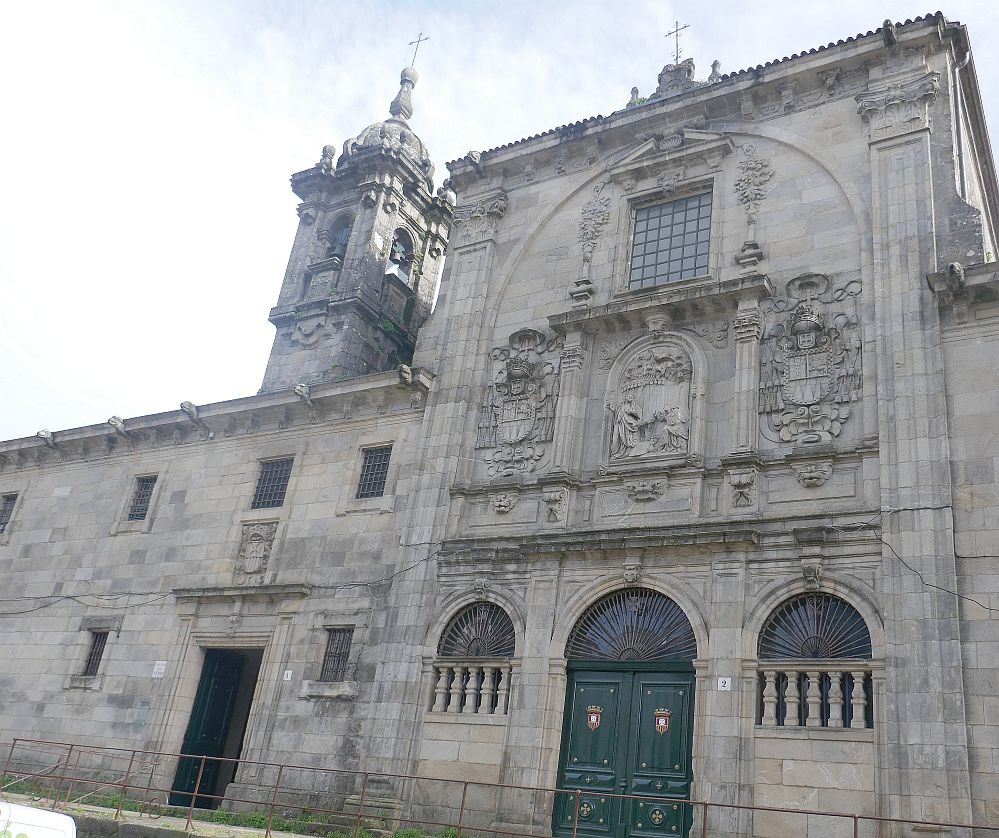
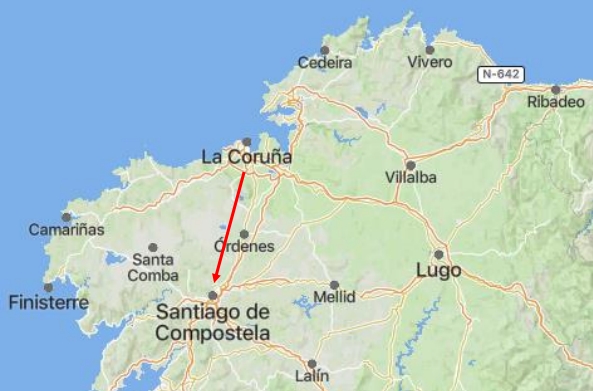
We were very pleased with our visit to A Coruna but realised it was a city that deserved a much longer stay in order to see and appreciate all it had to offer. However our destination of Santiago de Compestela called and it was another 74 kilometres down the coast of Spain.
 FOGTRAVEL