I have known quite a number of people who have left home in Australia and come to Europe, selecting a distant city in Portugal, France or Spain in order to walk the Pilgrim’s Way to Santiago de Compostela. Due to problem knees (and perhaps a lack of enough piety), I have always resisted the call to walk the Pilgrim’s way. However when the opportunity arose in 2023 to tour Northern Spain, I leapt at the opportunity, particularly the decision to end the tour in Santiago de Compostela. Whether you arrive at this city as a Christian pilgrim or a curious traveller, this is a city that has been a significant location in Spain’s long, turbulent history with a complex story to match it. This is where Pelagius the Hermit claimed to have found the body of James, the son of Zebedee, one of Jesus’s apostles. He informed his local bishop who built a cathedral on the site of St James’s grave and a city developed around this cathedral. This developing city became a significant centre in leading the Christian crusades against the invading moors.

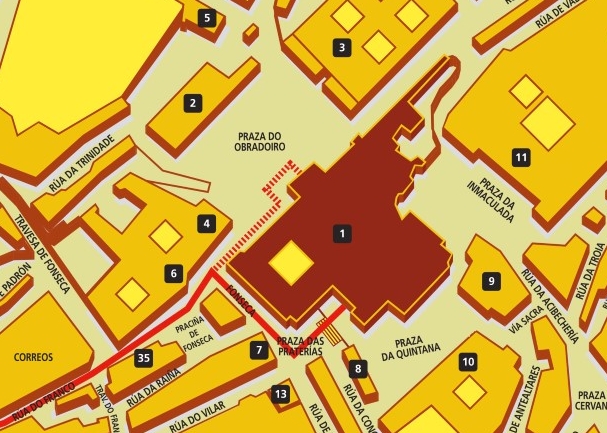
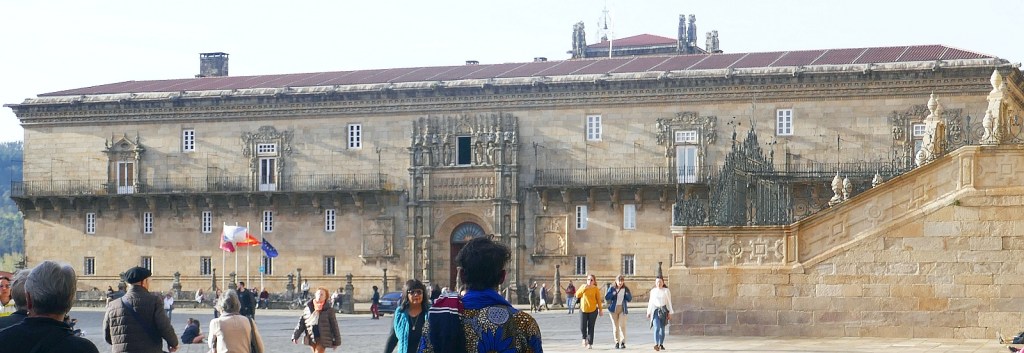
Our arrival in Santiago was on the last day of our Intrepid tour after driving from Oviedo and we stayed in Hotel Pazo de Altamira which was just inside the old city walls (See map above). After getting ourselves settled into our hotel, we then walked down the hill towards the centre of town where the famous Cathedral awaited us in Plaza del Obradoiro. Our first view of the Plaza below shows the Parador de Santiago directly in front of us; it began construction in 1501 to provide lodging for pilgrims. Today it is a five-star Parador Hotel. The steps to the right in the photo lead up to one of the the Cathedral’s entrances,
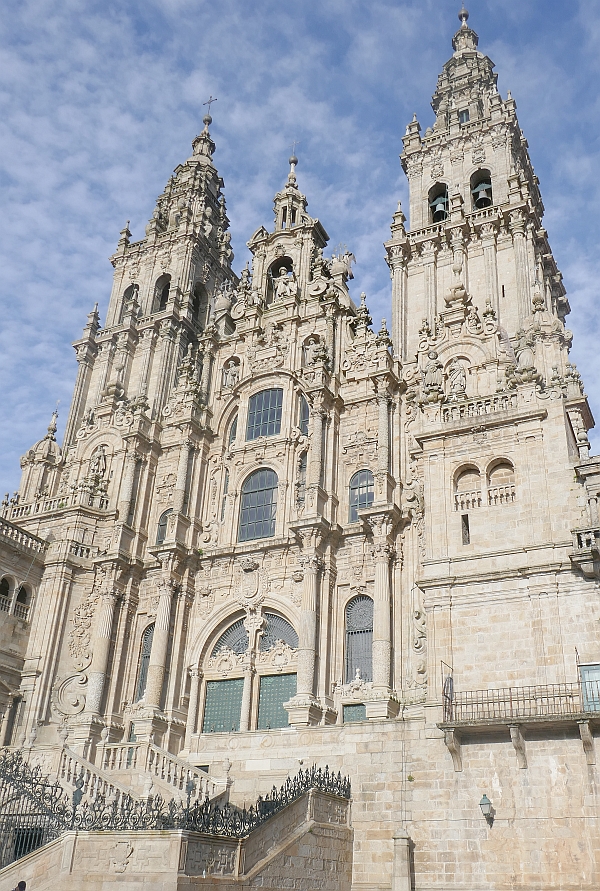
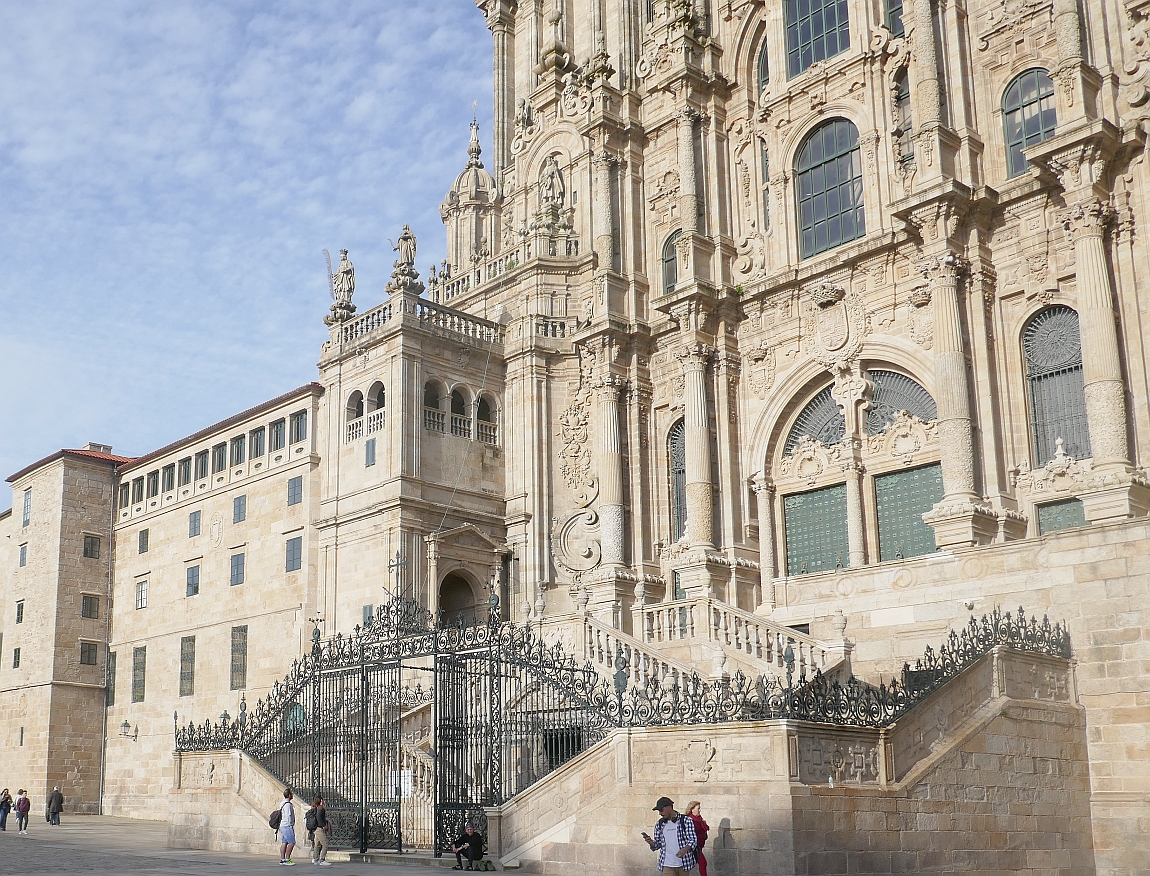
Below are images of the eastern side of the Plaza where the cathedral stands to welcome the pilgrims as they arrive in the Plaza.
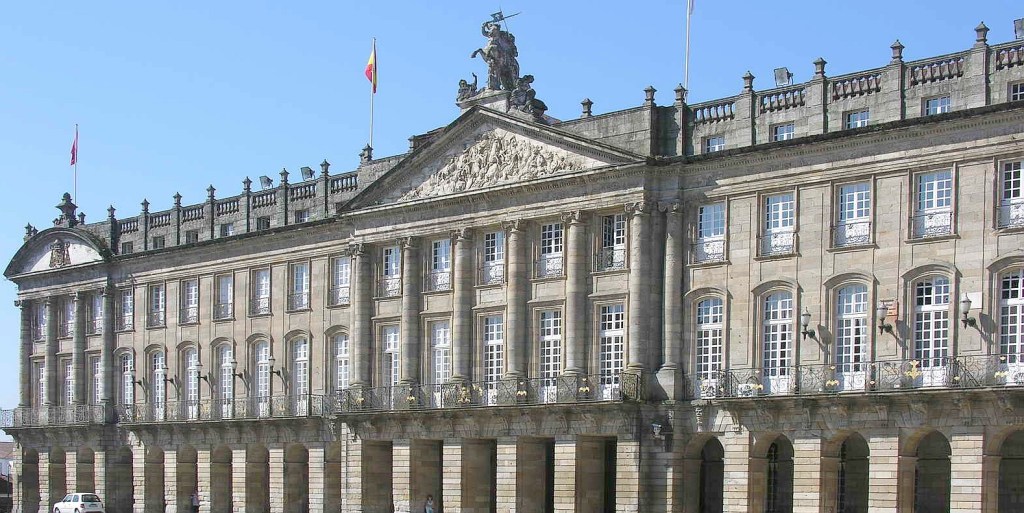
Opposite the Cathedral is the huge Palace of Raxoi (photo below) which was completed in 1776. It houses both the local government and the regional government.

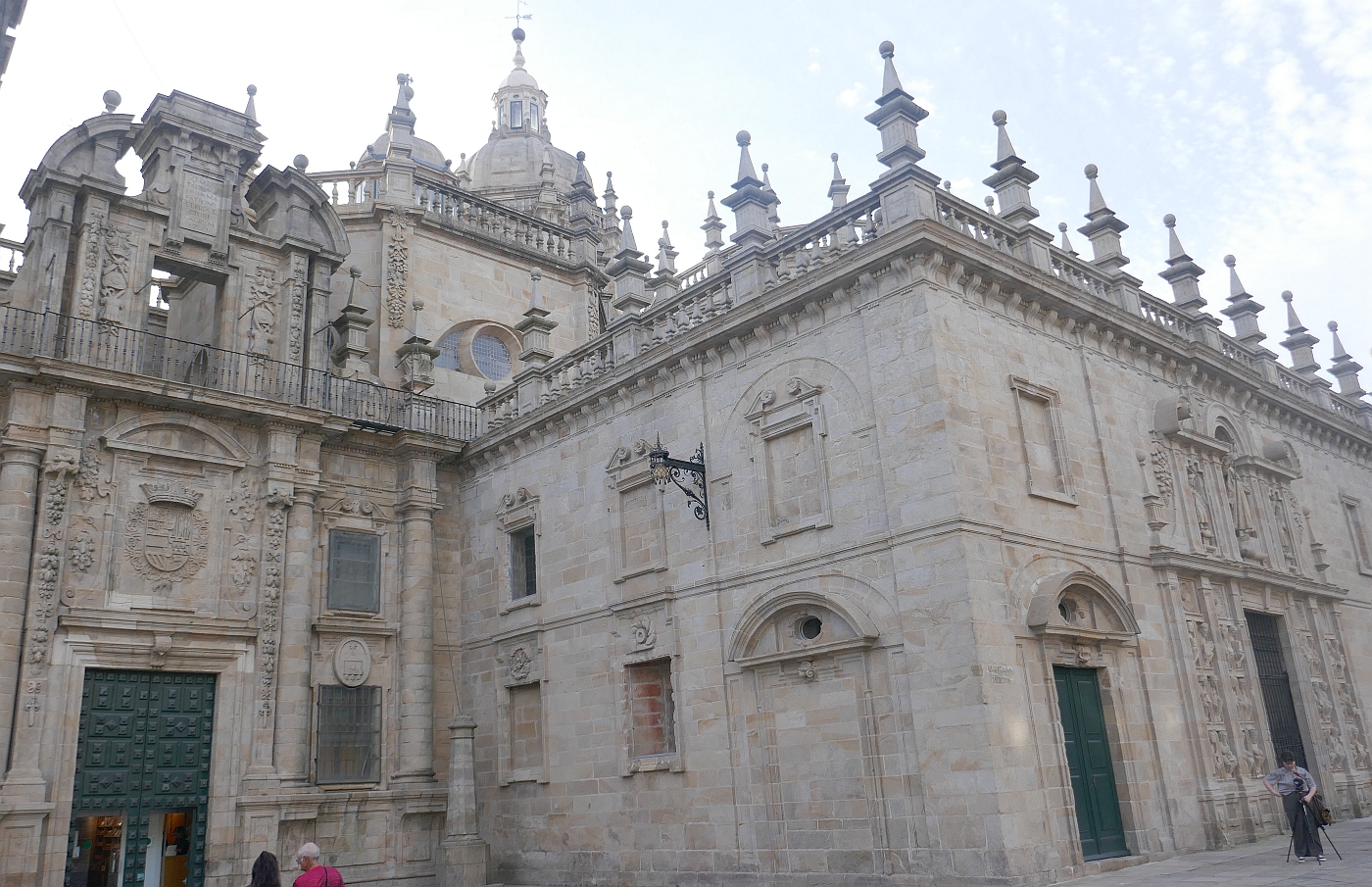
Mass was underway when we went around to the back entrance of the church but the officials were no longer allowing more people inside. We then decided to go and have a look in the museum and shop attached to the Cathedral
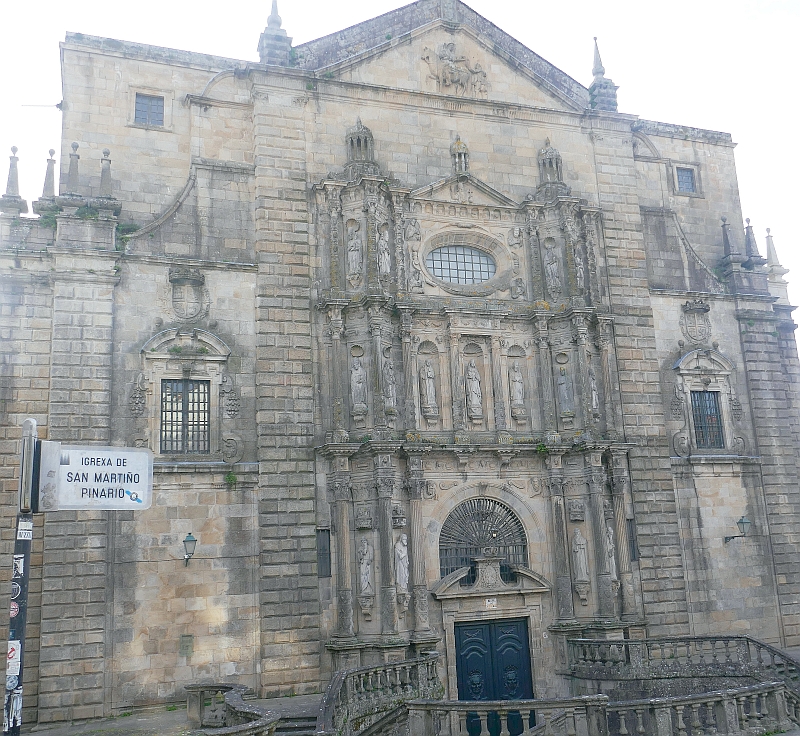
By the time we finished our exploration of the Cathedral environs, the light was fading. Our guide announced that he wanted us to meet a local friend of his who did a magic show for special guests such as ourselves. We walked away from the Cathedral as per the map to the right and walked past the Igrexa de San Martino Pinario. It was both a church and a monastery founded in the 10th century. It is a large complex and contains a seminary, a section of the local university as well as other organisations. The complex is now part of a World heritage Site. The photo to the left below taken in the fading light is of the façade of the church, built in the 17th century.


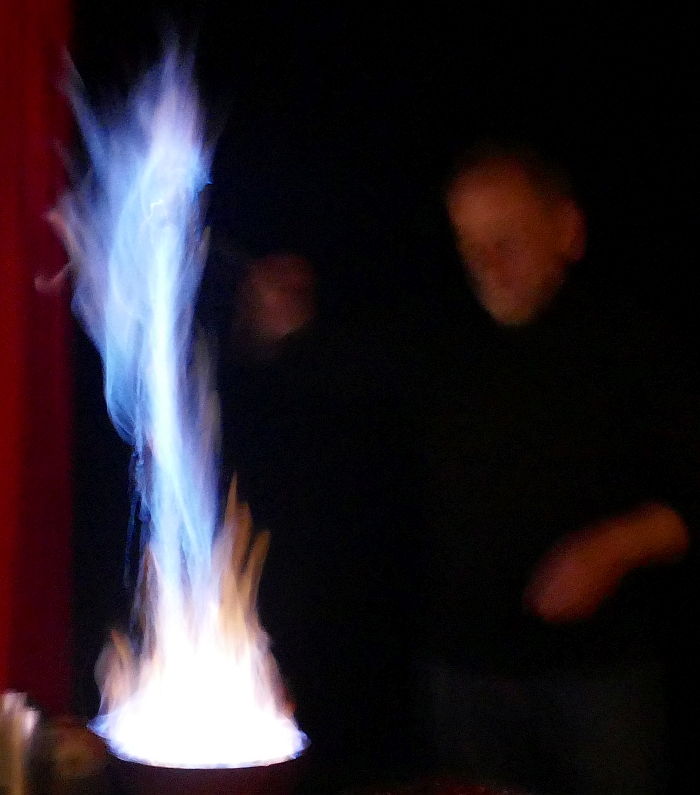
I have to admit I have never been invited to a magic show ever before in a in a darkened room in a city far from home. Our host had a room already set out for us where he began a process of peeling an orange and a lemon into a bowl, surrounded by cups. I had the distinct impression we were soon going to be invited to drink some magic elixir that he was creating in his bowl. Things got a little stranger when he was ready to start. He began reading from a book, no doubt an ancient ‘grimoire’ imbued with significant magical powers!. I was proven correct not long after when he started to read from his book and it burst into flames in his hands and so he abandoned the reading and returned to producing his magic elixir. Our drinks were produced by a process of pouring liquid into and out of the bowl with flares bursting from the bowl and running up his arms. I suspected we were going to be invited to drink this concoction at the end of the show and when the lights were turned on again, he politely offered us a drink. I accepted my mug but failed to imbibe. I also tried to check if his arms still had hairs on them but the low light and my ageing eyes couldn’t quite detect whether he suffered any lasting damage.
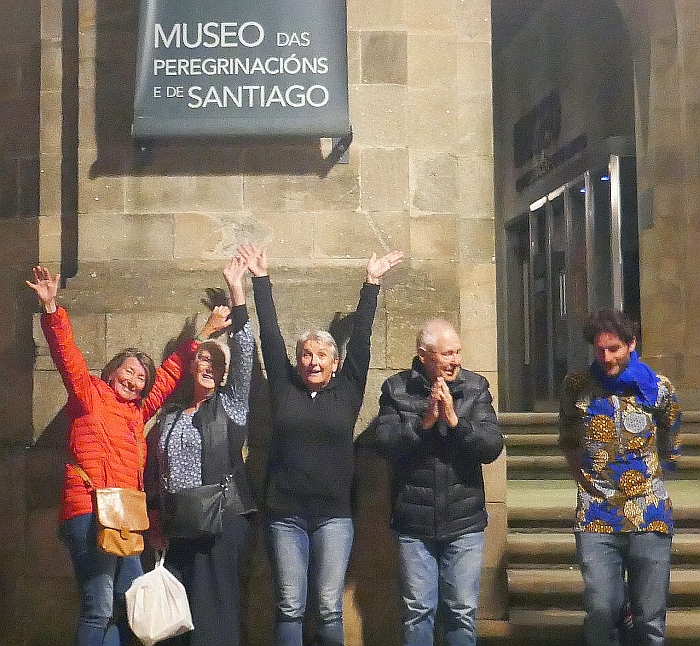
It was all very interesting but it was soon time to head back out onto the streets of Santiago and find our way back to the hotel. We were lucky our guide was able to lead us through the darkened streets of the city and eventually returned us to the safety of our hotel room!
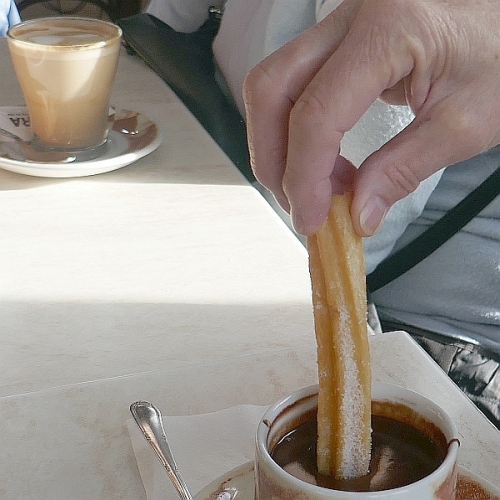
The next morning we had a lovely breakfast in the second hotel of our time in Santiago (Hotel Lux Santiago de Compestela). It was our last official morning of our guided tour of Northern Spain and so our guide decided we needed to have a traditional Santiago morning tea that consisted of Churizos and a very thick hot chocolate. This ‘delicacy’ promised too much early morning sugar and so I declined it in similar fashion to the magic drink from the night before.
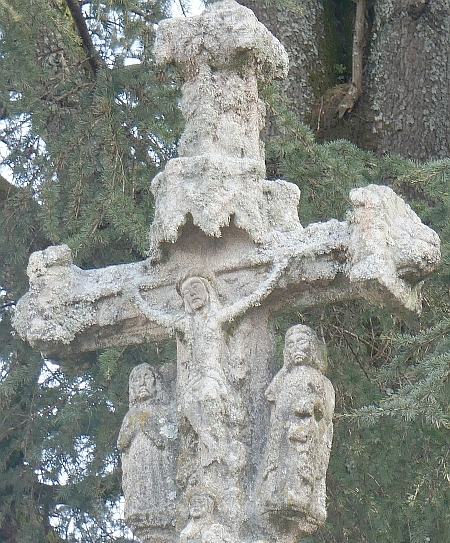
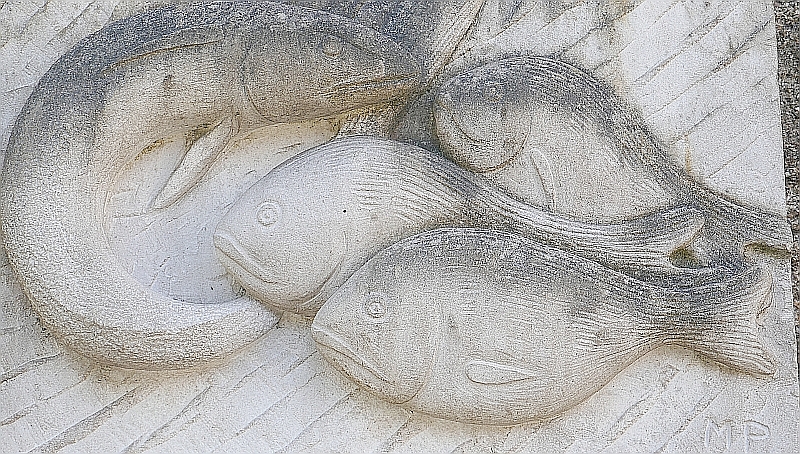

Being a very old town, I admired the many curious crosses that we came across as we made our way back towards the centre of town; they had clearly lined the Santiago streets for centuries. Our destination was the Mercado de Abastos which was near our original hotel as well as the old city wall. This was a large market place where all sorts of unfamiliar food stuff was on display and was doing a roaring trade with tourists and locals alike.

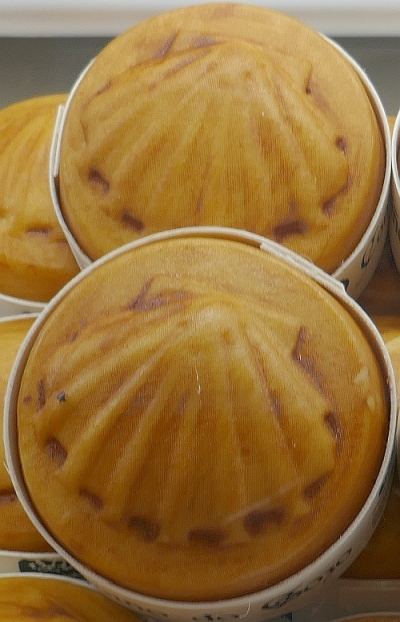

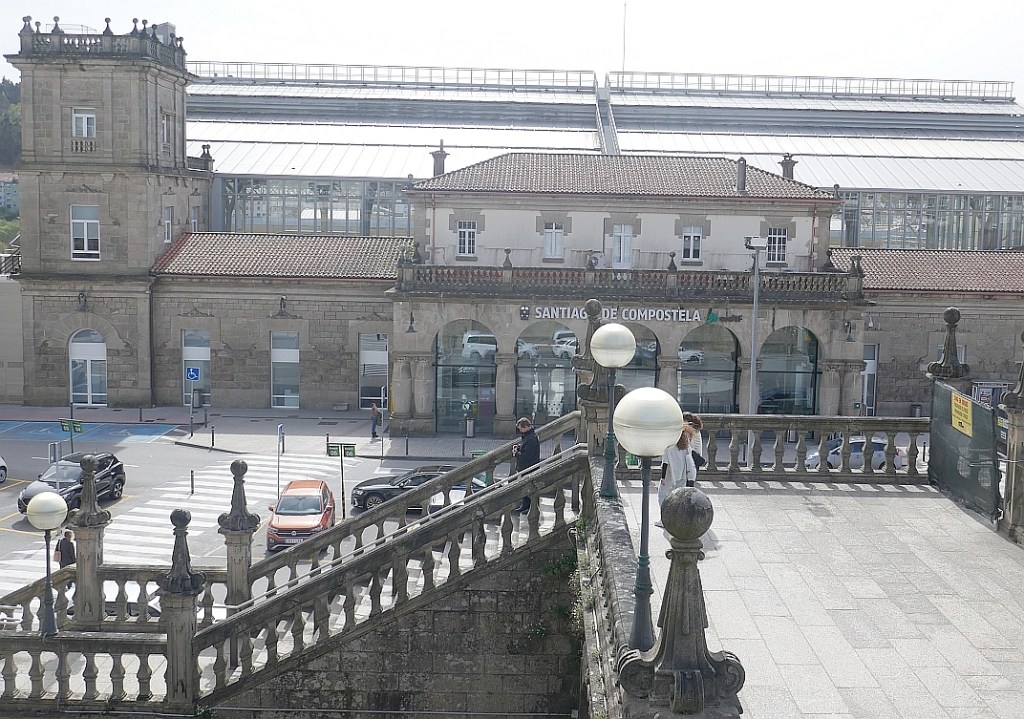
After our morning’s activities we headed back to Hotel Lux for a rest and preparation for the afternoon. One of things we decided to do was find the Railway Station in relationship to our hotel so we would know where we were going in the morning when we had to catch a train to Madrid.
After a successful reconnoitre of the train station, we returned back past our hotel before heading out for one last circuit of the centre of Santiago. As the map shows to the right, we headed down the streets at the back of the Cathedral so we could come at these major sites from a different direction from yesterday.


By walking down this route that led to the area at the back of the cathedral, we came upon Quintana Square which is considered one of the main squares of Santiago apart from Plaza del Obradoiro. The southern façade of the Cathedral makes up one side of this Square. This square is used for public celebrations for significant days in the city’s calendar. One celebration that is connected to the Cathedral is when a Jacobean Holy Year is celebrated, pilgrims cross this square and enter the Basilica through Holy Door to earn a plenary indulgence. This process goes back to the twelfth century to Pope Alexander III.
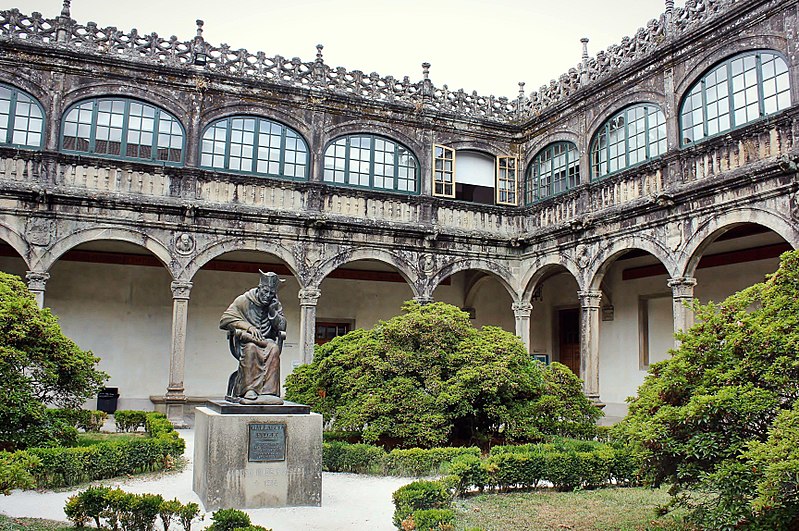
We passed from Quintana Square through a ‘laneway’ that consisted of a narrow pathway and a long series of steps that led us back to Plaza del Obradoiro in front of the Parador de Santiago once again and its ornate front door (above right). Nearby to the Cathedral in the Plaza there is a campus building belonging to the University of Santiago de Compestella. As we were passing this building we noticed an enclosed garden that we spotted though one of its doorways so we turned in and had a stroll around the beautiful garden that can be seen in the images below. The statue in the centre of the garden is of Gallaecia Fulget, the founder of this University in the early 16th century.

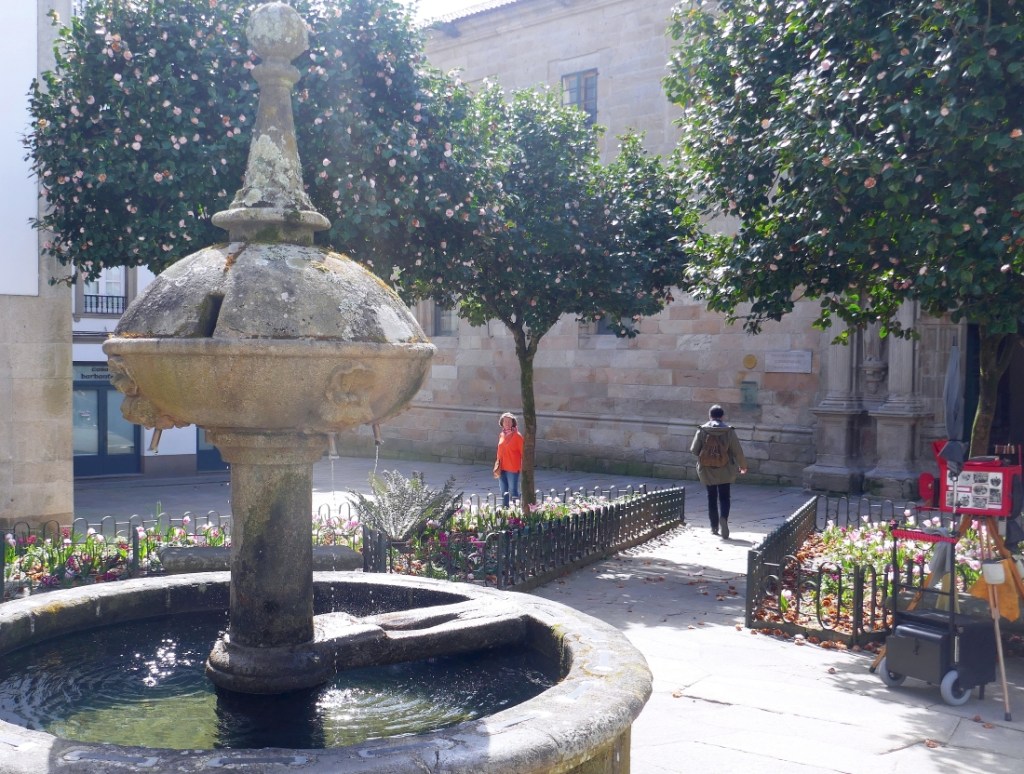
Further along the street that led away from the Cathedral we came upon another garden that was just as attractive as the university garden we had just inspected. This was Jardin de Fonseca and its location can be spotted on the map a few paragraphs above. Much of the space in the square is given over to gardens; in the photo to the left can be seen garden beds abloom with tulips. This also a good spot to stop for coffee as there a cafes lining the square.
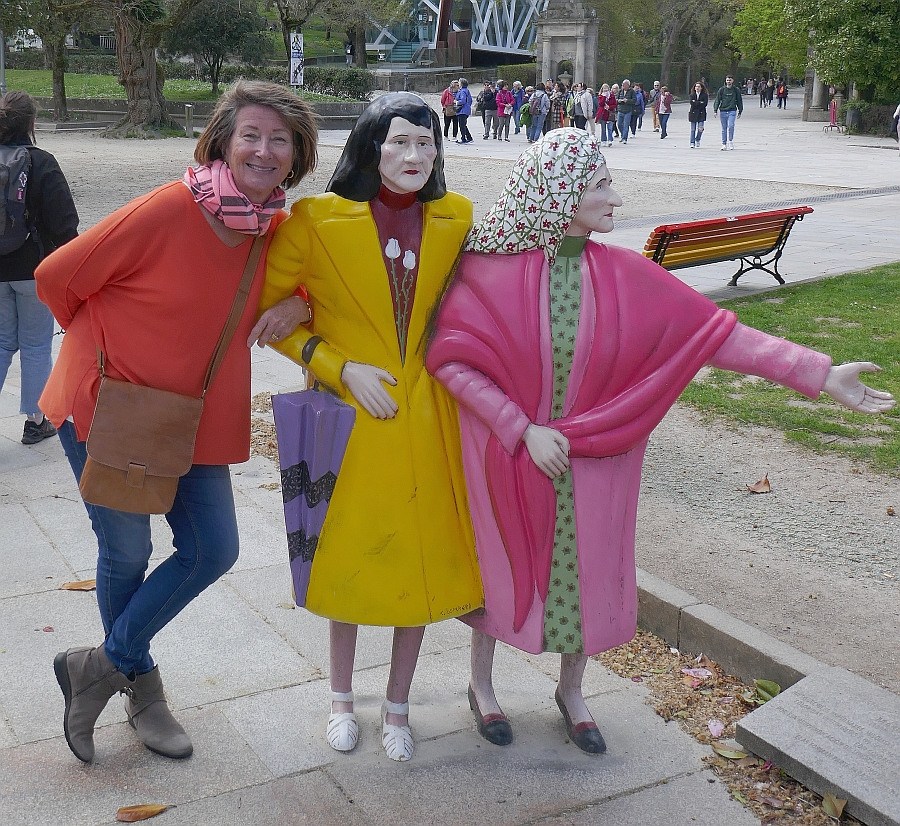
From the Cathedral area we decided to go for a stroll to the large parkland outside one of the city’s old gates, Porta Faxiera. It is called Alameda de Santiago de Compostela. One of the most curious monuments we encountered anywhere in Santiago was a colourful sculpture of two sisters who became famous in the city for walking together every day in the 1950/60s. They dressed in showy styles and teased the students they met on their walk. They were a strong contrast apparently to the depressing environment that reigned in the country as a result of the Francoist dictatorship. The sculptural piece is called As Duas Marias or the Two Marias.

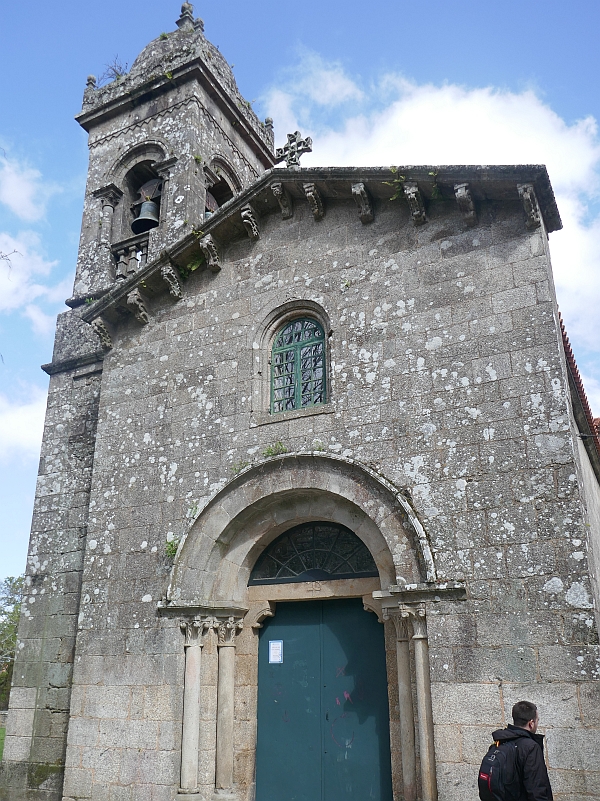
We strolled as far as the Church of Santa Susana in this parkland and enjoyed the greenery very much. It was time to head back to our hotel to prepare for our last dinner in the north of Spain before we headed to Madrid by train in the morning.
 FOGTRAVEL