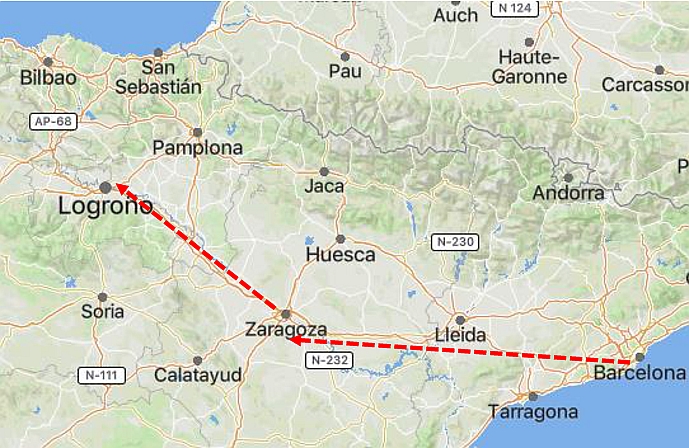
We had booked an Intrepid Tour to lead us along the coastline of Northern Spain with our guided journey ending in Santiago de Compestella. Our guide had met us in Barcelona and spent one day with us in that complex city before we left by train and headed off to Logrono, the capital of the province of La Rioja in Northern Spain. Our train ride took us a little over four hours via Zaragoza. We were met by booked taxis which took us to our hotel, Sercotel Calle Mayor on Sagasta St.

The map to the left shows the route of our first walk around Logrono after we had settled into our hotel. We walked up Sagasta St and turned left onto Calle Portales and within minutes we were in Plaza Mercado admiring the splendid Cathedral of Santa Maria de la Redonda. The ‘Redonda’ refers to the shape of the original church on this site. It was a ‘Romanesque Temple’ built around the 12th century. The cathedral has been modified three times over the centuries.

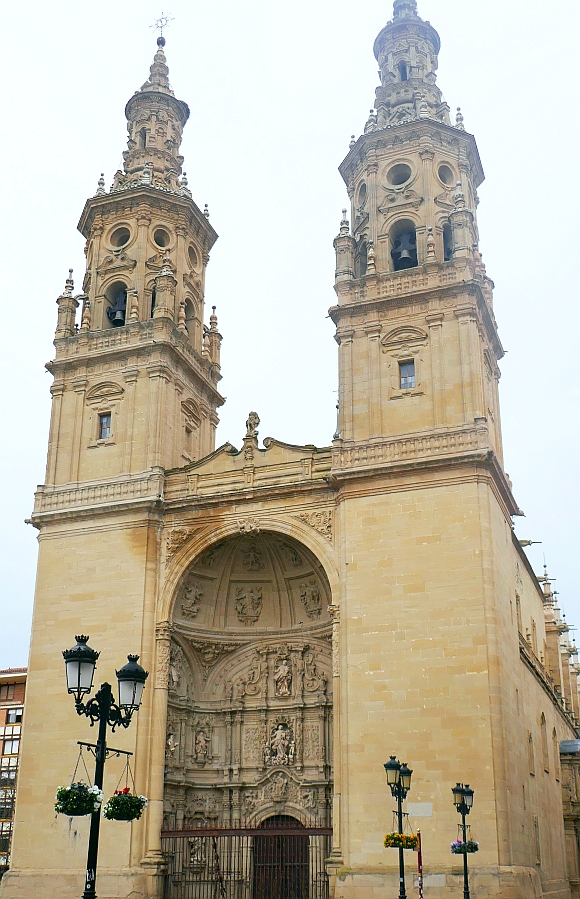
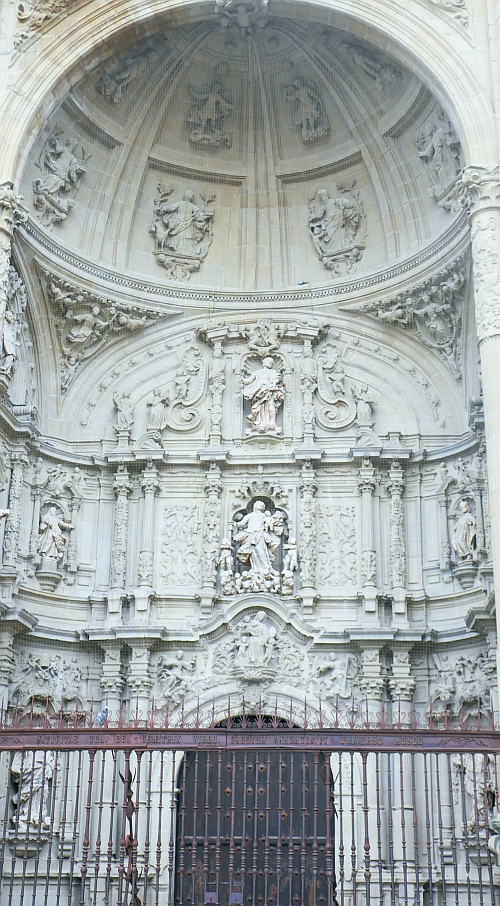
Perhaps the most impressive aspect of this church is the front entrance with a huge amount of sculptures presenting key figures from the Christian story scattered around and above the door. There is a large gate and lots of netting to protect this area from both birds and people. Logrono is a destination for the African storks who come for the breeding season so this cathedral is keen to keep them out of their fabulous entrance. The image on the right is of a nesting stork on top of a huge chimney down near the Rio Ebro river. Also in Plaza Mercado is the Old City Hall of Logrono, located here in the 16th century.

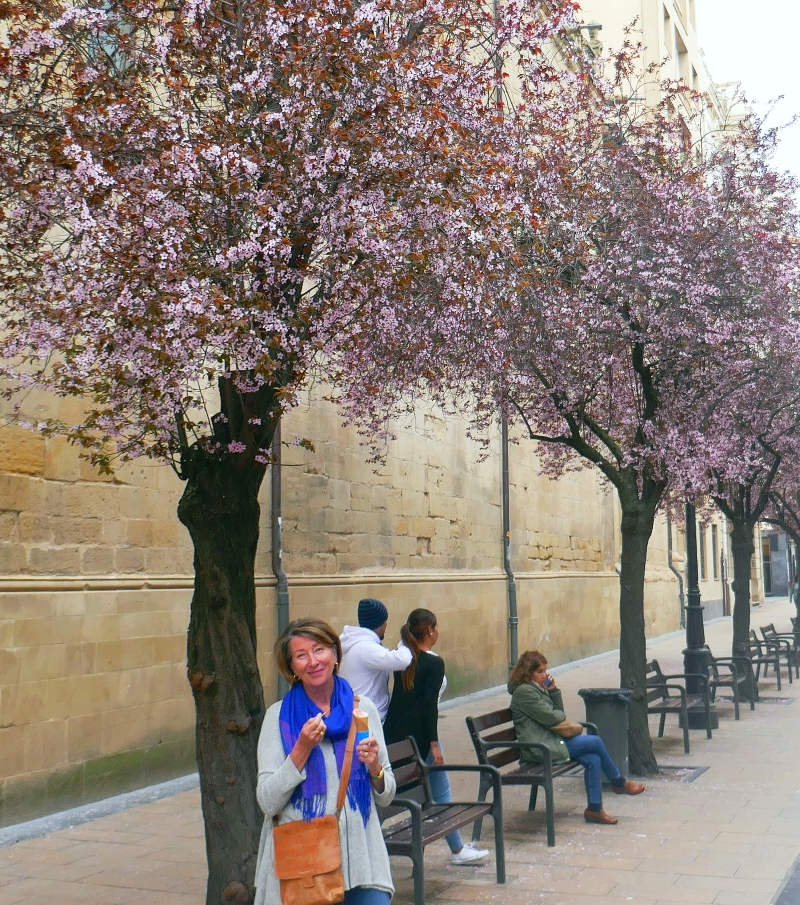

After some time inspecting Plaza Mercado we returned to Calle Portales and strolled to the end of the street, admiring the row of purple flowered trees that were in full bloom. The image below shows the parkland area at the end of this street called the Glorieta del Doctor Zuba. The building that is surrounded by lawns, gardens and trees here is an 1837 building , the Sagasta Institute, today officially called the Institute of Secondary Education.
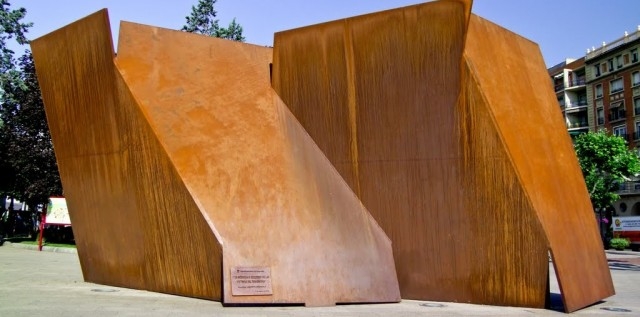
We turned right and walked up the street and found ourselves at another, much larger park, Paseo del Espolon. It was established in the 19th century with a large equestrian statue of General Respartero. There was also a monument there (on left), dedicated to the victims of terrorism from the events at the start of the 21st first century. This was the period of civil war in Spain involving the demands of the Basque separatists.

Time was starting to get away from us on this late afternoon walk, so we turned around and headed back down this street in the centre of Logrono and found ourselves in Plaza San Bartolome. This was clearly an ancient part of this city, outside of the church that the plaza is named after. The Church of St Bartolome is the oldest church in Logrono, dating back to the 12th century.
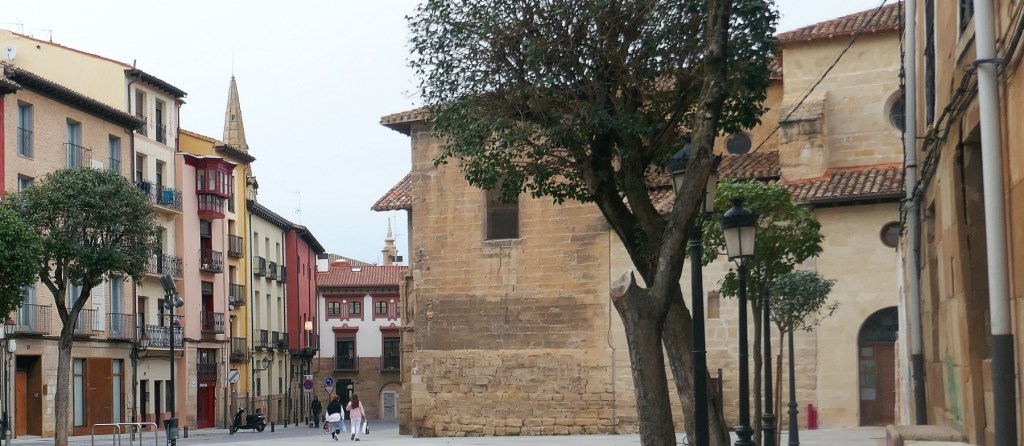


I was particularly fascinated by the portal of this church as it has a series of well-worn sculptures that have survived the nine centuries since they were created. They tell the life of St Bartolomeo who was one of Jesus’s apostles who spread the word in many far-flung places outside of Israel. Unfortunately he has become most famous for his actual death where legend has it that he was flayed alive for his missionary efforts. He became a favourite of sculptors like Michelangelo and other artists who presented the ghastly images in Italian churches of the saint holding his own skin.
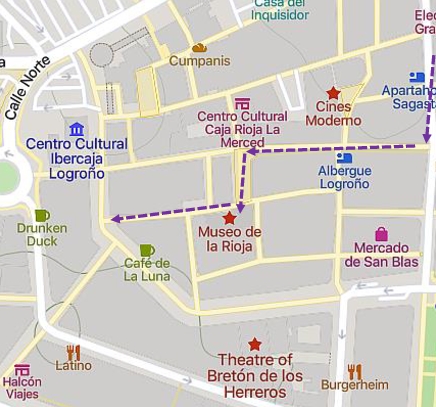
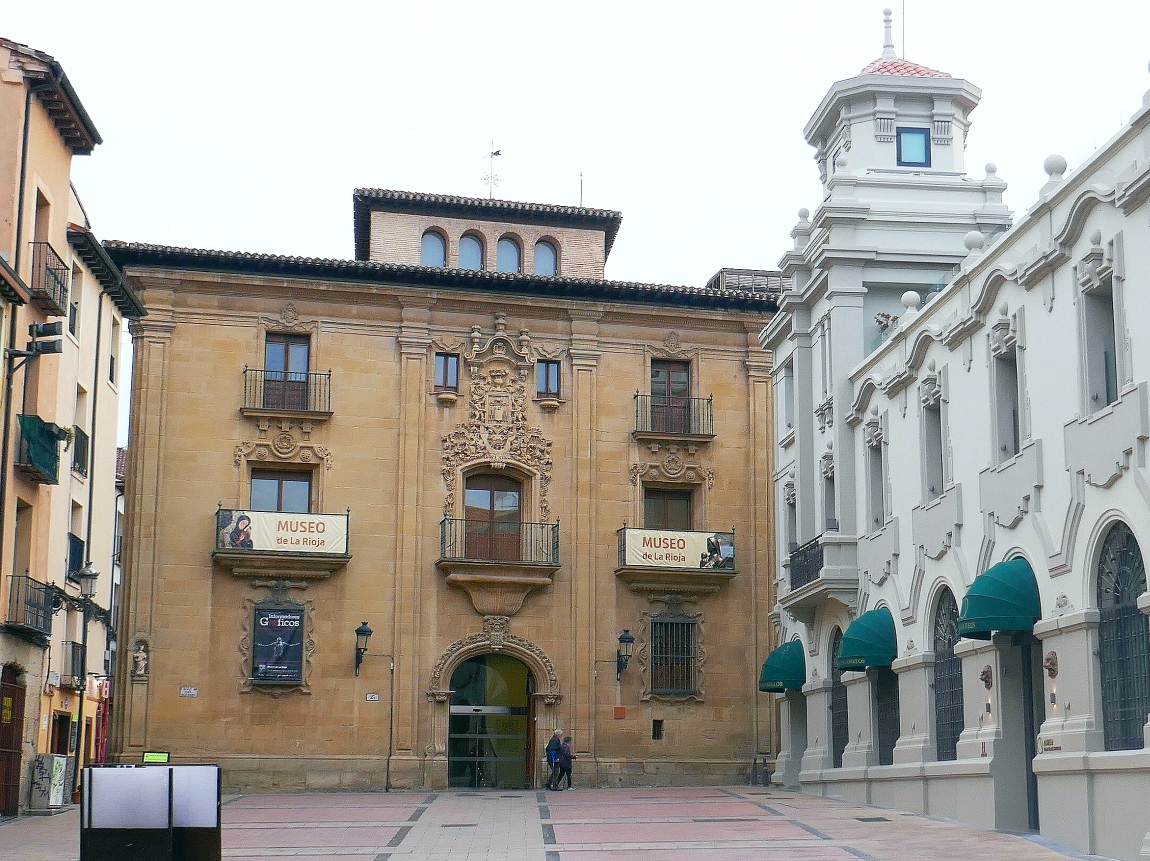
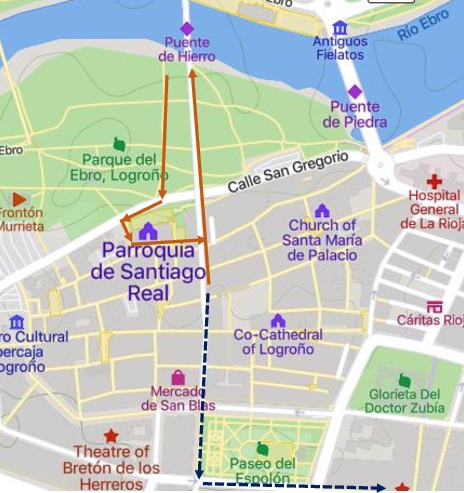
Our only evening in Logrono was a key part of our Intrepid Tour package…visiting the famous Tapas bars of the city. There is a particular street that all tourists head for in town called Valle Laurel where many of the estimated over 50 Tapas Bars in town can be found. Our evening was spent casually going to 3 or 4 bars, tasting their Tapas and the local wines of the region. Not having had much experience of Tapas, I was pleasantly surprised at how delicious they were and realised that it might be a good idea to start experimenting with this cuisine when we went home. We didn’t have to walk far from our hotel when we set out that night as the map on the left bshows. Our walk took us past the two buildings of the Museo de la Rioja on the way to the Tapas Bars but there was no opportunity for visiting, either tonight or the next morning.

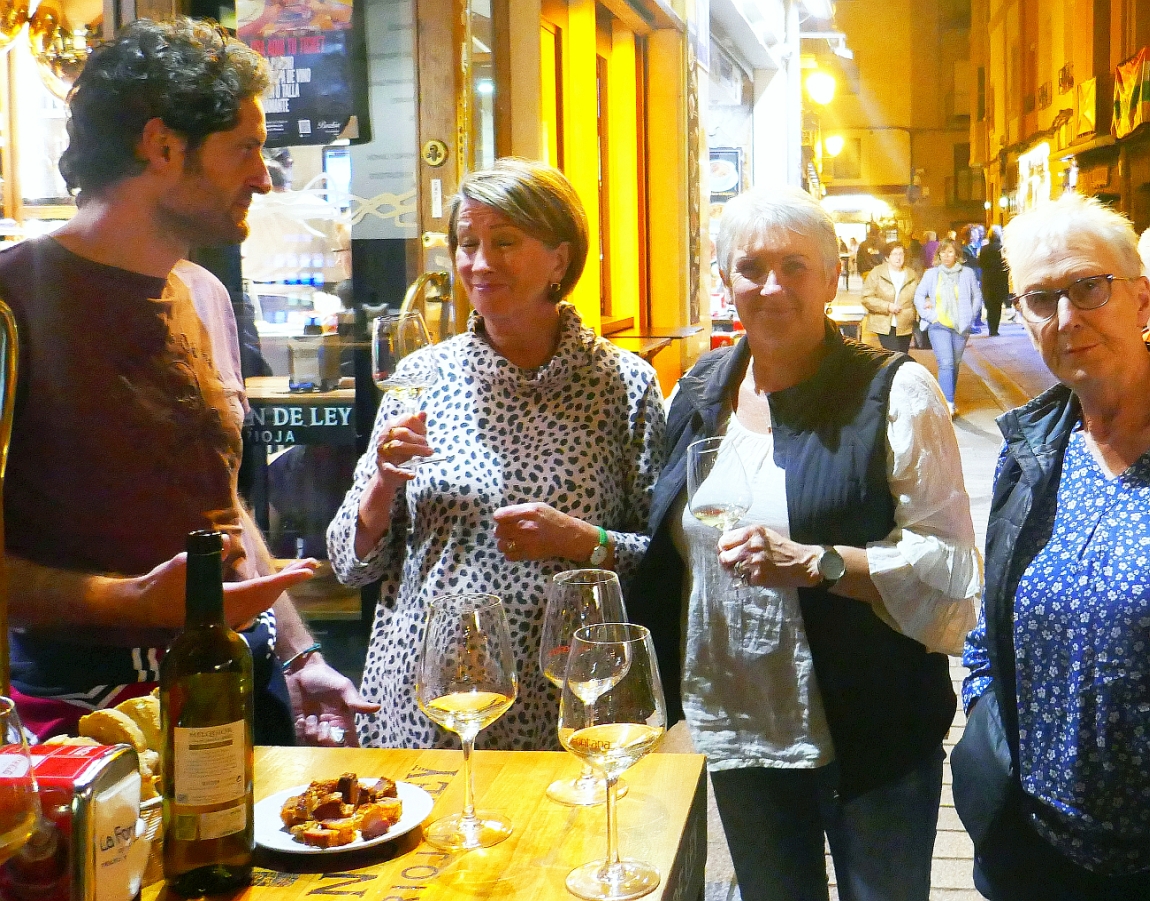
Below are some images from the night that have been carefully chosen to show no foolish behaviour was revealed by our night out in Logrono.

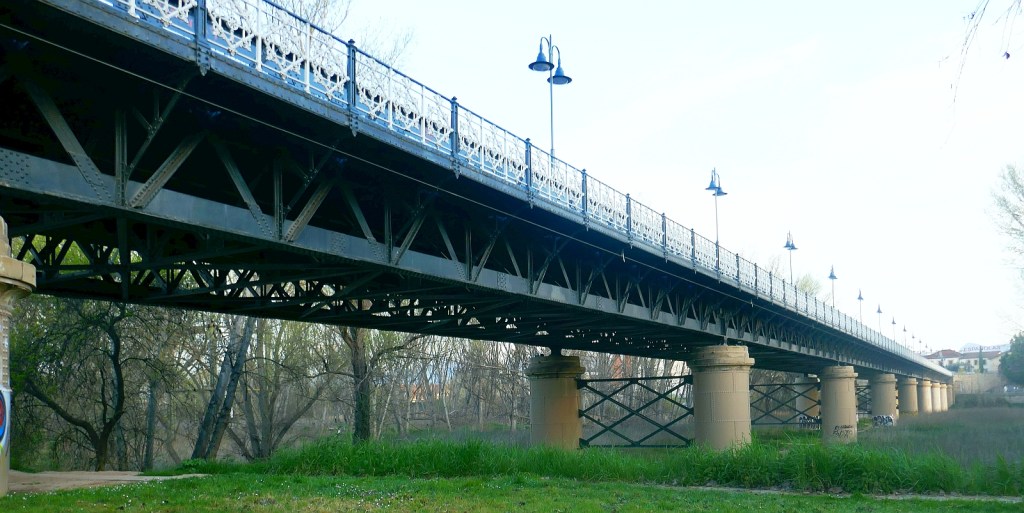
I was up reasonably early the next morning as I had noticed there was a large park at the end of our street that sat beside a river. Much of the park was actually crossed by the approaches of this bridge that took locals to and from the inner city.
The real gem of my morning walk was to discover the Church of Santiago el Real, hidden away among the buildings across the road from the river park, Parque de’ Ebro. From the river park, one side of the towering church could be seen but to reach the front entrance, I had to find my way around to Calle de Santiago. There was originally an old medieval church on the site that had been largely destroyed by fire. The current church was started in the 1570s and the Renaissance façade was built a century later, started in 1669 (see photo below right). At this stage I didn’t know the name of this huge church but I started to get the message when I noted the name of the street, the carved pilgrim shell in the wall and finally the name of the square nearby, Plaza de Santiago.
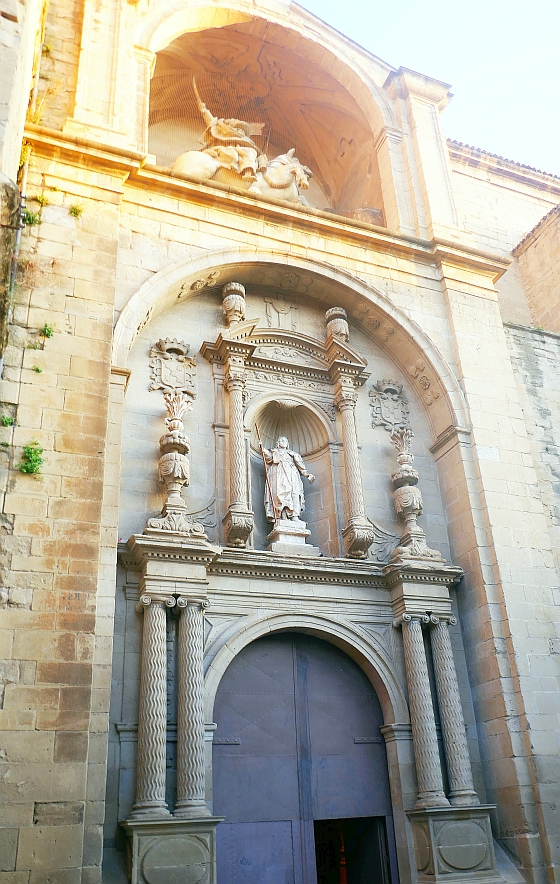
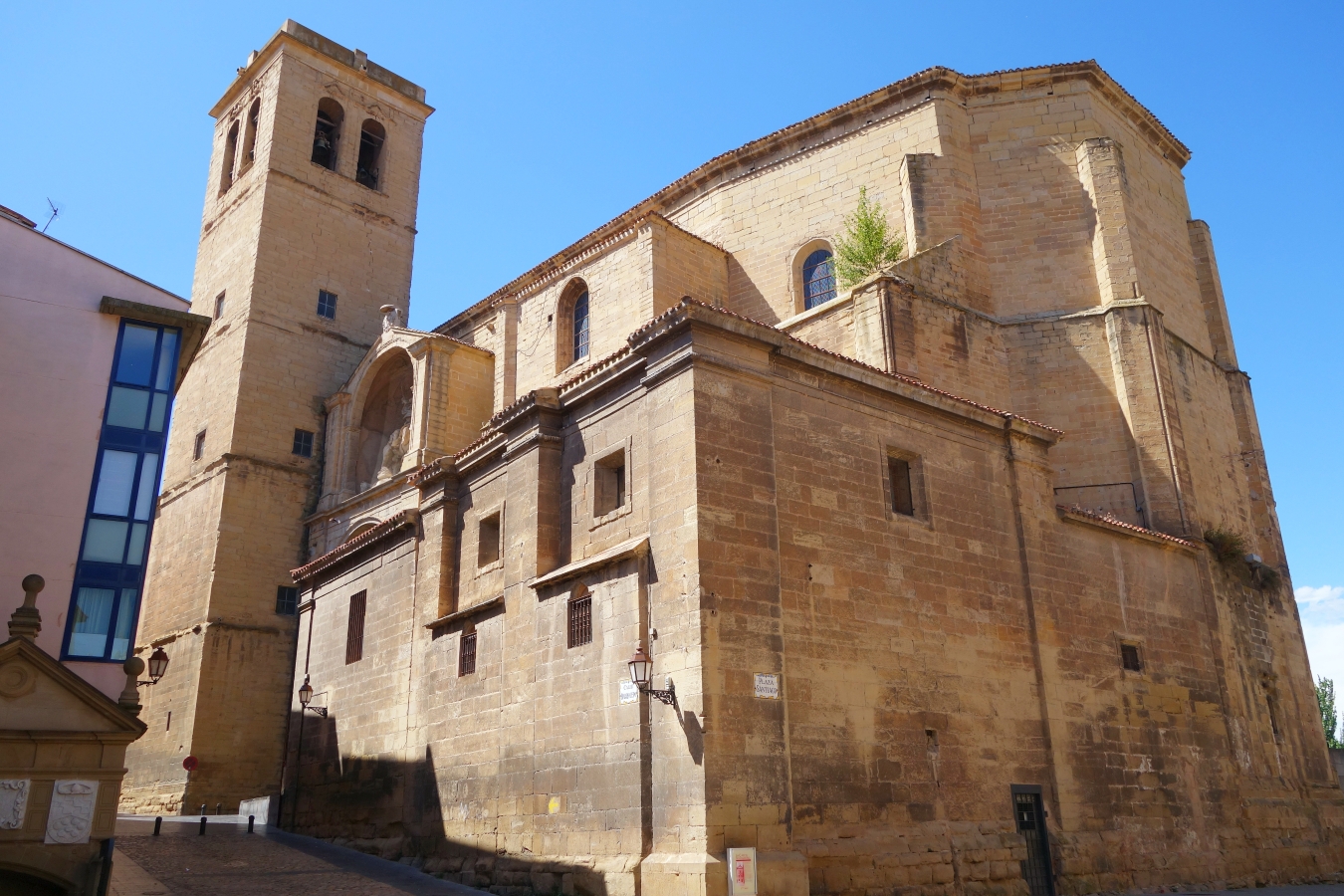
Perhaps if I was superstitious, I would have seen the discovery of this Church of St James the Elder (Patron Saint of Spain) as an auspicious sign, given that our journey through Northern Spain was to end in Santiago de Compestela.


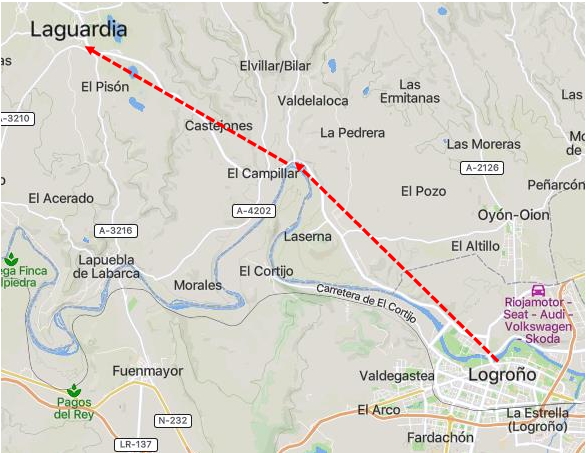
The next morning we were up for a good and early breakfast before we had to hit the road, dragging our bags up hill to the Logrono Bus Station. Our first destination for the day was Laguardia, a town in the Basque Autonomous Community further north towards the coast of the Bay of Biscay. We would spend a few hours there before we were collected by small bus and delivered to the beautiful coastal town of San Sebastian.
 FOGTRAVEL