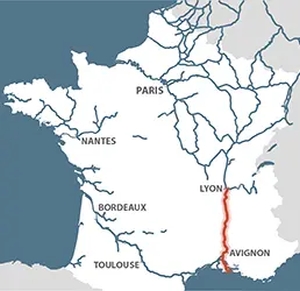
Our short boat cruise up the Rhone River in Southern France started off with two days back-tracking…to introduce the passengers, first of all, to Avignon, particularly the Papal Palace and then the town of Arles (by bus) which was down river, much closer to the sea.
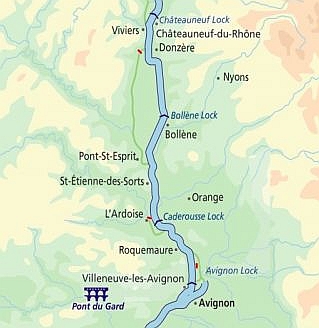
Our boat was very comfortable. We received great service and enjoyed our first morning ride up the Rhone River to our first ‘river’ destination, the ‘village’ of Viviers. It is about 80 Kms by car from Avignon. Whilst the village today has lost much of its original population, it still displays its heritage which goes back before Roman Times. When the Romans occupied this area of the region of Ardeche, it became the capital of the ‘Pays Vivarais’ as well as the Diocese of the area. Its glory days are long gone but the remains of the important town it once was are still there and are well preserved.
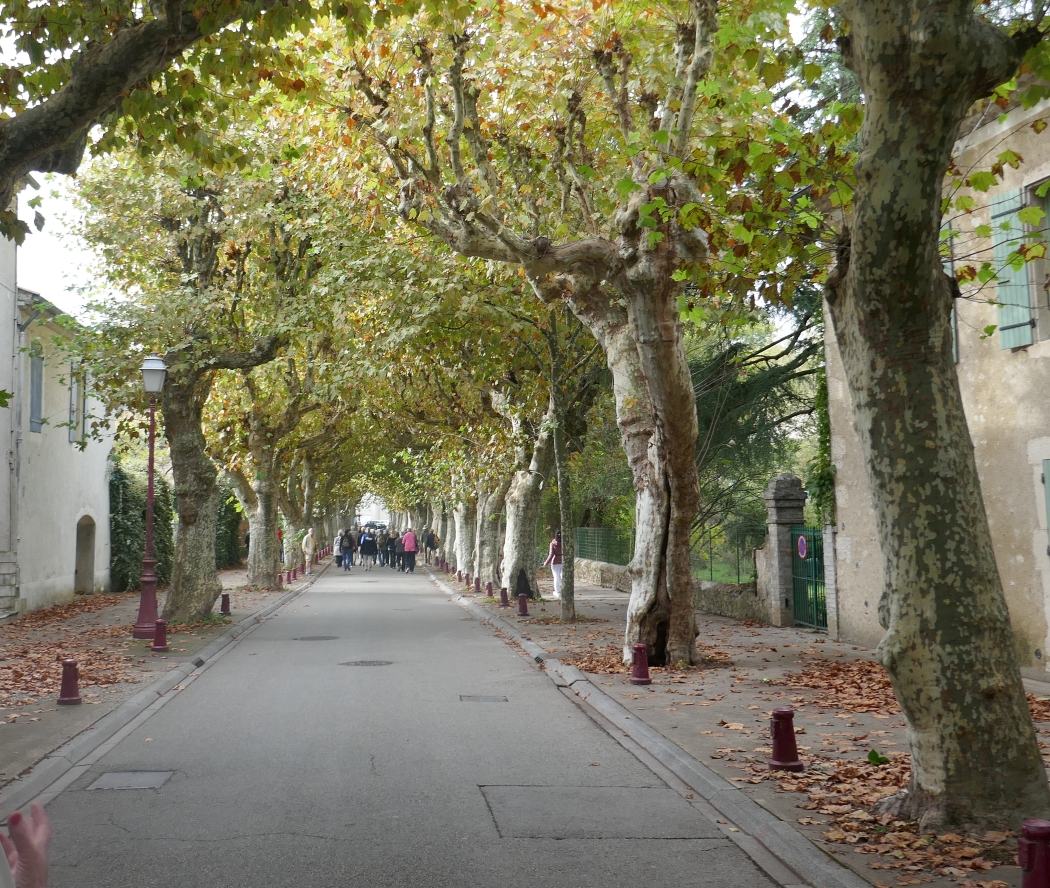
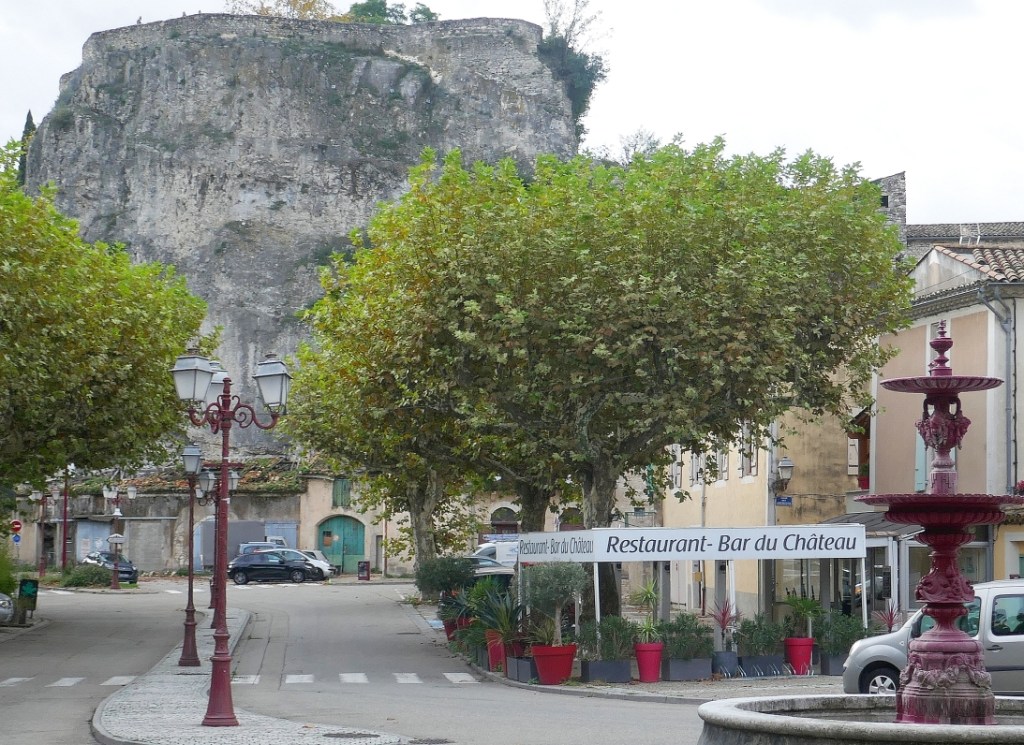
The image on the left above shows the walk from the river to the village of Viviers. Plane Trees as usual lined the road and it was a very impressive entry-way into the village. We passed through the village gates and found ourselves in the town square, the centre of town that was overshadowed by a large rocky outcrop which explained why the Romans originally decided it was a great spot for a camp. It also gave our group some idea of where we were going to walk given the town’s cathedral was up on top of the rocky outcrop.
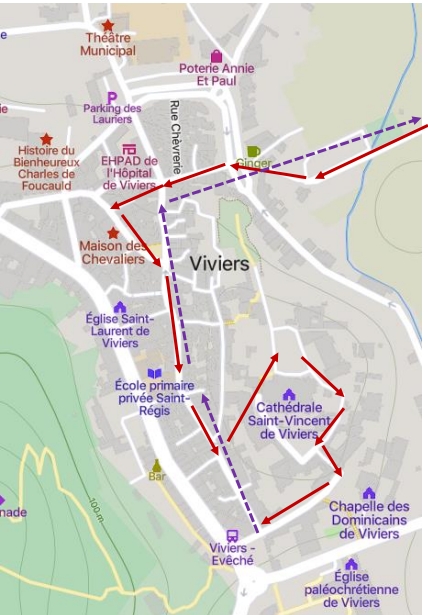
Below right is an outline of our morning walk. Climbing the cliff face in the centre of town was not an option so our guide led us off at right angles which took us to the medieval centre of town with our first stop being on a corner where the ‘L’Hopital de Viviers’ was located.
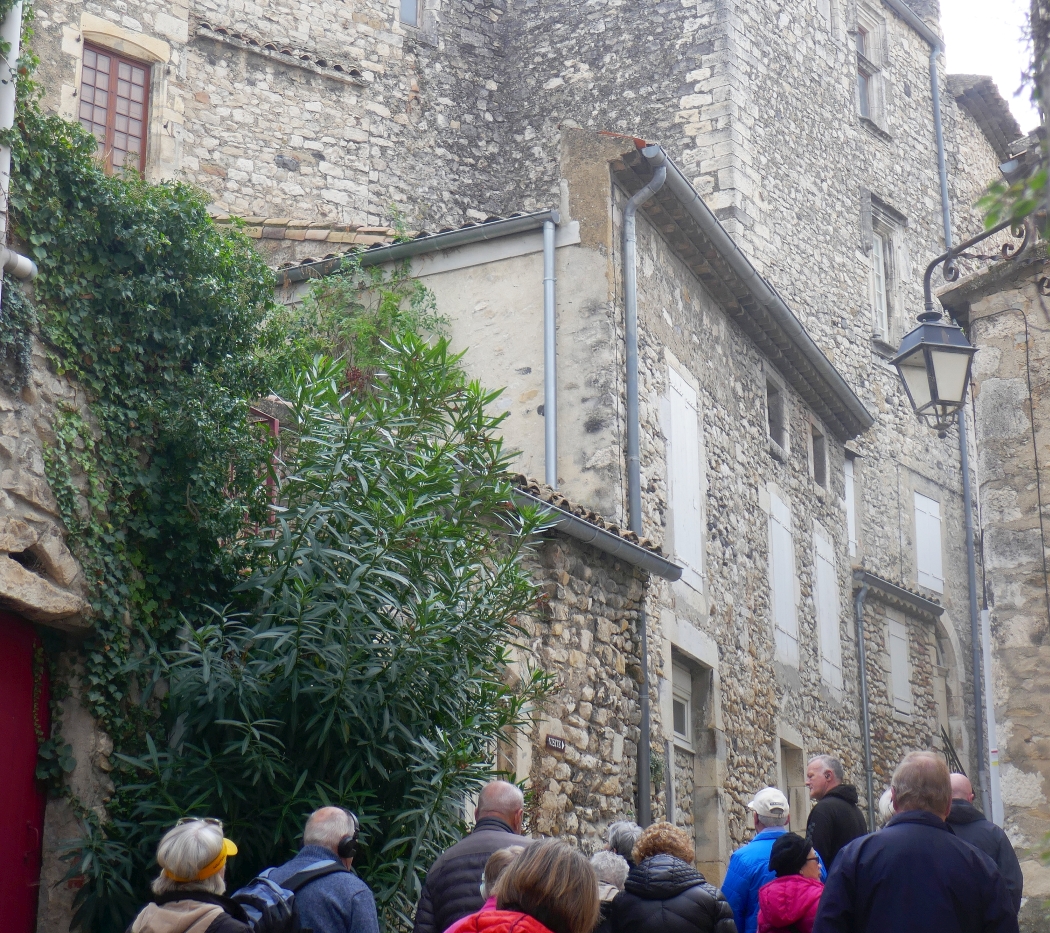
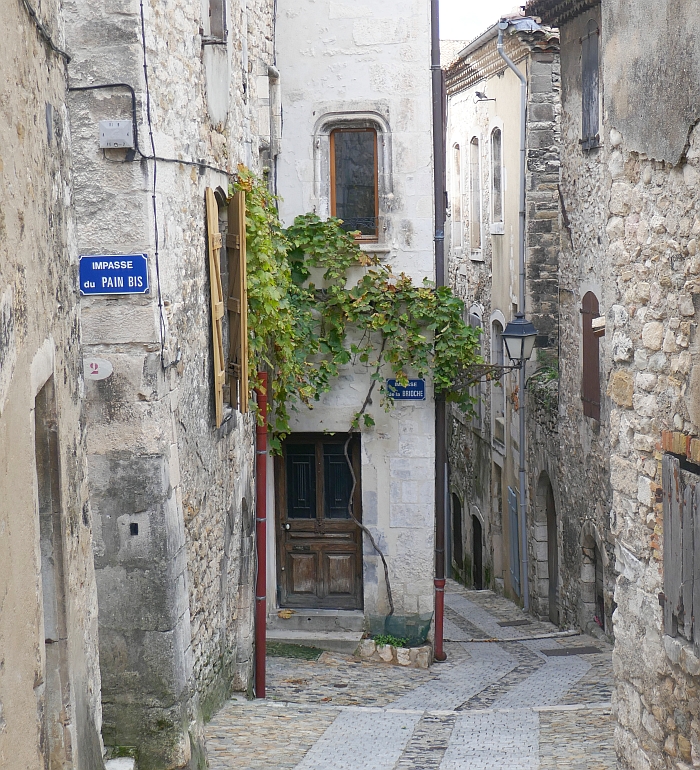
From the Hospital Corner, we turned left into the narrow alleyways Of Viviers and headed towards one of the most interesting buildings in town, the Maison des Chevaliers (Knights’ House.)

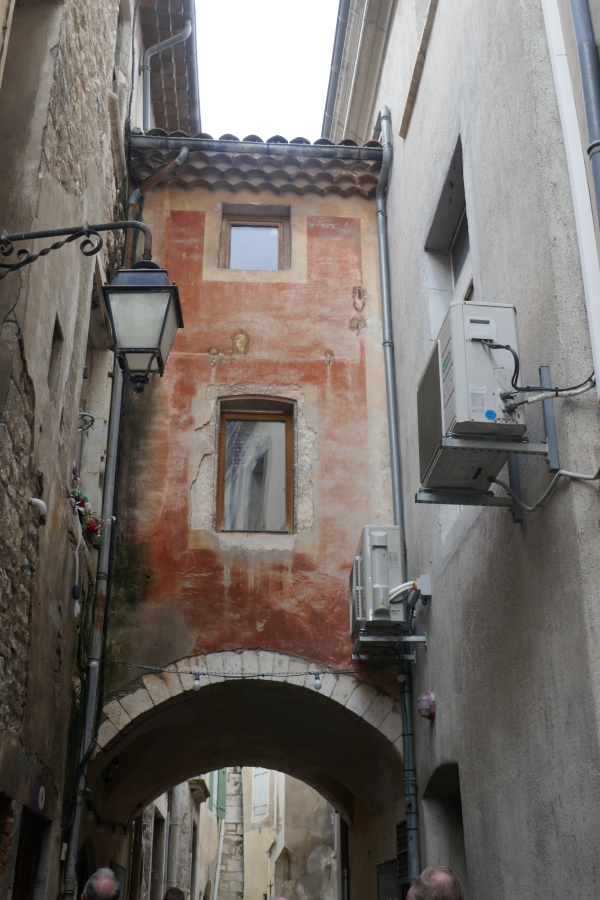
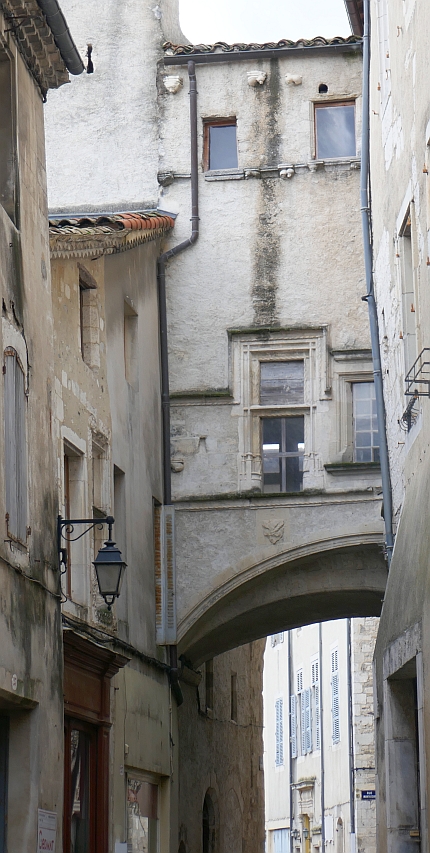
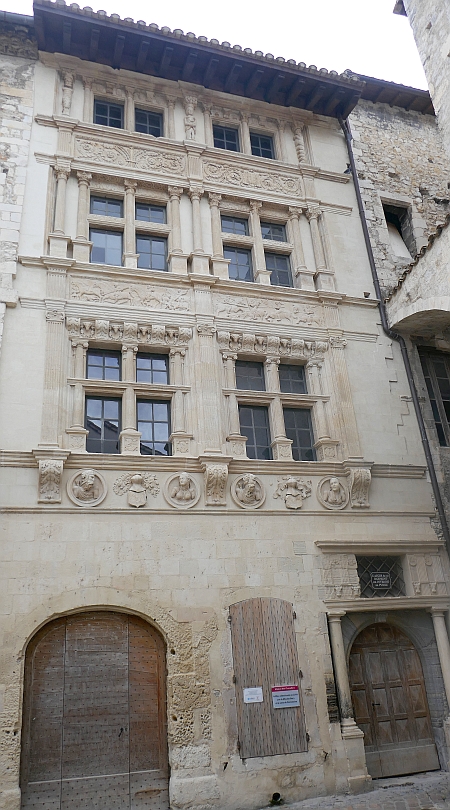
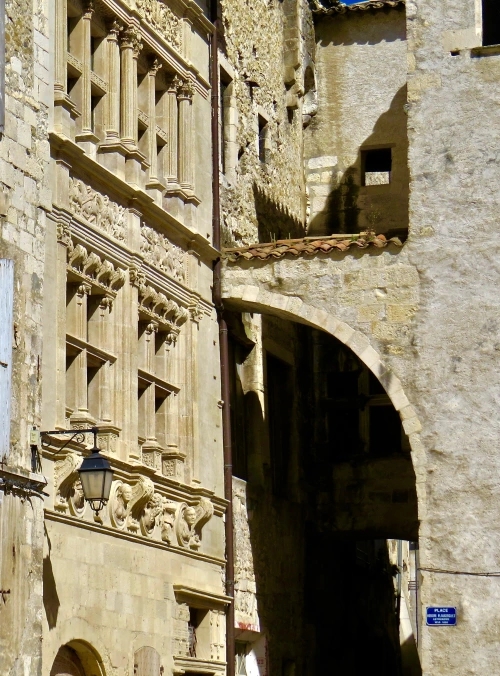
The Maison des Chevaliers was built by Noel Albert, a wealthy merchant of Viviers in the mid 16th century. He was involved in the Salt Trade and became renowned for his ability to avoid Government taxes. His house still stands today in Place Honore Flaugergues and its façade is what makes it famous. It is on four levels of ornate windows and associated sculptures.
“The main facade on the square is on four levels crowned by a ‘sponge cake’ . The decoration is made of a superposition of the Doric, Ionic, and Corinthian orders. Under the windows, on the first floor you can see figures in high relief in medallions, on the second floor friezes representing knightly battles, and on the third floor scrollwork.” (Courtesy Wikipedia)
Almost every city, town and village in France has a memorial in their main square, usually entitled the Place de la Republique. In Viviers there was a fairly small area set aside for the Place de La Republic just along from the Knight’s house. A few days before I had visited a very large memorial statue dedicated to the French Republic just outside the walls of Avignon. Given the comparative size of Viviers, there was a much smaller statue of Marianne, a National emblem of the Republic, as well as the usual national motto, “Liberte, Egalite and Fraternite.” Unfortunately there appeared to be a lot of abandoned houses around the Viviers Place de la Republic so it wasn’t the most impressive stop on our tour of the town.
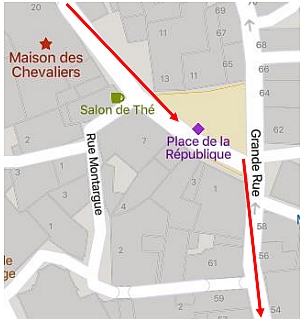
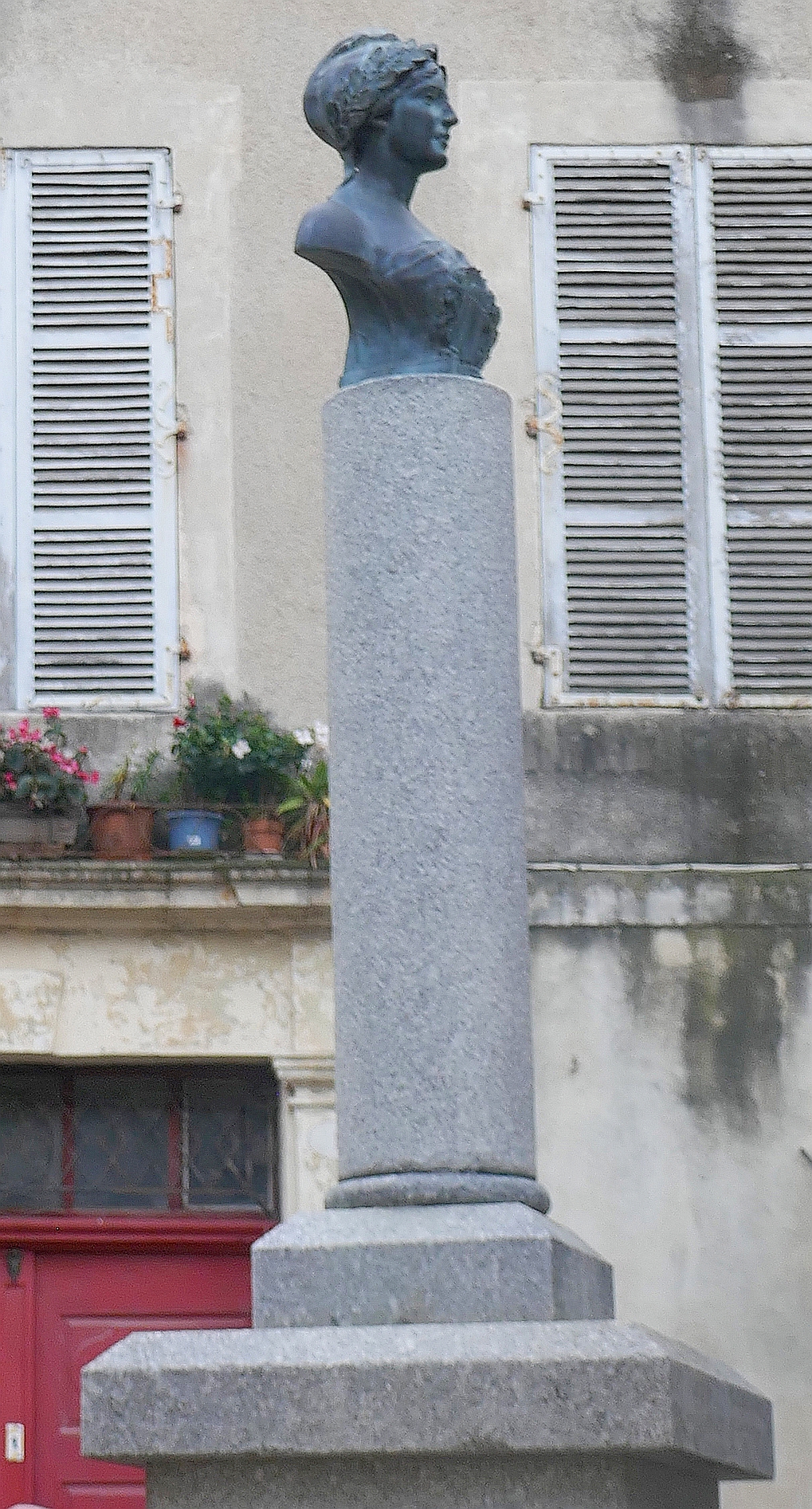
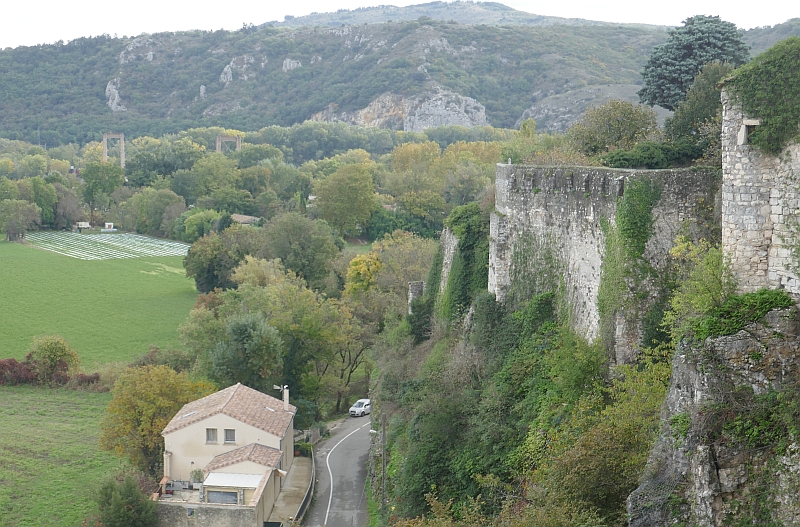
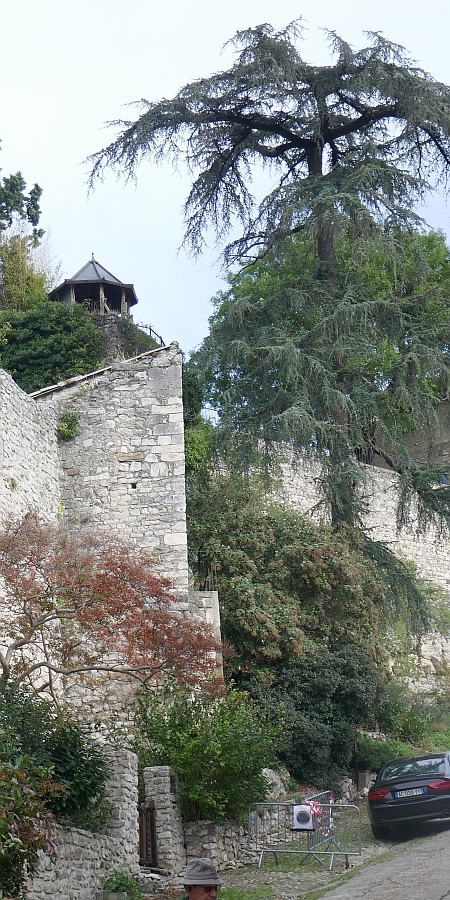
From the Place de la Republic it was full steam ahead to make our way to the top of the town where the local Cathedral was constructed. Just along from the Cathedral was a large area set aside for locals and visitors alike to appreciate the grand views across the town and neighbouring countryside.
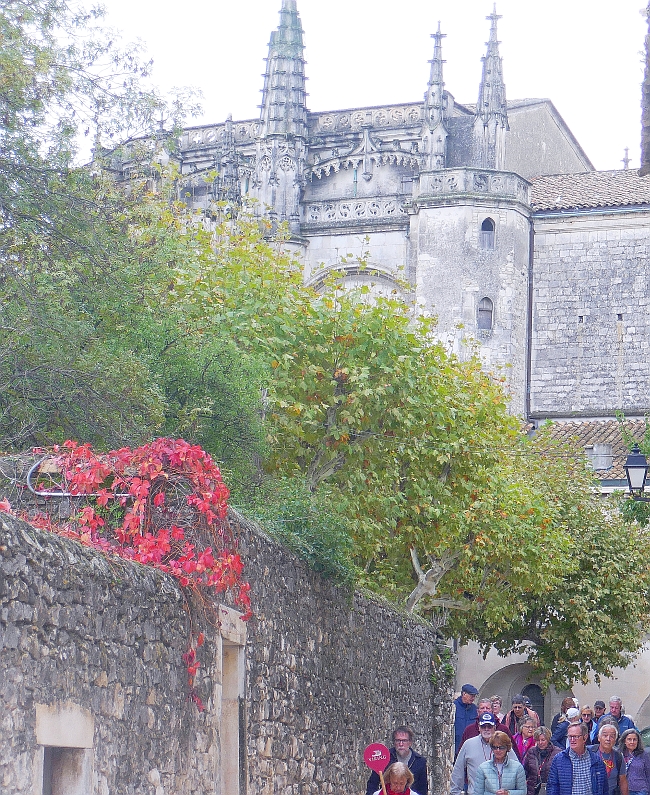


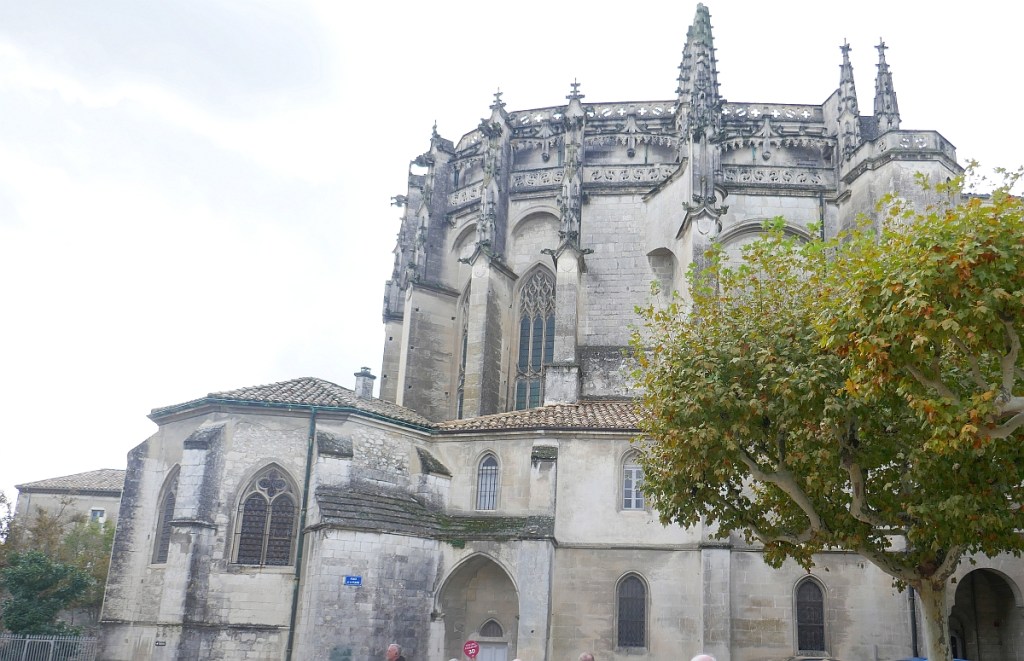
From the lookout area we walked towards the St Vincent Cathedral. Unfortunately for the visiting tourists, the Cathedral was in use by the parishioners so most of us decided to let the locals worship in peace inside. There was a very impressive tower attached to the cathedral that was built in the 11th century (See image on right below.). The rest of the building hails from the twelfth century. One of major outbreaks of warfare between the citizens of France was the ‘Wars of Religion’ fought between 1562 and 1598. This was the civil war between French Catholics and Protestants (Hugenots). It is an outrageous statistic to note that between two and four million people died at the time from violence, famine and disease due to this conflict between groups of citizens who both claimed to be the true followers of the Prince of Peace. Apart from local casualties, Viviers Cathedral’s vaulted ceilings were destroyed and were not reconstructed until the 18th century.
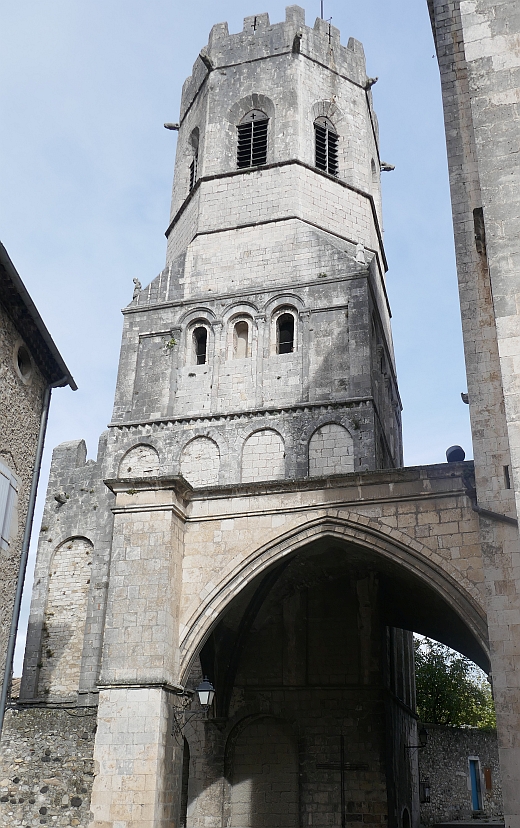

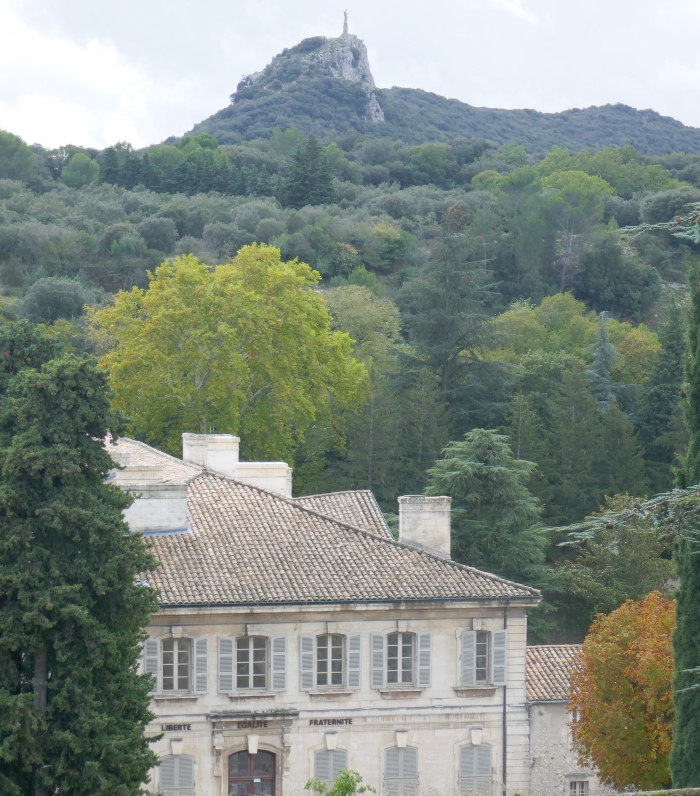
We walked past the cathedral through the tunnel underneath the tower and emerged the other side of the buildings to another great view of the surrounding countryside. In the distance can be seen a statue of the Virgin Mary atop a rocky outcrop in the distance. It originally held a wooden cross but in 1861, this statue was erected by a local family.

From the Cathedral area we made our way back through the village of Viviers and strolled our way back to our boat along the Plane Tree road.
 FOGTRAVEL