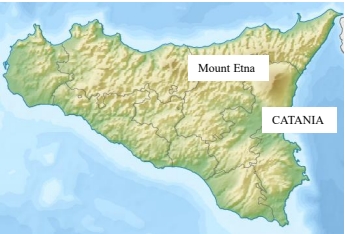
It was 2009 and my daughter and I were doing a world-wind tour of Sicily. We had started off with a couple of days in Palermo and then caught a bus across the island to Catania on the east coast of the island. It is Sicily’s second largest municipality and lives life dangerously by locating itself at the base of Mount Etna, an active volcano that sits above the colliding African and Eurasian tectonic Plates. This volcano doesn’t have a stable height as it erupts so much material…for example in 2021 it added 30m of volcanic material over a six-month period.
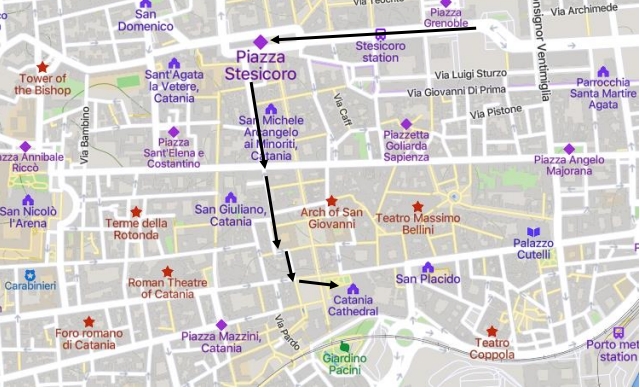
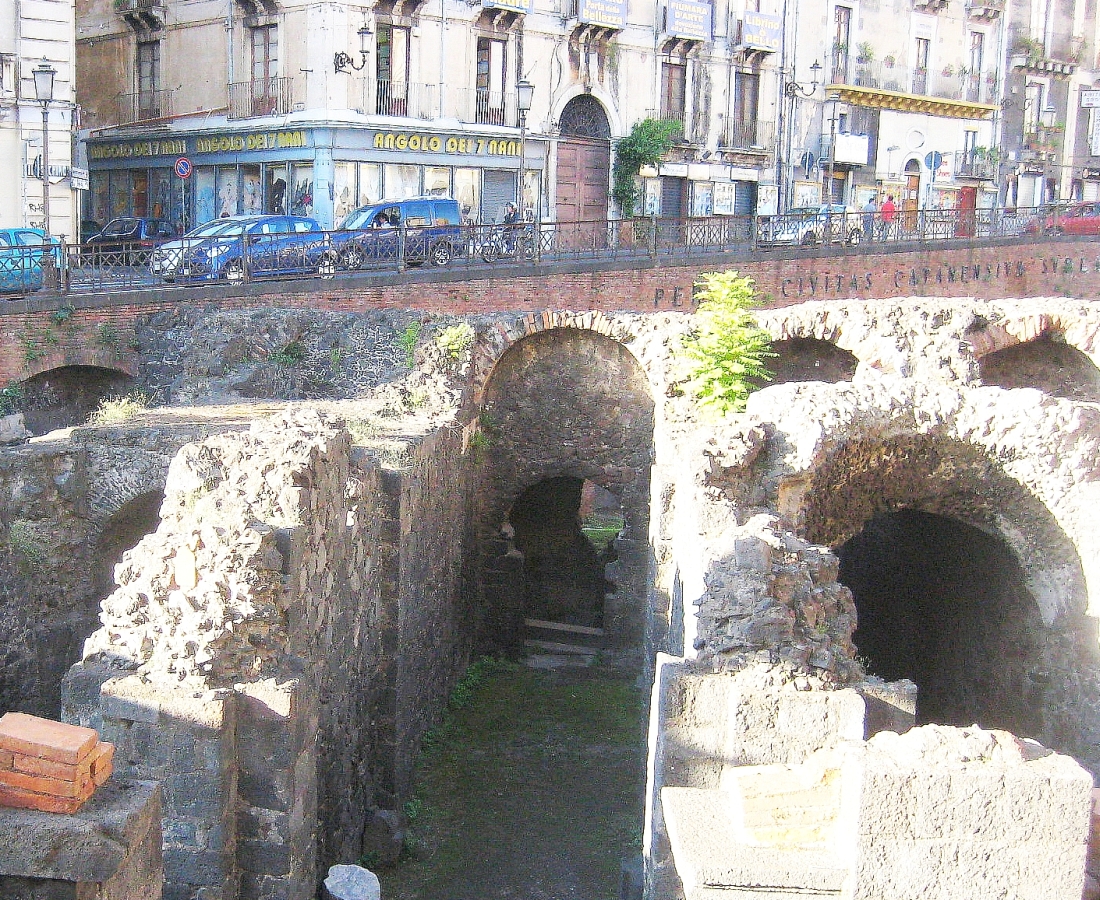
We had a morning to go for a walk around the centre of the city before we trained back across to the mainland. We made our way from our hotel to one of the main squares in Catania, Piazza Stesicoro, which was an area that contained some significant sights of the city. From here our path took us directly to Piazza Duomo where the Catania Cathedral stood. One of things we discovered about Catania was that it was a very old city having been founded around 729 BCE by settlers from Greece. Five hundred years later it was taken over by the Roman Republic during the Punic Wars with Carthage. The remnants of this early history were scattered along the path of our morning walk, generally in the form of the open-air amphitheatres. One of these Roman Amphitheatres lay partially uncovered beside Piazza Stesicoro.
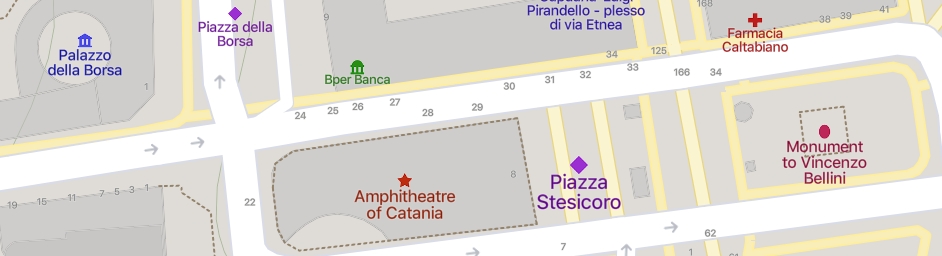
The first major site we encountered was the monument to Vincenzo Bellini, an Italian composer of famous operas whose short life (1801-1835) was greatly celebrated in Catania, the city of his birth.
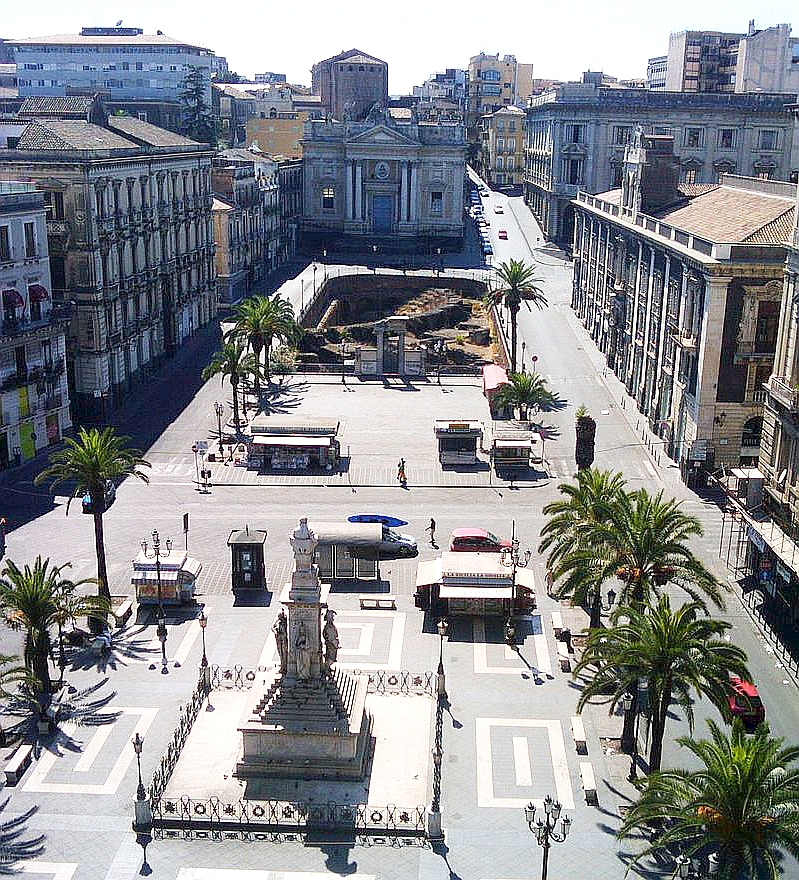
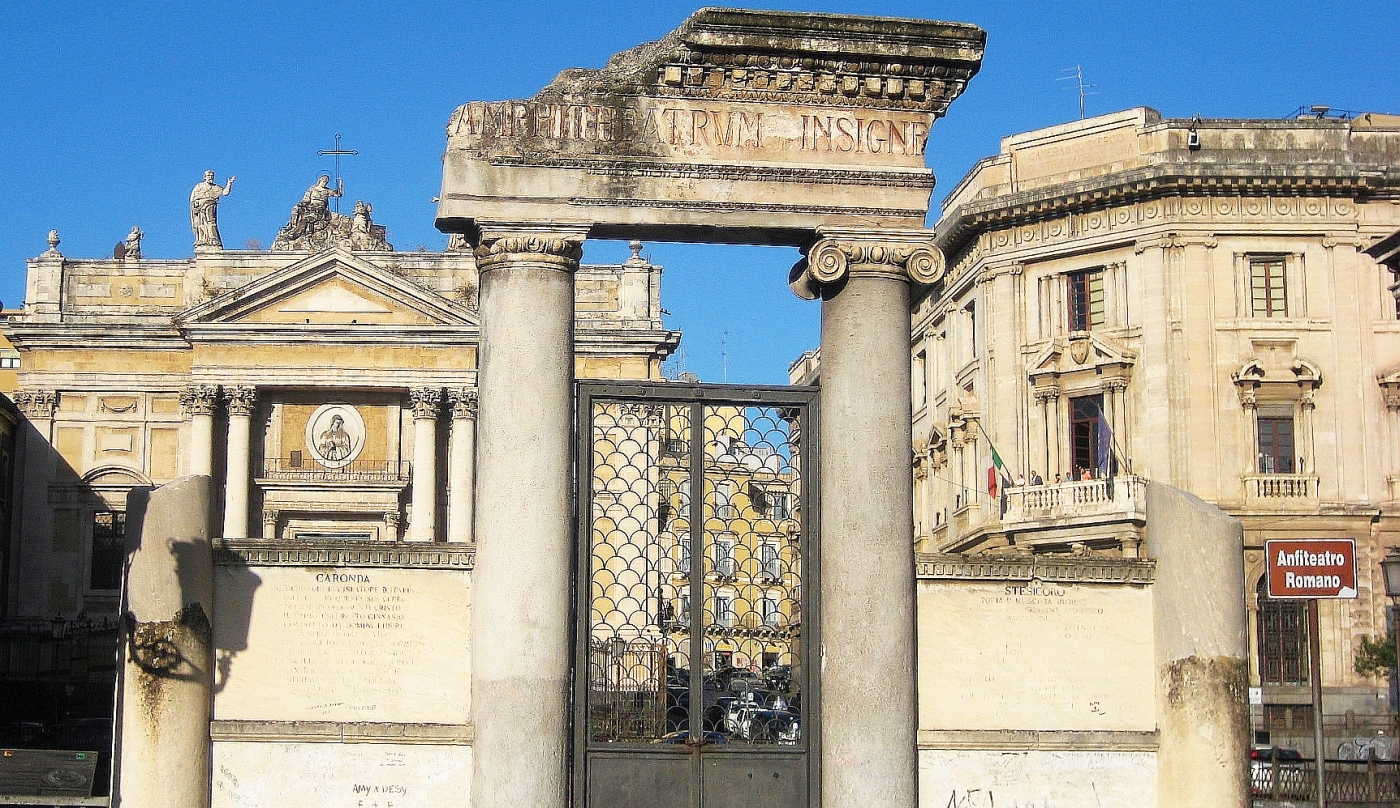
The photo below of the Piazza shows the monument to Bellini at one end and over the road (Via Etna!) is the central area of the Piazza. (A larger image of Bellini Monument can be seen below left.) On the other side of the Piazza can be seen parts of the ruins of the Roman Amphitheatre of Catania. Below right is the current entrance to the Amphitheatre. In 1906 it was decorated with two fragments of Ionic Columns and part of the original architrave inscribed with the Latin text, “Eminent Amphitheatre”. The amphitheatre was most likely built in the second century CE and is believed to have held around 15,000 spectators. The remains of the amphitheatre represent only a tenth of its original size.


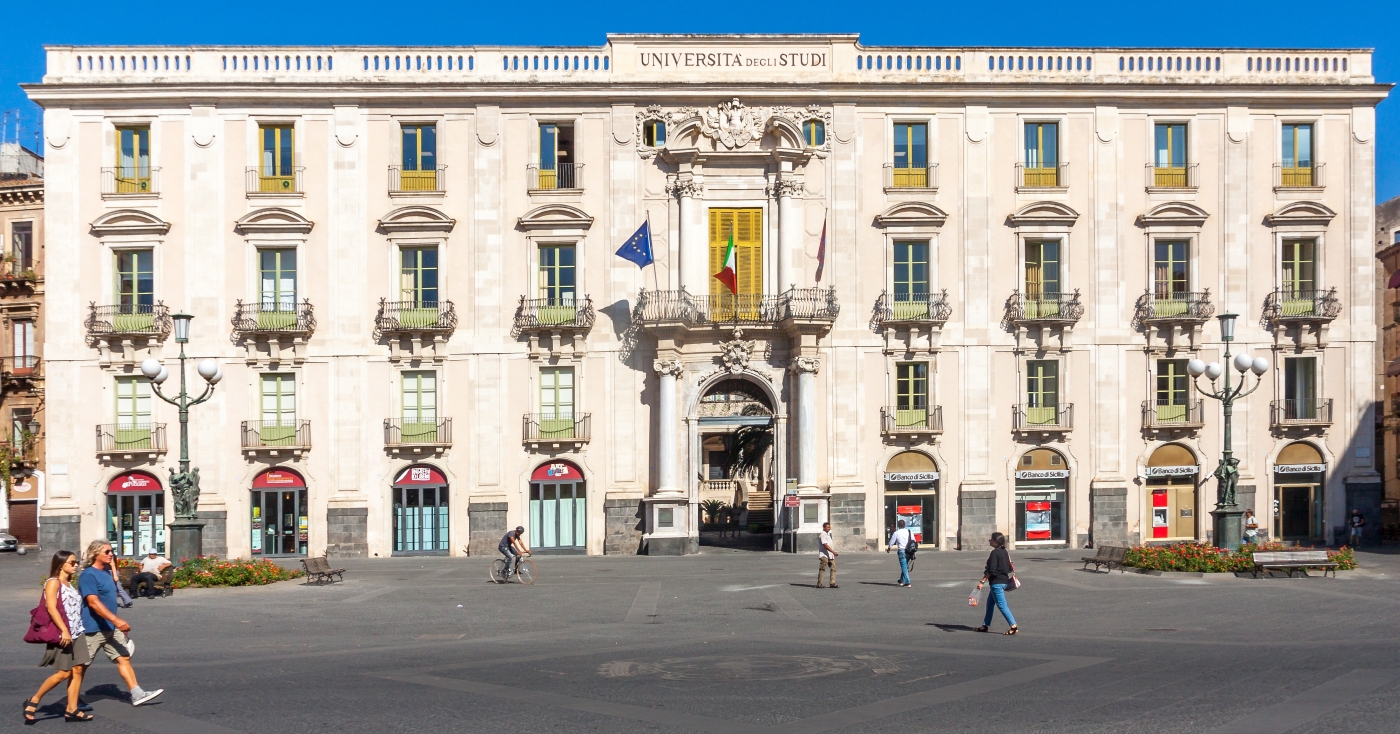
After we explored the surrounds of the Roman Amphitheatre, we headed down Via Etna towards the Plaza dell’Universita. Catania was severely damaged by an earthquake and Tsunamis in 1693; almost two thirds of the population of Catania were killed in this major event. Along our path down Via Etna were the university buildings that were rebuilt as part of the restoration of the city after this destructive seismic event of the late 17th century. The building on the left below is Palazzo San Giuliano which was built at this time and is still a significant university building today.

It wasn’t much further to walk when arrived at Piazza Duomo which is another central square in Catania. It sits beside the Catania Cathedral dedicated to Saint Agatha. As I commented earlier, buildings in Catania live dangerous lives given that their neighbour is an active volcano. This city’s cathedral has been destroyed and rebuilt several times. It was built originally in the late 11th century over the ruins of the Roman Achillean Baths. Amazingly, a 1000 years later visitors to the Cathedral can still visit these Roman remains beneath the cathedral. In 1169 the Cathedral was destroyed and then rebuilt but like so much of Catania and was shaken to ruins again in the 1693 earthquake.
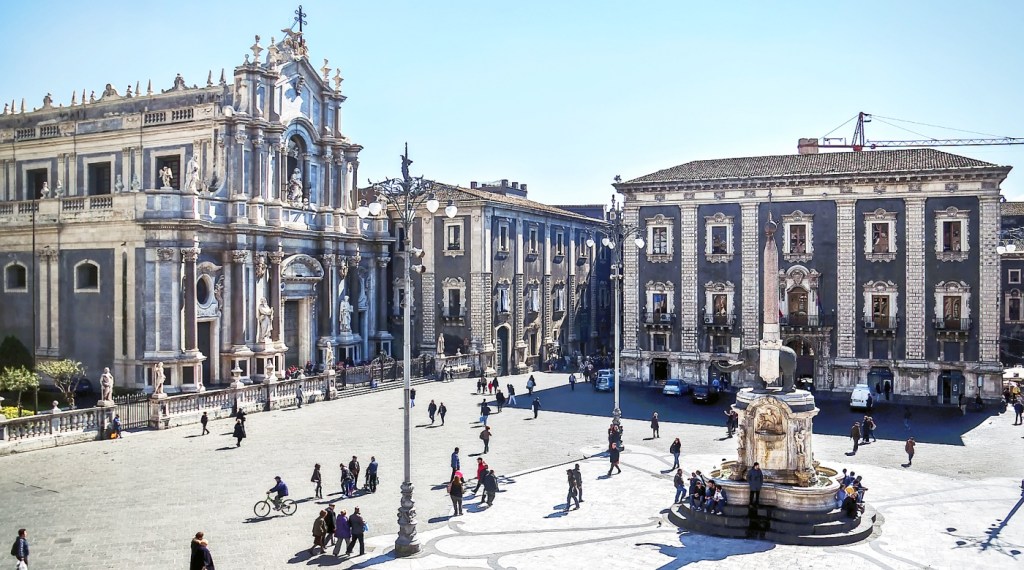
Saint Agatha was born in Catania in 221CE when it was a province of the Roman Empire. She was only 20 years old when she was martyred…early accounts describe her interrogation, torture, resistance and death. The above photo shows the front of her Cathedral facing towards the Piazza Duomo.
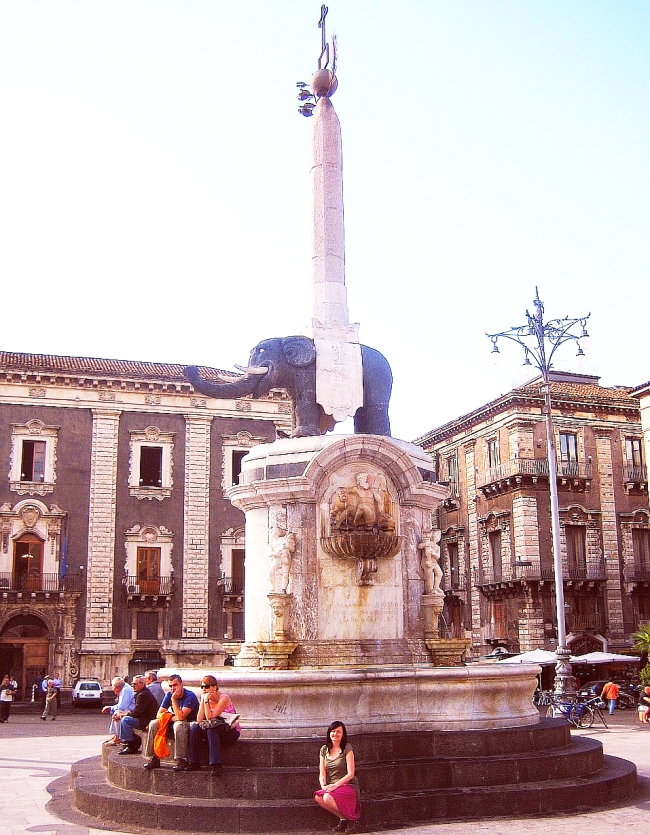
In the centre of Piazza Duomo there is a famous fountain, in the centre which stands a basalt elephant. This elephant was mentioned in a book written in the 12th century which suggested that the locals believed it had magic powers and could predict eruptions of the neighbouring volcano. Today the ancient elephant stands in the centre of a fountain built in the 18th century and the fountain’s architect also found an Egyptian obelisk to mount on top of the long-suffering elephant.

From Piazza Duomo we walked about 300 metres down to the Piazza San Francesco d’Assisi where the Church of St Francis of Assisi stands (above right). St Francis himself died in 1226 CE and it was only 28 years later that his monks settled in Catania. Back in Catania’s Roman period, there was a temple of Minerva on this site. In 1329, Eleanor of Anjou, the Queen of Sicily backed the construction of a church and convent on this site dedicated to St Francis. The impressive façade of the church wasn’t built until 1854.
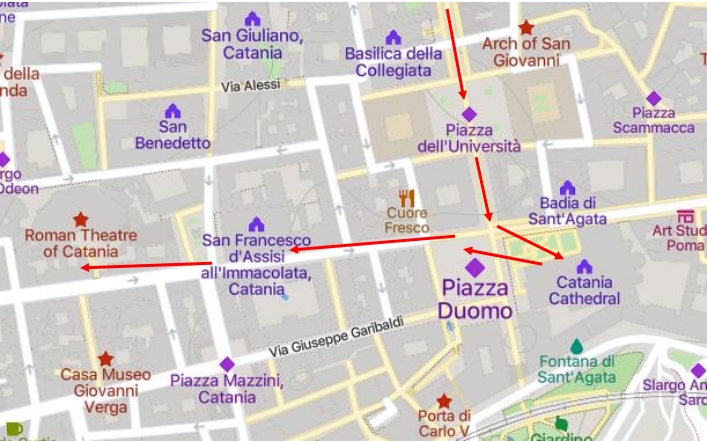
After inspecting the Church of St Francis, we continued down Via Vittorio Emanuelle Secondo to the next major site of this area of Catania, another Roman Theatre and Odeon. The map of the site below shows how large an area was taken up by the Roman Theatre. However it is the usual story of the history of Catania that no site here is a clean slate…three to four centuries before the Romans built two ‘arenas’ here, there was a Greek building here, probably another theatre. The larger theatre here would have held around 7000 spectators when it was built around the first century BCE. A thousand years later, the locals no longer valued the ancient theatre and its marble was stripped to assist in the rebuilding of St Agatha’s Cathedral. It was re-excavated in the 19th century.
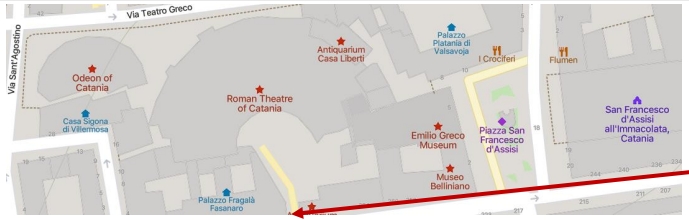
The photo of the Roman Theatre below was taken from the other side of the structure and the spires of the Church of St Francis can be seen in the background. The map above shows that there is a smaller odeon further along on the site and is set a little higher than the larger theatre and is still used today for performances of Summer shows. The larger theatre is not used for these functions as over the centuries the ground level has dropped and so the lower part of the building (eg. Orchestra Pit) takes in water from the underground Amenano’s River.

 FOGTRAVEL