We were meeting our guide on our second night in Spain, preparing for our 10 day excursion from Barcelona to the north coast of Spain along the Bay of Biscay. The map to the right shows the approximate site of Hotel Astoria which we found to be a very interesting, olde worlde place. Both on the previous evening and after breakfast on this day, we were able to explore the area around out hotel before our walking tour for the day started.

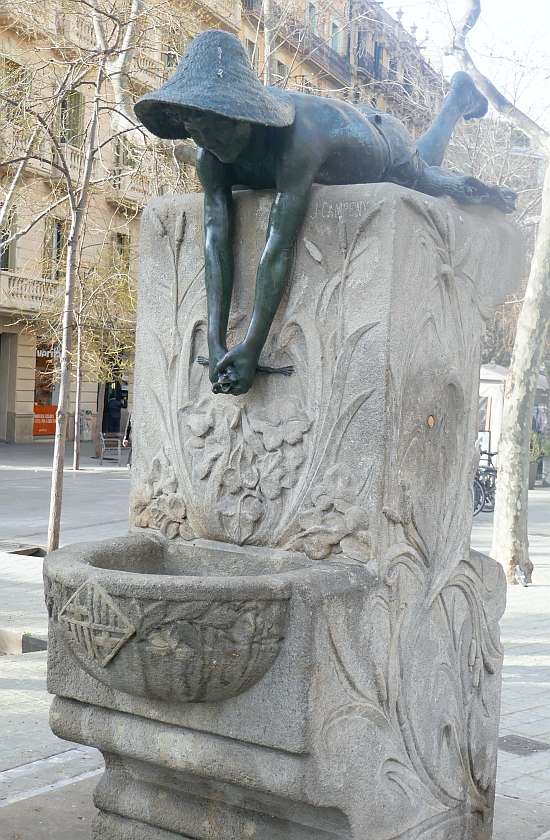
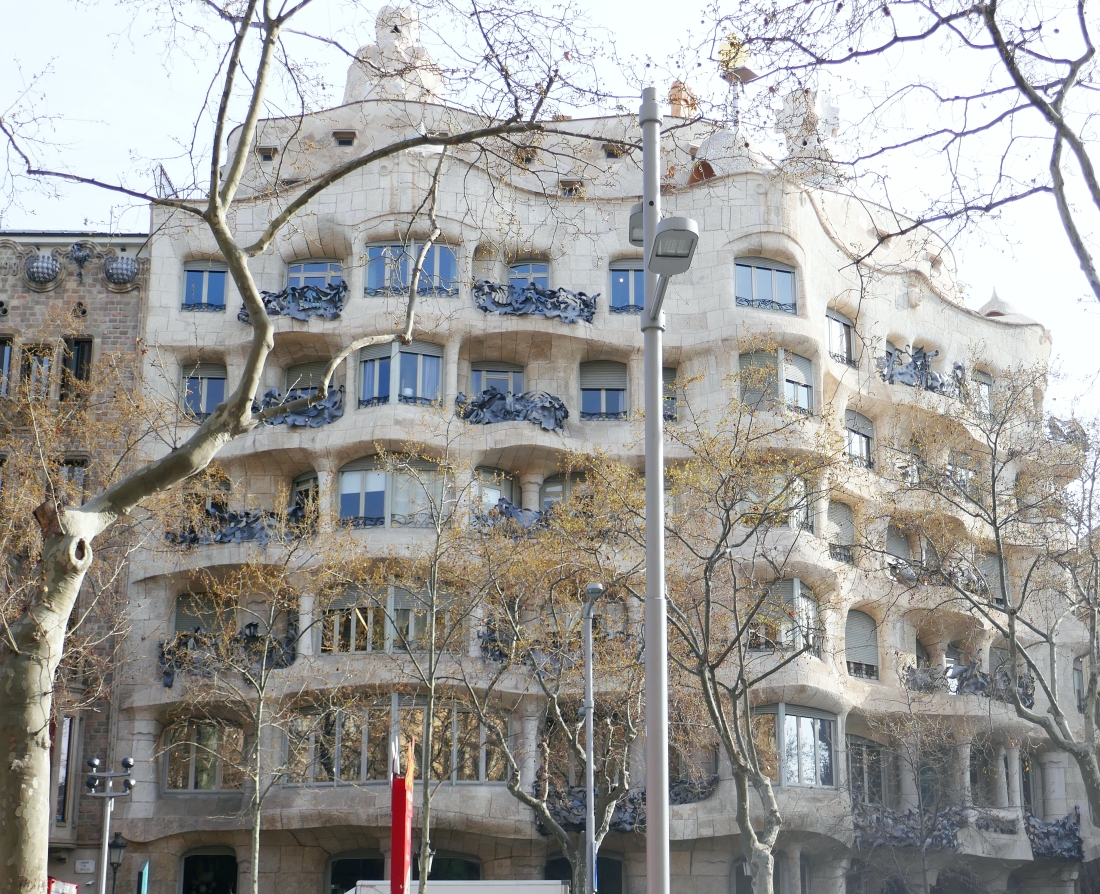
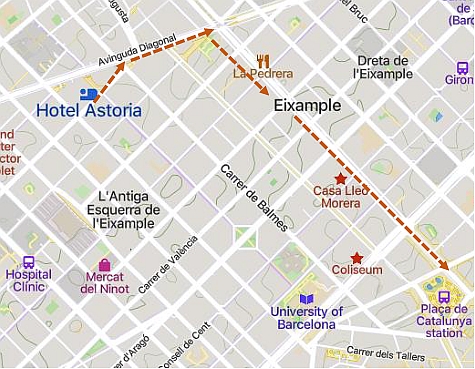
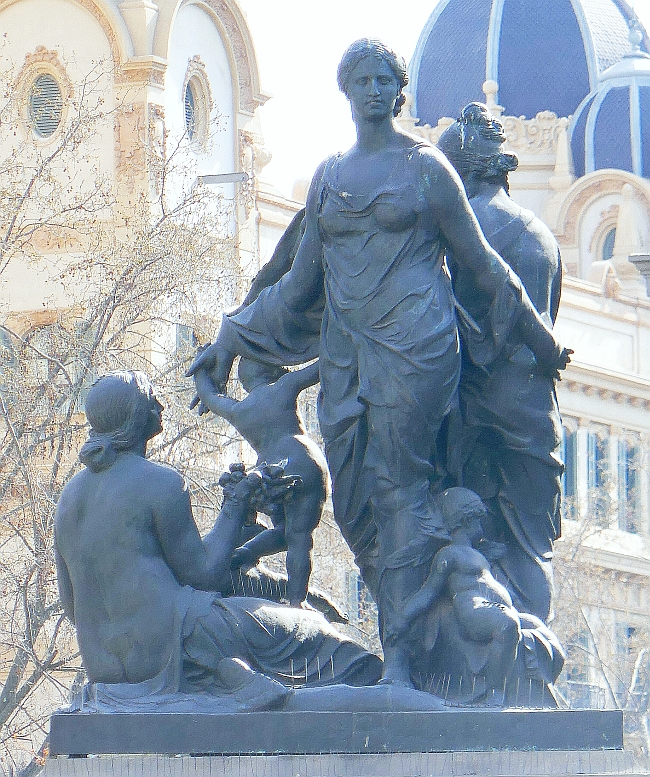
One of the curiosities of this city is that there are a few major roads that criss-cross Barcelona, enabling traffic to quickly cover large distances without being caught up in too many traffic snarls. One of these is called Avinguda Diagonal and this street was the target for our new guide. It was about 500 metres from our hotel and it wasn’t long into our stroll down the Diagonal before we realised why our guide had chosen a hotel in this area, not far from this important Barcelona street. Apart from the prevalence of street sculptures like the one on the left above, we were amazed when suddenly we found ourselves outside Casa Mila (La Pedrera), our first Gaudi Building of the trip; Antoni Gaudi was born in 1852 and 53 years later he designed and built this huge home with its wave like walls and huge chimneys on top. It was commissioned by a wealthy couple who wanted to live in a spectacular house on this cosmopolitan Barcelona Avenue.
One of the most famous landmarks in Spain is the Sagrada Famiglia (Cathedral of the Poor), the enormous cathedral that Gaudi devoted the rest of his life to from 1915. We were due to visit this architectural masterpiece later in the day. But for the moment we were happy to have seen Casa Mila and it wasn’t much further down the Diagonal that we came across another building of Gaudi’s called Casa Batlo (1904-6). This structure is so fanciful that it is like an underwater palace, perhaps at home in an Octopus’s Garden! Other folk have decided that it should be called a ‘House of Bones’. Gaudi did not design this building, he merely restored the façade to the gorgeous thing it is today.


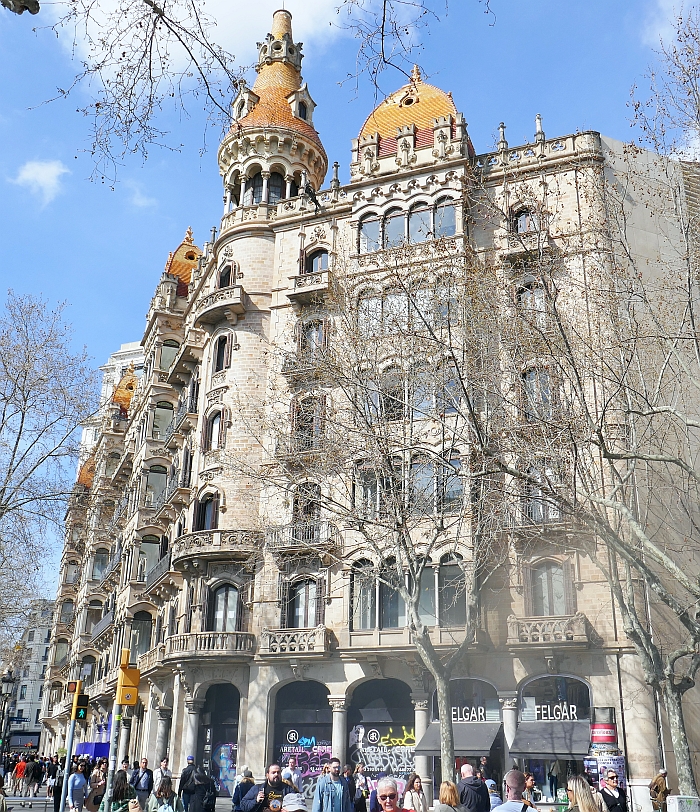
There were no more Gaudi buildings on our morning stroll but there were plenty of other amazing sculptural pieces as we walked down to our turnoff at Rambla de Catalunya. Below is just a small selection of what I spotted before we eventually arrived at another major square of Barcelona, Place de Catalunya.


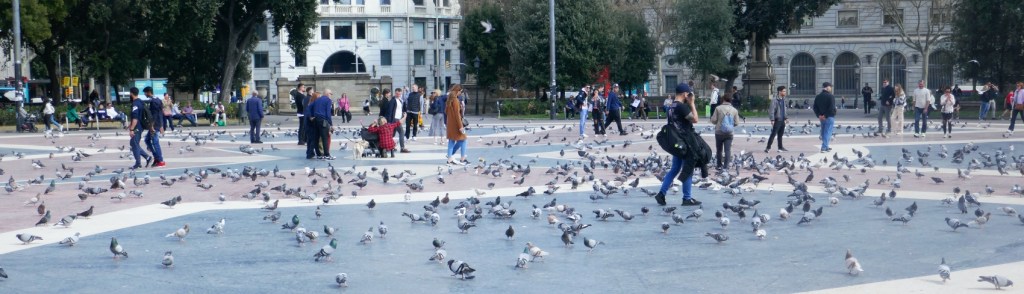
Whilst Placa de Catalunya is not the administrative centre of Barcelona, it is considered to be its city centre and the place where the old city meets the 19th century small towns that were built over the 19th and early 20th centuries. Its eminence as the place to be can be detected by the number of International embassies that are sited around this location. The square consists of 50,000 square metres and is renowned for its fountains and statues (See map,right below). One unusual claim to fame is the suggestion that the locals are particularly proud of the huge flock of pigeons that gather around the Placa.
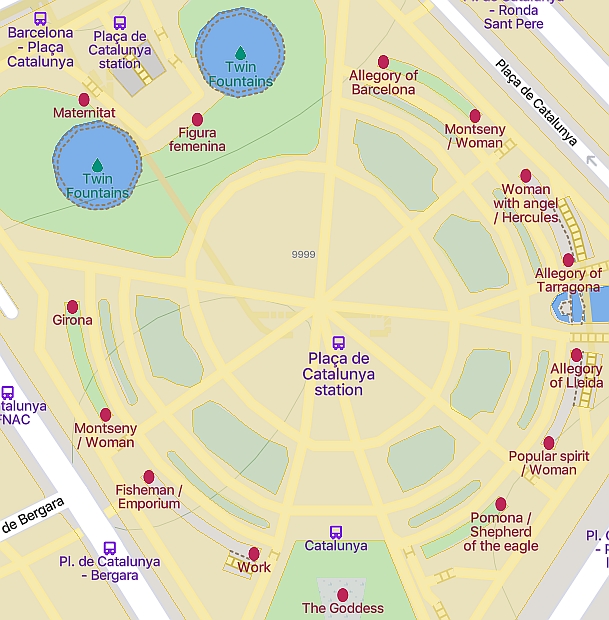
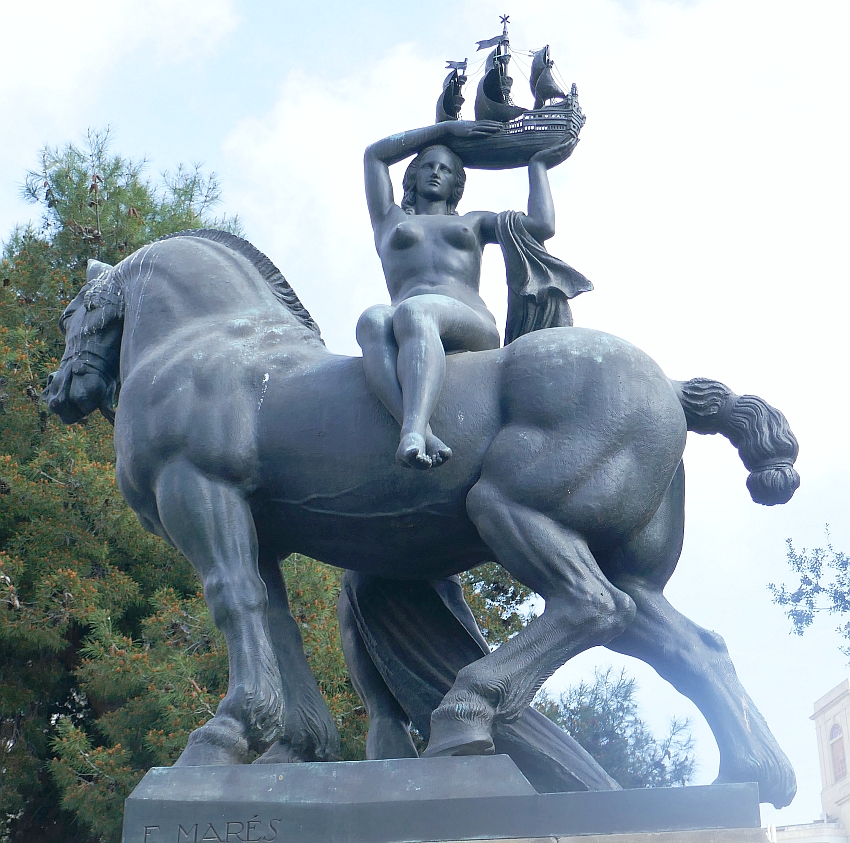
The Placa de Catalunya is famous for its ring of sculptures depicting allegories of the Provinces of Catalonia and mythological figures. Those of our company who weren’t strolling in the surrounding shopping centres, took a cultural walk around these impressive statues. Below are four examples of these art works. In order they are called…Allegory of Barcelona, Sculpture honouring the Province of Tarragona, Equestrian Statue by Luciano Osle (1925), Allegorical statues representing the Province of Lleida (1929)


When we regathered for the next stage of our day, the consensus was for lunch before we began our next walk down the Rambla de Catalunya.
Walking la Rambla from Place Catalunya
APPENDIX 1: Another Gaudi building visited the next morning
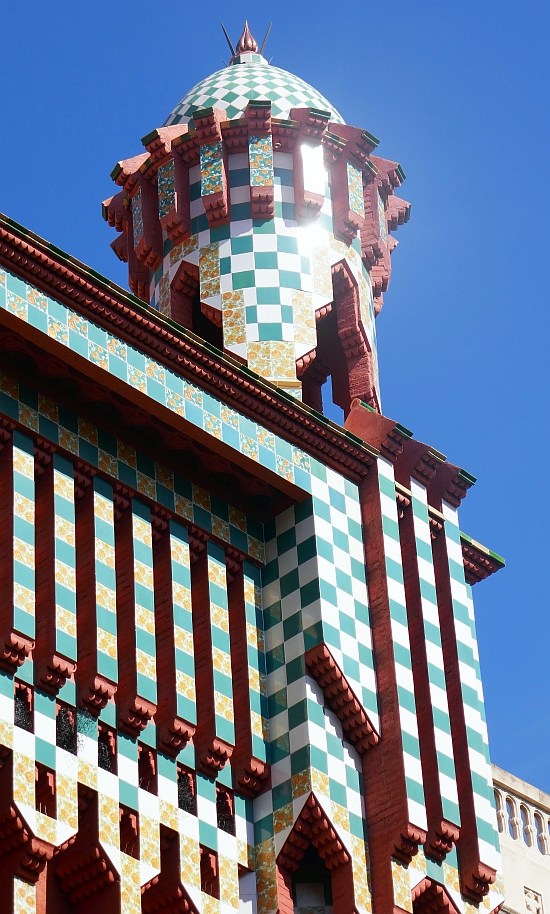
Wednesday was our next day of travelling and it was going to be very different from the previous days of walking the streets of Barcelona. We were due to catch a train from Barcelona to Logrono, a five hour train and some bus trip north towards the Bay of Biscay. On the way to the train station, our guide decided that we could just as easily take the route past another Gaudi building, Casa Vincens.


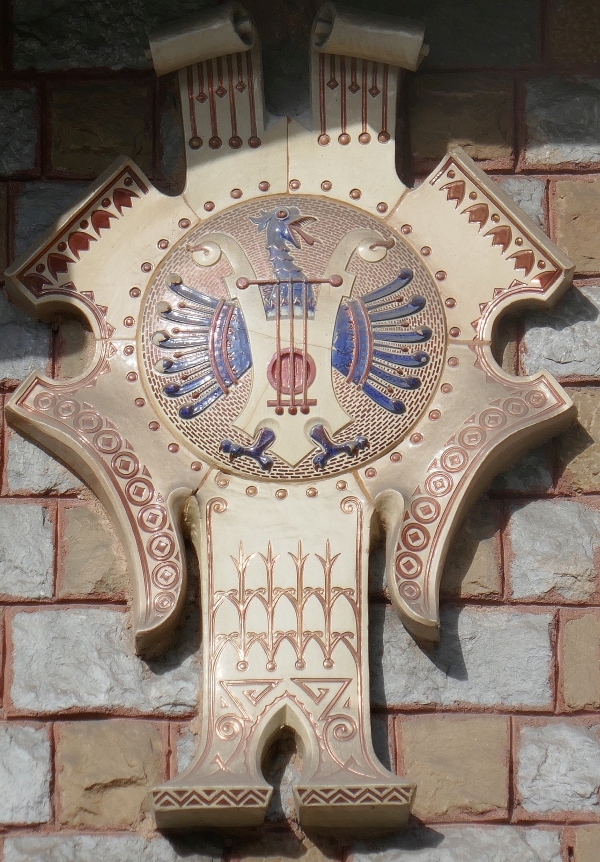
This summer villa was Gaudi’s first significant architectural assignment and was built between 1883 and 1889. It had a very different look to the amazing buildings we had visited on the previous day, this building had a distinctly Arabian feel about it. Today it is a UNESCO World Heritage Site.

 FOGTRAVEL