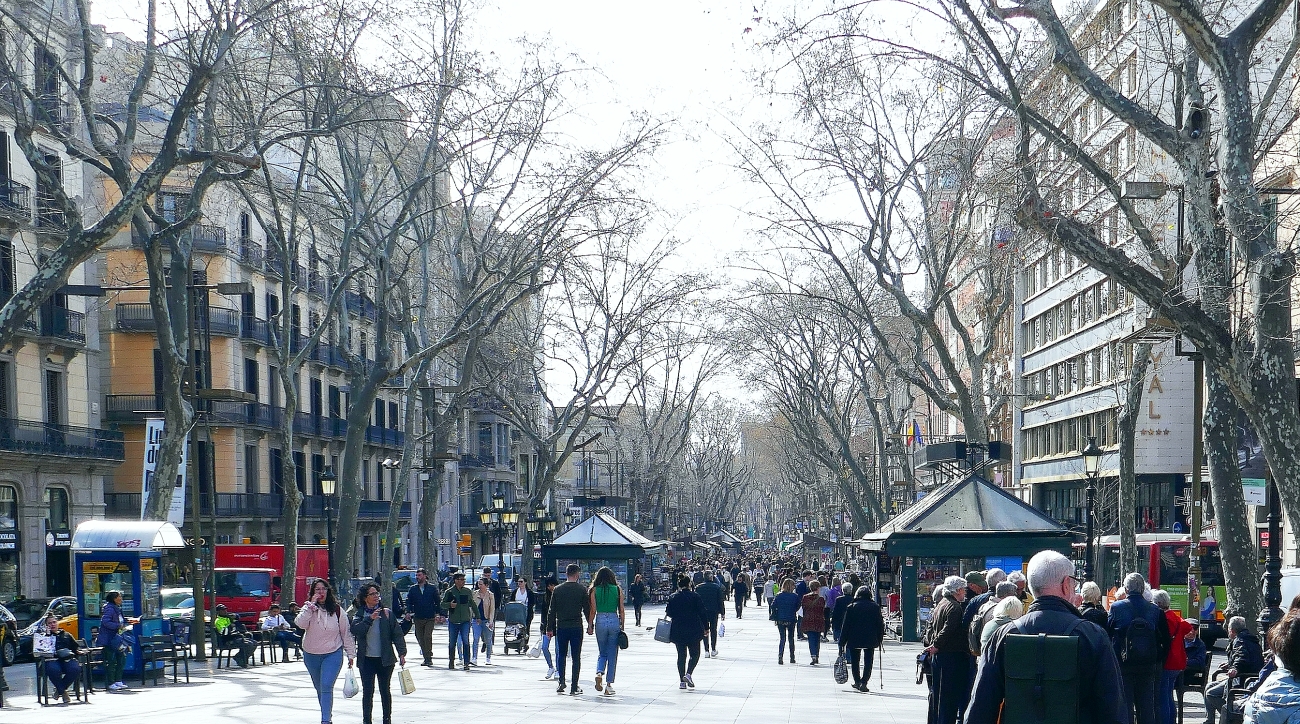
One of the changes to our itinerary that started in Placa de Catalunya was that we were met by a city guide who was to lead us through Barcelona for the rest of the afternoon. Her first job was to get us to Placa de Vincenc Martorell where we were booked in for a late morning tea. The namesake of this square, Vincence Martorell, was an Impressionist painter. The square we arrived in was fully enclosed by apartments all around and it was clearly a small oasis of green for the locals. What made it more enjoyable was the lady who ran the restaurant was an Australian who made us very welcome.
Perhaps the most curious aspect of this square was the building that ran along one side of the Placa had been known as Casa de la Misericordia from the end of the 16th century. It had served a number of purposes over the centuries but when it was functioning as a convent, a wooden circle inserted in the wall was meant to function as a place for locals to leave food for the nearby church. Unfortunately, it was also used as a place to deposit unwanted babies for the Nuns to care for and raise. Luckily for some small individuals playing annoying games in this placa while we were there, it was no longer functioning as a child deposit system.


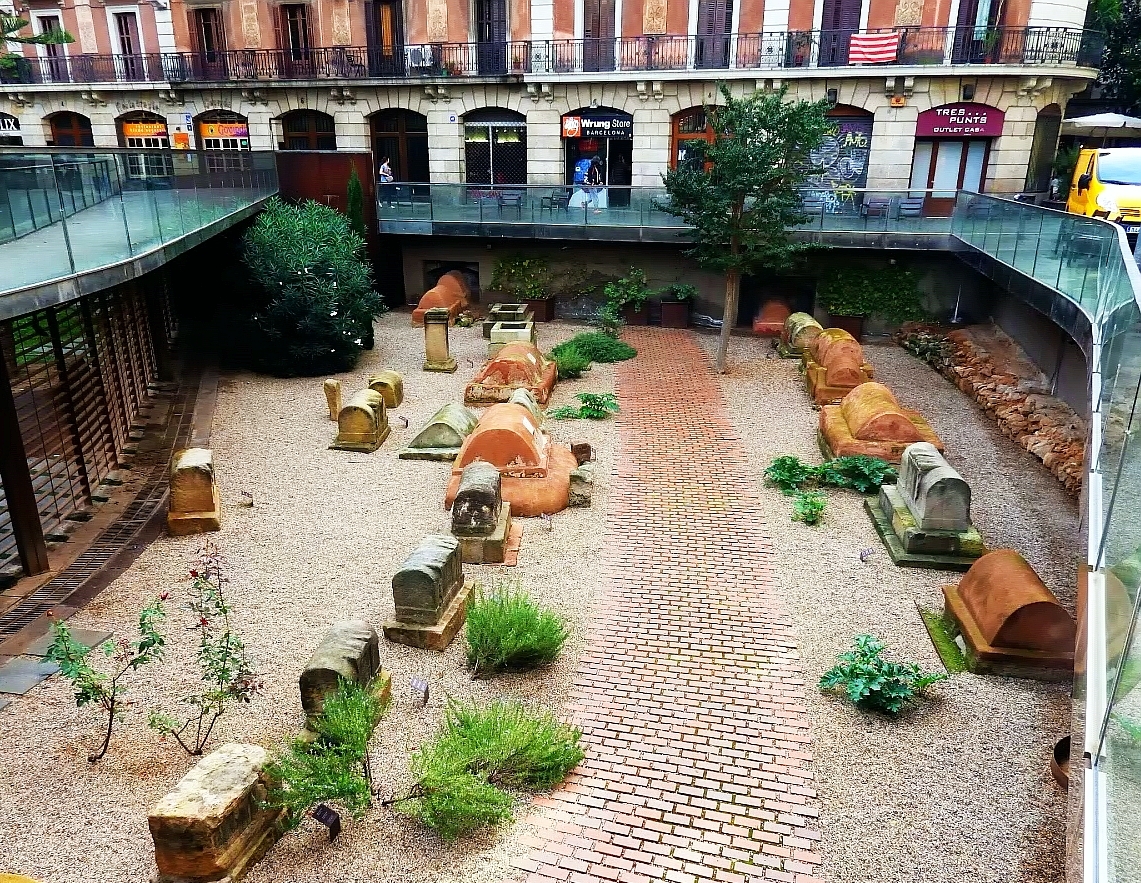
The map on the left of our walking trail for the next little while shows that our second destination continued our exploration of the Roman origins of Barcelona. We were led to a Roman cemetery used in the first to third centuries CE, originally built outside the walls of the Roman town of Barcino. We were able to inspect this cemetery from all angles along Carrer d’En Bot.
This area of Barcelona was severely damaged by bombing during the Spanish Civil War and the Convent of Nuns on this site was hit by numerous explosives. By 1954 it was decided that the ruined area had to be cleared and the remnants of the convent were removed. Underneath the rubble an ancient Roman cemetery was discovered. The site was of great archaeological importance and a square was created here to display these important finds from Barcelona’s early history.

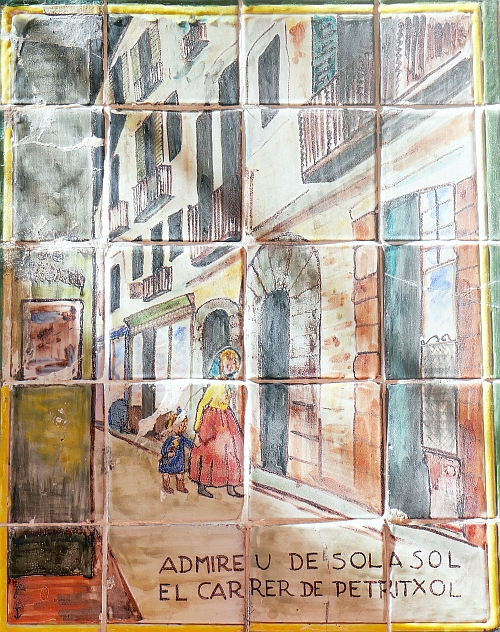
Whilst our walk this afternoon was meant to generally follow La Rambla, the famous street was used by our guide as an approximate pathway, to lead us to places of interest along the neighbouring alleyways. This area on the way to visit the church of Santa Maria di Pi was highly decorated by tile art works on the alley walls, illustrating scenes from the past of the Gothic Area of Barcelona.


Santa Maria del Pi is a very ancient church, being built in the early 14th century. It is also a very tragic church as major events seemed to be determined to destroy it. It was seriously damaged by earthquake in 1428. It was bombed in 1714 during the Spanish War of Succession and significant damage was done at that time to many of the buildings associated with the church. In 1936 it was gutted by fire set by anarchists who weren’t just offended by the presence of this church, but many other churches in Barcelona were similarly attacked.


However, associated with this church today is a cultural practice dating from the 16th century. It consisted of building large dolls that were carried in parades as well as being brought out for annual religious festivals. The large dolls were packed away in 1870 in storage and weren’t rediscovered until the 1950s. They have been restored and are used again in public parades and in local ceremonies. The large dolls are kept in cupboards just inside the main door of the church.
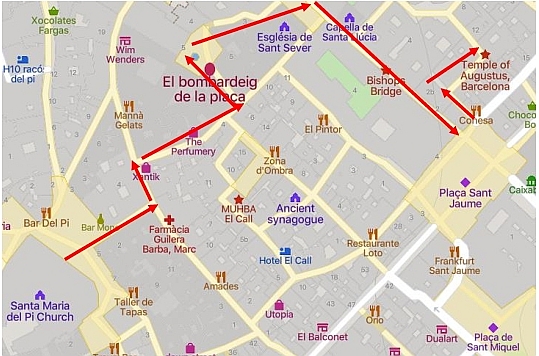
From Santa Maria del Pi, we walked the back alleyways leaving La Rambla behind and heading for the Placa de Sant Filip Neri. The other name for the square, as the map to the left illustrates, is “El Bombardeig de la Placa.” This name comes from events in January 1938 where from 9am to 11.20am there was continuous bombing of this area of Barcelona. The Church of Sant Filip Neri was being used as an air-raid shelter for children from the neighbourhood and some 20 of these children died in these air-raids.

The continuous aerial bombings hampered efforts to clear the area and another 42 people died as a result. The only thing left standing in the Placa was the façade of the church and the above image illustrates that tourists like us who visit this site, can still see the unrepaired bullet holes in the front wall. There is an information poster outside the church that relates the following information about how the Franco government explained the bullet holes in the front wall of this church. (The bombing occurred as part of Mussolini’s support for Franco’s government). “For years, Francoist propaganda offered an account of how the marks on the façade were caused by bullets from firing squads executing priests from the church, a version which covered up their part in the massacre.”
From the El Bombardeig de la Placa, our guide than led us down a street that we had walked up yesterday after our visit to Placa Sant Jaume. This was the street where we had walked under the Bishop’s Bridge with its veiled threats suggested by the knife in the skull underneath it. This time we were going to visit the Temple of Augustus and its associated museum. Unfortunately this complex was very crowded as there was a school excursion class there, keen to learn the Roman history behind their city. It was a small museum area around the Roman columns so our inspection was a little limited.
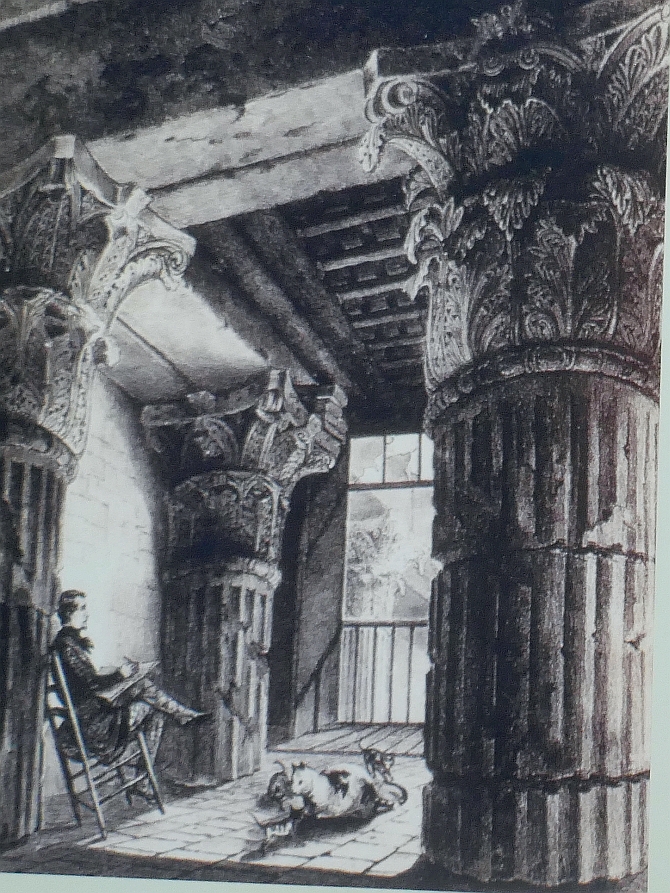
It is not known when the Temple of Augustus was demolished but it is suggested that it probably occurred somewhere round the 4/5th centuries with the rise of Christianity. The discovery of the remains of the temple was even more unusual than that of the Roman Cemetery that we had examined earlier in our walk. In the late 19th century three of the temple’s column were found on a construction site in the city. A fourth column was discovered and displayed in the Placa del Rei, over the road from the Barcelona Cathedral. The original temple would have been about 37 metres long, built on the Roman forum that was once sited where Placa Sant Jaume is today.


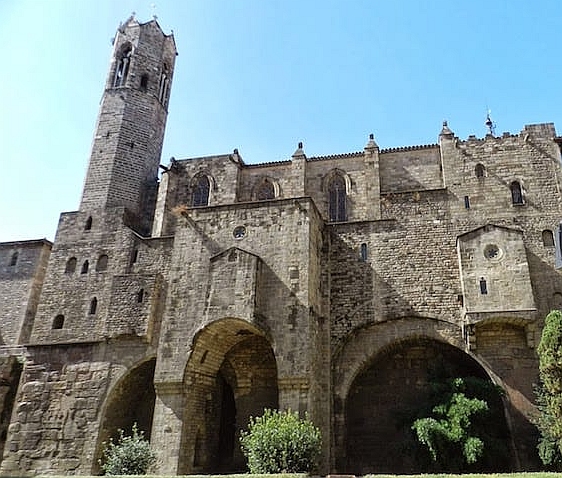
From the Temple of Augustus, our guide decided we needed to visit the Museum of the History of Barcelona which was located back in the area near the Cathedral as well as close to Placa del Rei. The image below left is of the Chapel of St Agata that sits on top of the old Roman Walls that we were able to examine the previous day when we had lunch in Placa de Ramon Berenguer. It was further along that the local youths were trying to flatten themselves against the stones of the Roman walls.

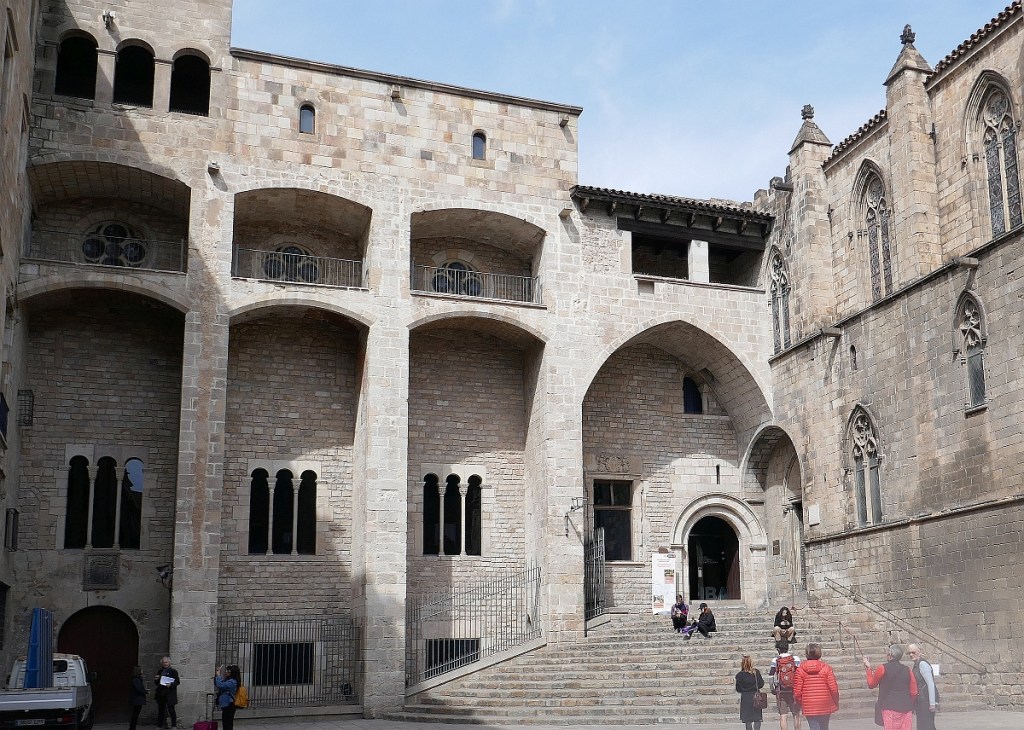
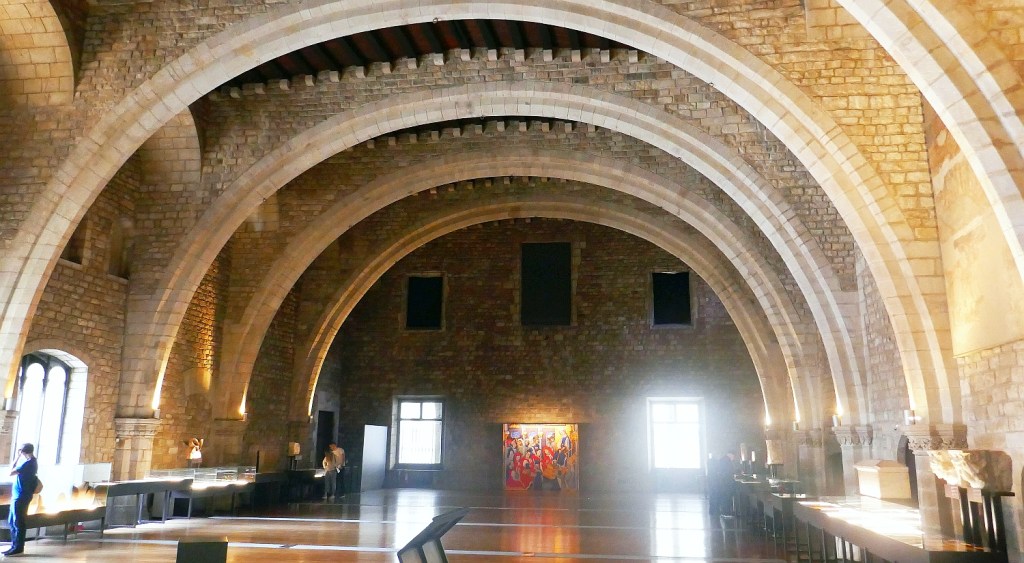
The photo to the left here shows our team arriving at the doorway to the Museum of the History of Barcelona. It is not often that a Museum itself is as old as the history that it presents but that was the feeling we had as we wandered the exhibits in this museum. The exhibition at this museum was particularly intent on illustrating the history of the expansion of Barcelona over the last 2000 years, particularly with bronze 3D maps of the different stages of the city.
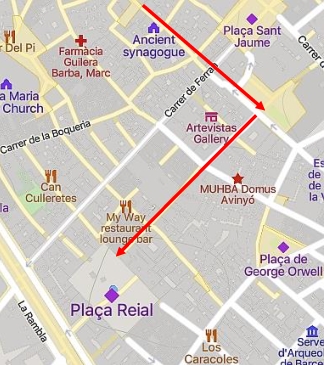

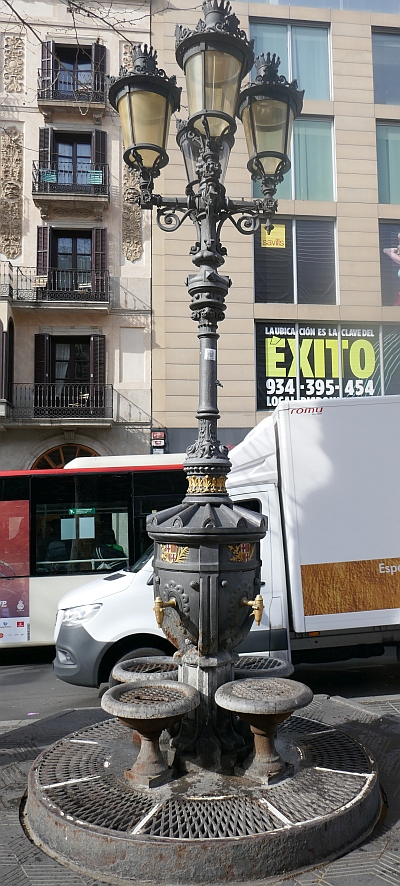
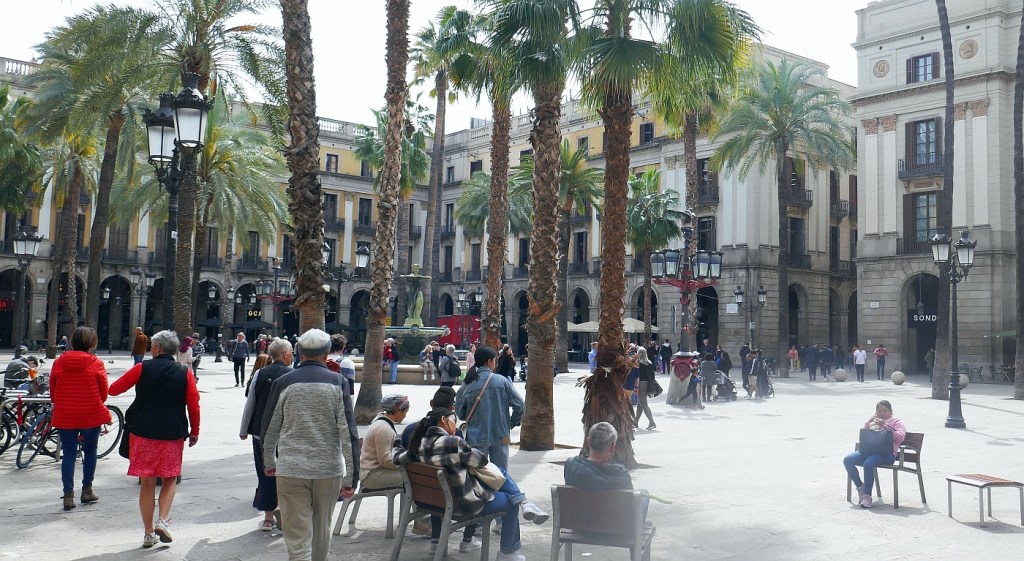
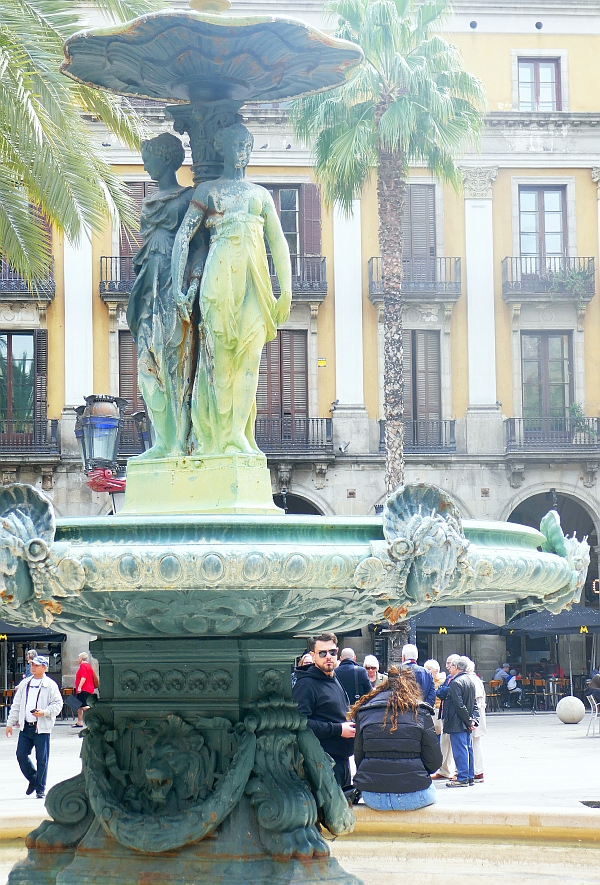
It was getting on in the afternoon and we had made an appointment to meet up with some friends at a hotel towards the end of La Rambla. Our meeting place was not far from Placa Reial and our route to this square took us back towards La Rambla. This square is famous for its fountain of the Three Graces, along with plenty of palm trees to make it a great place to stop for coffee and wile away the afternoon. The fountain was installed in 1876. The square is surrounded by a series of hotels and looks a popular venue for tourists checking out Barcelona. Note on the right above one of the curious lamps that are scattered around this Placa; another contribution by Gaudi enhancing the style of the city.
Not long after our stroll through Placa Reial we joined our friends outside their hotel and then completed our walk around one last section of Barcelona before our local guide said ‘Goodbye’ to us after a very informative and interesting tour of the old city of Barcelona. It is a rare thing for any local guide in any world city to say ‘Goodbye’ to her guests with a song…our guide sang us “Amigis para Siempre” (Friends for life) the official theme song from the 1992 Summer Olympics. It was a wonderful farewell!

 FOGTRAVEL