After our early morning safari drive from the Victoria Falls River Lodge, we packed for our drive to Botswana. Our transfer was to Kasane airport in Botswana and the first part of our drive took us to the border between Zimbabwe and Botswana.
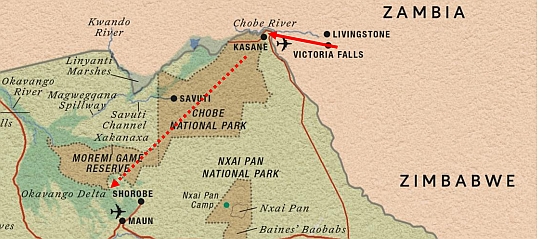
Our drive took us through much of the Zambese National Park as we drove to the border marked by the Chobe River. It was a very hot day so we were curious to note that a reasonably large gathering of women dressed in blue and white full coverings were gathered in the bare trees beside the road, not far out of Victoria Falls. Apparently they were preparing for a church service by what our driver called a local ‘Apostolic Church’. My first thought was that one of the advantages of church buildings is that prayer and worship is a lot easier when you are out of the midday sun. Our driver explained that there were a lot of these Zimbabwean churches that had broken away from more conservative churches. They were notorious for requiring members to seek healing via prayer and faith and completely reject conventional medicine. Statistics for maternal mortality were rising in Zimbabwe as a result of this trend.
On our arrival at the border with Botswana, we very impressed that the movement through Customs was much more efficient and organised than the one between Zambia and Zimbabwe. Even our shoes had to be soaked to prevent the transmission of cattle disease. We were collected by our Botswana driver who took us the reasonably short distance to Kasane Airport. Delivering tourists to destinations in game reserves in Botswana was a job for planes, not ground vehicles.

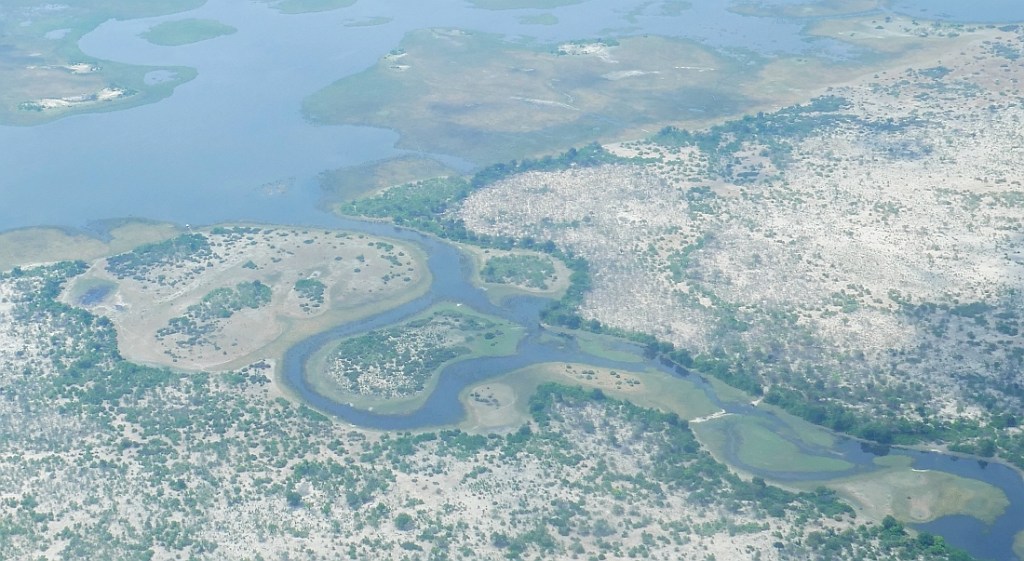
I am not a big fan of small planes but getting anywhere in Botswana means small plane travel. Our three flights that week involving getting to Little Vumbura and back out again to Maun airport however were models of local efficiency. The image below of the waterways of Botswana gives some indication as to why roads are not the main form of transport here.
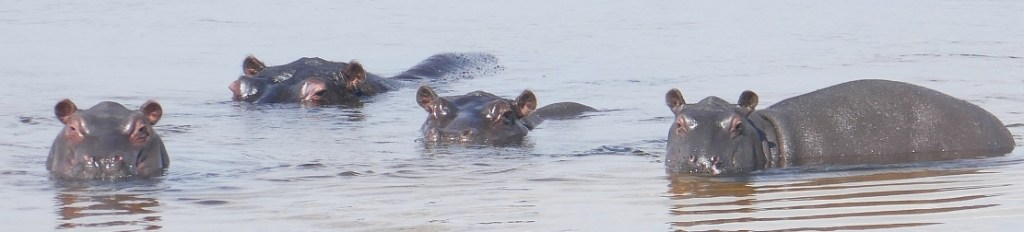
Our flight landed at Vumbura airstrip and we were collected immediately we landed and were taken for our first drive in the ‘Kwedi Concession. Our accommodation was on an island in the Okavengo Delta and it was a 15 minute drive through country that we would become very familiar to us over the next four days. One of the first low wooden bridges across a channel confirmed that some of the spectators we would encounter on these drives were not the ones that we were familiar with. The image below of hippos giving us the eye was just an early indication of what we would see over the next few days.

Our camp site was similar to what we had experienced in the Zambezi River Lodge. There were six large tents that were scattered over the small island and they were very comfortable places to stay. Perhaps the only problem with island-living in the Okavenga was that every second night some of the local elephants would cross the river and come looking for a feed amongst the huge trees on the island. We would not hear them as ‘night-walking’ never occurred to us but in the morning we would find their gigantic gifts on the path to our breakfast area as a little reminder of who really owned the area.
We had an excellent time exploring the section of the Okavenga delta that surrounded our home island. Little Vumbura is situated in a concession leased from remote rural communities organised under the Okavango Community Trust and aims to help bring the benefits of ecotourism to local people. These benefits include jobs for local villagers, financial support for local village schools and the involvement of local elders in discussing how the concession is run
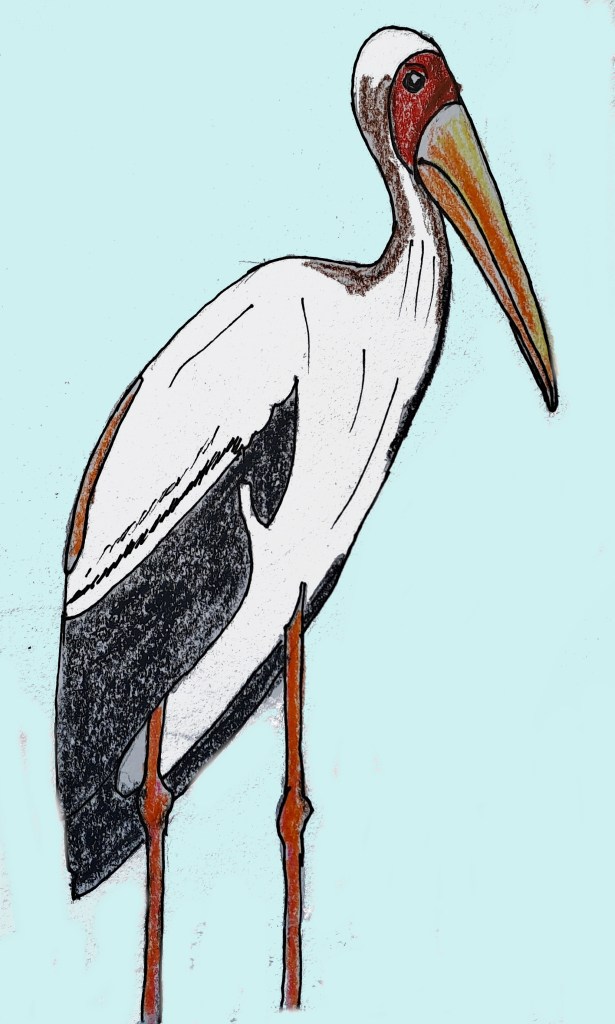
We went on about 5/6 game drives while we were at Little Vumbura and on all occasions, our two guides were with us ensuring we got the best out of our trips. Our guides realised we were interested in the local birds so when we noticed a bird like the Saddle Billed Stork (on right above) on our first excursion, we stopped to discuss this bird at length as we did all the significant birds on our tours.

Further along on our first afternoon’s drive, we encountered our first Kudu who was lurking in the shrubs near a large ‘garden’ of red flowers. We had seen a lot of Kudus on our travels already but at Little Vumbura, these beautiful animals often swam across the river and grazed on the island outside of our tent homes. We discovered that that the Kudu knew that the Lions and Leopards did not want to get too close to human settlements so some Kudu and other Impala chose to dine at night on our island, reasonably safe from the dominant predators of the neighbourhood.
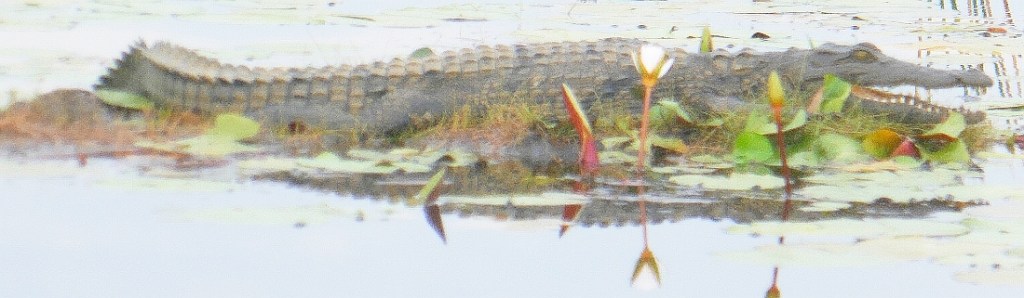
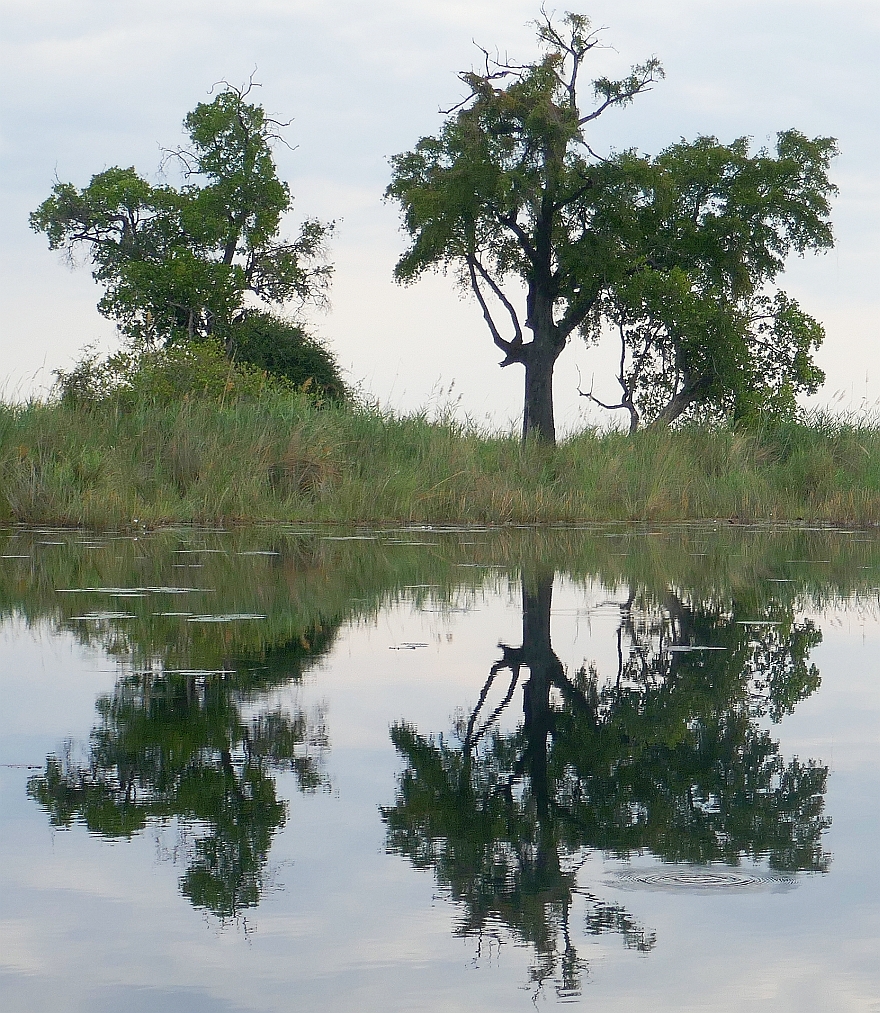
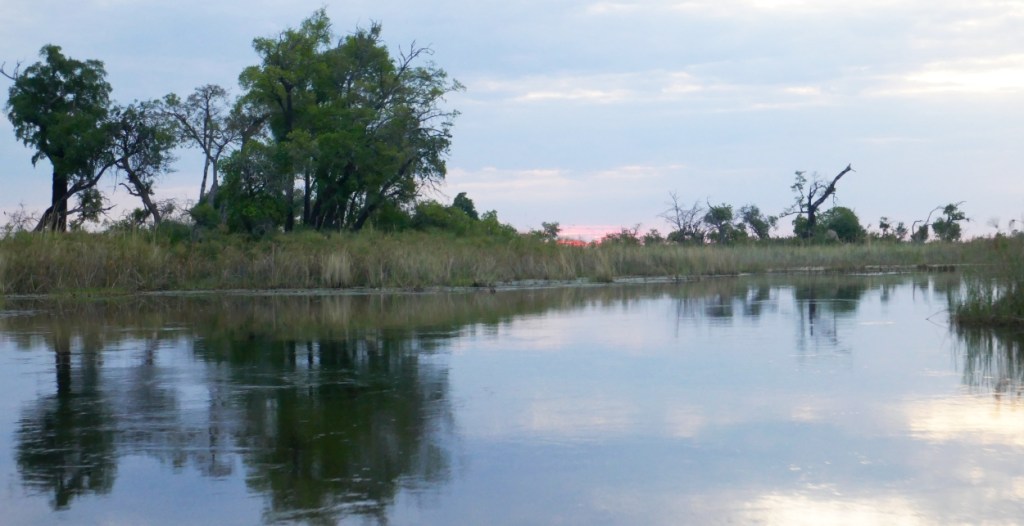
Once we had finished our first game drive, we were given a certain amount of time to recover and then we had to be ready for an afternoon boat ride on the river that flowed around the home Island. It wasn’t long into our boat road that we passed a crocodile ensconced on an island of reeds and other floating vegetation. But it was the birds that caught our attention. Not far from the island, we passed a tree that looked like a boarding house for the local birds of prey. This was where they gathered in the late afternoon to watch for their dinner, both on the water and prowling the banks.

We only encountered one group of hippopotamuses on our afternoon boat ride. It appeared to me that the hippos liked to gather in friendly groups in one section of the river rather than split up and claim their own territory.

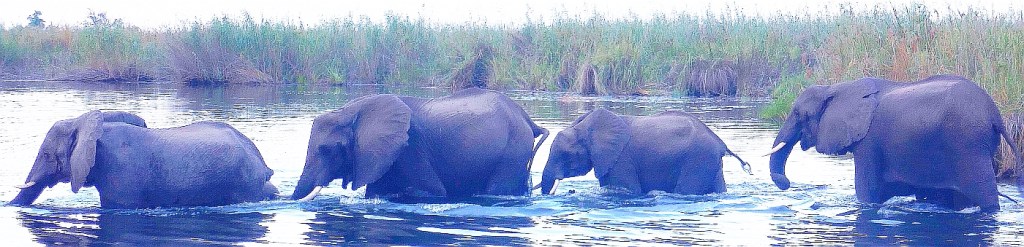
The highlight of our afternoon boat ride was encountering a herd of elephants on one side of the river. As the photo below shows, the elephants were making their way slowly through swamp territory, grazing on the tall grass that dominated both sides of the river. We pulled over to watch what the elephants were up to and then realized that they were getting close to the bank of the river.

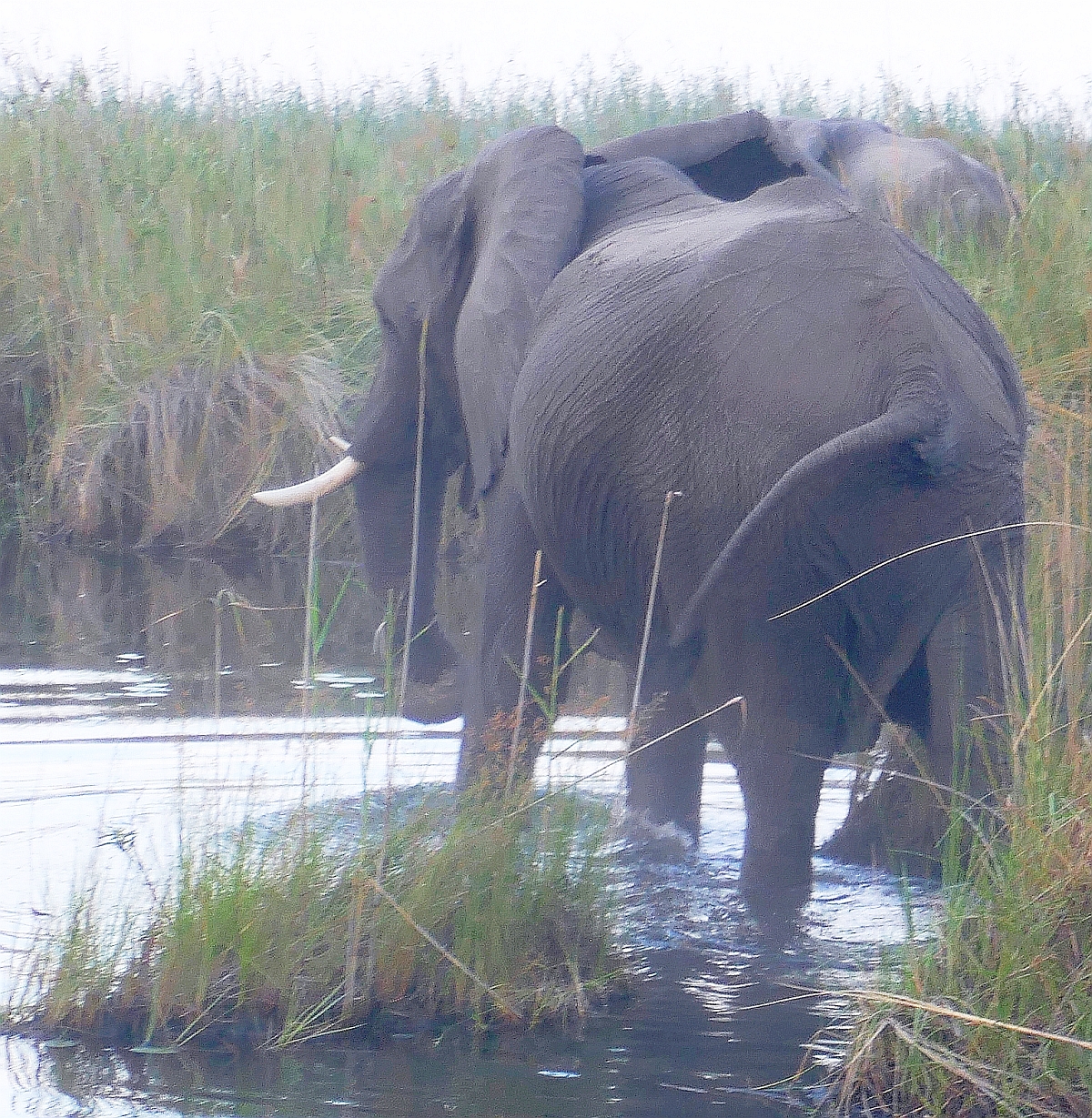
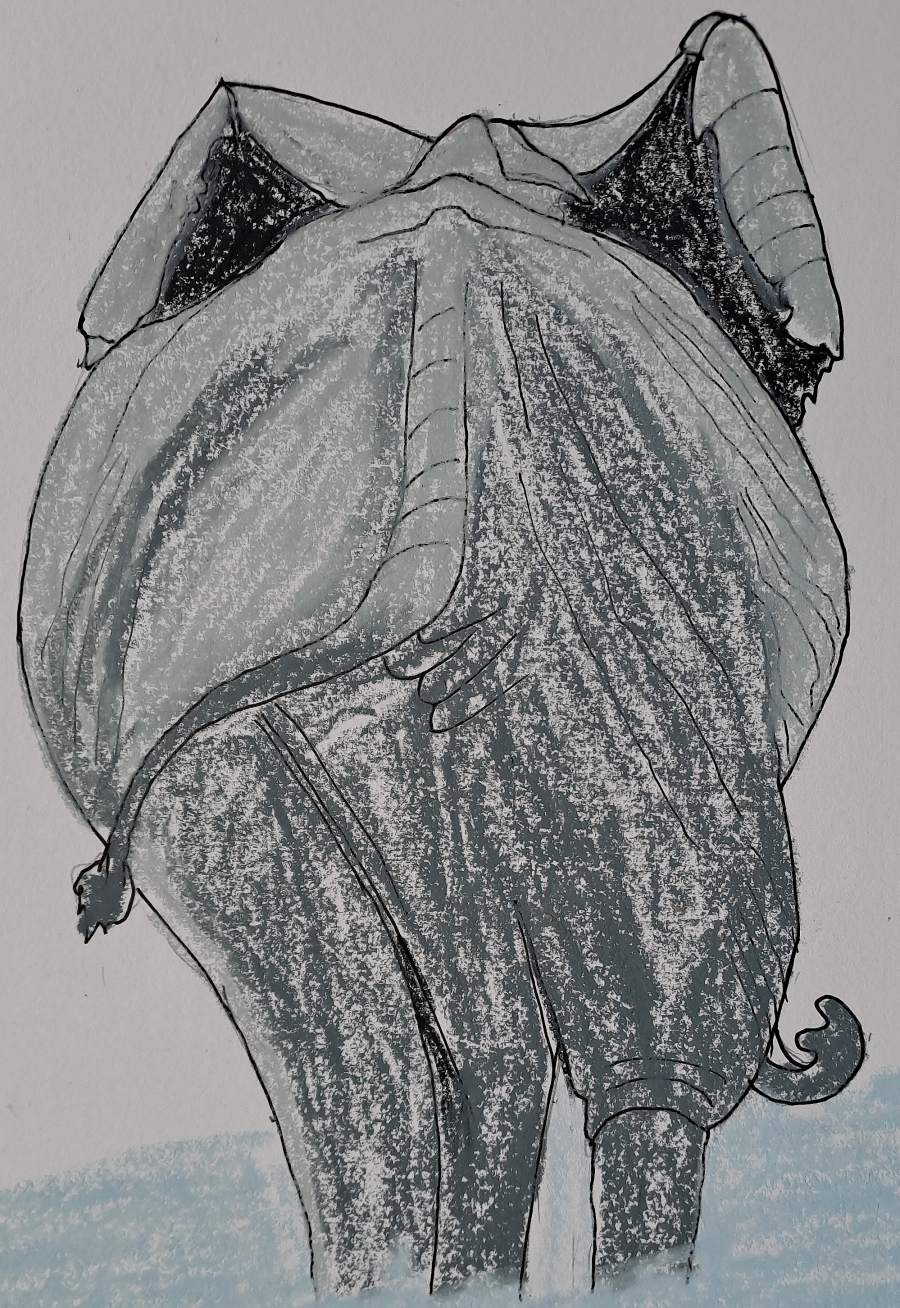
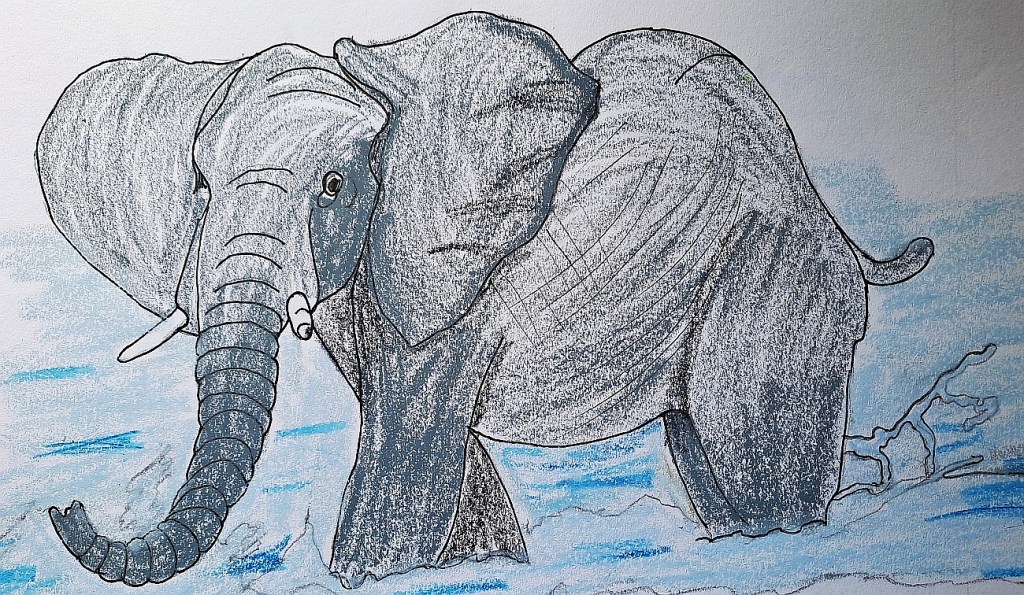
One of the larger elephants was the decision-maker who slowly but surely manoeuvred his way off the bank, into the rocky shallow water and slowly started to progress his way out into the centre of the river.
The rest of the herd quickly decided that the grass was greener on the other side of the river and they all followed their trail blazer. The centre of the river was reasonably deep so the elephants had to ‘swim’ some of the way as their feet didn’t touch the river bottom.
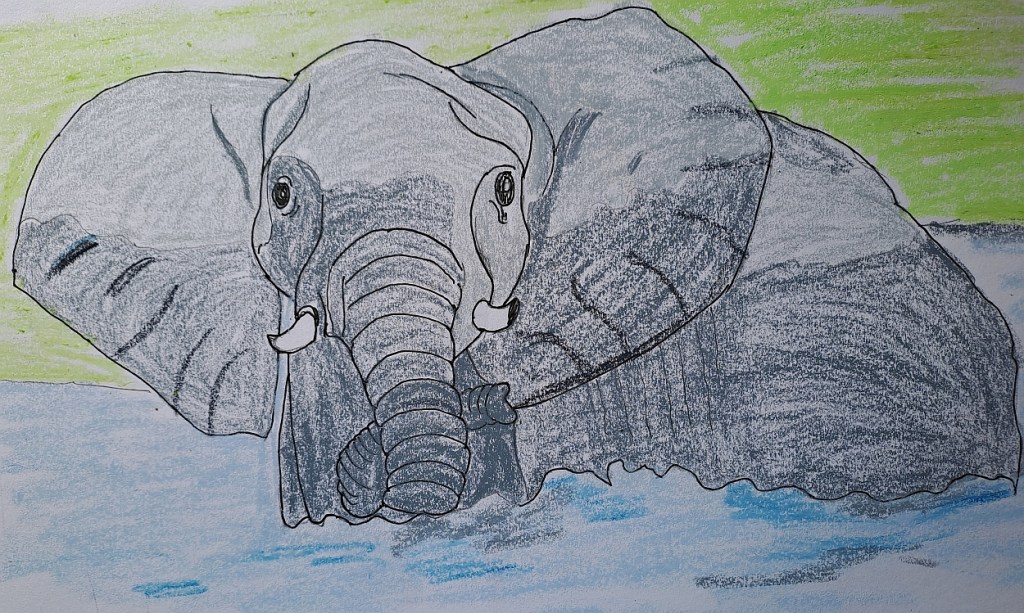
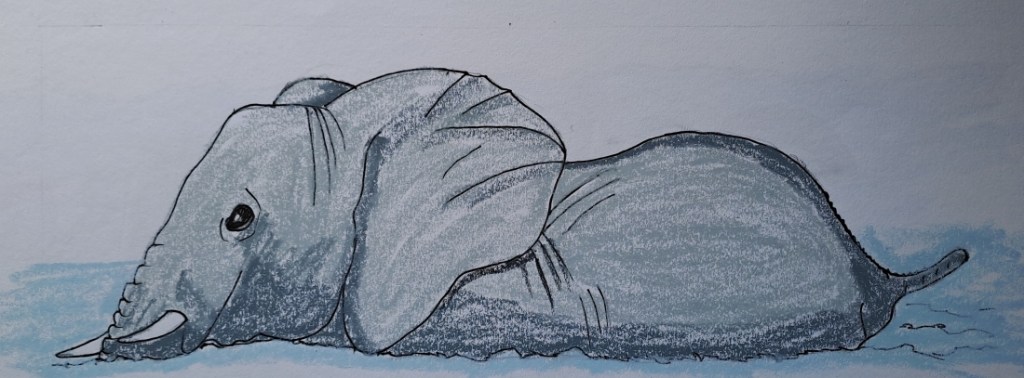
It was a very entertaining afternoon of elephant watching but by the time the elephants clambered up the other side of the river, the light was staring to fade and it was time for us to turn around and head home.
 FOGTRAVEL